

Victorian Carved Plant Column
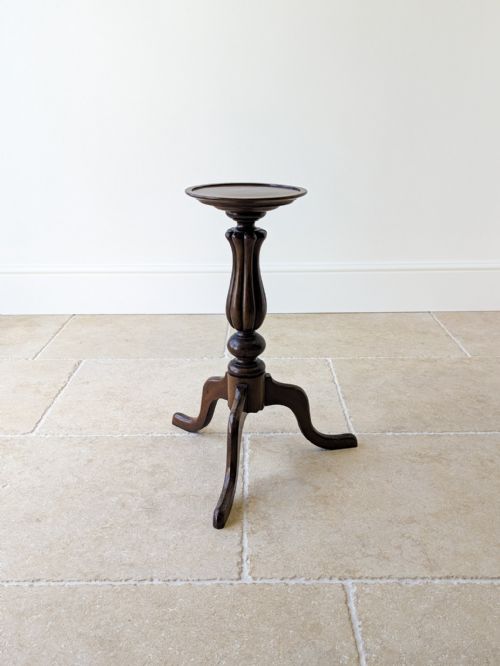
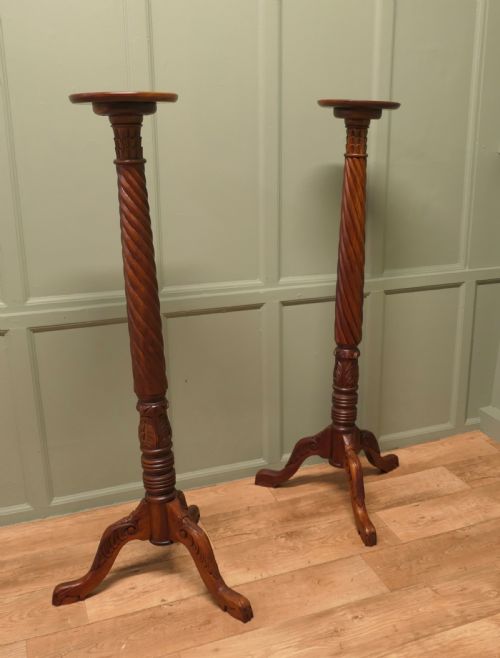
A victorian carved plant column raises greenery or sculpture into the light, bringing architectural presence to a room.
Victorian Carved Plant Column
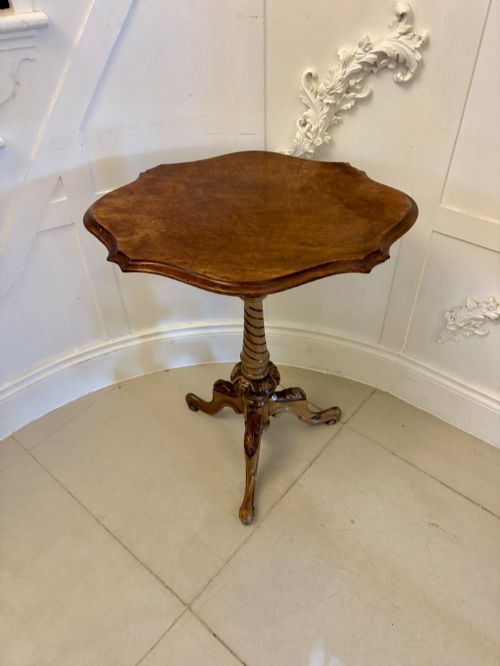
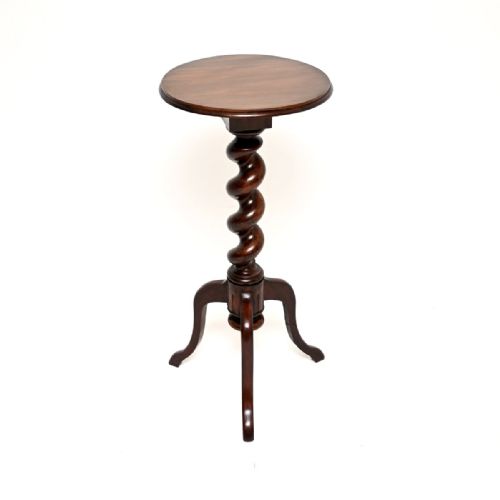
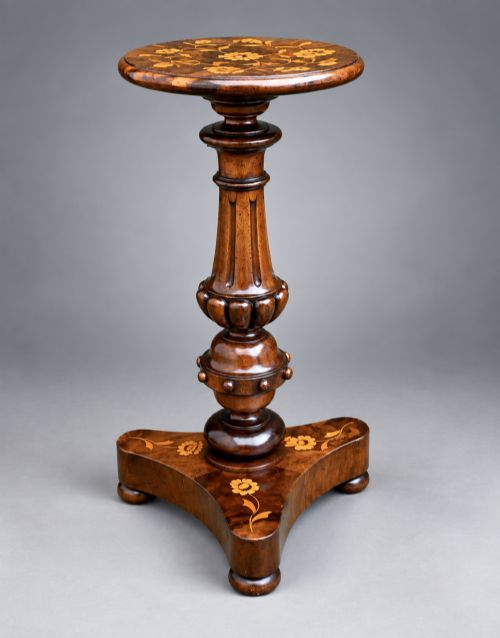
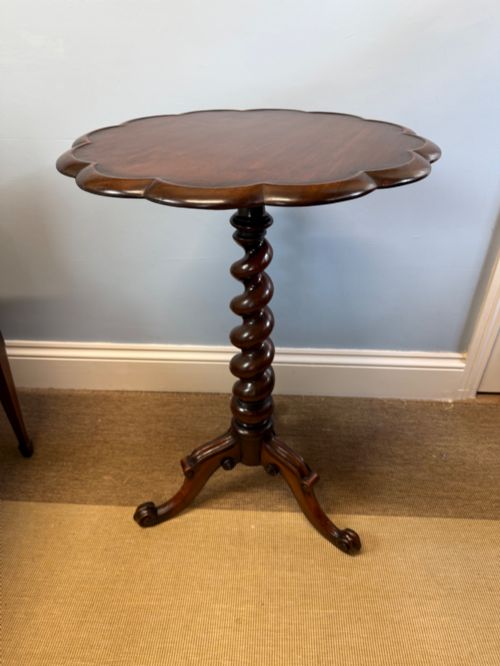
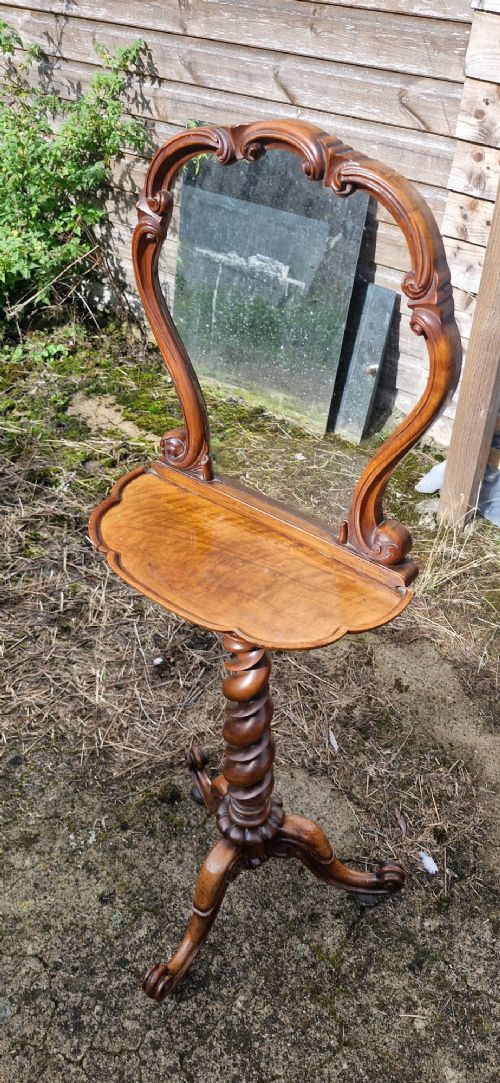
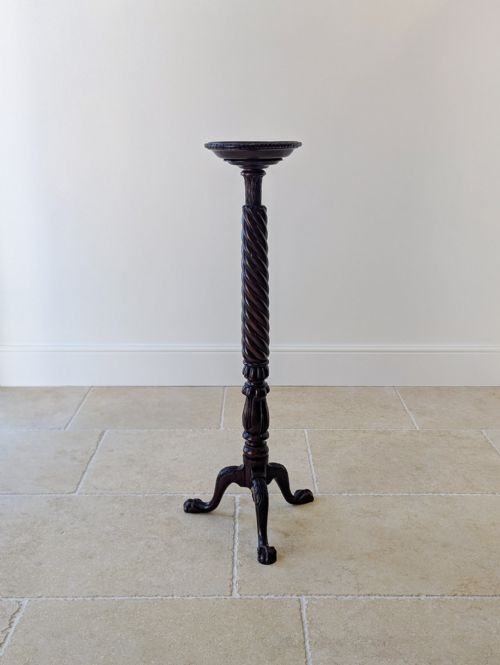
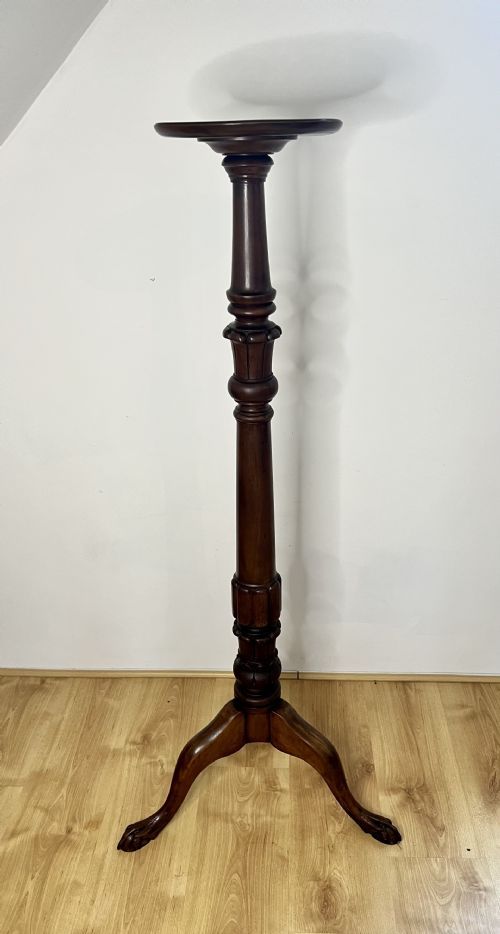
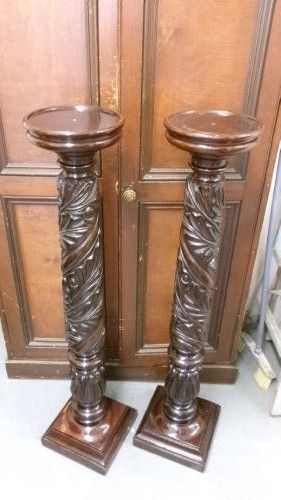
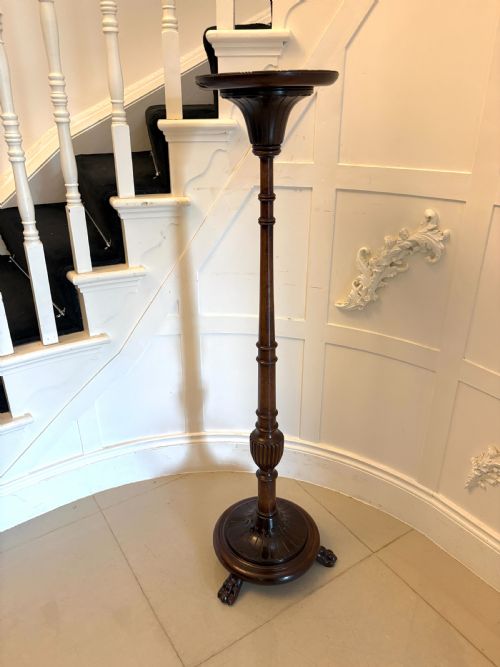
A victorian carved plant column serves as a display piece for botanical specimens, lamps, or decorative busts. The pieces gathered here draw from nineteenth-century forms including torcheres, pedestals, and occasional tables.
The selections span stylistic revivals such as Neoclassical, Renaissance Revival, and Chippendale, alongside Anglo-Indian and French Napoleon III designs. Mahogany and walnut columns dominate the offerings, frequently accompanied by marble, brass, and oak.
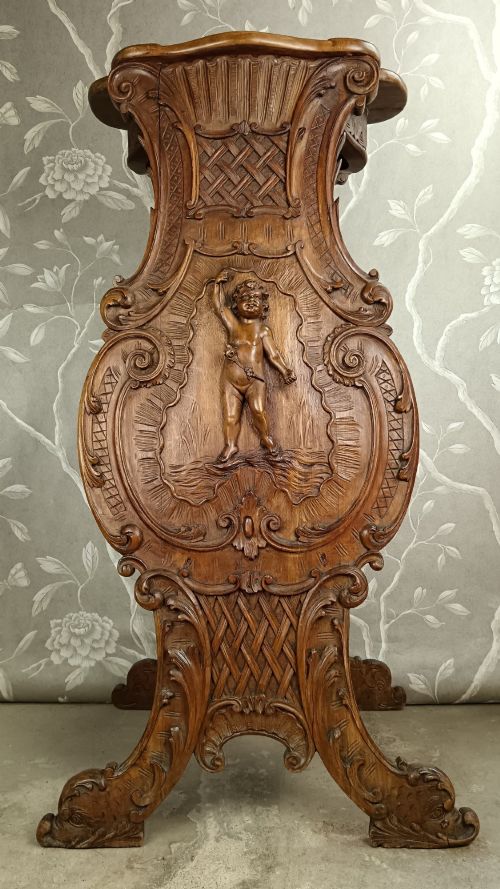
Origin points range from English workshops to Italian studios and French ateliers. Buyers encounter sturdy tripod bases, spiral pillars, and figurative supports designed to anchor a room's decorative scheme.
Materials and Construction
Cabinetmakers utilised dense timbers like mahogany, walnut, oak, ebony, and rosewood, carving them with deep relief work and fluted columns. Secondary woods such as pine appear alongside grain-painted finishes.
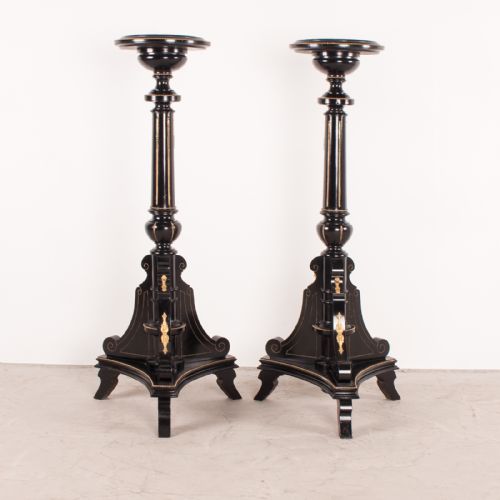
Inlay and structural accents incorporate brass hardware and contrasting stones. Insets of Verde Antico marble, white marble, and alabaster provide durable, cool surfaces for pots and figures.
Listings feature woods spanning mahogany, walnut, oak, ebony, rosewood, and stained birch, alongside marble, alabaster, and brass elements.
Design Depth and Execution
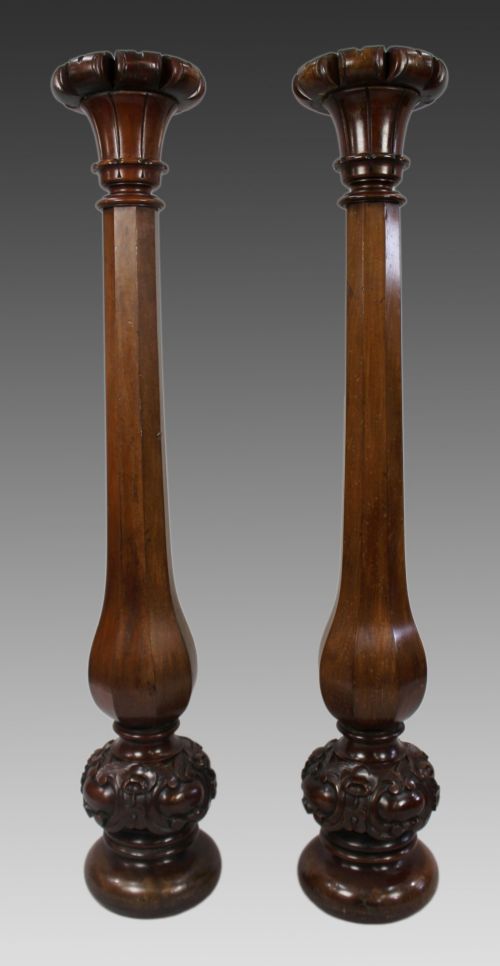
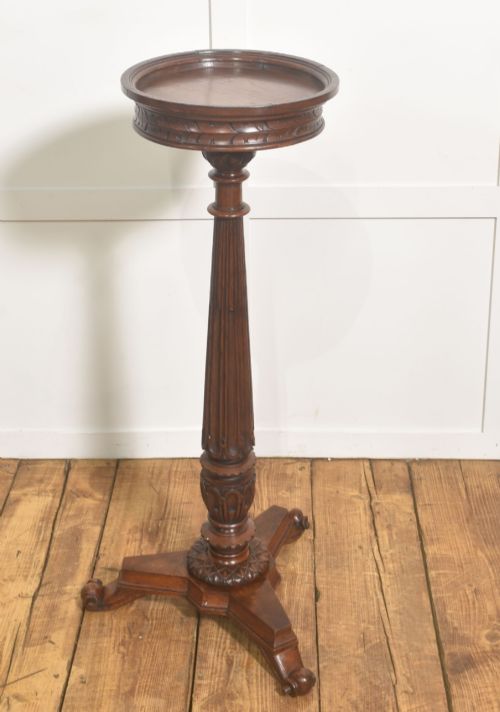
Quality rests in the crispness of the hand-carving and the choice of timber figure. Finer examples display deeply undercut foliage, clean turning on spiral pillars, and robust structural joinery.
The integration of contrasting elements, such as inlaid marble tops, cast brass fittings, or ebonised surfaces, separates standard utility stands from highly decorative exhibition pieces.
The Victorian Carved Plant Column Glossary
- Torchère
- A tall, slender stand designed to hold a light source or plant. These pieces typically feature a narrow circular top raised on a tripod or columnar base.
- Verde Antico
- A dark green serpentine marble historically quarried in Greece and favored for classical architectural details. It provides a cool, variegated surface on column tops.
- Caryatid
- A sculpted female figure serving as an architectural support in place of a column. They appear beneath tabletops and jardinières in nineteenth-century revival pieces.
- Jardinière
- An ornamental pot or stand intended for holding plants or flowers. These items often feature waterproof inserts or durable stone tops.
Victorian Carved Plant Column: Frequently Asked Questions
What is a torchere stand?
A torchere is a tall, slender column originally designed to hold a candle or oil lamp. Over time, these elevated stands were adapted to support potted plants or decorative busts.
Today, they function primarily as display furniture that adds height and vertical line to interior spaces.
How were plant columns used?
Victorians placed these stands in drawing rooms and conservatories to lift ferns and flowering plants toward natural light. They also served as pedestals for sculptures, lamps, and decorative urns.
Their placement allowed homeowners to create varied levels of interest across a room's floor plan.
What woods are most common?
Mahogany and walnut appear frequently in nineteenth-century pieces, prized for their strength and rich grain patterns. Oak, ebony, and rosewood also feature across English and imported pieces.
Cabinetmakers sometimes paired these dark timbers with painted pine or stained birch.
How do I spot revival styles?
Revival pieces borrow decorative motifs from earlier historical periods, such as Neoclassical columns, Italian Renaissance carving, or French Napoleon III mounts. Makers combined these classical forms with Victorian manufacturing techniques.
Examining the depth of the carving and the choice of marble or brass helps distinguish these stylistic revivals.