



Carved Timber Plant Column
A carved timber plant column elevates your greenery above the floor, bringing structure and botanical height to any room.
Carved Timber Plant Column
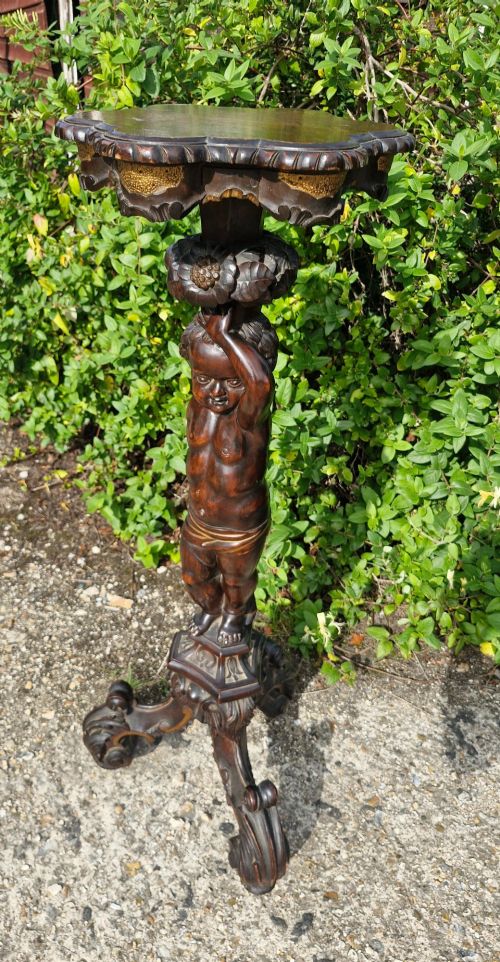
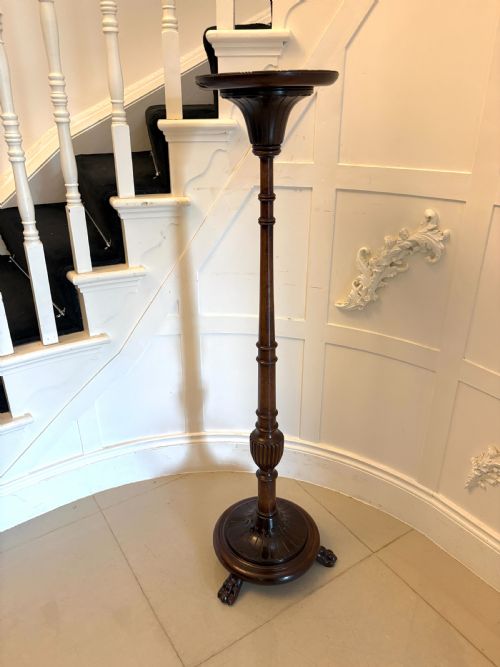
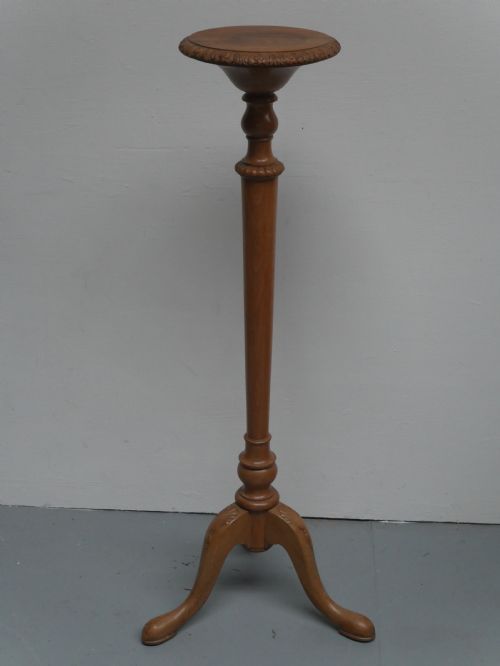
A carved timber plant column functions primarily as a pedestal, torchiere, or jardiniere stand to display flora and sculptural objects within domestic interiors. These supports elevate greenery to eye level, introducing vertical punctuation to a room.
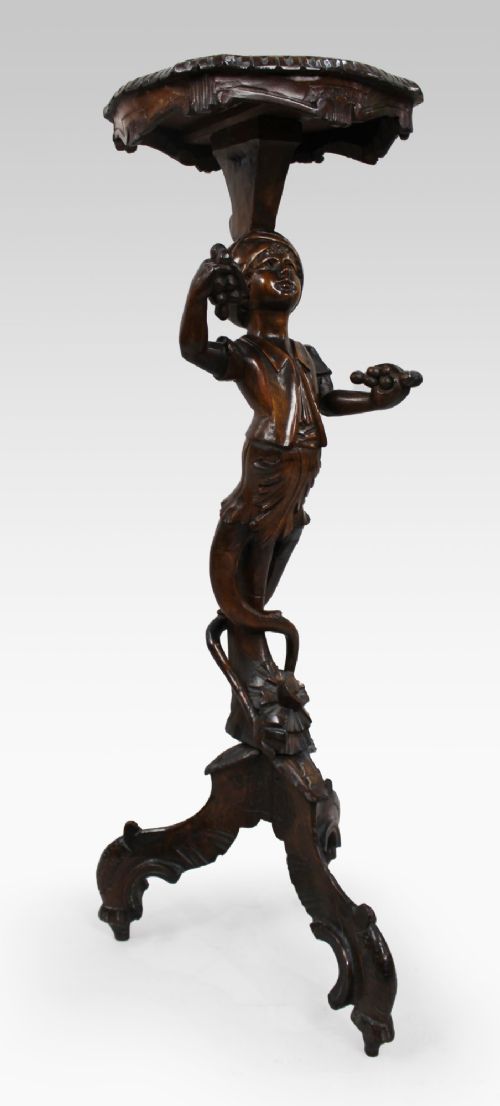
The selections available here range from austere classical fluted forms to elaborate figural supports featuring caryatids and blackamoor figures. You will encounter straightforward timber plant stands alongside paired decorative columns intended for symmetrical display.
Originating across various European and global workshops, these nineteenth-century pieces draw upon distinct regional revivals including the Venetian Baroque, Gustavian, and Renaissance styles. Each object demonstrates the period taste for classical display furniture.
Materials and construction
Carpenters utilised dense hardwoods such as mahogany, walnut, oak, and beech to fabricate these load-bearing columns. Certain examples receive surface treatments including paint or stain to alter the natural grain appearance.
Hand-carved detailing defines the decorative program, ranging from delicate fluting to fully rendered figures supporting the upper platform. Joinery methods of the period ensure stability for heavy botanical arrangements.
Markers of quality
Depth and crispness of the hand carving separate standard commercial stands from exceptional sculptural commissions. Figures rendered with anatomical precision and deep undercut foliage indicate superior workshop output.
The integrity of the timber selection and stability of the central column dictate structural longevity. Heavier hardwoods and balanced proportions ensure the stand safely supports weighty ceramic pots.
The Carved Timber Plant Column Glossary
- Caryatid
- A sculpted female figure serving as an architectural support in place of a traditional column. This classical motif appears frequently on nineteenth-century pedestals.
- Torchiere
- A tall stand originally designed to carry a light source but commonly utilised today for plants or urns. These fixtures provide significant elevation in high-ceilinged rooms.
- Jardiniere stand
- A decorative piece of furniture specifically constructed to hold indoor plant troughs or pots. They often incorporate waterproof liners or recessed upper platforms.
- Fluting
- Shallow, concave grooves running vertically along the shaft of a column. This classical decorative technique adds visual rhythm to timber supports.
- Plinth
- The flat base or lower block upon which a column or pedestal rests. It provides structural stability and grounds the vertical composition.
Carved Timber Plant Column: Frequently Asked Questions
What is a carved timber plant column used for?
These pieces serve as elevated stages for potted plants, ferns, or decorative urns, allowing greenery to catch natural light and occupy vertical space.
Historically, they also functioned as torchieres or display stands for sculptures within grand country house interiors.
How do I style a pedestal in my home?
Place a single column in an empty corner to break up monotonous wall space, or use a matched pair to frame a doorway or fireplace.
Ensure the weight of your plant pot matches the structural capacity and footprint of the top platform.
How can I tell the period of a column?
Examine the timber species, tool marks, and stylistic revival cues such as Victorian heavy carving or lighter Gustavian painted surfaces.
Nineteenth-century examples often display hand-turned shafts and period-specific joinery techniques beneath the base.