



Victorian Carved Pedestal Sideboard
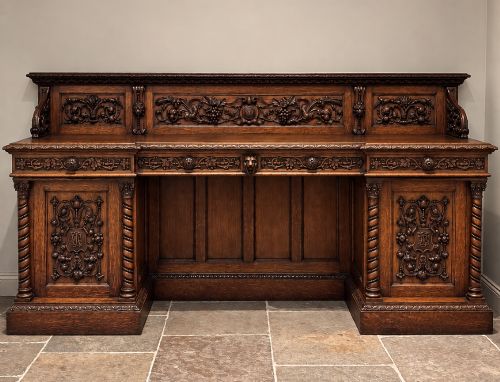
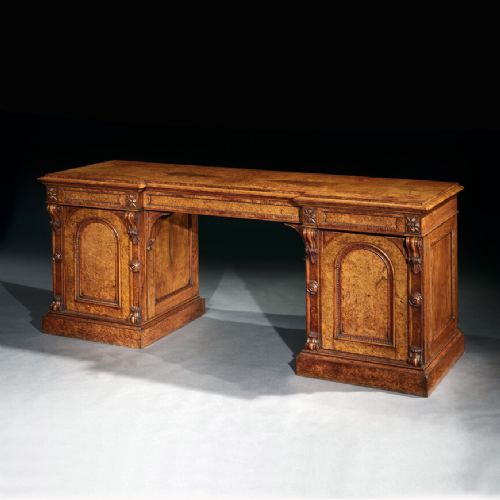
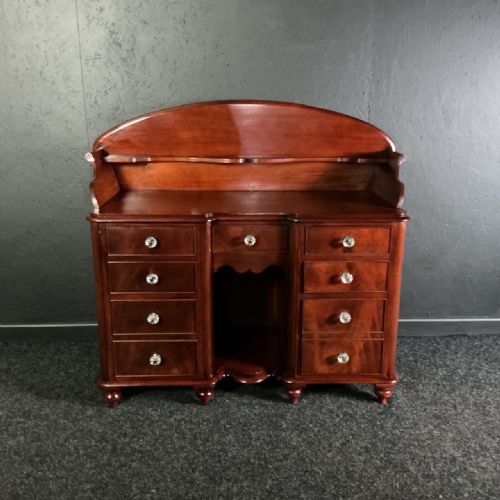
A victorian carved pedestal sideboard brings monumental presence to a room, offering substantial storage beneath heavy timber mouldings and carved details.
Victorian Carved Pedestal Sideboard
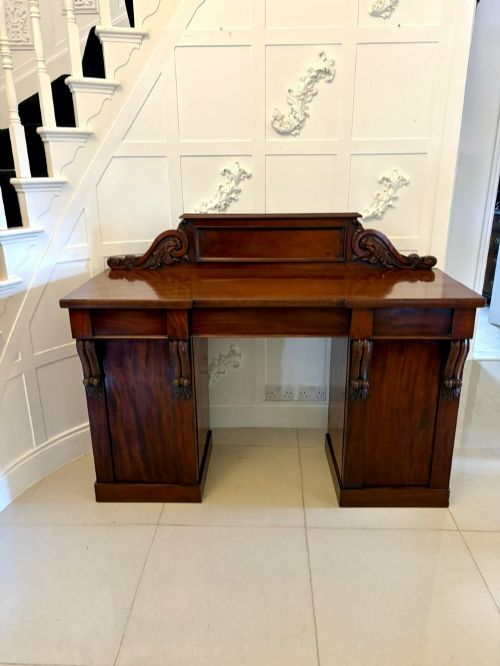
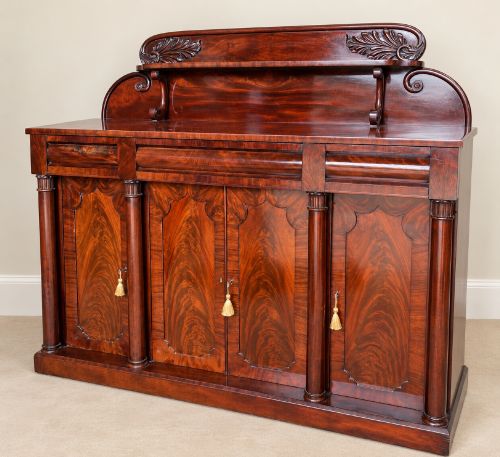
A victorian carved pedestal sideboard is a heavy dining room storage piece featuring cupboards or pedestals flanking a central section, often surmounted by a carved mirror back. The pieces found here span the nineteenth century, including examples from the eighteen-fifties, sixties, seventies, and eighties, alongside influences from earlier periods such as William IV and Georgian designs.
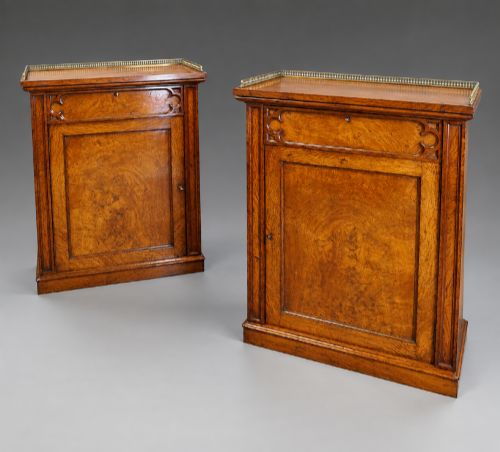
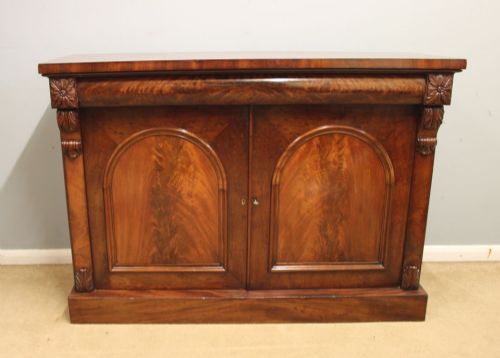
Buyers will most frequently meet mahogany and oak versions on this page, ranging from standard three-door formats to grand breakfront and double pedestal configurations. Alongside conventional sideboards, related forms such as chiffoniers, pedestal cabinets, and mirror-topped servers appear within the selection.
The decorative vocabulary draws heavily on Victorian taste, encompassing plain timber surfaces, heavy carved motifs, Gothic revival elements, and Anglo-Indian production. Proportions vary from medium formats to monumental country house pieces designed for large dining spaces.
Distinctions in standard
Quality rests upon the selection of timber and the depth of carving, with figured mahogany and highly figured flame veneers marking out the finer examples. Exceptional pieces display crisp, deep relief work on the pedestals and mirror frames rather than shallow or mechanical milling.
Structural integrity and the retention of original components, including brass fittings, mirror plates, and pedestals, separate standard utility pieces from monumental, architecturally ambitious dining room furnishings.
Several pedestals double as discreet cellarets, built specifically to keep nineteenth-century wine bottles cool and secure.
The Victorian Carved Pedestal Sideboard Glossary
- Pedestal
- A structural cupboard base supporting the upper sideboard deck, often containing cellarete drawers or shelving.
- Chiffonier
- A smaller sideboard variant, typically enclosed with doors and sometimes fitted with a raised shelf or mirror back.
- Breakfront
- A cabinet front where the central section projects forward from the flanking pedestals or cupboards.
- Flame Mahogany
- Timber cut to reveal a flamy, undulating grain pattern, utilised on high-grade Victorian drawer fronts and doors.
- Padouk
- A dense tropical hardwood seen in Anglo-Indian pieces, noted for its deep reddish-brown tone and fine finish.
- Pollard Oak
- Timber taken from pollarded trees, producing a dense, knotty burr pattern prized for decorative cabinet work.
Victorian Carved Pedestal Sideboard: Frequently Asked Questions
Where did these sideboards sit?
These large dining room pieces stood against the main wall of formal dining spaces, positioned to serve food and store tableware.
They anchored the room visually, providing a heavy architectural counterpoint to large dining tables and chairs.
How do I care for the wood?
Maintain timber surfaces by applying appropriate wax polishes sparingly and avoiding direct, prolonged exposure to sunlight.
Keep the environment stable to prevent movement in large mahogany or oak panels and solid wood pedestals.
Are the mirror backs detachable?
Many mirror backs were constructed as separate assemblies fixed to the sideboard base with sturdy wooden bolts and screws.
Transporting these pieces often requires unfastening the upper mirror frame from the heavy pedestal base.
What is an Anglo-Indian sideboard?
Anglo-Indian pieces reflect nineteenth-century British colonial trade and craftsmanship, frequently utilising exotic woods such as padouk.
They combine traditional British sideboard forms with intricate, distinctive regional carving techniques.