

Victorian Carved Oval Mirror
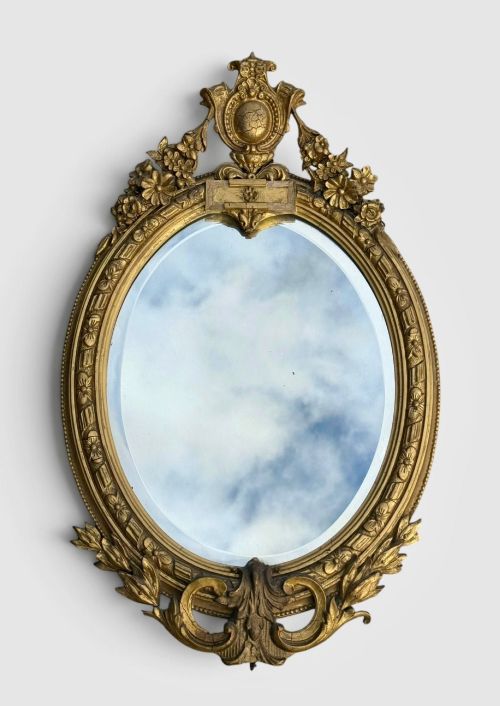
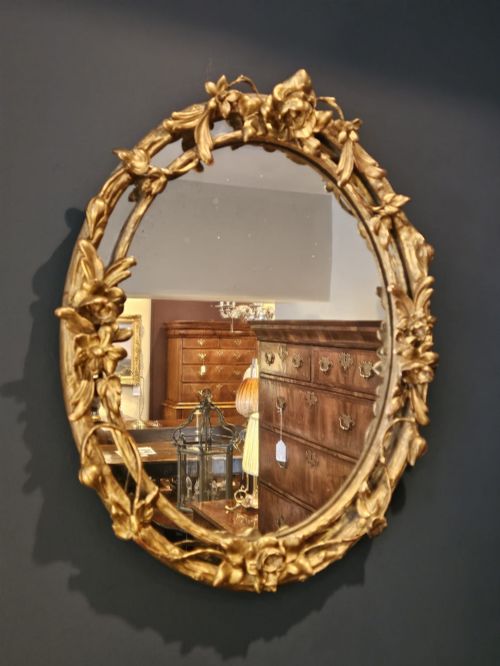
A victorian carved oval mirror brings depth and warmth to a room, framing light within ornate wooden or gilded borders.
Victorian Carved Oval Mirror
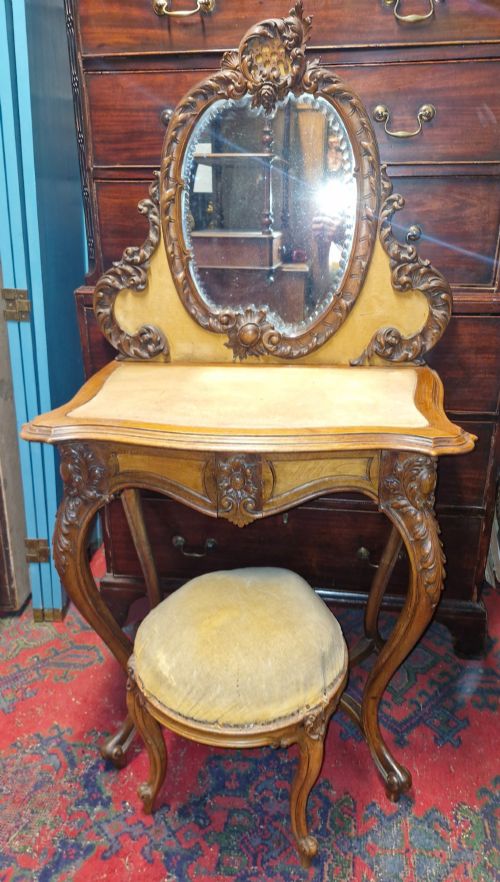
A victorian carved oval mirror typically manifests as a wall hanging for a hallway or overmantel, though dressing table variants also appear.
Most examples date from the nineteenth century, spanning decades from the eighteen sixties through to nineteen hundred.
Makers fashioned these pieces in English, French, and Swiss workshops, adopting styles from Rococo Revival to Black Forest.
Materials and Technique
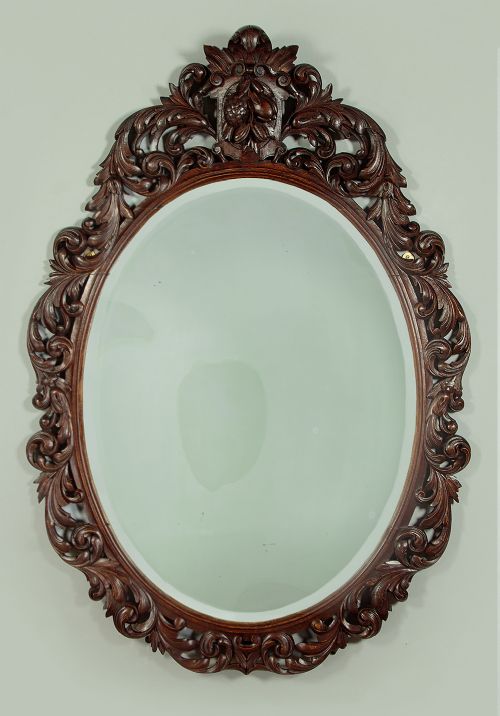
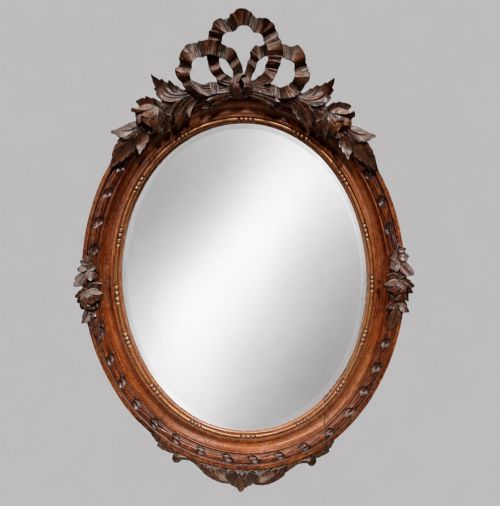
Artisans carved frames from timber substrates including oak, walnut, lime wood, and mahogany, applying gesso to build up decorative relief details.
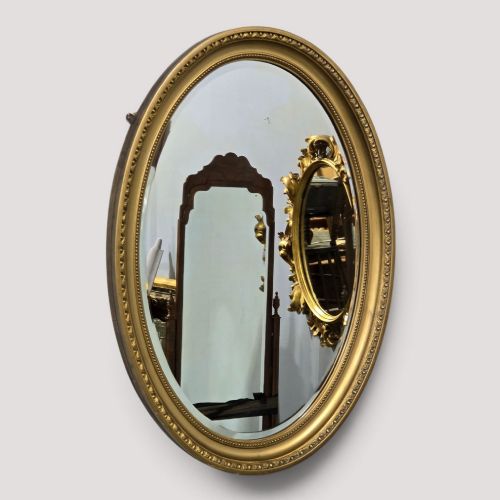
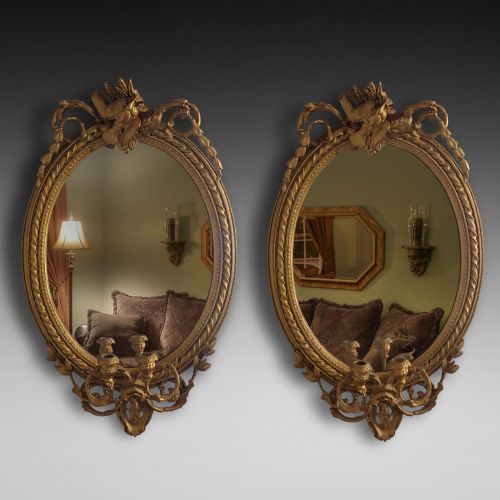
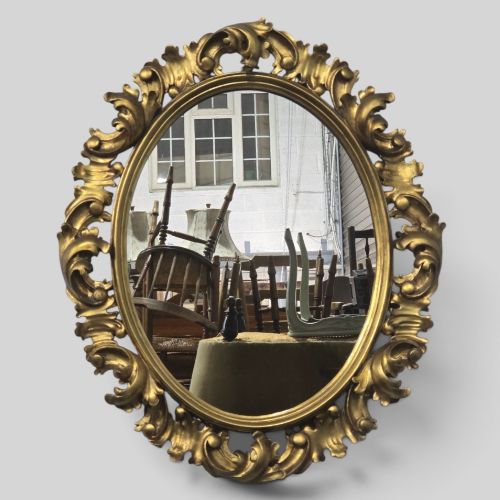
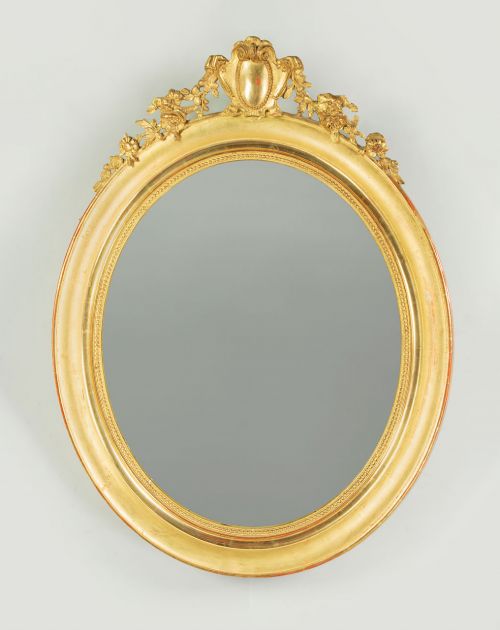
Gilding involved laying gold leaf or gilt paint over the prepared surface to achieve a reflective metallic finish.
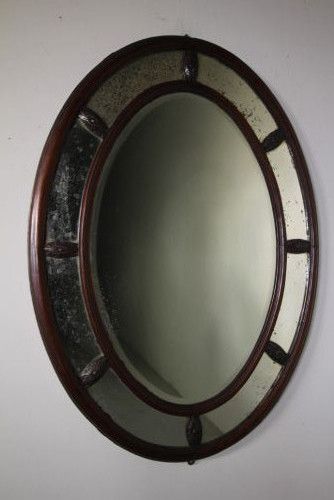
Original mirror glass panels were set within the wooden rabbet, sometimes featuring bevelled edges or cushion profiles.
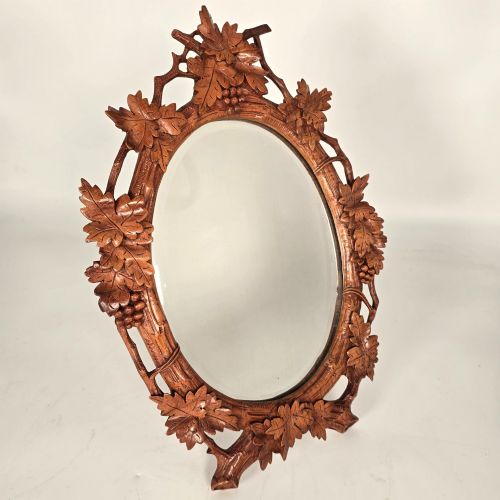
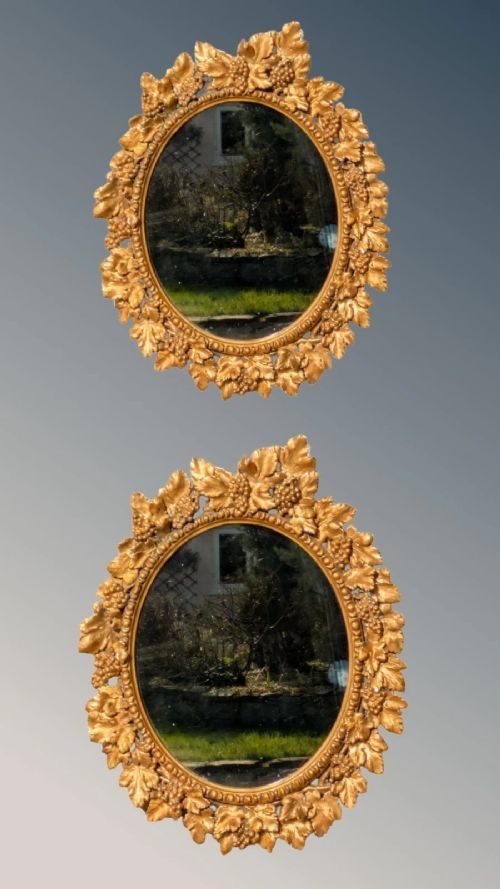
Several mirrors include carved wooden vine leaves wrapping around the frame, bringing woodland foliage indoors.
Craftsmanship and Proportion
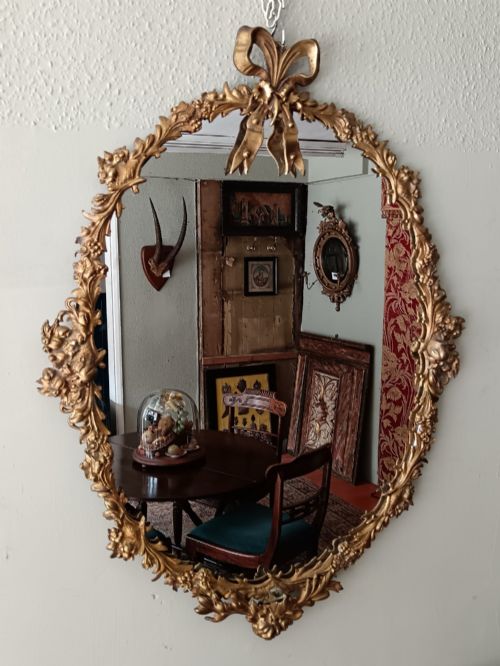
Depth and crispness of the carving distinguish superior frames, where botanical motifs like vine leaves or ribbon twists show distinct hand tool work rather than shallow moulding.
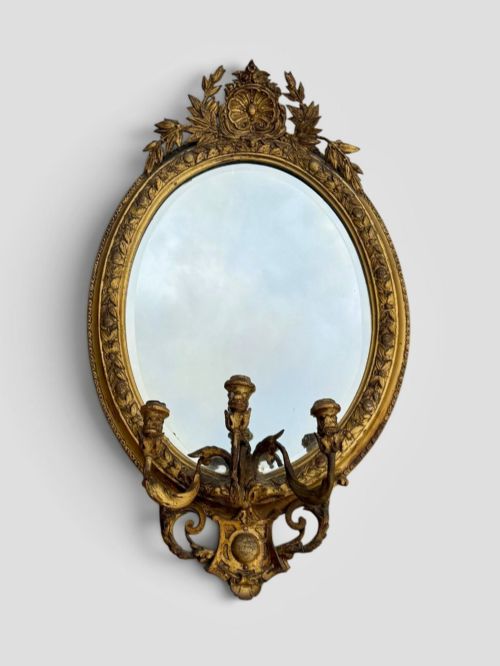
The integrity of the original giltwood and gesso surface dictates the visual weight, with intact gold leaf retaining a warmer tone than later repainted substitutes.
Substantial country house and pier mirrors command attention through balanced proportions and heavy timber construction that holds its structural rigidity over time.
The Victorian Carved Oval Mirror Glossary
- Giltwood
- Wood that has been coated with gold leaf or a metallic finish. This material characterises many nineteenth century wall pieces.
- Gesso
- A plaster mixture applied to wood frames as a base for carving or gilding. It allows for intricate moulded ornamentation.
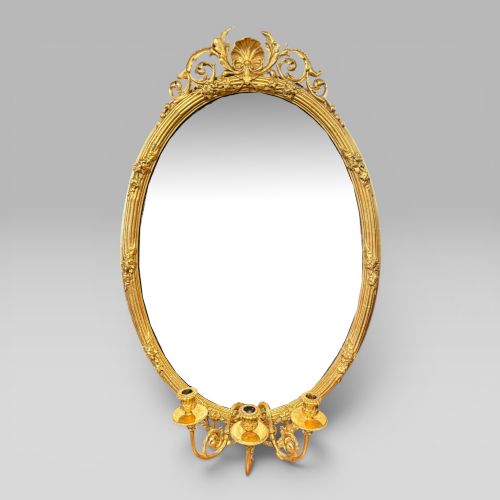
- Girandole
- A decorative wall mirror fitted with candle sconces attached to the frame. These branch fixtures reflect additional candlelight into a room.
- Cushion mirror
- A frame profile that curves outward like a pillow towards the outer edge. This style adds visual depth to the wall.
- Overmantel
- A large mirror designed to hang directly above a fireplace mantelpiece. These pieces often anchor the decorative scheme of a principal reception room.
Victorian Carved Oval Mirror: Frequently Asked Questions
Where should I hang an oval wall mirror?
These mirrors suit narrow spaces like hallways or stairwells where an oval shape softens vertical lines. They also function well above mantelpieces or sideboards.
Ensure the wall fixings match the weight of the timber and gesso frame to support the piece securely.
How do I date a nineteenth century mirror?
Examine the timber behind the frame, the composition of the gesso, and the backboards if present. Fasteners and fixings often provide clues to the manufacturing decade.
Styles shifted from mid century Rococo Revival exuberance toward simpler aesthetic or Arts and Crafts linear designs by nineteen hundred.
Are the mirror plates original?
Some pieces retain their original mercury or early silvered glass, which often exhibits minor foxing or speckling. Other pieces have received replacement glass during their history.
Original glass adds character, while replacement glass offers a clearer reflection for daily use.
What is Black Forest carving?
Black Forest work refers to deeply carved wooden pieces, often originating from Switzerland, featuring naturalistic animal or botanical subjects. Lime wood was frequently utilised for these intricate three dimensional designs.
These mirrors display detailed foliage or carved birds rather than traditional gilt moulding.