
Victorian Carved Oak Armchair
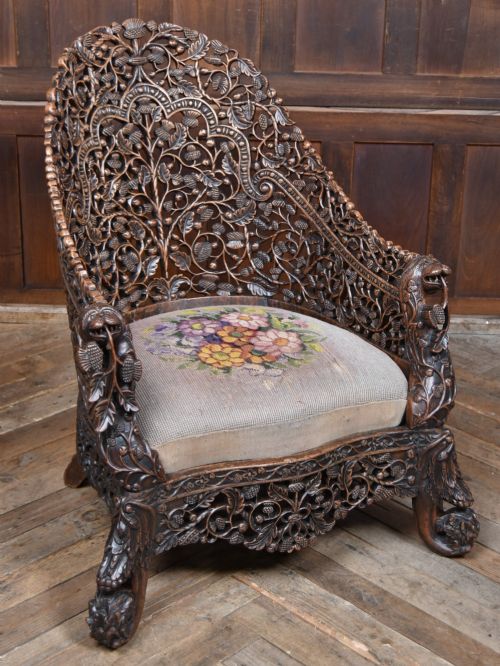
A victorian carved oak armchair brings heavy timber and dense ornamentation together for practical domestic seating.
Victorian Carved Oak Armchair
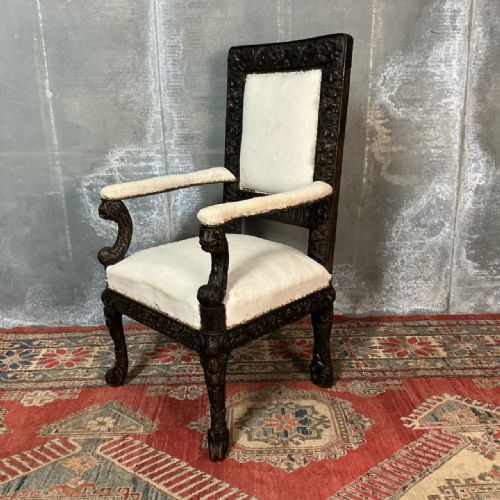
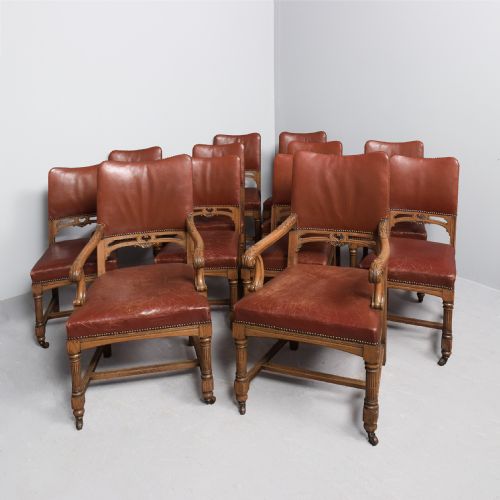
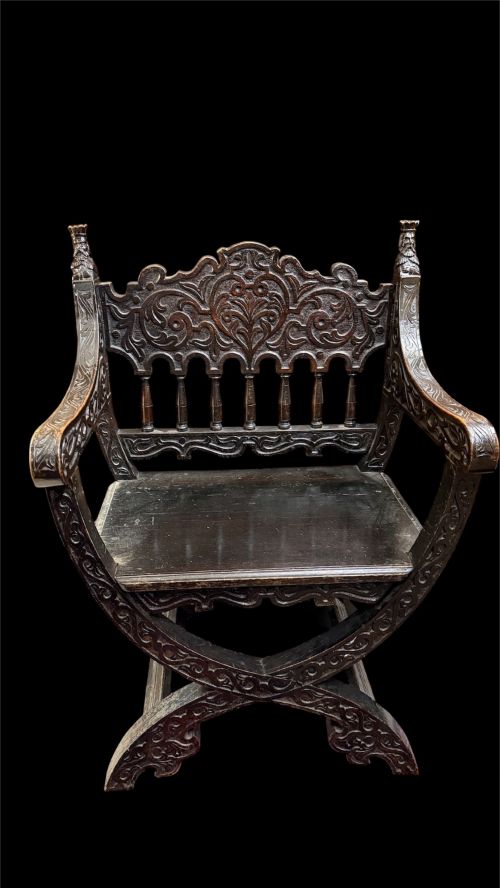
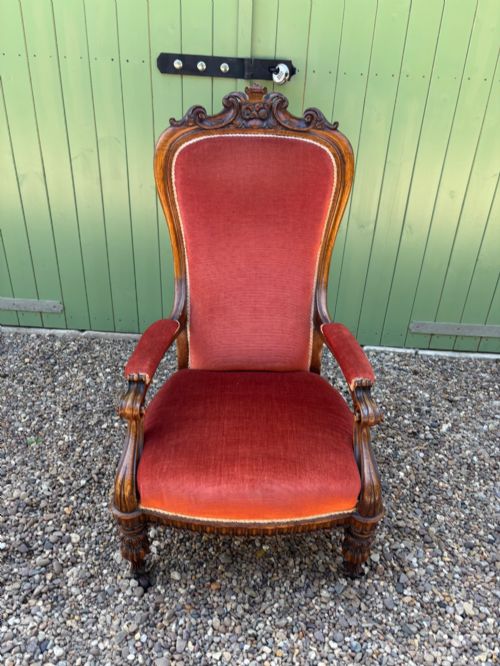
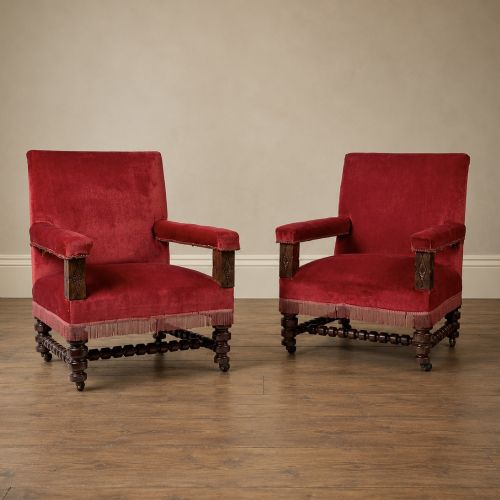
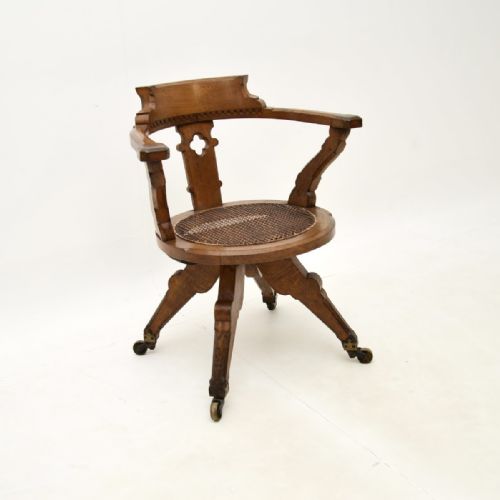
A victorian carved oak armchair appears in domestic and institutional settings across the nineteenth century, taking the form of desk chairs, library seats, dining chairs, and imposing throne armchairs. The pieces on this page span the Victorian era alongside related revivals, reflecting a period of heavy woodworking and deep relief carving.
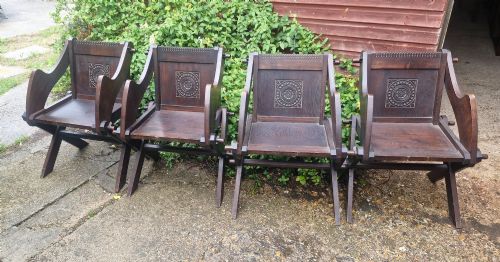
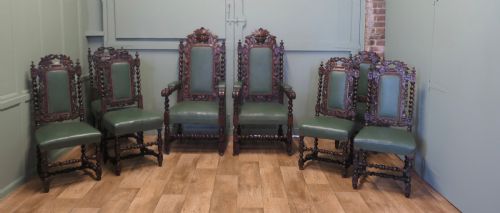
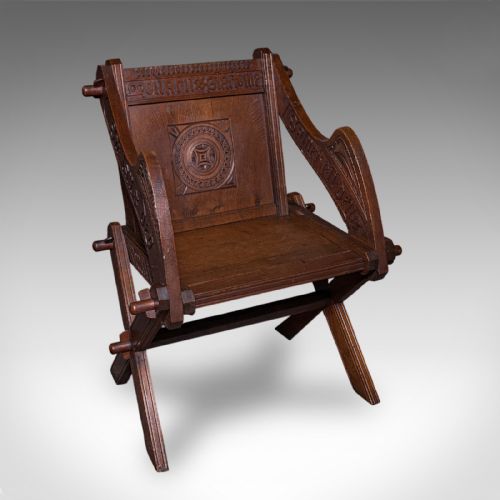
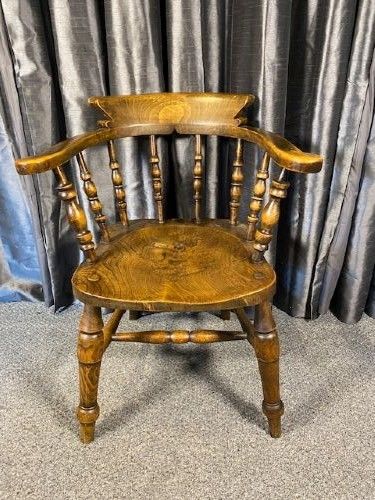
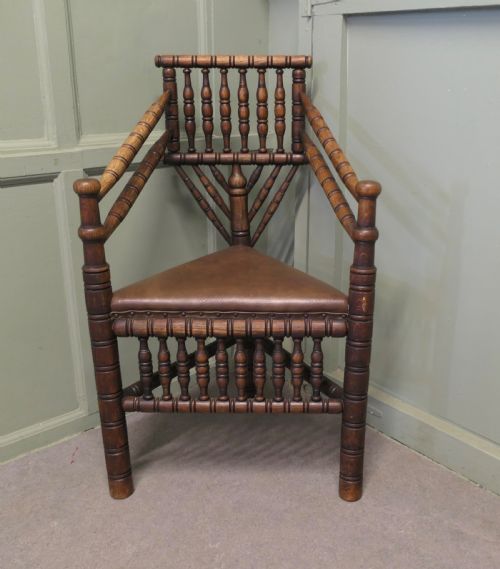
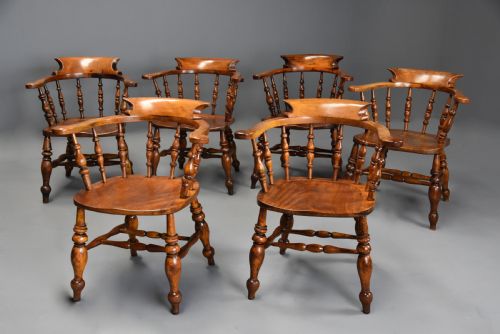
Buyers encounter single chairs, matched pairs, and larger dining sets fashioned from solid timber. Forms range from low smokers bows and swivel desk chairs to high-backed chapel thrones and Glastonbury chairs with distinctive intersecting rails.
Origins stretch across English workshops, Scottish ecclesiastical settings, and broader nineteenth-century production centres. Makers drew inspiration from Gothic, Jacobean, and Renaissance styles to create substantial seating designed for heavy daily use.
Materials and Technique
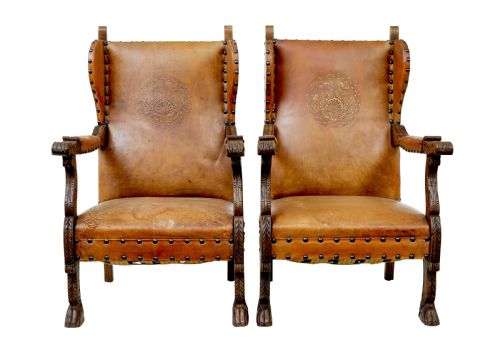
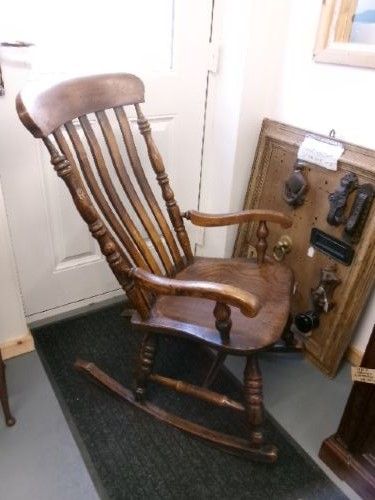
Construction relies heavily on solid oak, selected for durability and finished with brass hardware, studded leather upholstery, or woven cane inserts. Secondary timbers such as elm, ash, and beech appear in specific regional variations like Windsor armchairs.
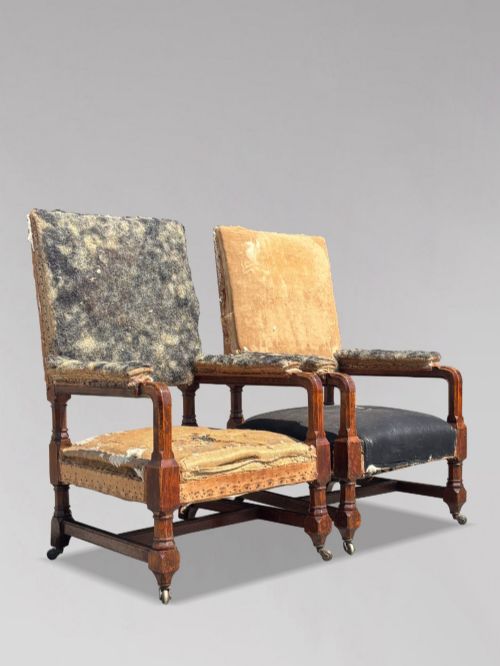
Carvers utilised chisels and gouges to apply deep relief decoration directly to the timber frame, incorporating linenfold, strapwork, and naturalistic motifs. Upholstered variants combined traditional webbing and horsehair stuffing beneath outer layers of leather, velvet, or fabric.
Listings feature oak alongside secondary materials including brass, leather, velvet, cane, elm, and ash across the nineteenth century.
Judging the Workmanship
Quality rests on the crispness and depth of the timber carving, where sharp, undercut details distinguish finer pieces from mechanical or shallow execution. The thickness of the oak stock and the robustness of the joinery determine the overall structural integrity of the frame.
Proportion and scale separate standard seating from exceptional library thrones and oversized armchairs. The integration of high-grade secondary materials, such as embossed leather or substantial brass castors, elevates the construction.
Gillows·Bruce James Talbert·S&H Jewell
The Victorian Carved Oak Armchair Glossary
- Gothic Revival
- A nineteenth-century design movement inspired by medieval architecture, featuring pointed arches, tracery, and trefoils carved into the oak framework.
- Wainscot chair
- A heavy wooden armchair with a panelled back, traditionally rooted in earlier centuries but frequently revived during the Victorian era.
- Glastonbury chair
- A nineteenth-century revival chair design featuring X-shaped supporting legs and a sloping wooden back, often bearing carved inscriptions.
- Smokers bow
- A sturdy low-backed Windsor variant with a curved continuous arm rail, commonly found in commercial and domestic settings.
- Bergere
- An upholstered armchair with an enclosed wooden frame, frequently incorporating woven cane panels along the back and sides.
Victorian Carved Oak Armchair: Frequently Asked Questions
Where were these armchairs used originally?
These chairs served in libraries, studies, dining rooms, and offices throughout the nineteenth century. Substantial throne chairs often furnished halls and institutional spaces.
Smaller desk and swivel variants accommodated working environments, while chapel and hall chairs filled ecclesiastical and formal domestic interiors.
How do I identify a Gothic Revival chair?
Gothic Revival examples display distinct architectural motifs carved directly into the oak frame, including pointed arches, tracery panels, and quatrefoils. The overall silhouette often mimics medieval church woodwork and stone ornamentation.
Makers combined these heavy structural elements with deep relief carving and dark surface finishes to accentuate the medieval aesthetic.
Are these chairs suitable for daily use?
Solid oak construction and heavy joinery make these armchairs exceptionally robust for modern seating. Many incorporate sturdy upholstered leather or velvet pads designed to support regular sitting.
Larger library and desk variants provide generous proportions that adapt comfortably to contemporary living spaces.