

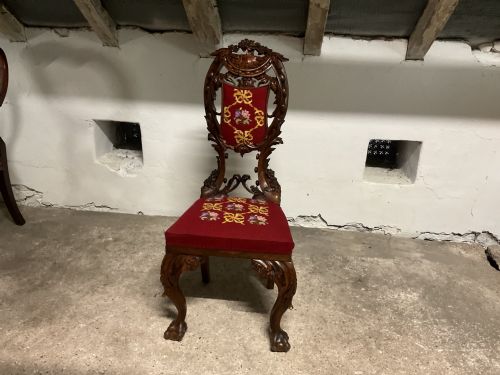
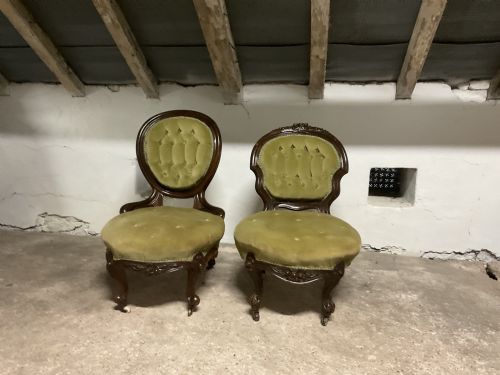
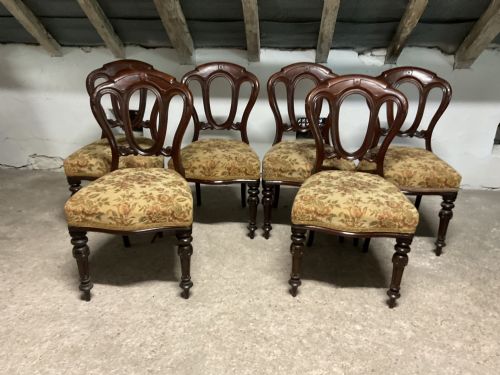
Victorian Carved Mahogany Chairs
When choosing victorian carved mahogany chairs, you are selecting sturdy seating defined by rich timber and intricate hand-carved detail.
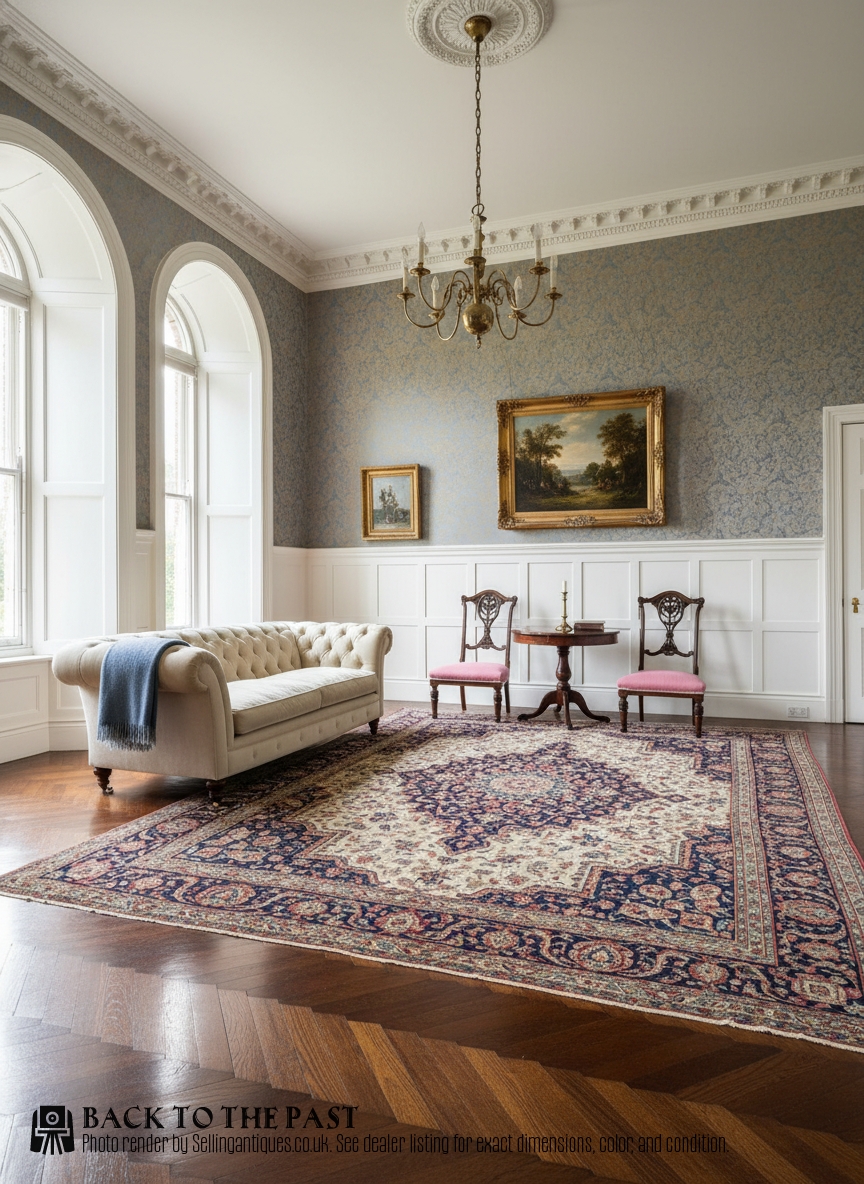
Victorian Carved Mahogany Chairs
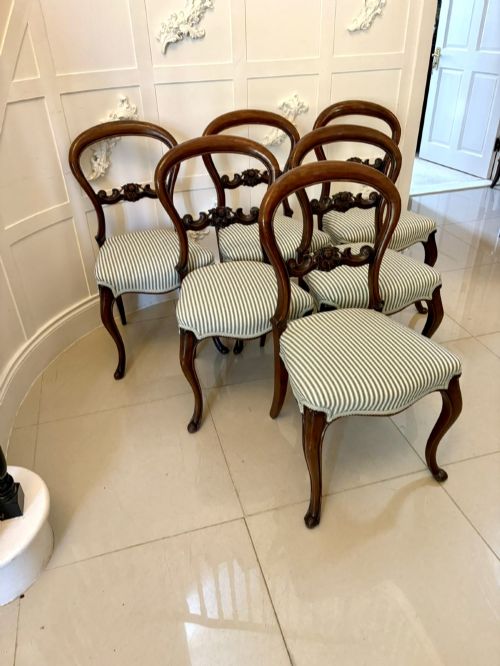
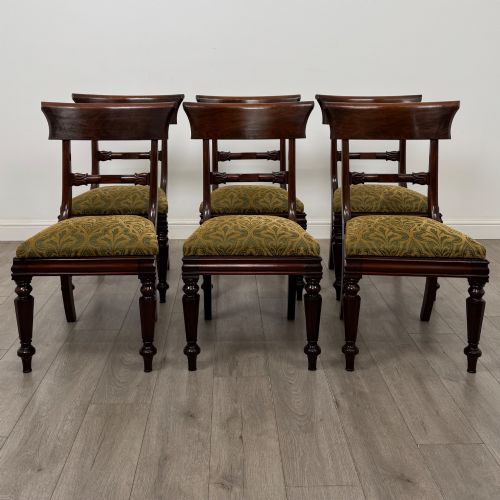
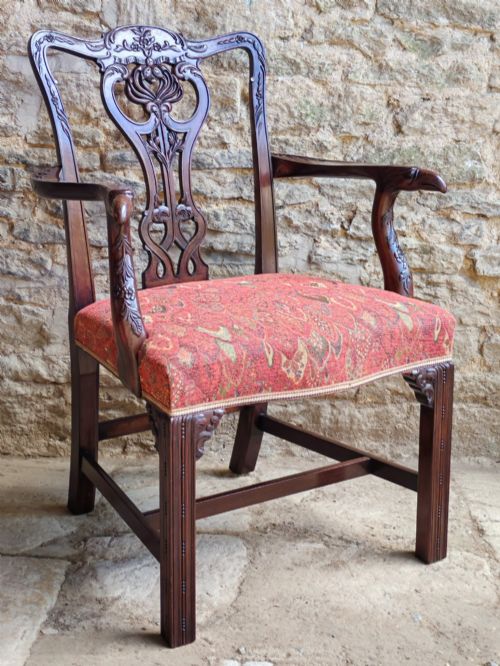
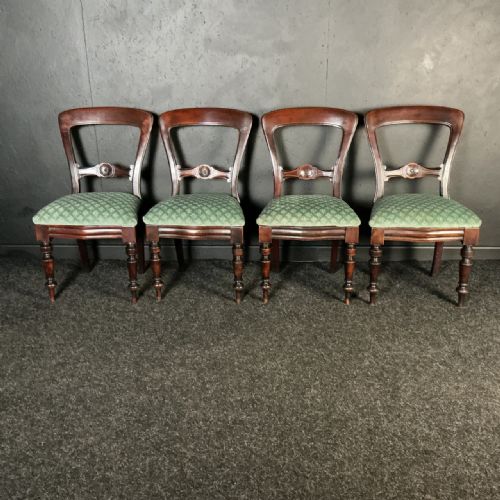
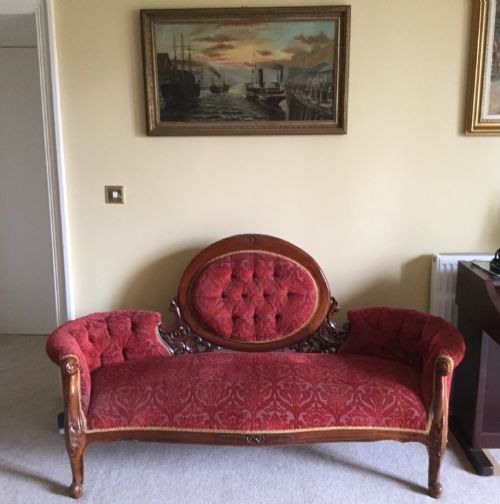
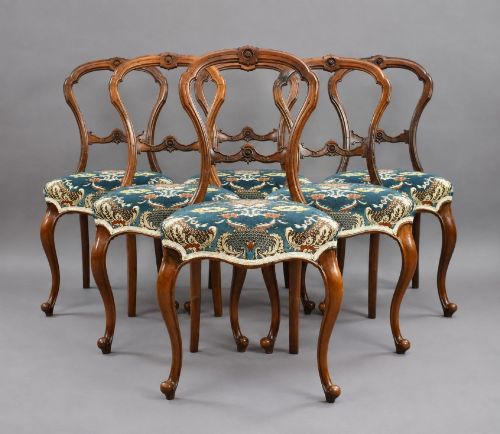
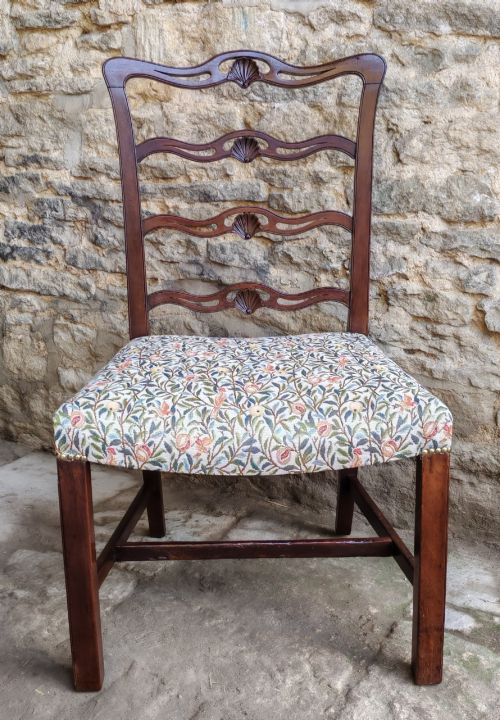
Victorian carved mahogany chairs encompass a wide variety of seating options designed during the nineteenth century, ranging from formal dining sets to intimate library armchairs and hall seats. These pieces showcase the versatility of dark timber craftsmanship, appearing in styles from simple balloon backs to elaborate revival designs.
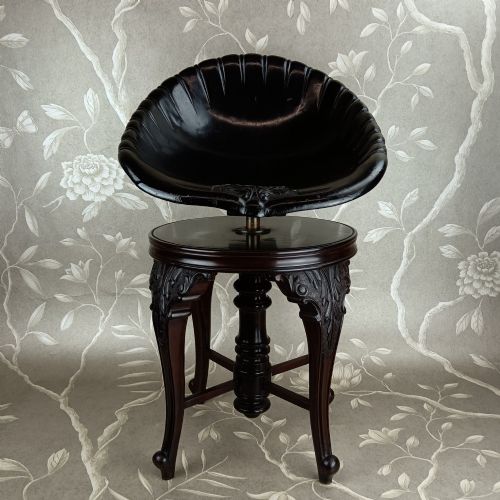
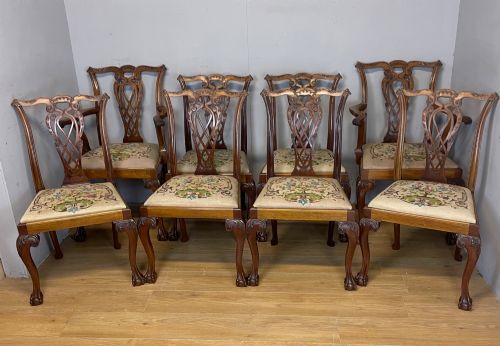
Dining chairs form the most common group found here, frequently offered in matched sets of six or eight alongside individual armchairs and carvers. Alongside these dining seats, the selection includes specialised forms such as revolving desk chairs, nursing chairs, and occasional salon seating.
The aesthetic of these pieces shifts across the decades, moving from early nineteenth-century William IV proportions through ornate mid-Victorian balloon backs to late-period revival interpretations. Regional variations, such as Scottish workshop output, also appear among the dining sets and hall chairs.
Materials and Construction
Cabinetmakers utilised solid mahogany for its density, deep natural grain, and receptiveness to complex hand-carving along the crest rails, splats, and cabriole legs. Structural integrity relied on traditional joinery techniques, often reinforced by heavy framing in larger library and desk chairs.
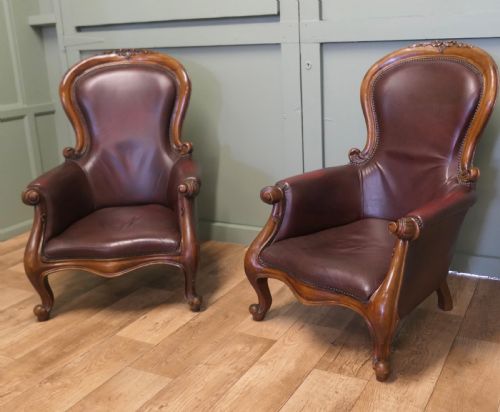
Upholstery materials varied according to the intended room, incorporating horsehair stuffing beneath leather, velvet, damask, fabric, or brocade textiles. Decorative elements like brass studs, spindle turnings, and cane seating completed the construction of these domestic and commercial seats.
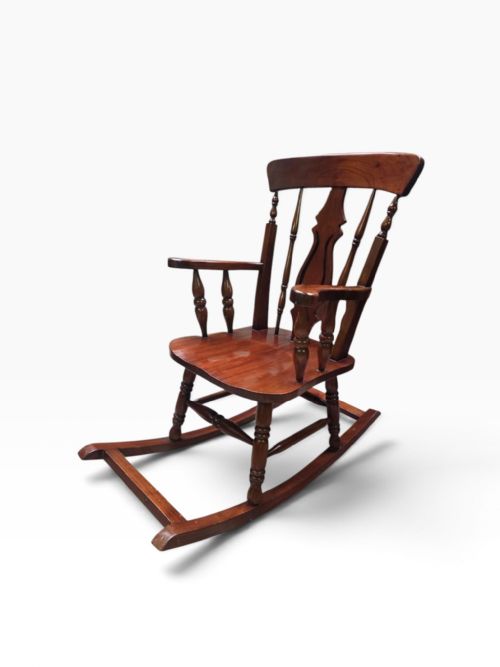
Several Victorian rocking chairs and revolving desk seats survive, proving that nineteenth-century comfort could occasionally involve a surprising amount of motion.
Evaluating Quality
The standard of a piece depends heavily on the crispness and depth of the timber carving, where master craftsmanship is evident in sharply defined scrollwork and foliage rather than shallow, machine-cut decoration. The thickness of the mahogany stock and the weight of the frame also indicate the original investment in the furniture.
Completeness and uniformity across a set dictate value, particularly when matching large groups of dining chairs or maintaining original leather and upholstery textiles. Furthermore, the retention of authentic structural timber without excessive replacement parts elevates the standing of an individual armchair or salon seat.
Howard and Sons·Jennens and Bettridge·Warings·Turner and Son Liverpool
The Victorian Carved Mahogany Chairs Glossary
- Balloon back
- A rounded chair back shaped like a traditional hot-air balloon, popular throughout the Victorian era. This curved wooden frame provides ergonomic support while offering a canvas for carved floral motifs.
- Carver
- An armchair designed to match a set of smaller dining chairs, usually placed at the head of a table. These pieces feature substantial armrests integrated into the main frame.
- Balloon back
- A rounded chair back shaped like a traditional hot-air balloon, popular throughout the Victorian era. This curved wooden frame provides ergonomic support while offering a canvas for carved floral motifs.
- Cabriole leg
- A furniture leg that curves outward and then tapers inward, inspired by the shape of an animal's leg. This form often terminates in a carved foot such as a scroll or ball and claw.
- Spoon back
- An upholstered chair back hollowed out to resemble the bowl of a spoon, fitting the contour of the human spine. This padded design frequently appears on Victorian nursing and easy chairs.
- Spindle back
- A chair back constructed with multiple thin, turned wooden rods arranged vertically. This lighter framework stems from traditional country styles adapted during the nineteenth century.
Victorian Carved Mahogany Chairs: Frequently Asked Questions
How do I date a Victorian chair?
Dating relies on observing stylistic shifts from early nineteenth-century William IV heaviness to mid-century balloon backs and late-century revival movements. Examining construction methods and timber thickness also helps narrow down the decade of production.
Makers' marks or stamps, when present, provide a direct link to specific workshops and active trading years.
Were these chairs used for dining?
Many of these pieces served as formal dining seats, manufactured in large sets of six, eight, or ten to accommodate Victorian households. Matching carvers with armrests typically accompanied the side chairs at the table ends.
Smaller variants found placement in bedrooms, libraries, and hallways rather than the main dining room.
Are replacement fabrics acceptable?
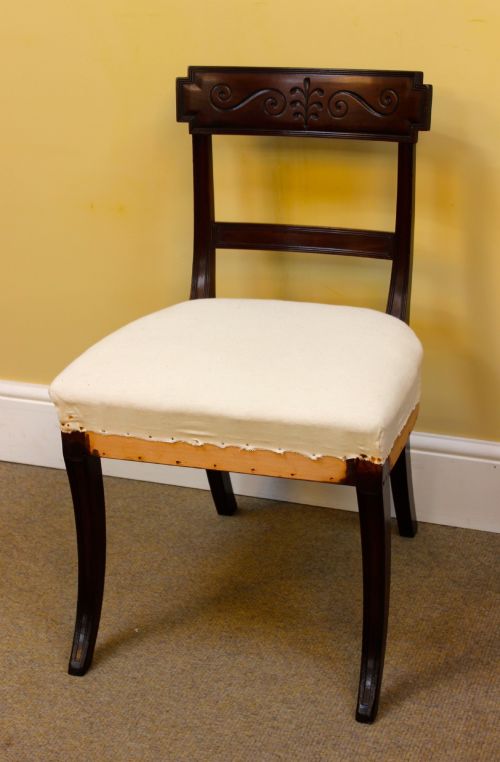
Re-upholstery is common in antique seating due to the natural degradation of nineteenth-century textiles and internal stuffing over time. Many surviving chairs have been updated with modern velvet, leather, or damask while retaining their original frames.
Preserved original coverings remain uncommon and are valued for authenticity when well maintained.
How do I care for mahogany?
Maintenance involves dusting with a soft, dry cloth and avoiding direct sunlight or intense heat sources that can dry out the timber. Applying appropriate wax polish occasionally helps preserve the natural lustre of the mahogany grain without building up heavy residue.
Checking structural joints periodically ensures the frame remains stable during daily domestic use.