


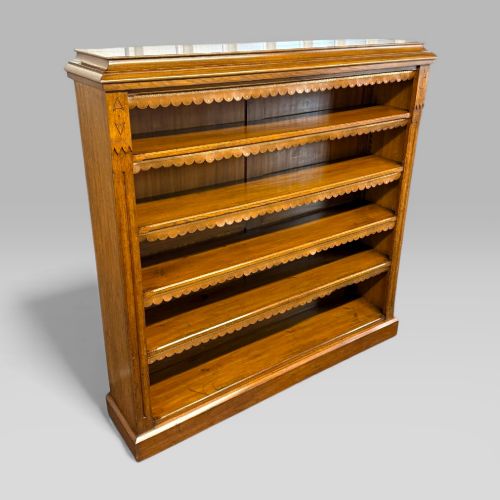
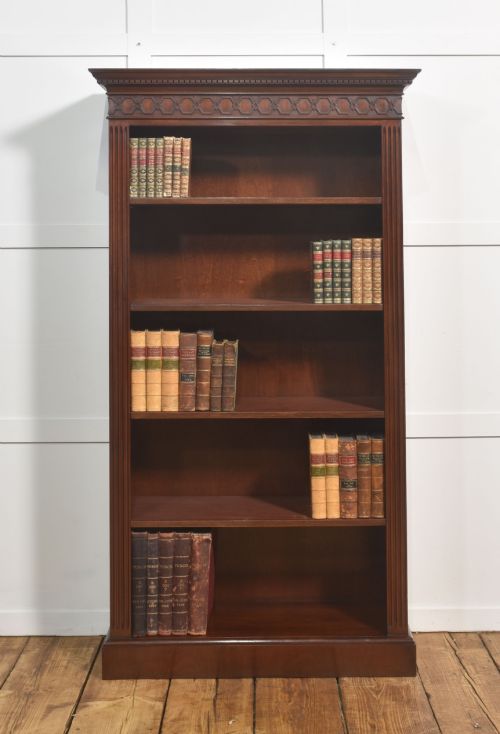
Victorian Carved Display Shelf
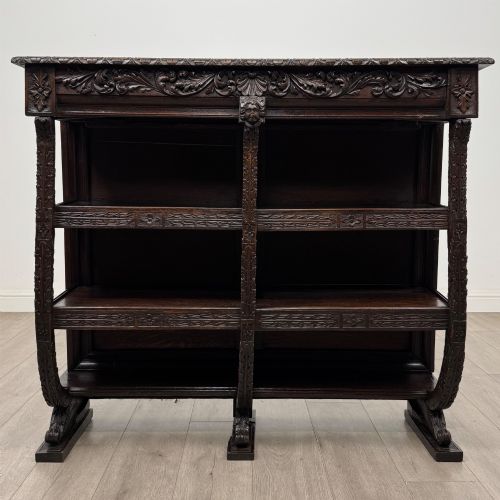
These Victorian carved display shelf pieces combine utility and ornament, offering sturdy platforms for cherished objects across walnut, mahogany, and oak.
Victorian Carved Display Shelf
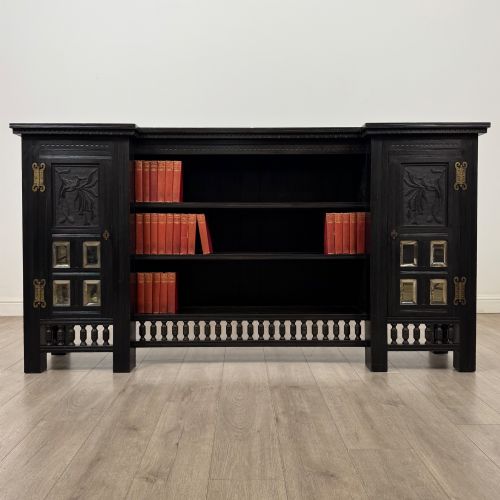
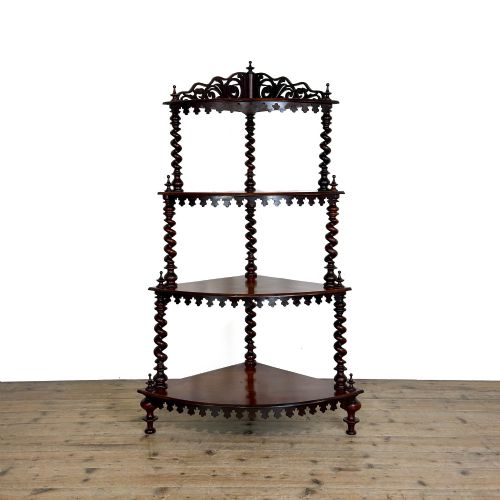
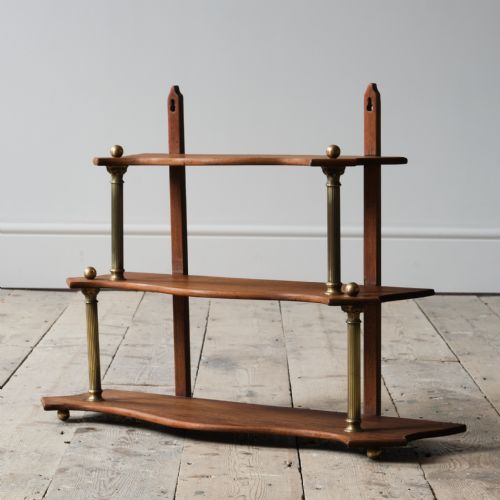
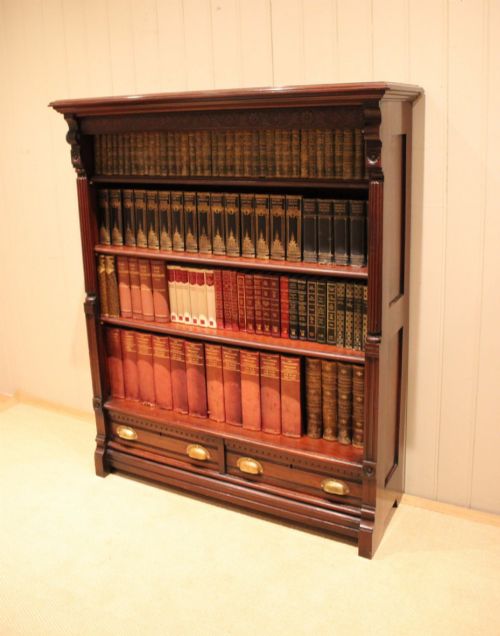
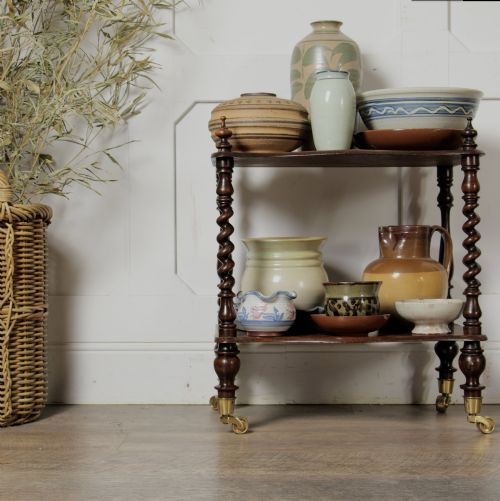
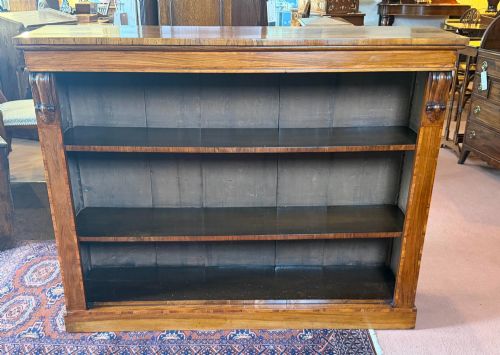
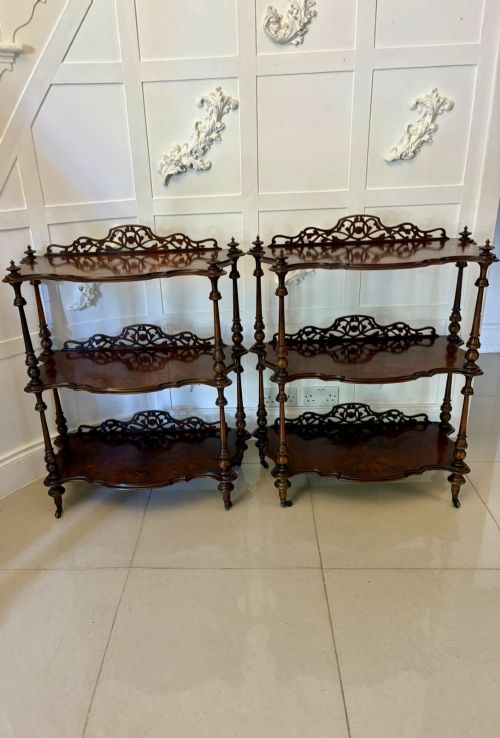
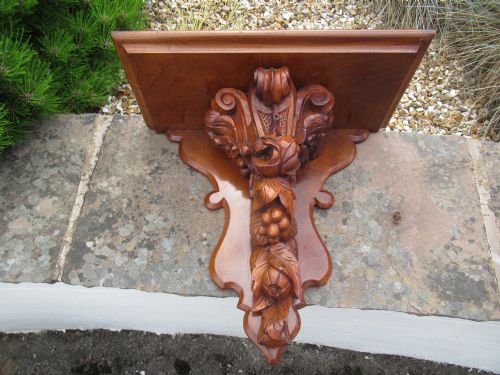
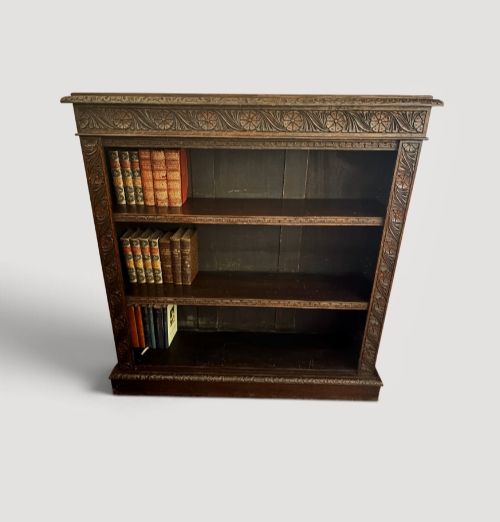
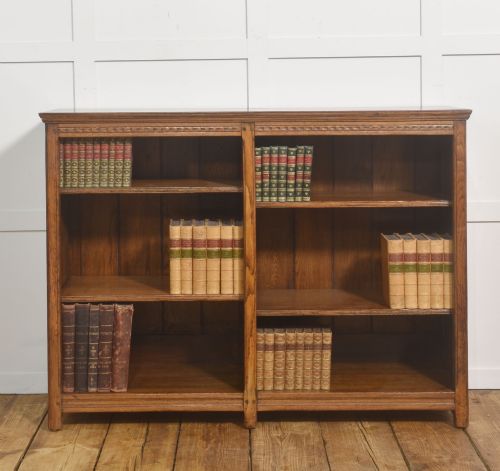
A victorian carved display shelf brings decorative storage into domestic interiors through diverse formats such as whatnots, wall hanging shelves, corner cabinets, and tiered etageres. You will frequently encounter wall brackets, open bookcases, and corner whatnots spanning the nineteenth century.
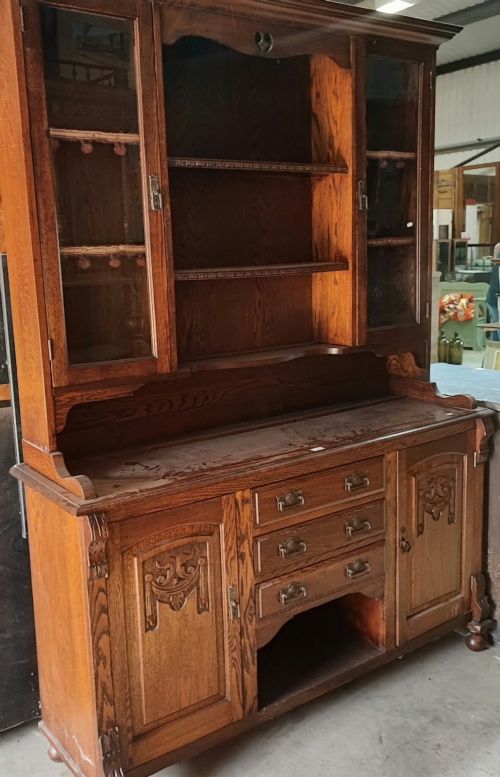
The objects originate from varied stylistic movements including Aesthetic Movement, Anglo-Indian, Japonisme, and Victorian Gothic designs. Pieces range from compact corner units to large stepped open bookcases and glazed Welsh dressers.
Materials and construction
Cabinet makers utilised dense hardwoods including mahogany, walnut, burr walnut, rosewood, oak, tiger oak, teak, padauk, and satin birch. Brass mounts and glass elements appear frequently to accent structural timber.
Construction techniques involve skilled carving, barley twist turning, and fitted joinery to support tiered shelves, adjustable bookcase interiors, and wall-mounted brackets.
The listings demonstrate a strong preference for walnut and mahogany, accompanied by oak, rosewood, teak, and padauk across diverse nineteenth-century styles.
Judging quality in carved shelving
Quality rests upon timber selection, evident in the rich graining of burr walnut, figured mahogany, and padauk rather than plain secondary woods. Crispness of hand carving and the integrity of structural joints distinguish superior workshops.
Sophistication of design elevates certain pieces, distinguishing standard utility furniture from items featuring distinctive stylistic markers of the Aesthetic Movement, Japonisme, or Anglo-Indian craftsmanship.
Gabriel Viardot·Edwards & Roberts
The Victorian Carved Display Shelf Glossary
- Whatnot
- A moveable set of open shelves for displaying small objects or books. These tiered pieces often feature turned uprights and delicate corner placement.
- Étagère
- A piece of furniture consisting of a set of open shelves for holding ornaments. French in origin, these decorative stands showcase prized collections.
- Barley twist
- A type of column or spindle carved in a spiral shape resembling a twist of barley. This decorative turning technique appears commonly on nineteenth-century supports.
- Shodona
- A Japanese-style cabinet or display stand with asymmetrical shelving. Such pieces reflect the nineteenth-century European fascination with Eastern design.
- Chiffonier
- A low sideboard or cabinet with shelves above. These versatile pieces combine enclosed lower storage with upper display surfaces.
Victorian Carved Display Shelf: Frequently Asked Questions
What is a whatnot shelf?
A whatnot is a multi-tiered open shelving unit designed specifically for displaying ornaments, ceramics, and small decorative items.
These pieces typically feature three or more levels supported by turned columns, making them ideal for corners or freestanding display.
How were wall shelves used?
Victorian households utilised wall hanging shelves and brackets to exhibit small decorative objects, plates, and books without occupying floor space.
Carved timber brackets provided sturdy support while adding architectural detail to plain interior walls.
How do I identify Victorian oak?
Victorian oak furniture displays a pronounced natural grain and medium to dark brown tone, sometimes seen in specialised tiger oak figuring.
Makers utilised this durable timber for robust open bookcases, carved display shelves, and heavy cabinet work throughout the nineteenth century.