


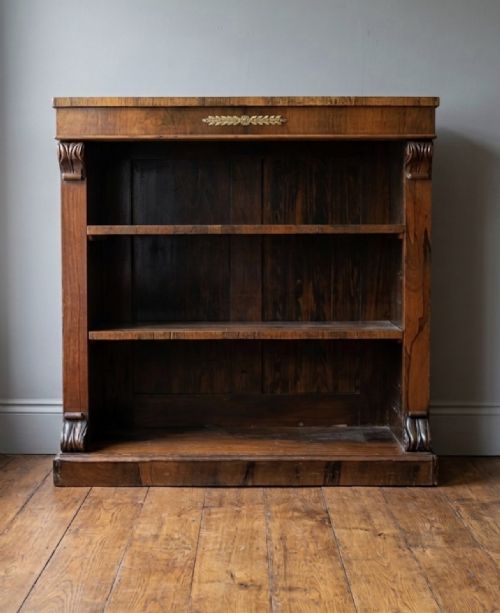


Victorian Rosewood Shelving Unit
A victorian rosewood shelving unit brings warm grain and open display space to a room, offering both utility and nineteenth-century elegance.
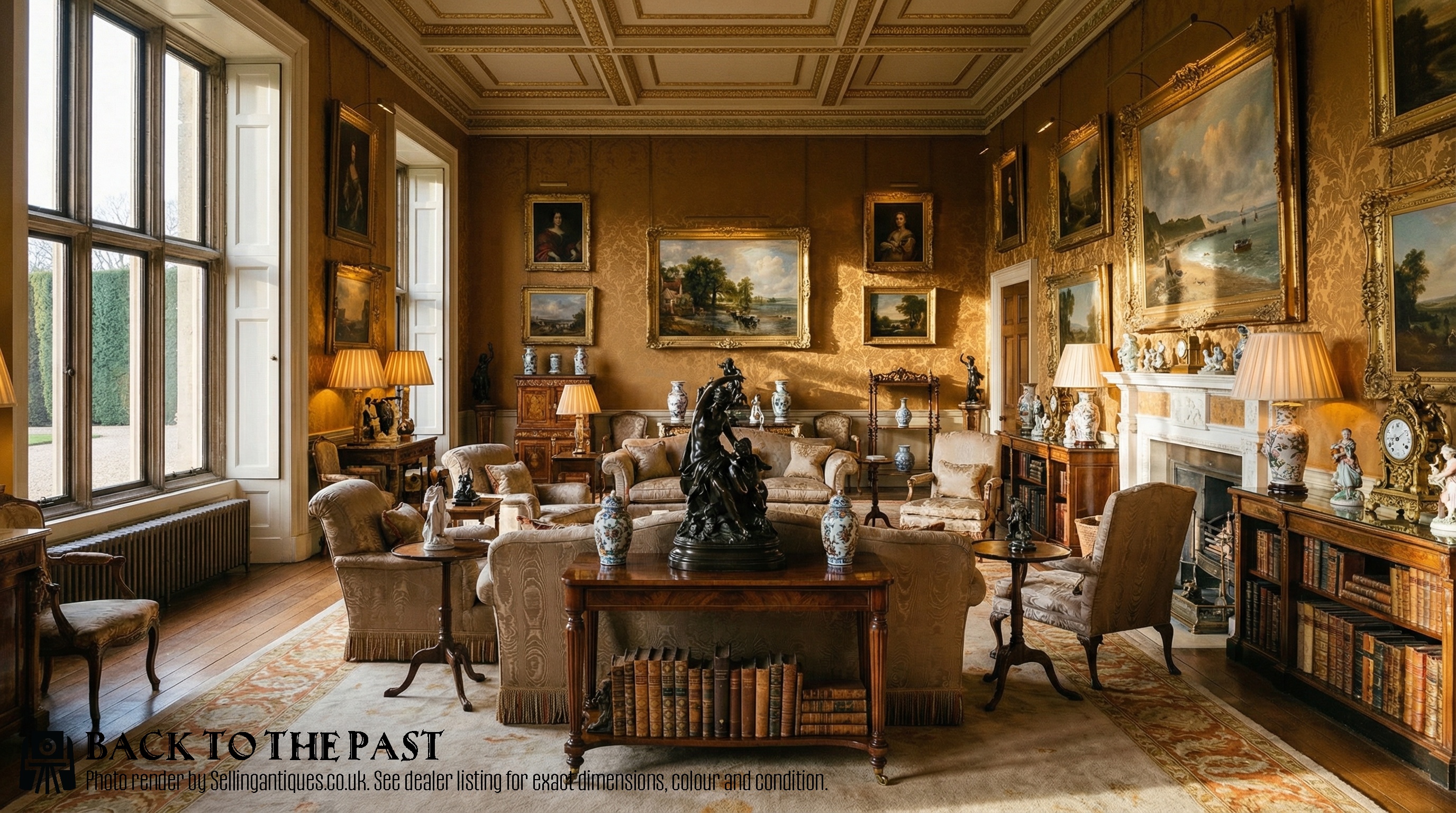
Victorian Rosewood Shelving Unit
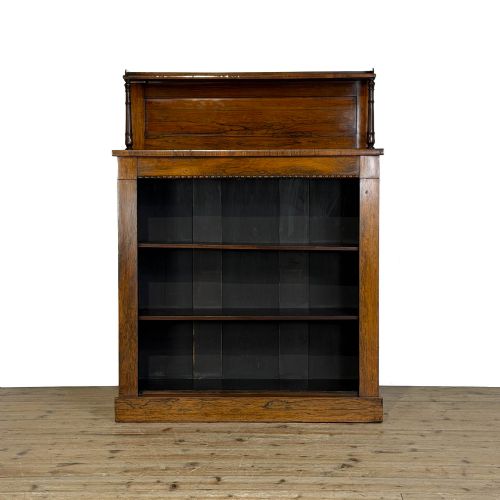
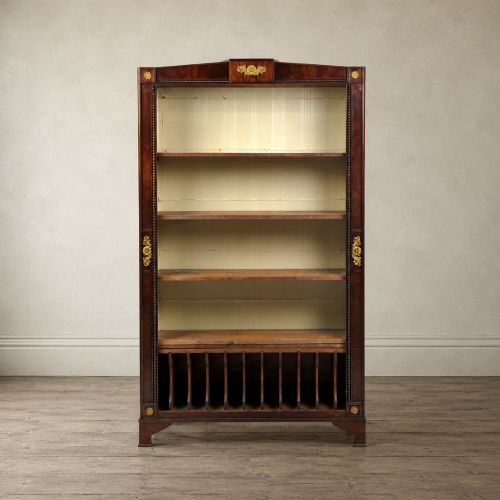
A victorian rosewood shelving unit encompasses open bookcases, multi-tiered étagères, and freestanding whatnots designed for display and storage. These pieces bridge the nineteenth century through styles ranging from early Victorian and Regency to French Empire and Edwardian forms.
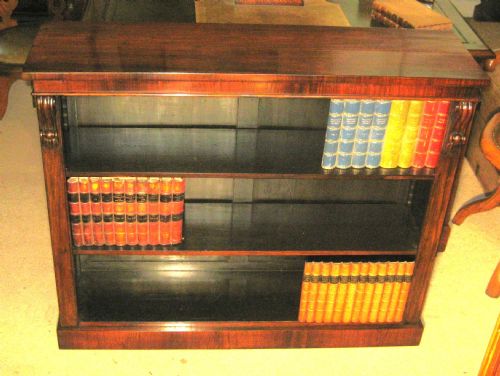
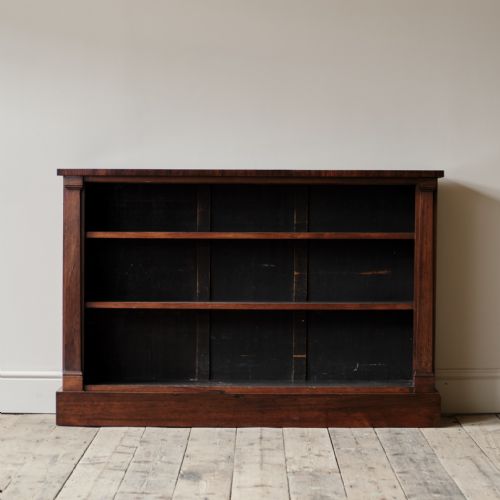
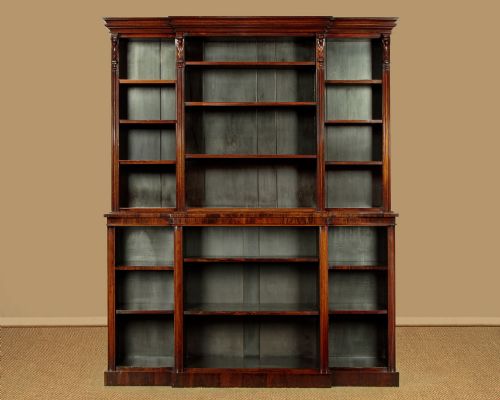
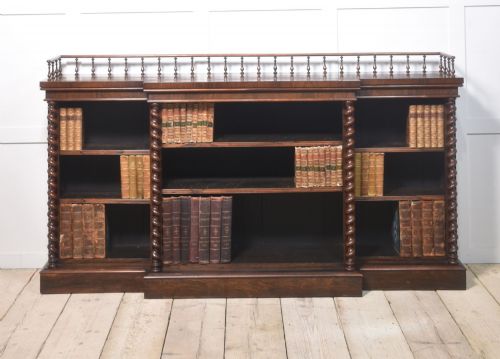
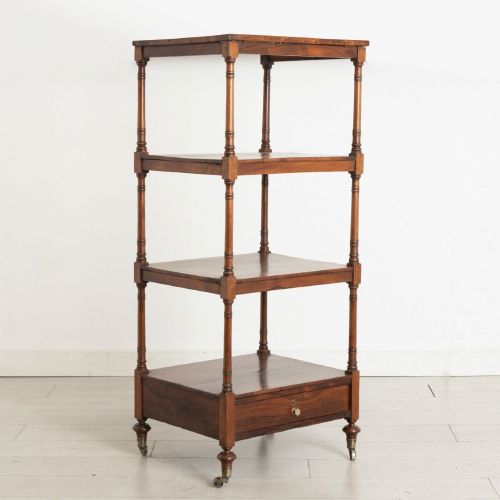
The version most commonly encountered on this page is the open bookcase, often proportioned as a low breakfront or central standing buffet. Alongside these, multi-tier whatnots and étagères appear frequently, reflecting the period desire for tiered display surfaces in parlours and libraries.
Origins stretch across nineteenth-century workshops, including examples shaped by French Napoleon III tastes and Anglo-Indian carving traditions. The core material remains consistent, uniting diverse utilitarian forms under rich, dark timber.
How they were made
Construction relies heavily on solid rosewood and rosewood veneer applied over secondary timbers such as pine and softwood. Cabinetmakers selected veneers to showcase striking grain patterns across flat surfaces like bookcase fronts and shelf tiers.
Detailing often incorporates brass hardware and patinated marble tops, particularly on adjustable bookcases and specialised display stands. Certain pieces feature marquetry inlay and carved elements that demonstrate advanced nineteenth-century cabinet work.
Some nineteenth-century makers could not resist adding six tiers to a single whatnot, just to see how high a display could climb.
What varies in quality
The refinement of the rosewood grain and the crispness of any applied carving or marquetry set finer examples apart from simpler utilitarian pieces. Superior construction shows in the stability of multi-tier étagères and the precision of veneered surfaces.
Proportion and architectural presence dictate the standing of a piece within the range, from modest three-tier whatnots to expansive breakfront bookcases. Integrated details like marble tops and adjustable shelving indicate higher original commission standards.
The Victorian Rosewood Shelving Unit Glossary
- Étagère
- A piece of furniture consisting of a set of open shelves for displaying small objects. This form appears frequently among nineteenth-century whatnots.
- Whatnot
- A standing set of open shelves used for ornaments or books. Victorian examples often feature multiple tiers supported by slender uprights.
- Breakfront
- A piece of furniture whose central section projects forward from the flanking parts. This layout adds architectural depth to low bookcases.
- Marquetry
- Decorative veneer work arranged in intricate patterns on furniture surfaces. It appears selectively on finer nineteenth-century display pieces.
- Chiffonier
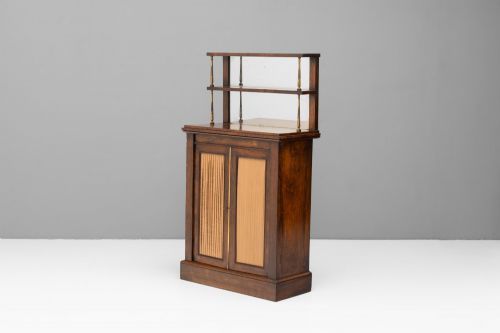
- A low sideboard or cabinet, sometimes incorporating shelving. These combine enclosed storage with upper display surfaces.
Victorian Rosewood Shelving Unit: Frequently Asked Questions
How do I use a whatnot in a modern room?
Multi-tier whatnots provide vertical display space without heavy visual bulk in a living area or hallway. Their open shelves suit books, ceramics, and small collections.
Ensure the piece stands on a level floor and avoid overloading the upper tiers of antique multi-tier stands.
How do I identify a Victorian rosewood piece?
Look for the characteristic deep brown and reddish-purple grain of rosewood, often paired with traditional nineteenth-century forms like breakfronts or tiered stands. Construction details such as softwood secondary framing and period joinery confirm the era.
Stylistic markers range from early Victorian severity to French Empire and Edwardian refinements.
Are these units suitable for heavy books?
Low open bookcases and breakfront shelving units offer sturdy platforms for substantial volumes. Adjustable softwood shelving lined with rosewood veneer provides practical support.
Lighter étagères and multi-tier whatnots suit lighter display items rather than extensive heavy libraries.