
Low Display Shelves
Low display shelves organise a room by holding books and objects within easy reach.
Low Display Shelves
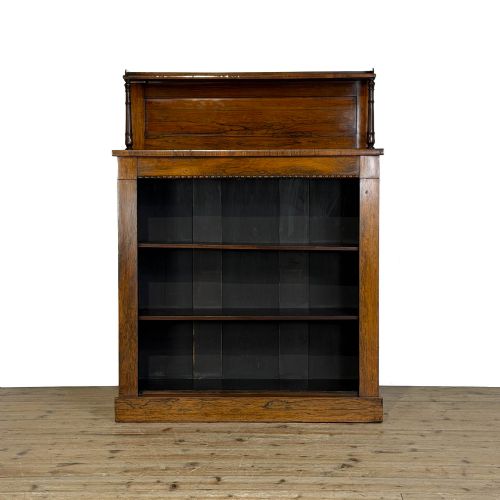
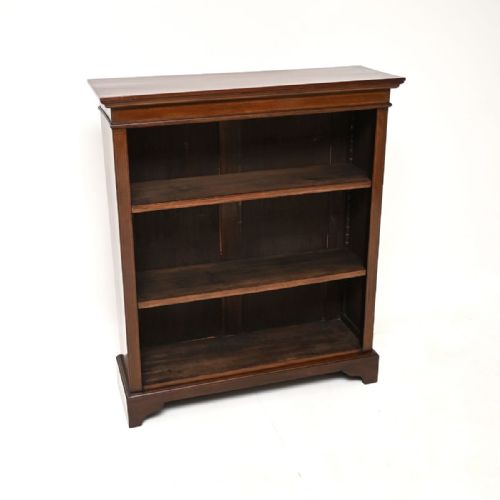
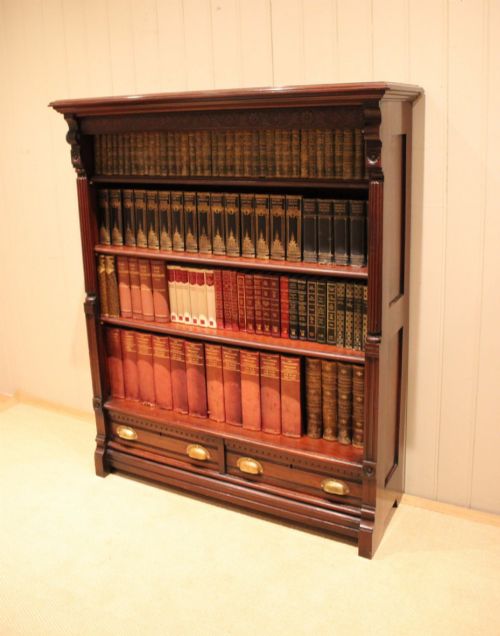
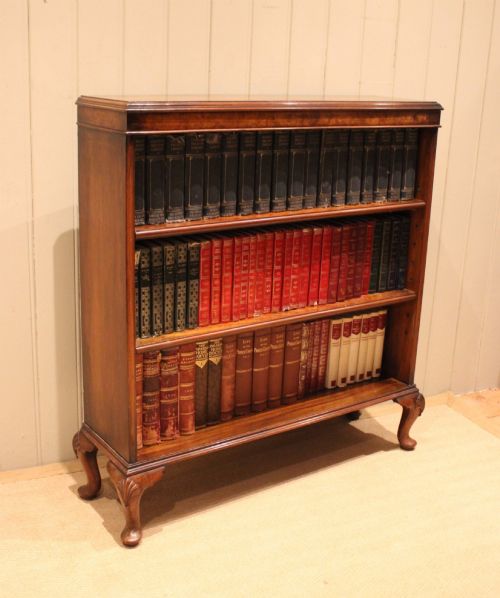
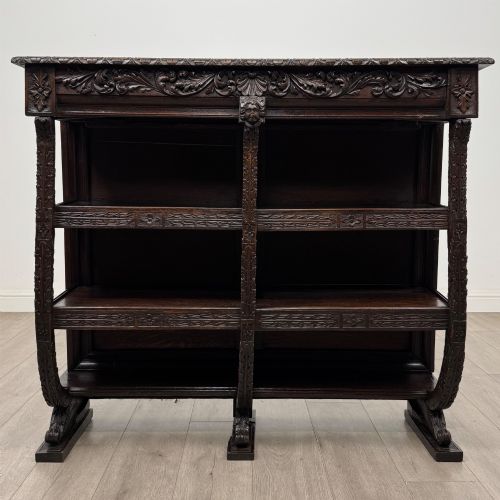
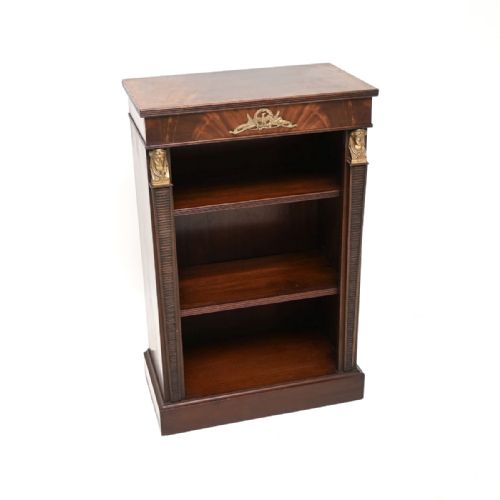
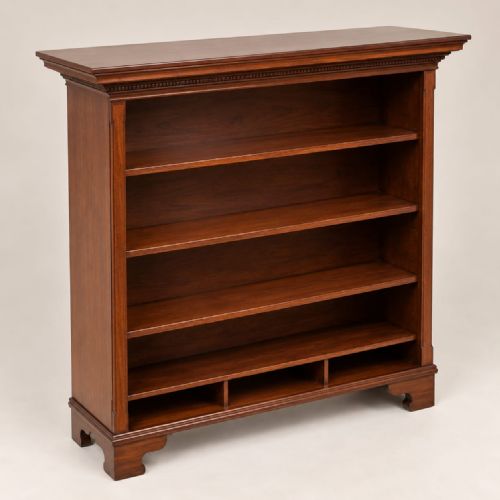
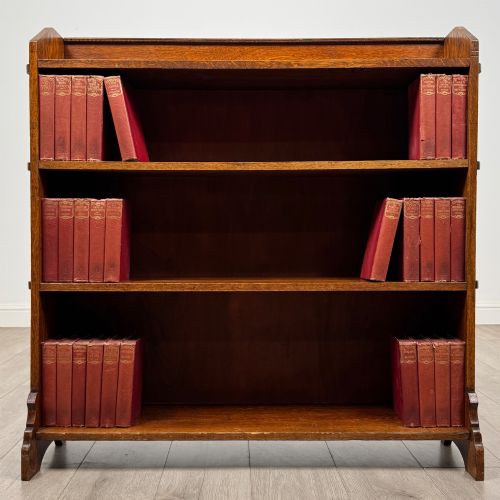
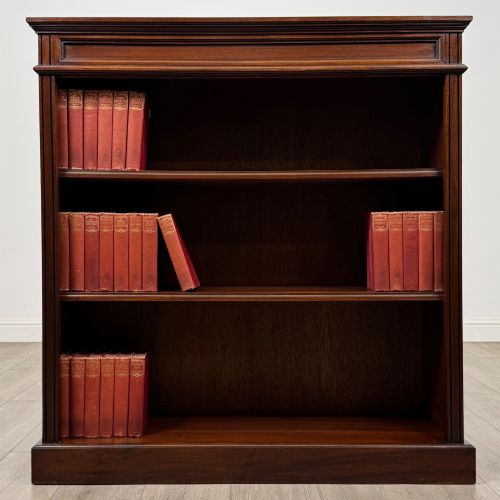
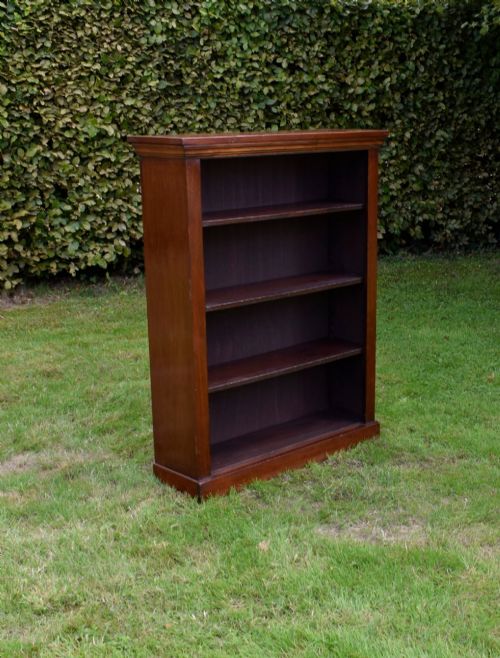
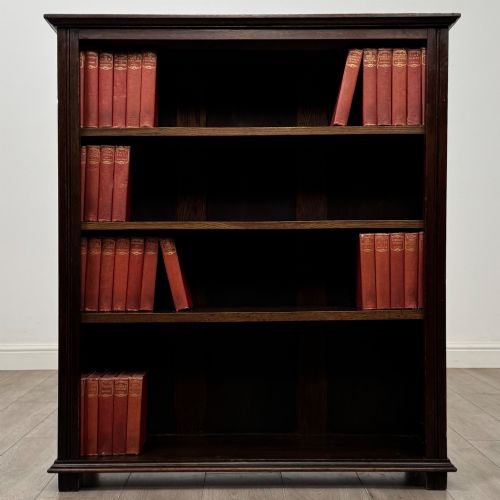
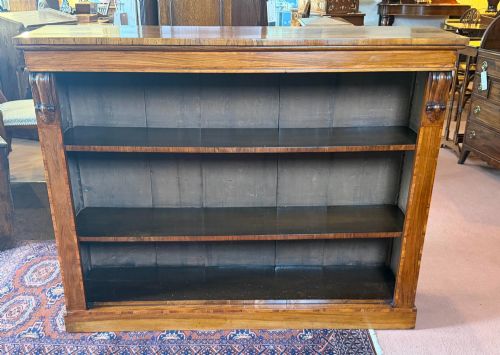
Low display shelves bridge the gap between heavy library furniture and open wall space, offering accessible surfaces for books and small objects. Pieces meeting this description appear across periods from the nineteenth century into the nineteen-thirties, spanning Victorian, Edwardian, and Art Deco styles.
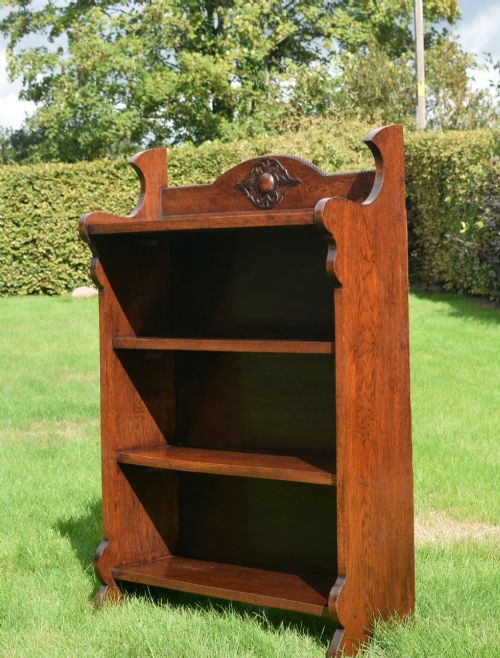
The form is most commonly met as an open bookcase or display cabinet in mahogany, oak, or walnut. Makers of these units configured them with adjustable shelves to accommodate varying volumes and decorative items.
Materials and construction
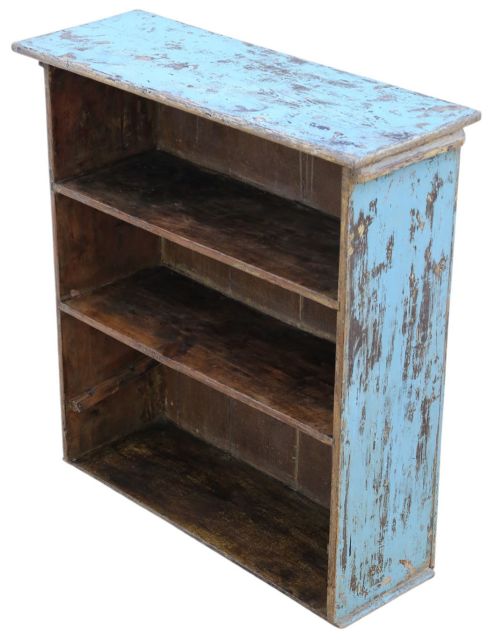
Makers relied on hardwoods such as mahogany, walnut, rosewood, and oak, alongside pine and ash. Surfaces frequently feature inlaid details, carved elements, or painted finishes.
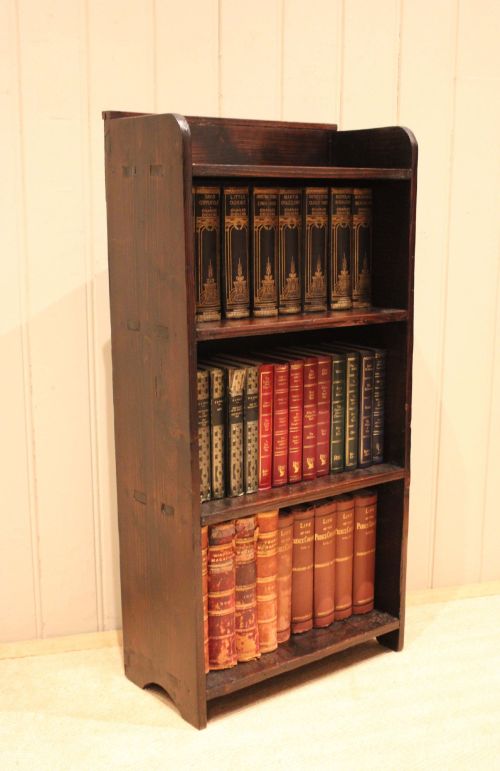
Shelving systems incorporate adjustable supports to alter the internal arrangement. Construction methods include straightforward box framing for utilitarian pine pieces and more intricate joinery for neoclassical or aesthetic movement examples.
Materials span oak, mahogany, walnut, pine, brass, rosewood, and paint across Victorian, Edwardian, and Art Deco periods.
Standards of manufacture
Quality rests on the selection of timber and the precision of the joinery. Dense grains in mahogany and walnut, alongside crisp carving in oak, distinguish finer examples from standard commercial output.
Refinement shows in the hardware and the operation of adjustable shelf mechanisms. Well-made pieces maintain structural integrity without relying on heavy external reinforcement.
The Low Display Shelves Glossary
- Open bookcase
- A piece of furniture designed for book storage featuring unobstructed front access rather than glazed or solid doors. This format defines the majority of display shelving options.
- Adjustable shelves
- Internal boards that can be repositioned at various heights using slots, pins, or racks. This system allows the user to customise vertical spacing.
- Breakfront
- A cabinet design where the central section projects forward from the flanking wings. It adds architectural depth to larger bookcase forms.
- Inlay
- A decorative technique where contrasting pieces of wood or other materials are inserted into the primary surface. Edwardian furniture often utilises this method for linear banding.
Low Display Shelves: Frequently Asked Questions
How do I clean wooden shelves?
Dust surfaces regularly with a dry, soft cloth to prevent particulate buildup on the timber.
Avoid chemical polishes that leave a residue, opting instead for a wax treatment suited to period finishes.
Are shelves usually adjustable?
Many examples incorporate movable shelf supports using traditional peg systems or vertical tracks.
Fixed shelves do appear, particularly in simpler rustic or country pieces built for specific storage tasks.
Where should I place a low bookcase?
Position units against interior walls away from direct sunlight and heat sources to protect the wood.
Their reduced height allows the surface top to hold lamps and decorative objects without blocking wall art.
How do I identify Edwardian oak pieces?
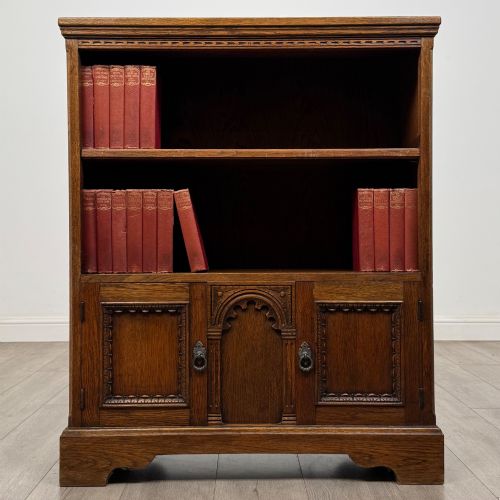
Edwardian furniture frequently displays lighter golden oak tones, sometimes combined with subtle inlay work.
Construction from the early twentieth century often balances functional proportions with restrained decorative carving.