


Rosewood Side Bookcase
These rosewood side bookcase examples combine rich timber with practical shelving, offering storage that anchors a room with understated elegance.
Rosewood Side Bookcase
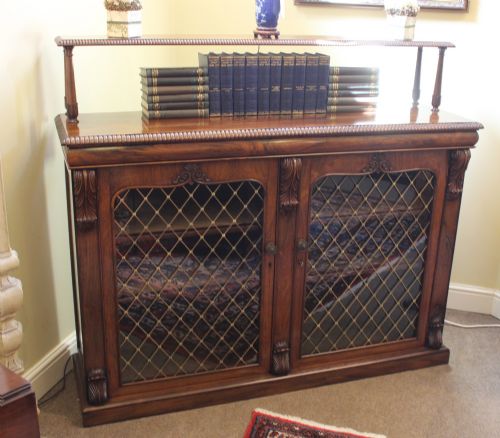
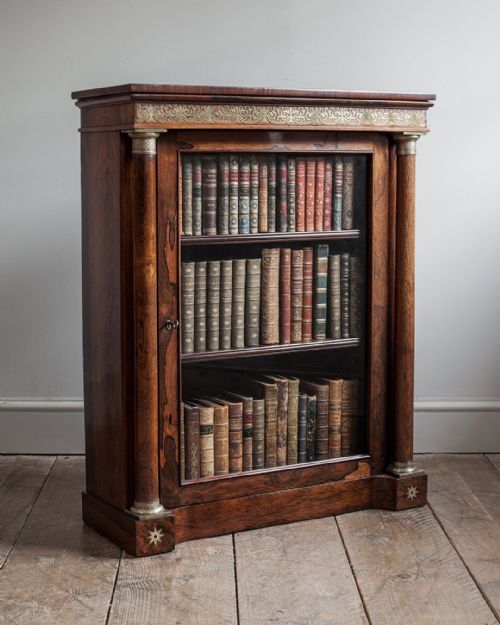
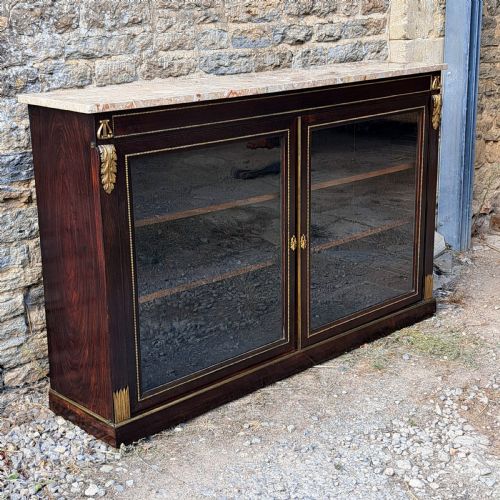
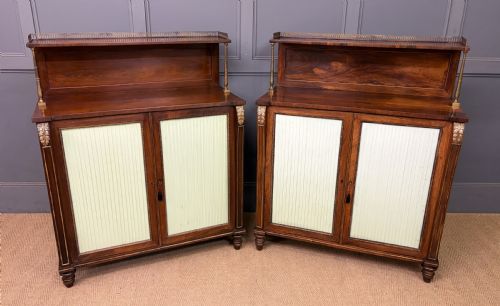
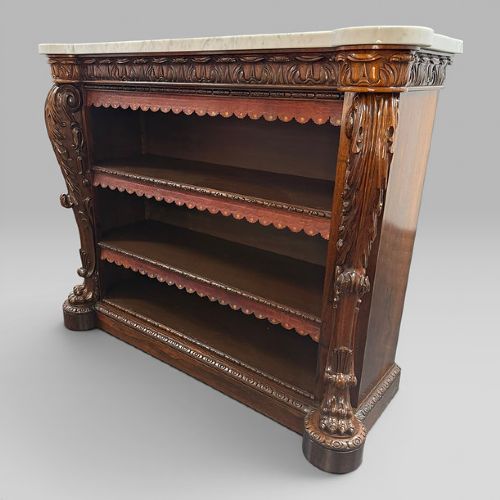
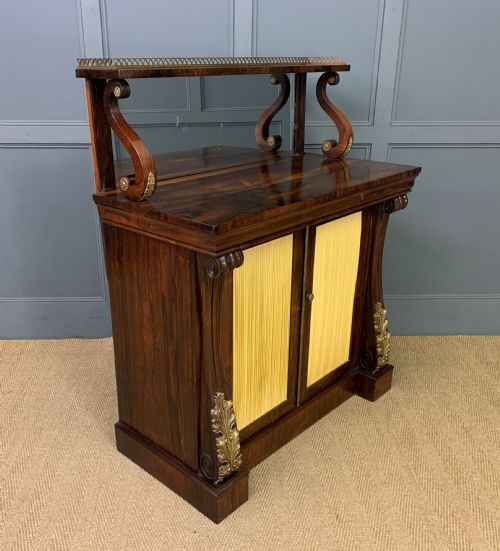
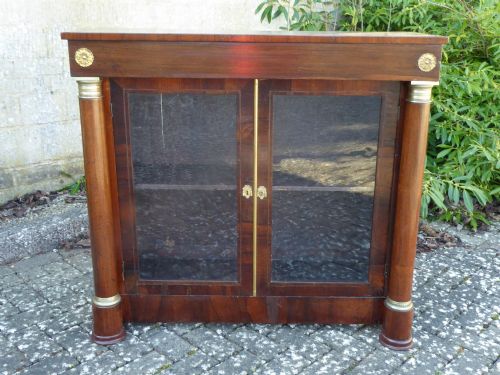
A rosewood side bookcase brings together timber shelving and enclosed cabinet storage, designed to sit against a wall in a principal room. You will frequently encounter forms from the Regency, William IV, and Victorian periods, often taking the shape of low dwarf bookcases, chiffoniers, or pier cabinets.
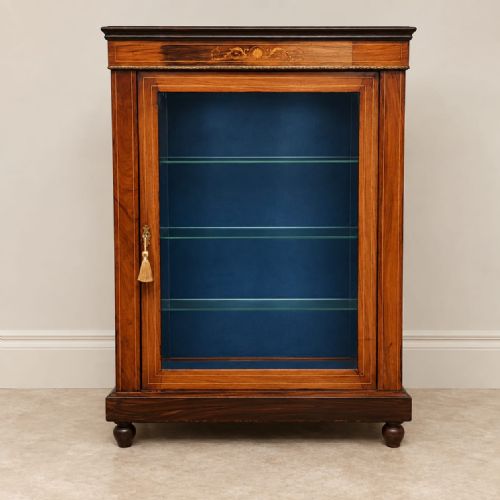
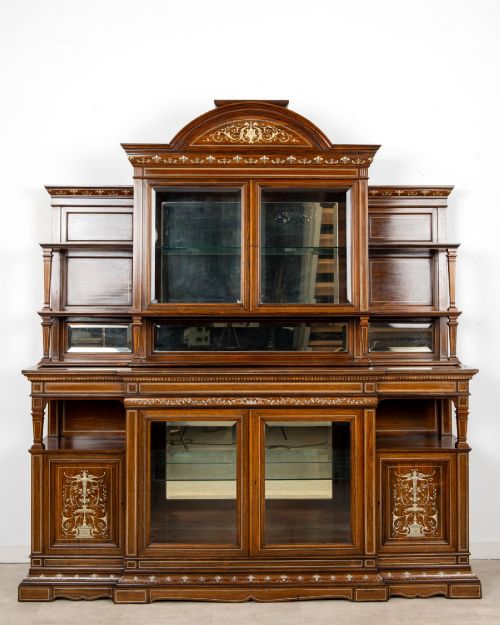
The practical function remains consistent across these eras: open shelves for display sit alongside lower cupboards enclosed by timber, glass, or fabric-backed panels. Many pieces integrate marble tops, brass grilles, or mirrored backs to enhance light and texture within domestic interiors.
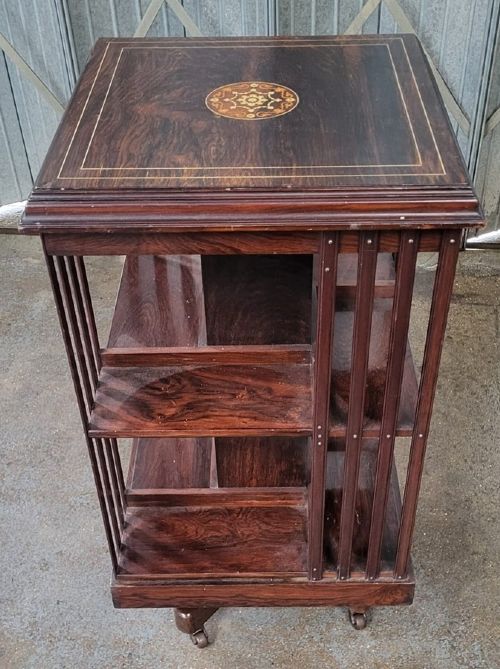
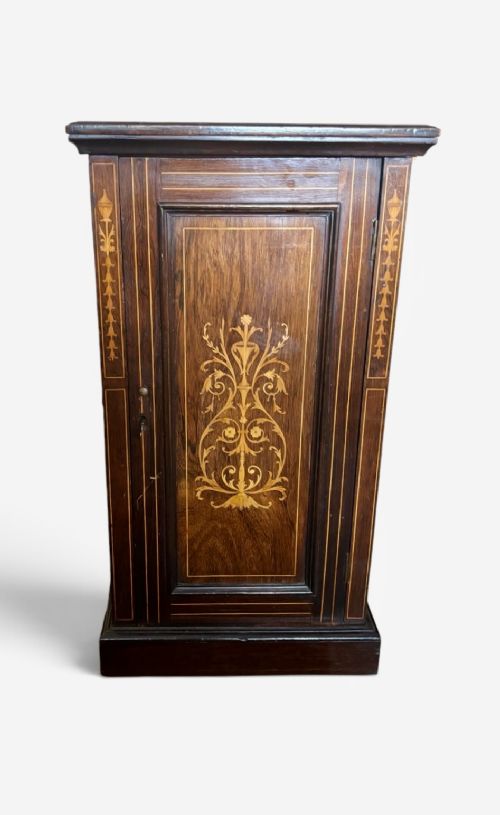
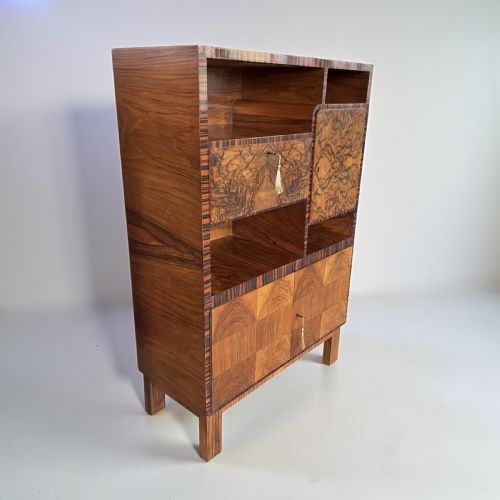
Makers adapted the form for varied spaces, producing breakfront configurations alongside narrow single-door cabinets and revolving desk-top book-carriers. The resulting furniture balances book storage with surface display space, reflecting the domestic habits of the nineteenth century.
How They Were Made
Cabinet makers utilised dense tropical rosewood veneers laid over secondary structural timbers, frequently selecting stock with pronounced grain patterns. These wooden surfaces received precision brass inlays, boxwood stringing, or parcel-gilt mounts that traced the architectural lines of the panels.
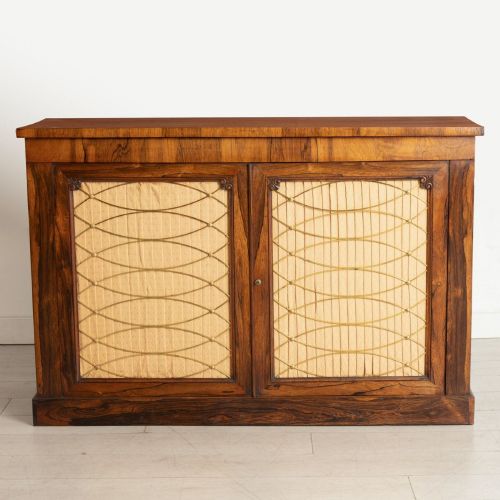
Internal construction involved substantial craftsmanship, incorporating adjustable wooden shelving, panelled doors, and heavy marble slabs fitted to the upper surfaces. Glazed sections relied on fine timber glazing bars, whilst chiffonier panels often utilised pleated silk or mirror glass behind brass grilles.
Listings feature rosewood side bookcases predominantly from the Regency, William IV, and Victorian eras, alongside Anglo-Indian interpretations.
What Varies in Quality
The calibre of a piece rests upon the selection and matching of the rosewood veneers, where continuous grain patterns across doors and friezes indicate superior workshop practices. Finer examples display meticulous brass inlay work that remains flush with the timber surface rather than protruding.
Structural integrity and secondary timber choices separate standard production from workshop-attributed pieces, with finer cabinets utilising solid mahogany framing and substantial marble or gilded bronze mounts. The refinement of the carving on applied mouldings and feet further distinguishes the output of skilled cabinet makers.
Collinson and Lock·Gillows of Lancaster
The Rosewood Side Bookcase Glossary
- Chiffonier
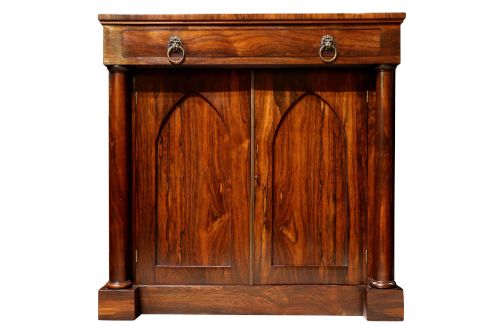
- A low cabinet featuring enclosed cupboards beneath open or shelved space, typically dating from the Regency and Victorian eras. This form evolved from sideboards to provide compact display and storage in principal rooms.
- Pier Cabinet
- A narrow display cabinet designed specifically to fit the wall space between windows. These pieces frequently incorporate glass doors and velvet or mirrored linings.
- Breakfront
- A piece of furniture whose central section projects forward from the flanking wings. This configuration creates visual depth and architectural presence.
- Faux Rosewood
- Timber that has been painted or stained to imitate the dark grain and warm tone of genuine rosewood. This decorative technique appeared frequently during the Regency period.
- Boxwood Inlay
- Narrow strips of pale boxwood inserted into grooves cut within darker rosewood surfaces to form geometric or floral patterns. This technique provides sharp visual contrast.
Rosewood Side Bookcase: Frequently Asked Questions
What is a rosewood side bookcase?
A rosewood side bookcase is a nineteenth-century storage piece that combines open shelves for volumes with enclosed lower cupboards. These low-profile cabinets were designed to sit against drawing room walls without obscuring windows.
They bridge the gap between a traditional bookcase and a side cabinet, offering display surfaces alongside functional storage. The integration of rosewood timber gives each piece a dark, heavily figured appearance.
How do I date a rosewood bookcase?
Dating relies on architectural styling, construction methods, and decorative details present on the cabinet. Regency and William IV pieces often display classical brass inlay and gilt mounts, while Victorian examples show heavier proportions or arched panel doors.
Secondary timbers inside the drawers and the style of the bracket feet also provide clear chronological markers. Comparing the veneer thickness and hardware styles helps narrow the manufacturing period.
Were these cabinets used only for books?
While the shelving accommodated libraries, these pieces served multiple functions within domestic interiors. Lower cupboards stored papers and household items, while upper surfaces held decorative objects, lamps, and clocks.
Many variants included marble tops designed to resist moisture from flower vases or serving dishes. The inclusion of glazed doors and mirrored backs also prioritised the display of ceramics and glassware.
How do I care for antique rosewood?
Maintaining rosewood requires stable room temperatures and protection from direct sunlight to prevent timber fading. Regular dusting with a soft, dry cloth preserves the polished surface without moisture damage.
Applying occasional specialist wax feeds the timber and enhances the grain figure. Avoid placing these cabinets near heat sources that might cause the rosewood veneers to lift.