



Three Tier Whatnot Stand
When you search for a three tier whatnot stand, you are looking at multi-tiered display furniture designed to hold books, ornaments and precious objects.
Three Tier Whatnot Stand
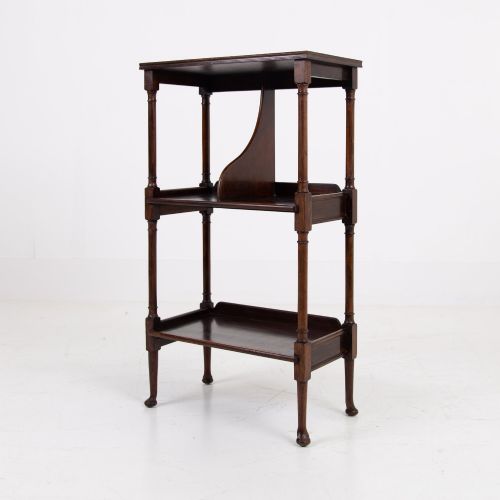
A three tier whatnot stand is a multi-shelved piece of furniture that appears across the Victorian, Regency, and Edwardian periods. These stands serve as display shelves, side tables, and bookcases within formal rooms.
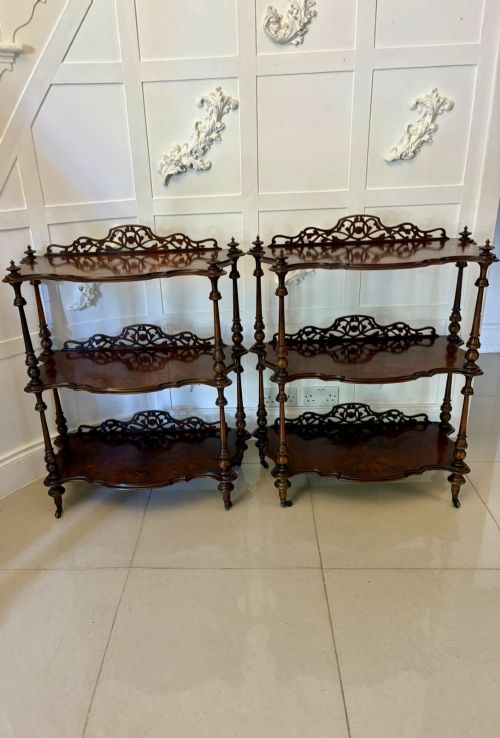
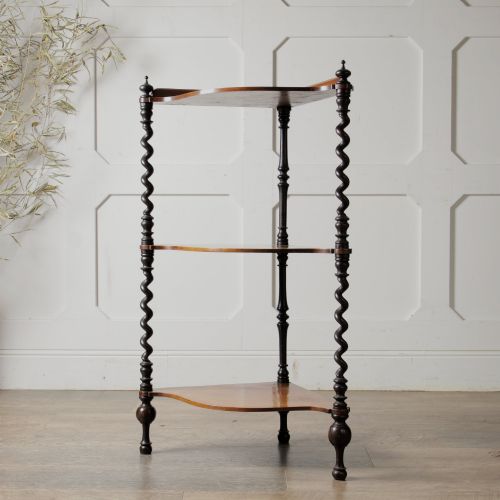
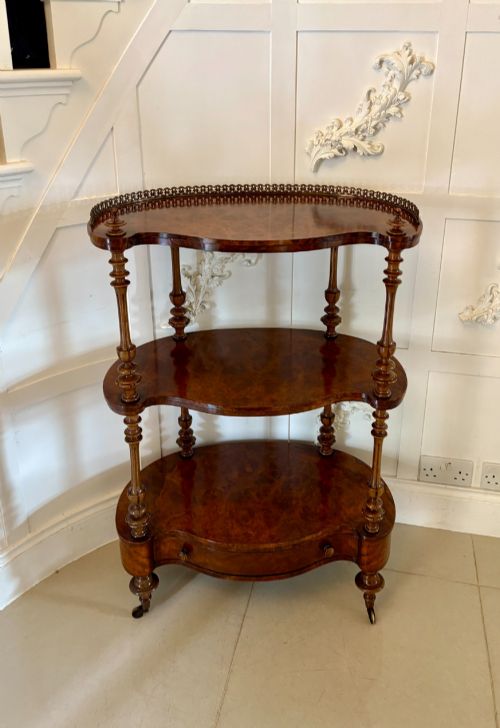
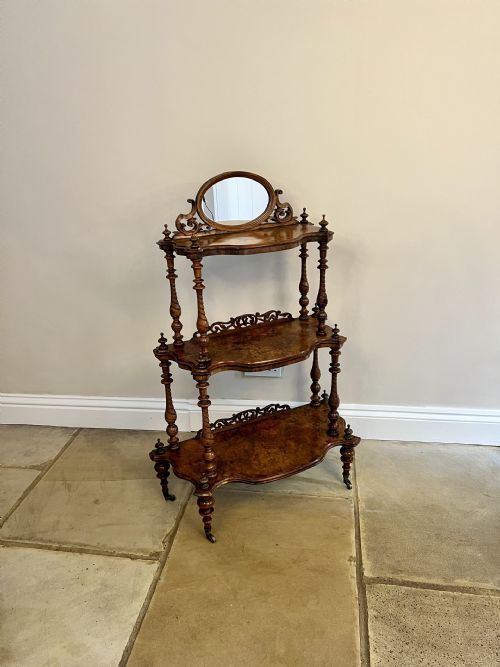
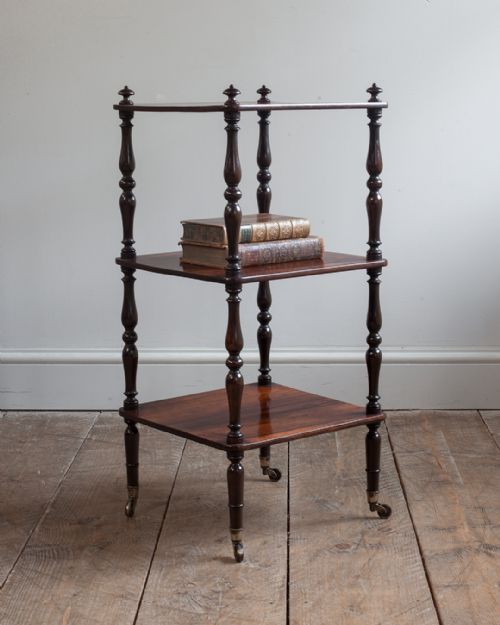
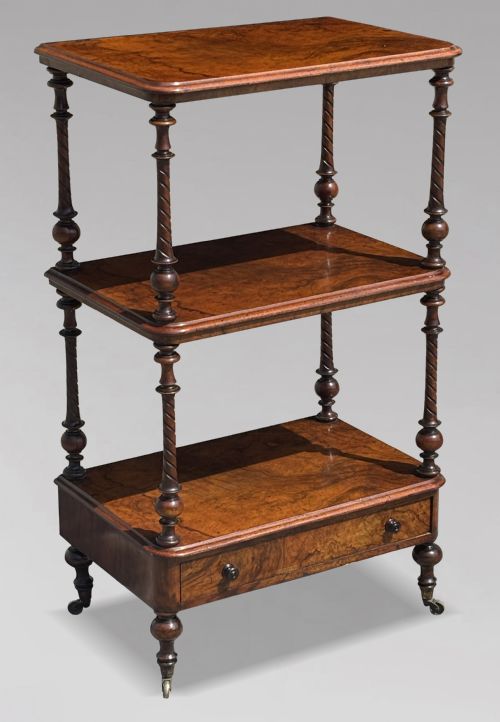
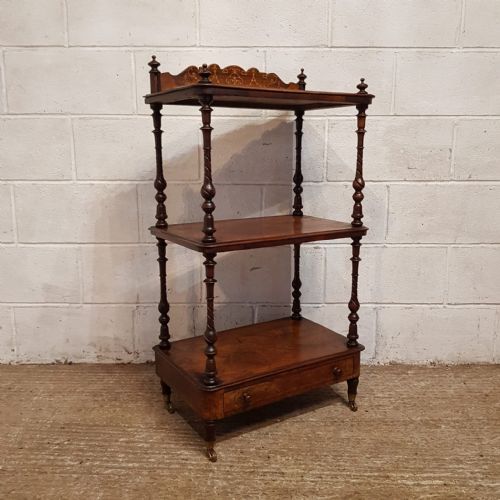
The version you most frequently meet on this page is the Victorian walnut or burr walnut three-tier stand, often featuring turned supports or barley twist columns. Pieces also emerge in rosewood, mahogany, and ebonised wood from the nineteenth century.
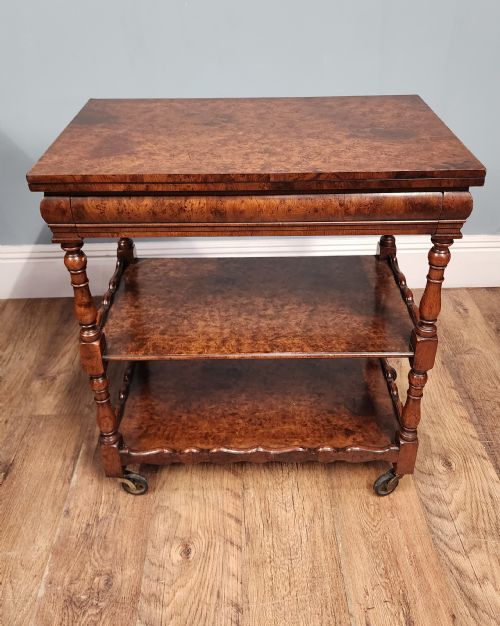
Makers designed these tiered units to stand freely in a room or fit neatly into a corner. Some examples include drawers in the base or incorporate butler's trolleys and Canterbury sections.
Materials and Construction
Cabinet makers built these stands using dense timbers such as mahogany, rosewood, and figured walnut veneers over secondary woods. Burr walnut and amboyna provide rich decorative grain patterns on the display shelves.
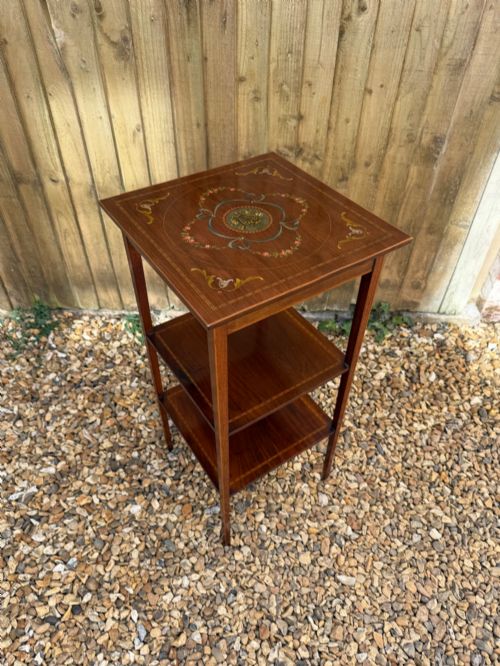
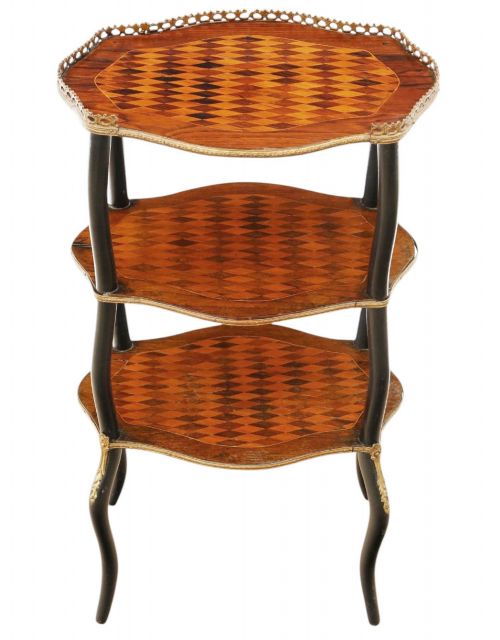
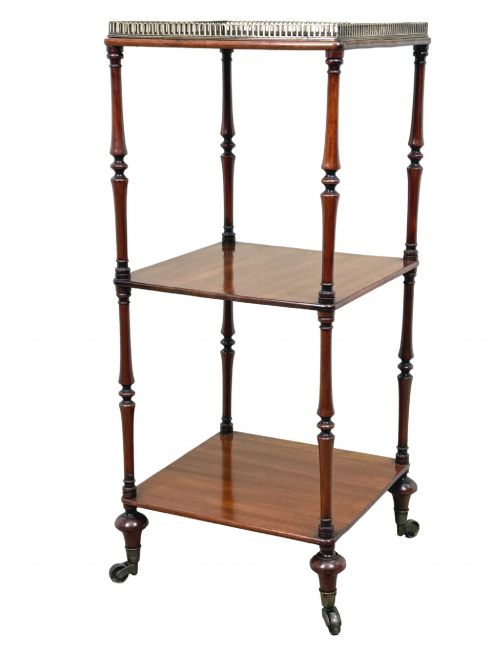
Construction relies on slender vertical supports, often turned as barley twists or columns, holding three horizontal tiers apart. Finer pieces incorporate brass mounts, ormolu details, and intricate marquetry or parquetry inlay.
French polish finishes protect the timber surfaces while enhancing the natural figure of the wood. Brass castors frequently appear on the feet to allow easy movement across carpets and floorboards.
Listings feature walnut, rosewood, and mahogany across Victorian, Regency, and Edwardian periods.
Assessing Quality and Execution
The choice of timber veneer dictates the initial visual impact, with select burr walnut and figured rosewood marking the upper tier of production. Plain mahogany and painted woods occupy a simpler domestic category.
Joinery execution and column turning separate standard utility pieces from exhibition-grade examples. Crisp carving on the uprights and tightly fitted joints indicate superior workshop craftsmanship.
Proportion and scale define the elegance of a stand. Diminutive proportions combined with secondary functions like drawers or removable trays elevate a piece beyond basic utility.
Samson and Son·Gillows
The Three Tier Whatnot Stand Glossary
- Whatnot
- A piece of furniture consisting of a set of open shelves for holding books or ornaments. These stands typically feature three tiers supported by slender uprights.
- Etagere
- A set of open shelves for displaying ornaments, closely related to the whatnot. French makers often applied marquetry and ormolu mounts to these display pieces.
- Burr Walnut
- Timber taken from a walnut tree growth containing swirling grain patterns. Cabinet makers prized this wood for high-status Victorian veneer work.
- Barley Twist
- A turning technique resembling the form of a twisted rope. This detail frequently decorates the vertical support columns of Victorian stands.
- Ormolu
- Gilded bronze mounts applied to furniture for decoration. French and English makers used these metal ornaments to accent the corners and edges of shelves.
Three Tier Whatnot Stand: Frequently Asked Questions
What is a three tier whatnot stand used for?
These tiered stands were originally created to hold small decorative objects, books, and curiosities in nineteenth-century drawing rooms.
Today, they function as practical side tables, lamp stands, or open bookshelves in contemporary living spaces.
How do I date a Victorian whatnot?
Dating relies on timber choice, hardware, and stylistic indicators recorded across the mid to late nineteenth century. Walnut and burr walnut dominate the Victorian pieces, while earlier Regency examples favour rosewood and mahogany.
Turned supports and edge moulding styles also shift from the crisp Regency reeding to heavier Victorian barley twists.
Are all these stands English?
While many pieces originate from English workshops, French etageres and influence appear frequently in the listings. French Napoleon III and Edwardian examples often feature marquetry inlay and ormolu mounts.
Irish workshops also produced high-status exhibition pieces using native and imported timbers.
Can I use a whatnot as a bedside table?
The compact footprint and multiple shelves make these stands suitable for bedside use. The upper tiers hold reading lamps and books, while models with lower drawers provide concealed storage.
Their open construction keeps small bedrooms feeling light and uncluttered compared to bulky bedside cabinets.