

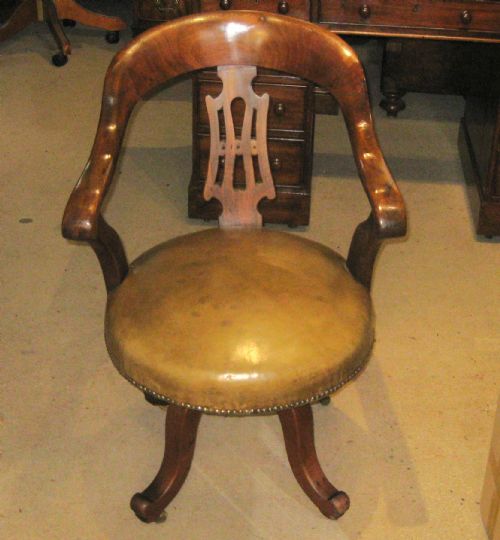
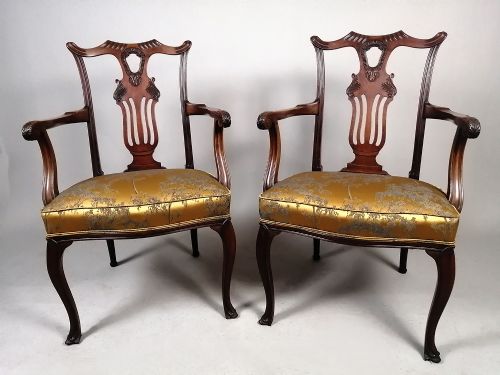
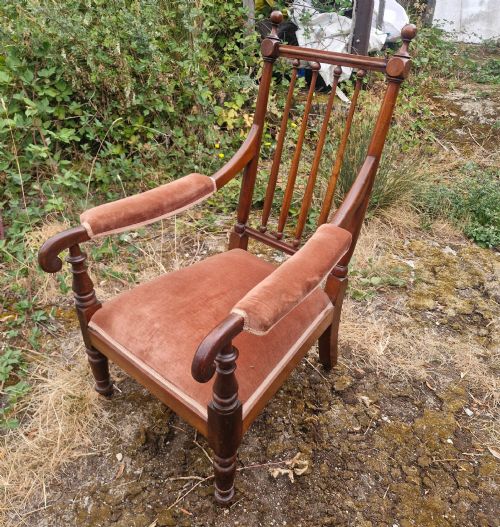
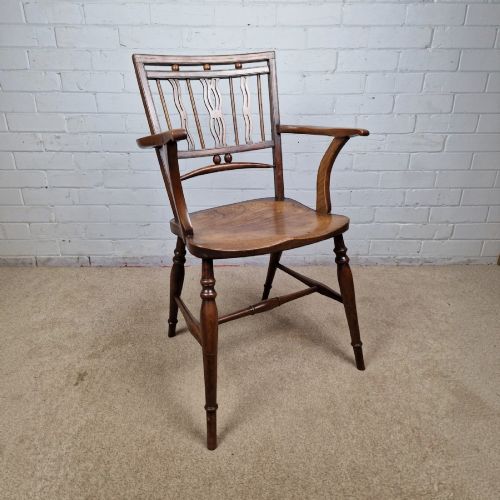
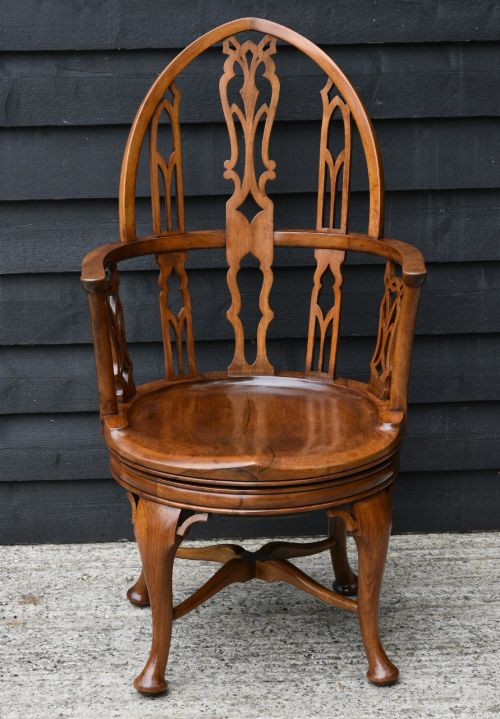
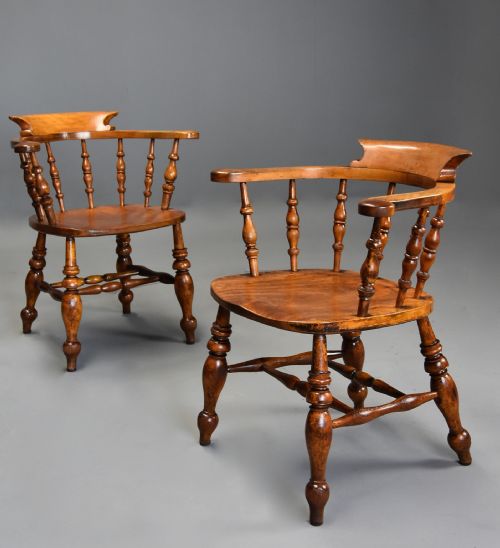
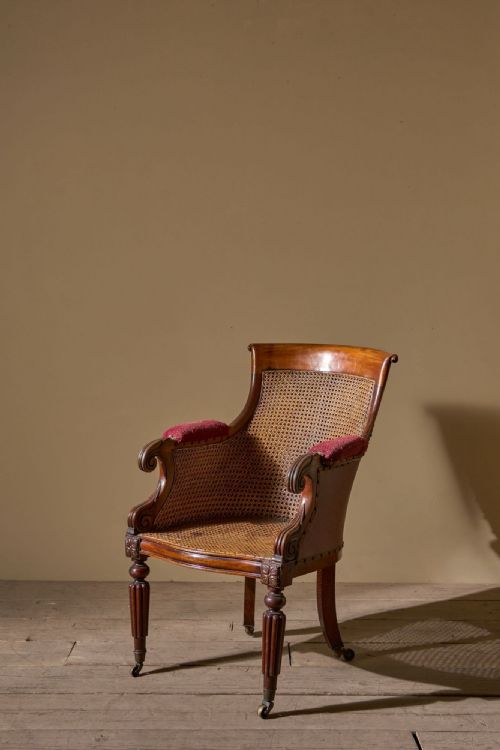
Victorian Carved Desk Armchair
A victorian carved desk armchair brings solid nineteenth-century timber and sturdy joinery straight into a study.
Victorian Carved Desk Armchair
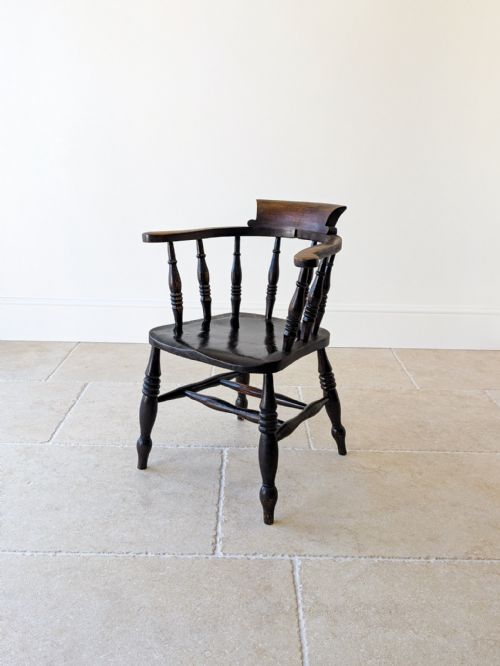
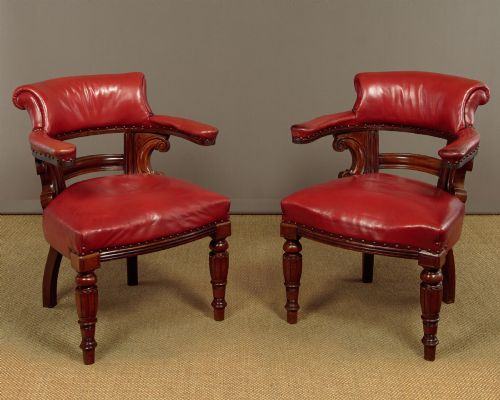
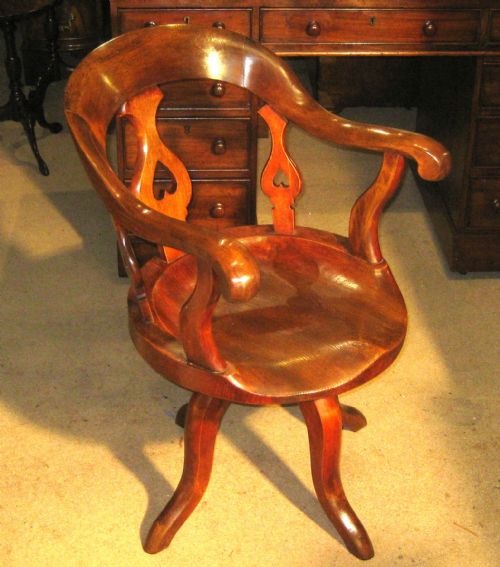
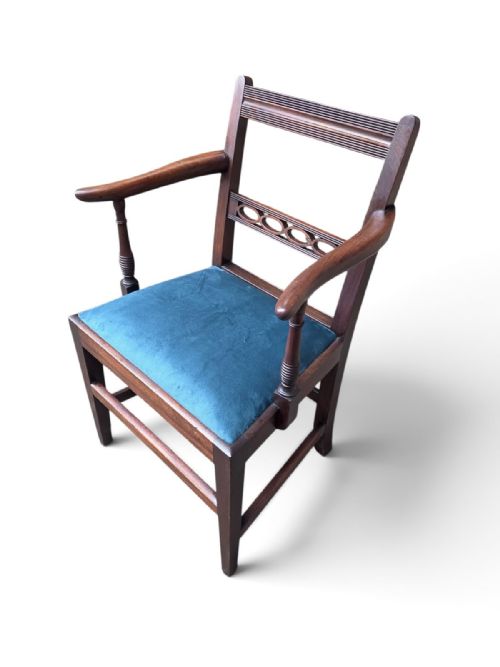
A victorian carved desk armchair provides a sturdy seat for a study, library or office, appearing in various timber frames from the nineteenth century. These chairs range from revolving swivel designs to open library armchairs and captain's chairs.
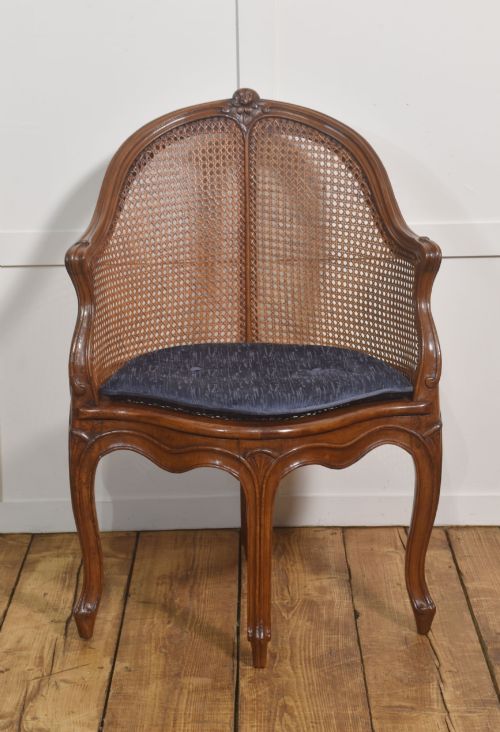
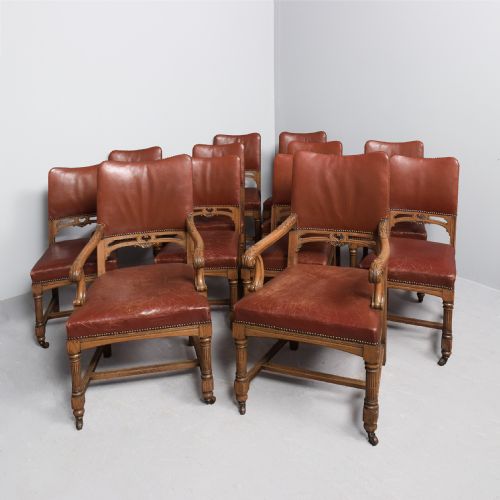
The pieces on this page span the Victorian era alongside styles such as Gothic Revival, French Louis XV and Queen Anne Revival. Walnut, mahogany and oak form the bulk of the structured frames, often paired with leather or cane seats.
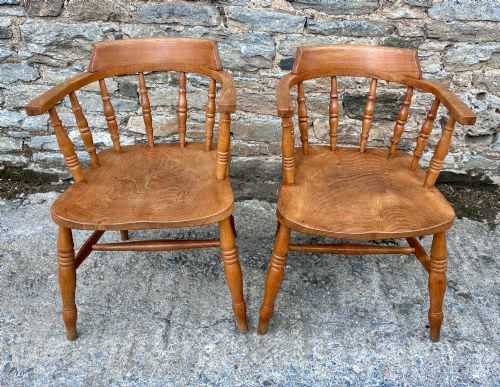
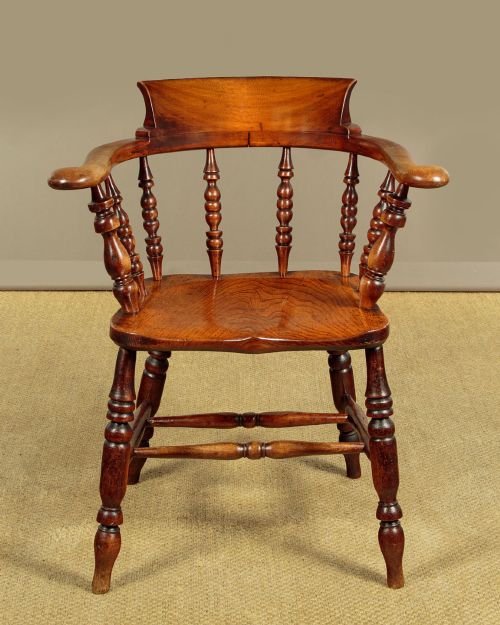
Makers and regional workshops produced both formal library models and vernacular country chairs like the smoker's bow. Buyers encounter solid mahogany swivel chairs alongside elm and ash captain's chairs intended for daily use.
How they were made
Cabinet makers utilised dense hardwoods such as mahogany, oak and walnut for formal desk chairs, turning and carving the timber by hand. Steam bending shaped the continuous arm rails of country Windsor and captain's chairs.
Revolving mechanisms combined iron swivels with wooden underframes to allow movement at the desk. Seats were fitted with inset leather panels, cane webbing or solid timber saddles pegged directly into the framework.
A grinning Green Man carved into the oak backrest watches silently over the daily paperwork.
What varies in quality
The depth and crispness of the hand carving separates standard production seating from exceptional library pieces. Timber selection dictates overall weight and grain movement, with well-figured mahogany or quarter-sawn oak holding higher regard.
The structural integrity of the revolving mechanism and the tightness of the spindle joints determine daily durability. Original leather upholstery and a deep natural patina elevate the standing of an individual chair.
Hindley & Sons·Bruce James Talbert
The Victorian Carved Desk Armchair Glossary
- Captain's chair
- A low-backed wooden armchair with a continuous curved arm rail supported by spindles, designed for stable seating.
- Smoker's bow
- A sturdy vernacular wooden armchair featuring a low spindle back and a deep saddle seat, closely related to the Windsor form.
- Gothic Revival
- A nineteenth-century design style drawing on medieval architectural motifs including pointed arches, tracery and heavy carved oak.
- Revolving desk chair
- An office seat mounted on a central swivel pivot, allowing movement while seated at a library table or bureau.
- Patina
- The surface sheen and mellow colour developed on timber through decades of handling, polishing and age.
Victorian Carved Desk Armchair: Frequently Asked Questions
How do I identify a revolving desk chair?
A revolving desk chair sits upon a central iron or wooden spindle mechanism concealed beneath the seat frame. This allows the upper portion to turn freely while the base remains planted on four legs.
Many examples from the nineteenth century feature a tilt action alongside the swivel movement to assist posture during prolonged writing or reading.
What is the difference between a library chair and a captain's chair?
Library chairs are typically upholstered in leather or fabric, featuring padded arms and carved mahogany or walnut frames suited to formal rooms. Captain's chairs are constructed entirely from solid wood with steam-bent rails and saddle seats designed for practical utility.
Library chairs prioritise cushioned comfort for reading, whereas captain's chairs offer robust support and easy movement around a workspace.
How should I care for nineteenth-century leather upholstery?
Leather seat pads benefit from occasional applications of microcrystalline wax or specialist leather balm to maintain flexibility and prevent cracking. Avoid placing the chair near direct heat sources or strong sunlight which dries out the hide.
Dust the buttoned tufts and crevices regularly with a soft brush to keep abrasive particles from wearing the surface.
Are these chairs suitable for daily computer desk use?
Nineteenth-century desk chairs were built for lower writing tables and ledger desks rather than modern computer setups. Swivel models provide functional movement, but seat heights often sit lower than standard modern office chairs.
Checking the exact dimensions of the seat height against your knee clearance ensures comfortable daily use at a contemporary desk.