
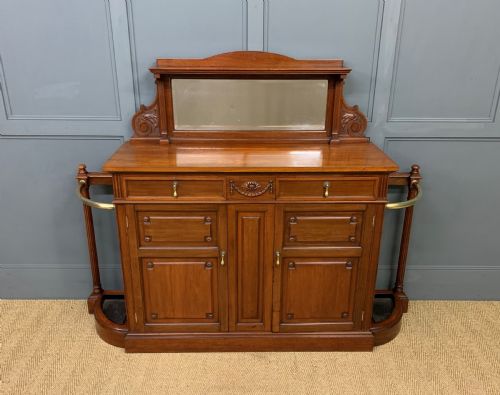
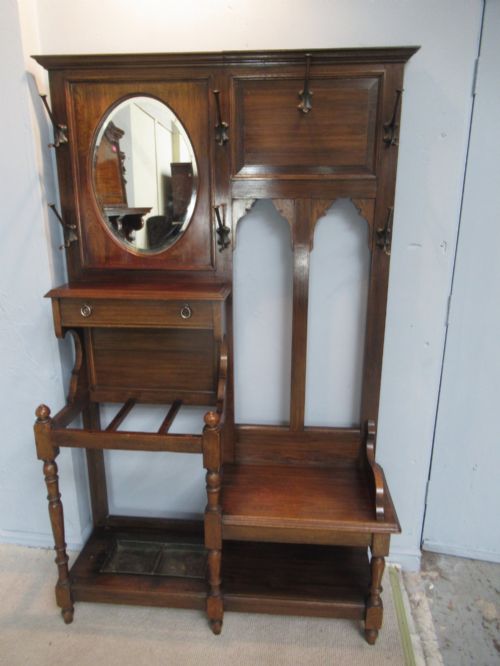
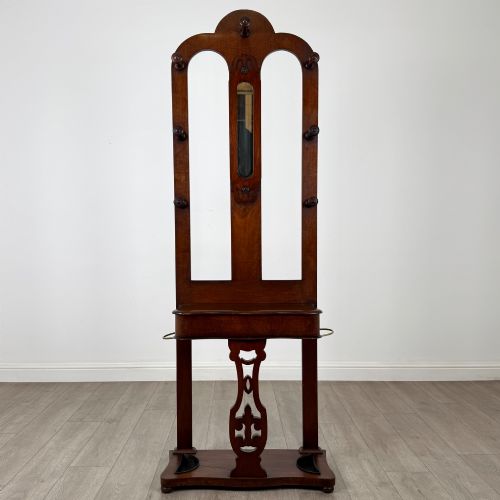
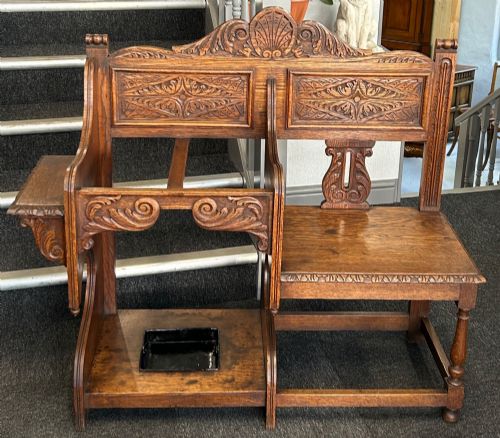
Victorian Carved Coat Stand
A victorian carved coat stand is a substantial piece of hallway furniture designed to hold garments and walking gear while anchoring an interior scheme.
Victorian Carved Coat Stand
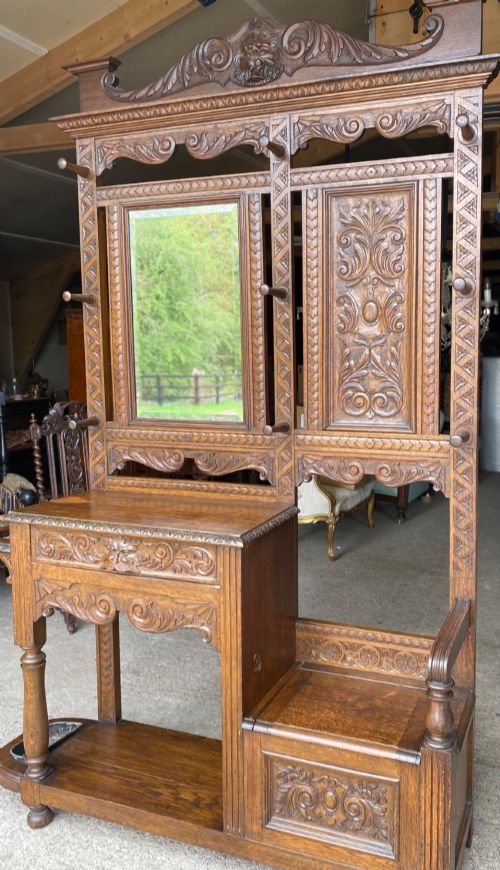
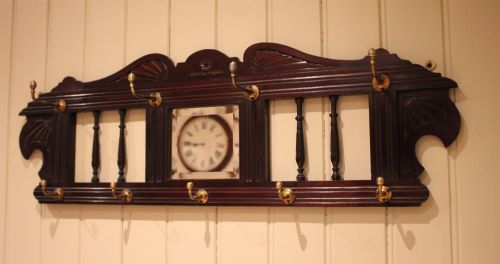
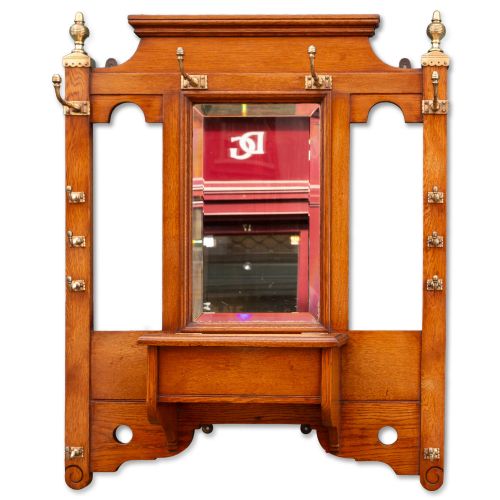
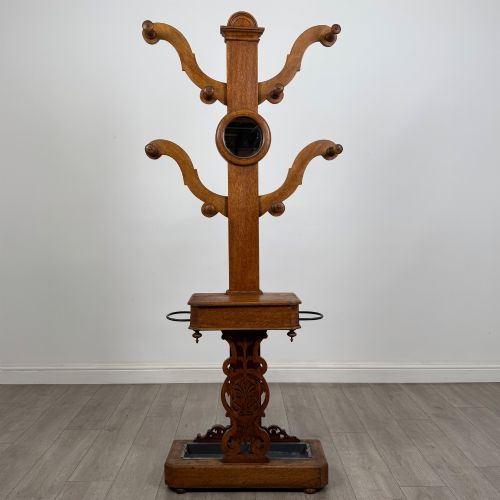
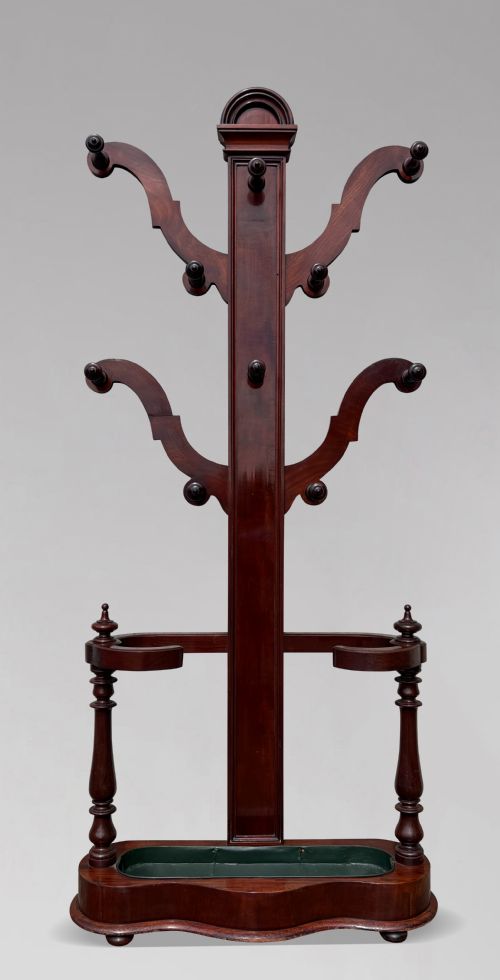
When searching for a victorian carved coat stand, buyers encounter a variety of forms designed for the entrance hall, ranging from wall-mounted racks to large freestanding pieces that incorporate mirrors, umbrella wells, and seats. The most common examples on this page are carved oak and mahogany hall stands produced during the nineteenth century, often featuring integrated brass hooks and drip pans.
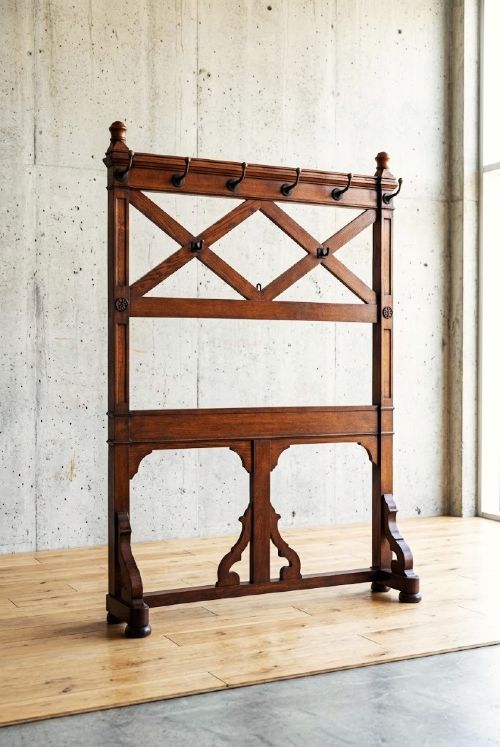
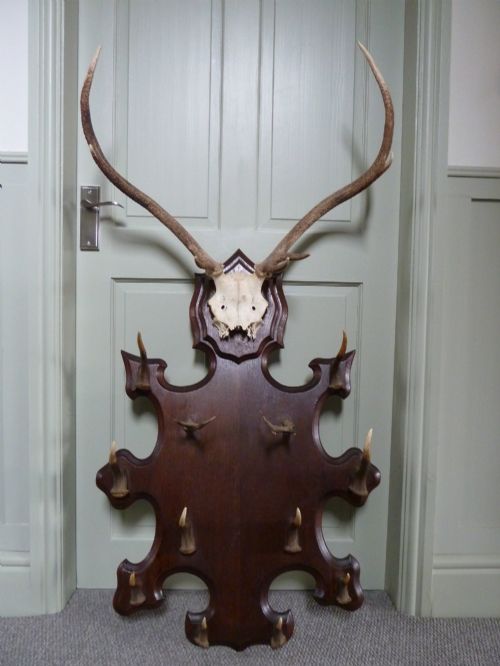
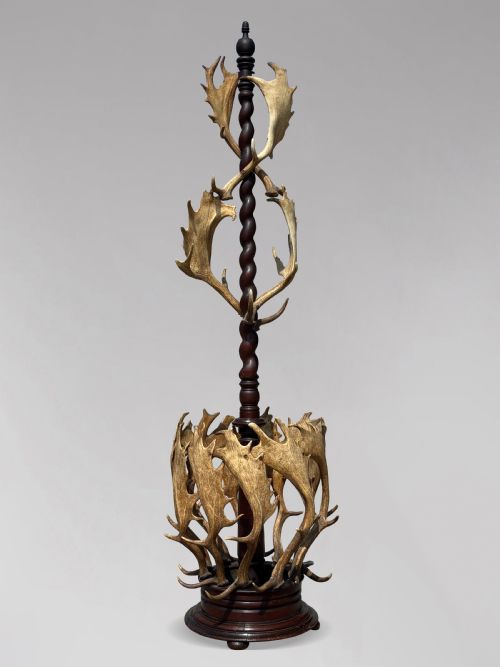
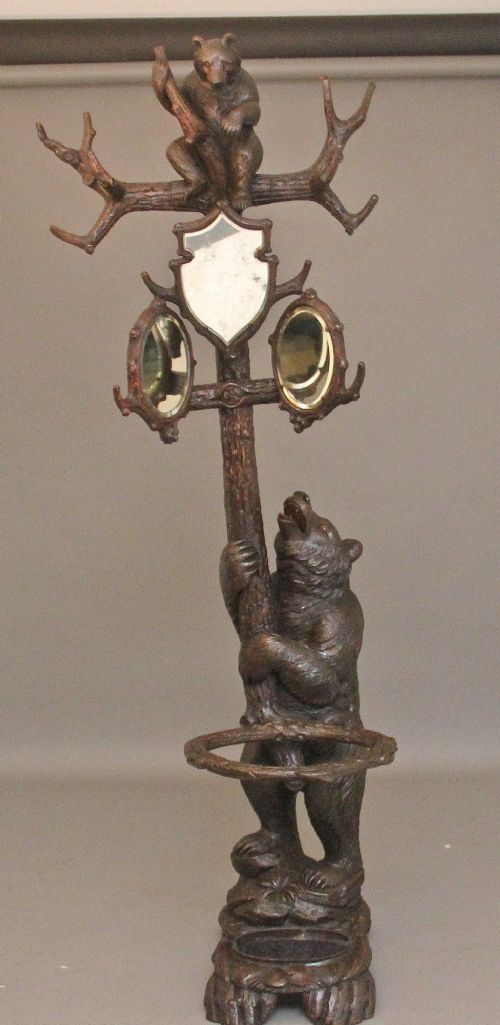
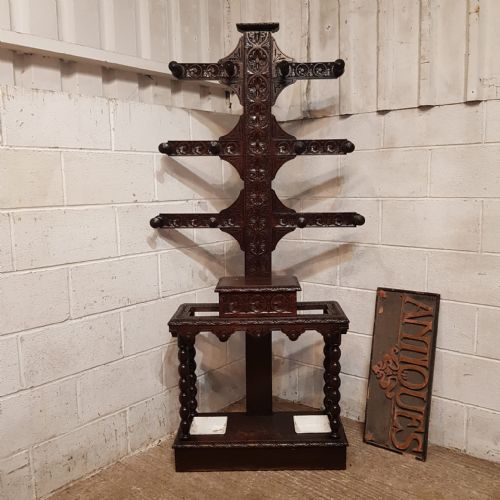
Beyond standard hall stands, the selection includes specialised formats such as Black Forest animal carvings, Gothic Revival designs, and compact wall racks. These items served a practical domestic purpose in period homes, providing an organised space for hats, coats, and walking sticks immediately upon entering the house.
The materials reflect the tastes of the nineteenth and early twentieth centuries, with solid oak, walnut, and mahogany forming the structural carcass of the larger freestanding pieces. Metal components typically include brass coat hooks and iron stick trays, while glass appears in the bevelled mirror plates set into the backboards.
What varies in quality
Quality in these pieces is determined by the depth and ambition of the carving, distinguishing standard production items from exhibition pieces with sculptural animal figures or detailed foliage. The choice of timber also dictates grade, with finely figured mahogany and substantial golden oak sitting above simpler utility versions.
Structural complexity separates basic wall racks from grand hall stands that combine mirrors, marble shelves, and stick stands into a single composition. The integration of original brass hardware, bevelled glass, and functional metal drip pans contributes to the overall integrity of a piece.
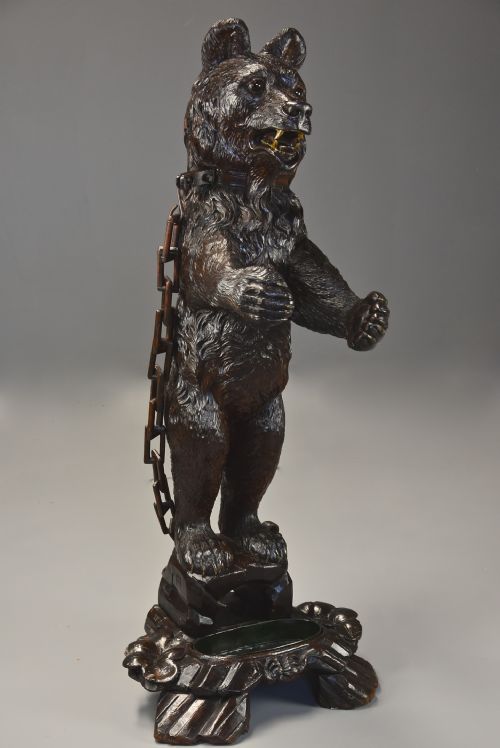
Several pieces feature carved bears keeping watch over your umbrella.
Shoolbred and Co·J. Parker of Woodstock·William Whiteley·Ray and Miles of Liverpool
The Victorian Carved Coat Stand Glossary
- Hall stand
- A freestanding piece of hallway furniture combining coat hooks, a mirror, and umbrella stands, often with a central seat or glove drawer.
- Green Man
- A sculptural architectural motif depicting a human face disgorged from or entwined with foliage, frequently carved into the crests of Victorian oak furniture.
- Black Forest
- A style of wood carving originating from central Europe, characterised by realistic animal figures such as bears, foxes, and stags integrated into furniture.
- Gothic Revival
- An architectural and decorative style drawing inspiration from medieval forms, featuring pointed arches, tracery, and heavy carved oak construction.
- Japonisme
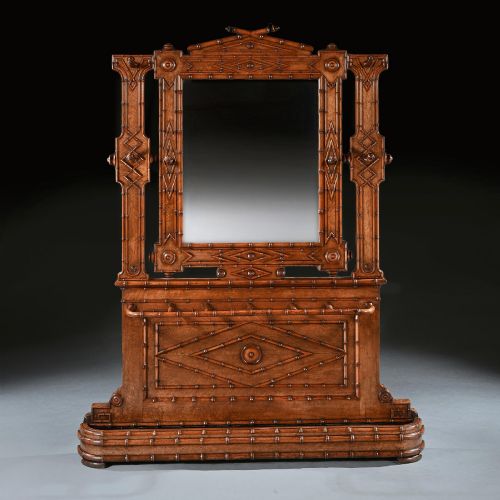
- The influence of Japanese art and aesthetics on Western design during the late nineteenth century, visible in exotic woods and bamboo-turned structures.
Victorian Carved Coat Stand: Frequently Asked Questions
What is a hall tree?
A hall tree is an alternative term for a freestanding coat stand, specifically those tall architectural forms that incorporate multiple hanging points, a mirror, and storage for umbrellas.
These pieces were designed to stand against an entrance hall wall to receive outdoor wear as soon as visitors or residents entered the house.
How do you use a stick stand?
The stick stand section holds walking sticks, canes, and umbrellas upright in metal or ceramic trays positioned at the base of the furniture.
The open framework and drip pans keep wet items contained and separate from the wooden structure of the main stand.
Where were hall stands placed?
Hall stands were positioned in the entrance hallway or vestibule of a Victorian home to greet guests and manage outdoor garments immediately upon arrival.
The inclusion of a mirror allowed residents to check their appearance before heading out the door.
How do you distinguish styles?
Styles are identified through specific decorative motifs and structural details, such as medieval pointed arches in Gothic Revival pieces or naturalistic animal carvings in Black Forest examples.
Materials also offer clues, with rich mahogany favouring classic Victorian forms and golden oak aligning with later arts and crafts or country house interiors.