
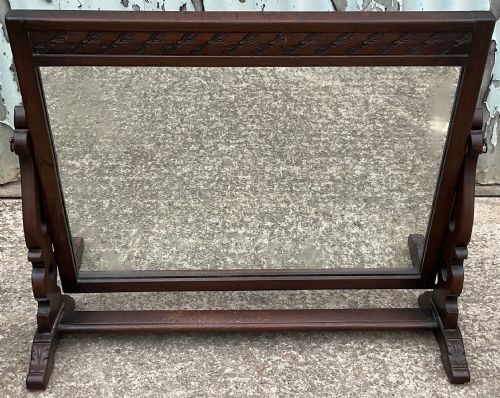


Victorian Carved Cheval Mirror
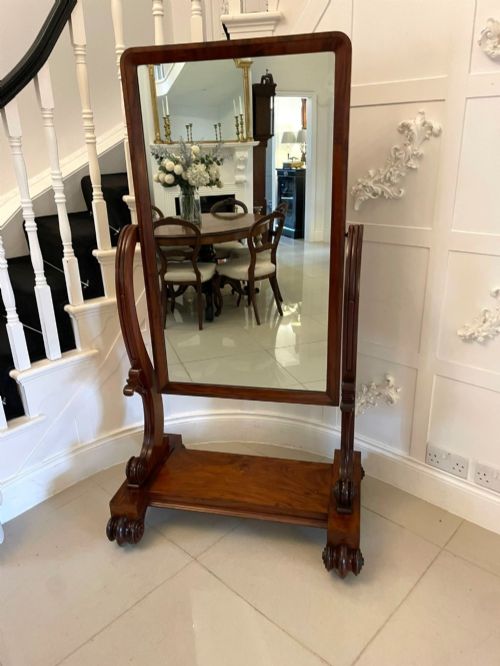
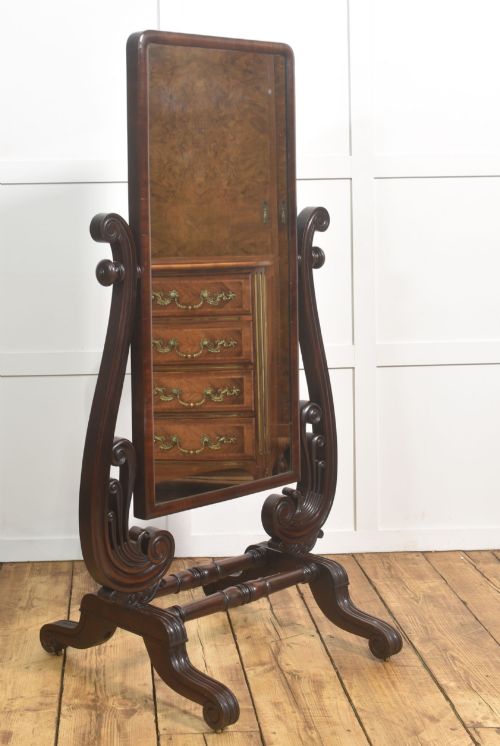
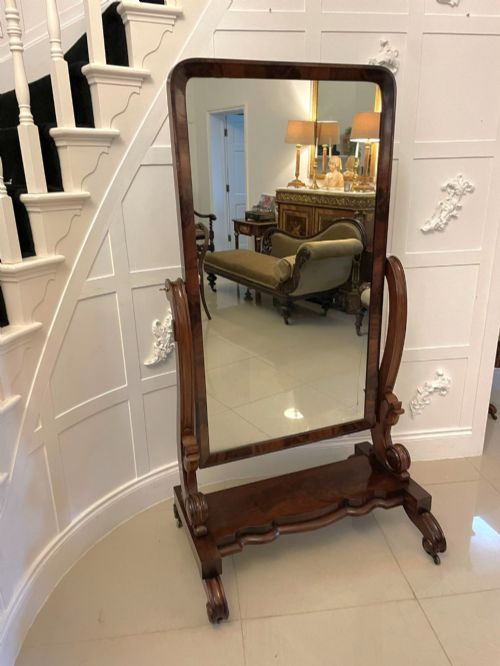
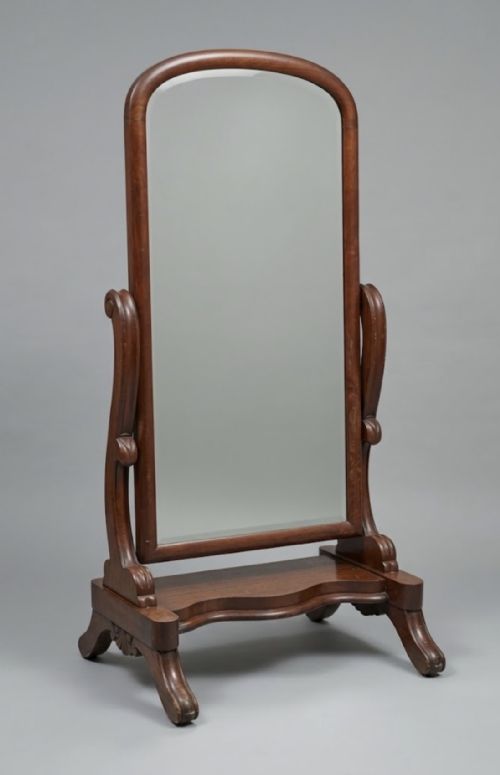
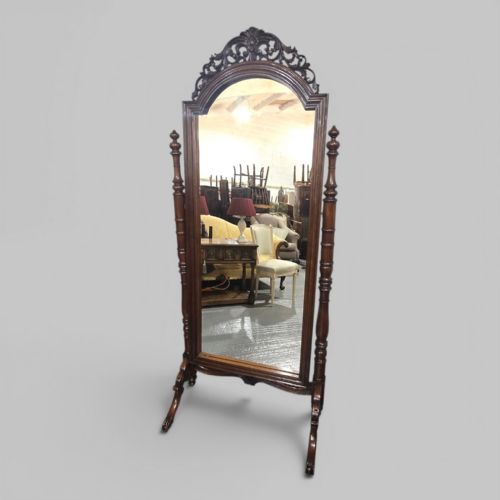
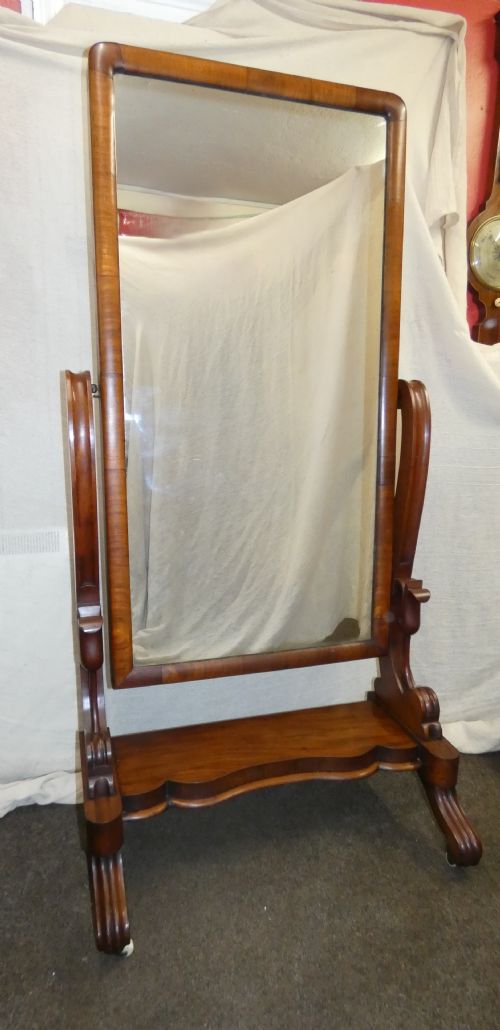
A victorian carved cheval mirror is a heavy, floor-standing swivel glass designed for full-length reflection.
Victorian Carved Cheval Mirror
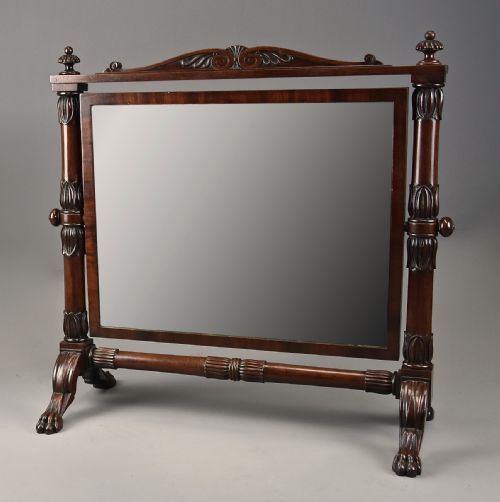
A victorian carved cheval mirror stands on a fixed frame with pivoted uprights supporting a swinging glass plate. This page presents nineteenth-century examples alongside earlier Regency and William IV pieces, plus later variants.
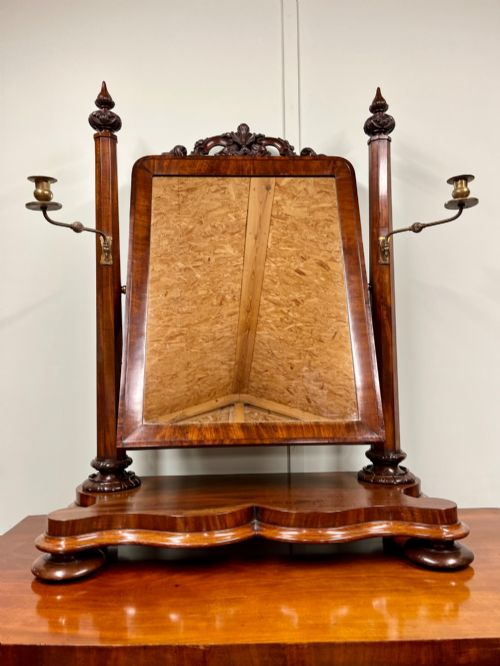
The floor-standing cheval forms appear frequently alongside smaller dressing table toilets and swing mirrors. Mahogany dominates the selection, accompanied by oak, walnut, and giltwood.
Makers shaped these frames with classical turns, Gothic points, or French Rococo curves. Buyers find both full-height floor mirrors and table-top versions designed for bedrooms and dressing rooms.
How they were made
Cabinet makers constructed the primary uprights and floor feet from dense timbers like mahogany, Cuban mahogany, oak, and walnut. They joined structural members using traditional framing techniques to support the heavy weight of the swinging glass.
Carvers applied manual ornamentation directly to the timber or built up relief details in gesso before applying gilding. Brass pivots, pins, and candle sconces provided the hardware needed to tilt the mirror plate.
Unusual survival of an early Victorian boot maker's mirror designed for fitting footwear on the shop floor.
What varies in quality
The weight and selection of the timber dictate the substance of the frame, with dense Cuban mahogany or figured burr walnut sitting above simpler domestic woods. Heavier timber prevents the uprights from twisting under the load of the glass plate.
Carving depth and sharpness separate standard production pieces from master workshop output. Crisp, undercut foliage and well-defined mouldings show the hand of a skilled artisan rather than routine mechanical shaping.
P and MA Nicholson
The Victorian Carved Cheval Mirror Glossary
- Cheval
- A floor-standing mirror supported on a frame with four legs and vertical pivots. The word derives from the French for horse, referencing the supporting trestle frame.
- Swing mirror
- A glass plate hung on pivots between two upright posts allowing it to tilt. These sit either upon a dressing table or stand directly on the floor.
- Giltwood
- Timber coated with fine gold leaf over a prepared gesso layer. This finish adds bright reflectivity and decorative warmth to ornate frames.
- Gesso
- A plaster-like mixture applied to wood surfaces and carved before gilding. It provides a smooth ground for decorative relief work.
- Cuban mahogany
- A dense, dark tropical hardwood valued for rich grain patterns and cabinet longevity. Nineteenth-century makers prized it for large structural frames.
Victorian Carved Cheval Mirror: Frequently Asked Questions
How do I adjust the mirror tilt?
Brass thumbscrews or threaded pins on the side pivots tighten to hold the glass plate at the desired angle. You turn them by hand to adjust the tension.
Older frames rely on friction pins that fit into numbered slots or rely on weighted balances within the uprights.
Where should I place a cheval mirror?
These floor-standing pieces require adequate clearance behind and in front to allow the glass frame to swing fully on its pivots. Bedrooms and dressing rooms provide the traditional setting.
Keep them away from direct sunlight to protect polished mahogany and walnut surfaces from fading over time.
How do I date a Victorian mirror?
Inspect the timber grain, fixing screws, and the backboards for signs of original construction methods. Hand-cut dovetails and older secondary woods point towards mid-century manufacture.
Later nineteenth-century examples often feature machine-sawn components and brighter, more uniform gilding finishes.
Are toilet mirrors different from cheval mirrors?
Toilet mirrors are smaller versions designed to sit on top of a dressing chest or table rather than standing on the floor. They share the same pivoting swing mechanism.
Both forms utilise carved frames, but floor-standing cheval mirrors provide a full-length reflection.