
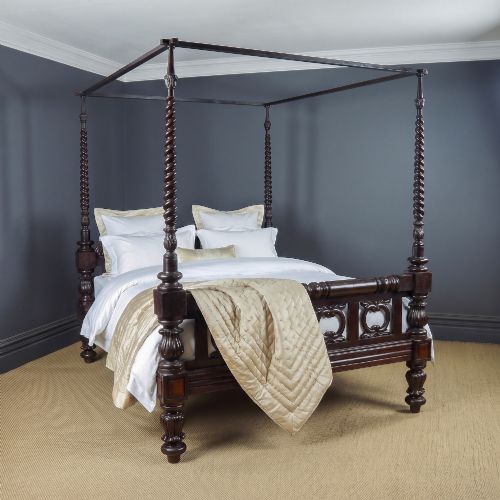
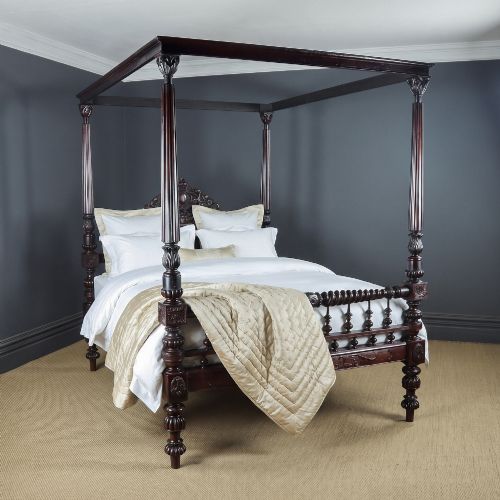
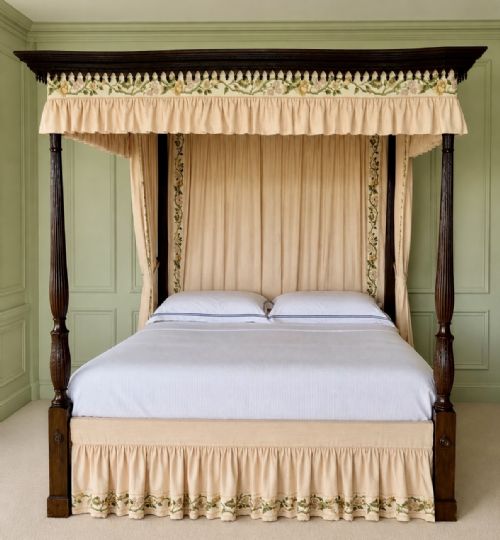


Victorian Carved Canopy Bed
A victorian carved canopy bed brings undeniable scale and architectural presence to a room, framing a sleeping space with solid timber and soaring posts.
Victorian Carved Canopy Bed
A victorian carved canopy bed is a grand sleeping platform defined by upright posts supporting an overhead tester, canopy, or half tester structure. These pieces emerge primarily from the nineteenth century, encompassing dates from eighteen fifty through eighteen eighty alongside broader Victorian and nineteenth-century designations.
Buyers encounter substantial forms constructed predominantly in mahogany, alongside options in oak, burr walnut, teak, pine, and gilt wood. Variations range from standard beds and four poster beds to half tester beds and even pet furniture in the form of a dog four poster bed.
Geographic influences and design iterations stretch across standard Victorian models into Anglo-Indian Colonial, Colonial Revival, British Colonial, and Victorian Gothic styles. The most frequent encounters on this page involve full-scale mahogany four poster beds and half tester configurations.
Materials and construction methods
Makers relied heavily on dense hardwoods such as mahogany and oak, employing structural pine and teak for internal framing. Selected pieces incorporate rich burr walnut veneers and decorative gilt wood elements alongside integrated textile components and fabric canopies.
Carpenters utilised traditional hand-carving techniques to shape the massive posts, headboards, and cornices characteristic of the era. Specialised additions include porcelain components integrated into the framework of specific four poster beds.
Materials recorded across the inventory include mahogany, oak, burr walnut, teak, pine, gilt wood, and fabric.
Qualities that separate examples
Depth and crispness of the hand-carved ornamentation dictate the visual standard across the woodwork, separating standard turned posts from deeply sculpted architectural drapery and foliage. The choice of primary timber also sets pieces apart, with figured mahogany and burr walnut commanding greater presence than utility hardwoods.
Proportion and scale define the architecture of the tester or half tester canopy, where balanced posts and substantial cornices create a more resolved silhouette. Integrity of the original framing timbers and the retention of period components preserve the historical character of each bed.
Howard And Sons
The Victorian Carved Canopy Bed Glossary
- Half Tester
- A wall-mounted or post-supported canopy that covers only the head portion of the bed rather than the entire frame. This configuration was common in nineteenth-century bedrooms.
- Anglo-Indian Colonial
- A style produced in the Indian subcontinent during the British Raj, combining traditional British furniture forms with local dense hardwoods and intricate native carving traditions.
- Burr Walnut
- A highly figured veneer sliced from the wart or burl growths of the walnut tree. It produces swirling, organic patterns prized for decorative surfaces.
- Gilt Wood
- Timber coated with a thin layer of gold leaf or gilt pigment. This finish highlights specific carved details on decorative frames.
Victorian Carved Canopy Bed: Frequently Asked Questions
How do I clean the wood?
Dust the carved surfaces regularly with a soft, dry cloth to prevent grime accumulation. Avoid harsh chemical sprays that can strip the historic polish from the timber.
Apply a traditional beeswax sparingly when the wood appears dry, buffing it gently to maintain a soft sheen. Respect the original finish rather than attempting aggressive restoration.
Will standard mattresses fit?
Nineteenth-century bed sizes often differ from modern standard dimensions, particularly in length and width. Many antique frames require custom mattress solutions to fit properly within the wooden posts.
Check the internal dimensions between the side rails and headboard carefully before ordering a mattress. Support slats may need adjustment to accommodate modern bases safely.
How do I assemble the frame?
These large beds typically dismantle into components including headboards, footboards, side rails, and the overhead tester. Professional installation is often advisable due to the sheer weight and scale of the solid hardwood elements.
Inspect the joint bolts and bed-bolt connections during assembly to ensure structural stability. Keep timber components aligned properly to prevent stress on the antique fixings.
What is a half tester?
A half tester is a bed featuring a canopy that extends only over the head of the bed rather than stretching across the entire length. This design originated to support curtains that sheltered the sleeper from drafts while keeping the room feeling lighter.
Such beds often combine burr walnut or mahogany with refined carving around the projecting tester bracket. They offer a compact alternative to full four poster beds while retaining strong architectural presence.