


Carved Headboard Poster Bed
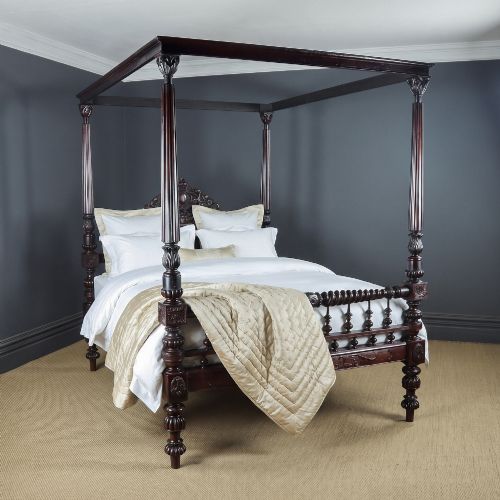
A carved headboard poster bed commands the bedroom with architectural presence, offering a grand focal point rooted in centuries of master woodworking.
Carved Headboard Poster Bed
A carved headboard poster bed brings substantial timber architecture into the bedroom through tall vertical posts and ornamented headboards. These monumental pieces span multiple centuries, reflecting the evolving domestic tastes of British, colonial, and continental cabinetmakers.
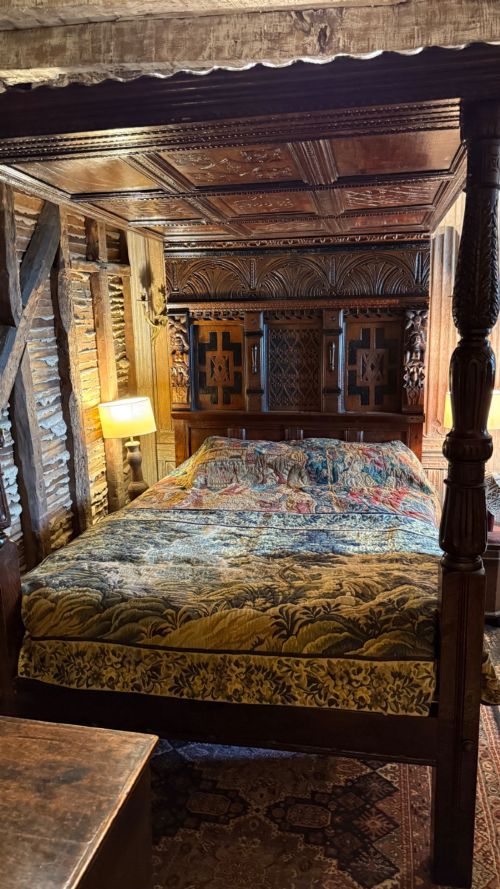
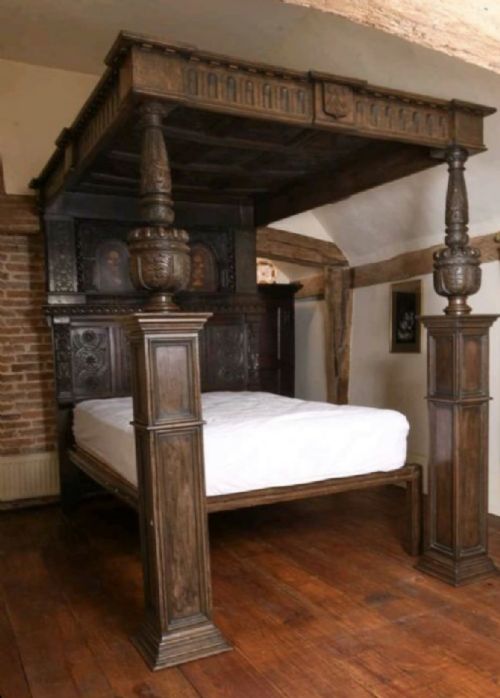
The selections encountered here range from robust seventeenth century oak designs to nineteenth century colonial mahogany and walnut interpretations. Buyers meet both full tester configurations and open poster bedframes, each bringing distinct architectural weight to a sleeping space.
Early periods supply sturdy oak examples featuring deep relief carving and traditional joinery, whilst later nineteenth century pieces showcase exotic hardwoods like flame mahogany veneer and teak. This variety allows collectors to match specific historical periods to their domestic interiors.
Materials and construction
Makers relied upon structural hardwoods such as oak, mahogany, walnut, and chestnut to build frames capable of supporting heavy testers and large mattresses. Cabinetmakers also utilised fruitwood inlay to introduce subtle tonal contrast across prominent headboard panels.
Joinery techniques relied on pegged mortise and tenon joints to secure the heavy posts, headboards, and side rails without modern metal fasteners. Surface decoration involved hand chiselling and gouging directly into the solid timber to create intricate repeating motifs.
Early seventeenth century makers tucked fruitwood inlay into oak headboards, proving that even centuries ago, people enjoyed a little extra decoration where their pillows rested.
Assessing quality and proportion
Superior examples display crispness and depth in the carved headboard ornamentation, where chisel marks reveal confident hand execution rather than mechanical repetition. The choice of timber also dictates quality, with dense, well figured flame mahogany veneer or richly grained seventeenth century oak marking out the finest commissions.
Proportion and structural integrity separate exceptional pieces from lesser alternatives, particularly in how the vertical posts harmonize with the scale of the headboard. Original timber patination, developed through centuries of handling and polishing, adds depth that replacement sections or overly stripped surfaces lack.
The Carved Headboard Poster Bed Glossary
- Four poster bed
- A bed featuring four vertical posts at each corner that support an upper tester or simply frame the sleeping quarters. These structures dominate the bedroom through sheer vertical scale.
- Flame mahogany veneer
- A thin decorative slice of mahogany timber displaying a distinct flickering flame pattern applied to a secondary wood core. This material appears on high status nineteenth century case furniture and bedframes.
- Mortise and tenon
- A traditional woodworking joint where a projecting tongue fits snugly into a corresponding cavity to lock timbers together at right angles. This method underpins the sturdy construction of early oak bedframes.
- Anglo-Indian Colonial
- A style blending British furniture forms with traditional South Asian carving techniques and exotic timbers like teak and mahogany. These pieces date predominantly from the nineteenth century.
Carved Headboard Poster Bed: Frequently Asked Questions
How do I fit a modern mattress?
Many historical frames accommodate standard modern mattress sizes, though older examples occasionally require custom dimensions due to historical sizing variations. Adjustments to internal slat systems are frequently made to ensure correct support without altering the visible exterior structure.
Buyers should measure the internal width and length precisely before sourcing a mattress. Consulting the listing details helps confirm whether the frame accepts standard double, king, or super king sizes.
Are these beds difficult to assemble?
Traditional construction relies on heavy timber posts, rails, and pegged joints that require careful handling during assembly. Professional installation is often recommended to ensure the frame remains square and structurally stable.
Component parts can be weighty, particularly dense oak or mahogany sections. Proper assembly preserves the historic joinery and prevents undue stress on the carved headboard.
How do I maintain the wood?
Routine maintenance involves dusting with a soft, dry cloth to prevent particulate build-up on carved surfaces and mouldings. Occasional application of quality beeswax feeds the historic timber and preserves the natural surface sheen.
Direct sunlight and sudden humidity changes should be avoided to prevent timber splitting or veneer lifting. Maintaining a stable indoor climate protects the structural integrity of antique hardwoods.
How can I date the bed?
Dating relies upon examining construction methods, tool marks, and stylistic motifs carved into the headboard and posts. Seventeenth century examples typically display pegged oak joinery and deep geometric relief carving, whilst nineteenth century pieces feature refined mahogany veneers and Anglo-Indian influences.
Comparing the hardware, timber species, and overall proportions against documented historical examples provides further confirmation. Period characteristics offer reliable clues to the decade or century of manufacture.