



Victorian Poster Bedstead
A victorian poster bedstead brings towering presence to a room, offering substantial timber frames and gleaming metal frameworks.
Victorian Poster Bedstead
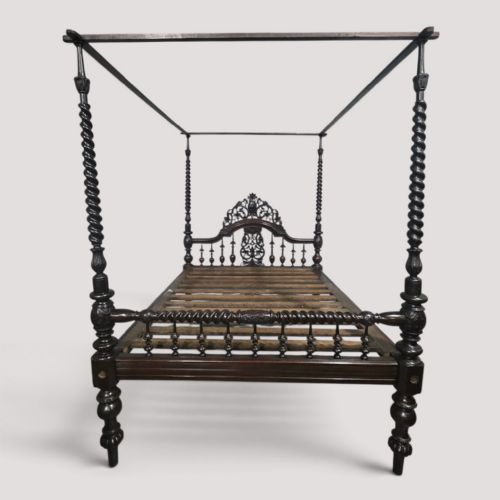
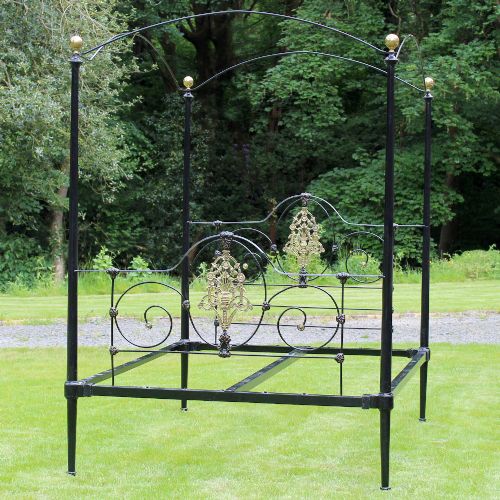
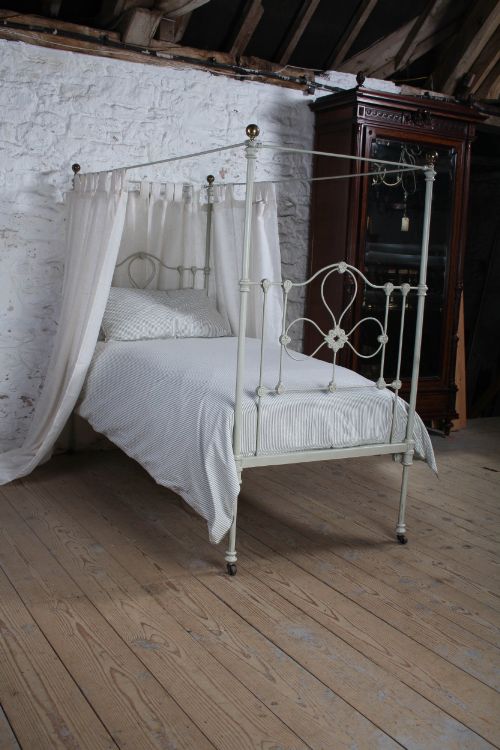
A victorian poster bedstead encompasses substantial architectural furniture designed for sleeping, featuring prominent upright posts and overhead testers. These pieces dominate a room through sheer scale and presence, utilising rich timber frames or gleaming metal structures.
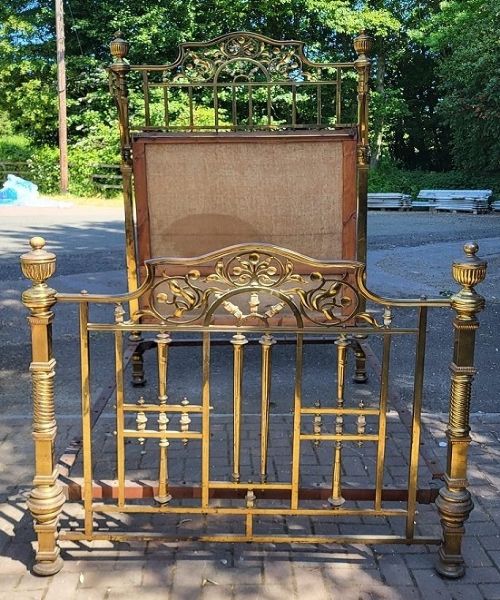
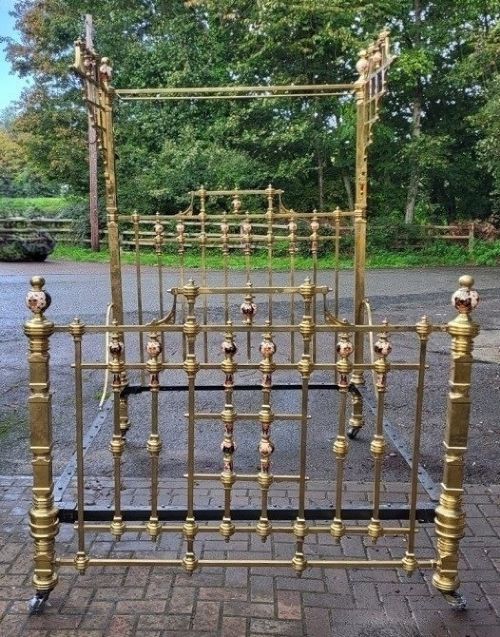
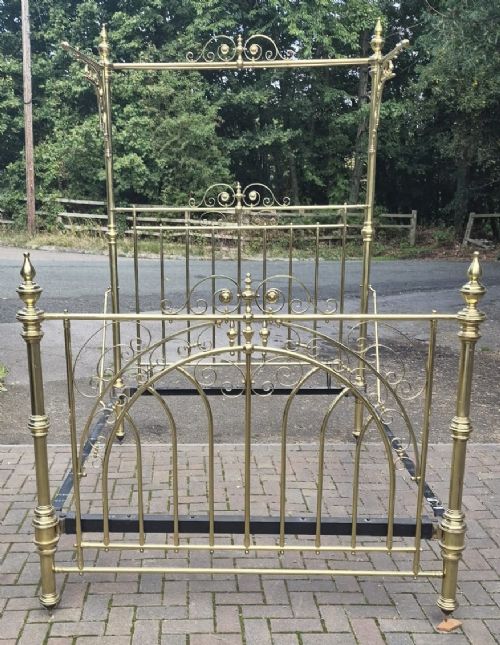
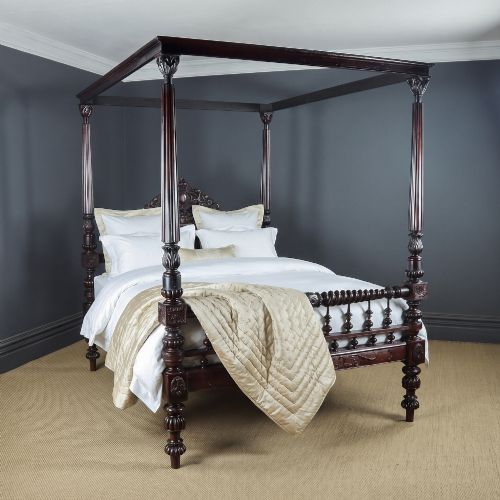
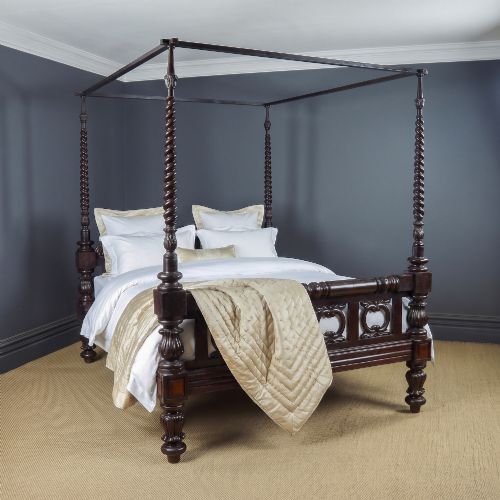
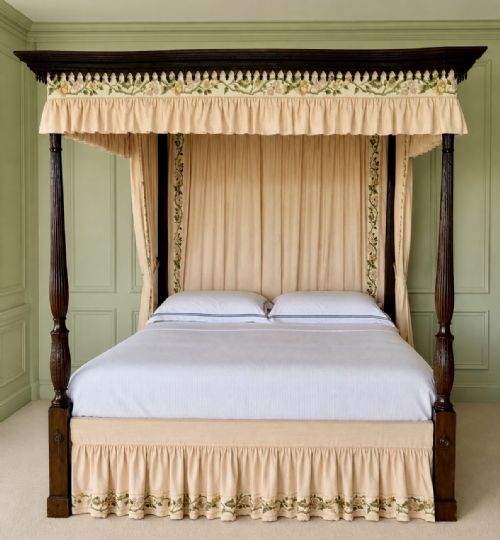
The versions most commonly met on this page include mahogany four poster beds and brass half tester bedsteads. Examples range from grand king size proportions down to single frames, alongside occasional miniature doll beds and specialised colonial forms.
Origins stretch across the nineteenth century, taking in William IV design influences and Anglo-Indian colonial craftsmanship. Makers utilised native and exotic woods alongside cast iron and brass to construct these elaborate sleeping quarters.
Materials and construction
Construction relies heavily upon solid mahogany, flame mahogany veneer, oak, and pine to build the main structural frames and testers. Timber components often display deep carving, turning, and polished finishes.
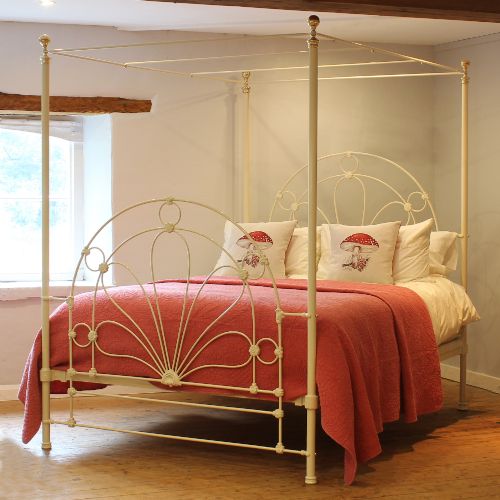
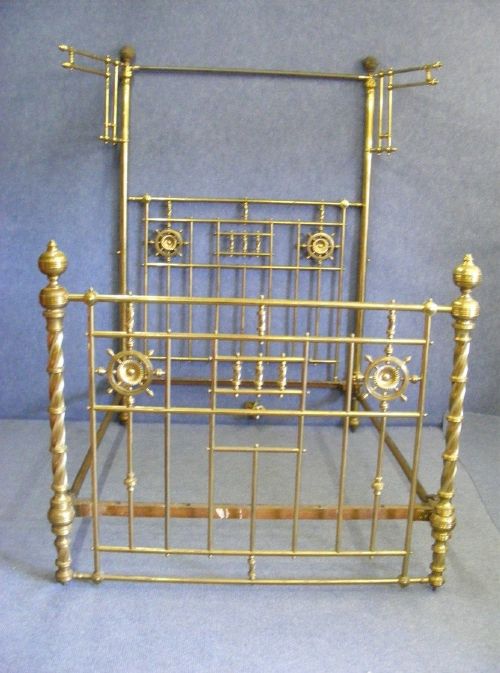
Metal bedsteads combine iron, cast iron, and bright brass to form half testers and upright posts. These metal components frequently incorporate porcelain elements for decorative contrast.
Fabric dressings and canopies historically completed the structures, enclosing the sleeper within the wooden or metal framework.
Victorian Poster Bedstead Retail Price Guide 2026
Typical asking prices for victorian poster bedstead among the pieces listed under this phrase on Sellingantiques today, from the lower quarter to the upper quarter. They describe what is for sale here now, not the wider market.
Among full-scale bedroom furniture, this selection includes a miniature doll bed fit for the most diminutive aristocrat.
The spectrum of quality
Quality separates ordinary utility frames from exhibition pieces through the depth of carving, the selection of solid timbers or flame veneers, and the prestige of the maker. Master workshops invested significantly more time in shaping architectural mouldings and decorative turnings.
Metal versions distinguish themselves through the weight and gauge of the brass used, alongside the complexity of the half tester canopy design. Exhibition quality specimens display superior finishing and more intricate metalwork overall.
Howard & Sons·R W Winfield
The Victorian Poster Bedstead Glossary
- Half tester
- A bedstead featuring a canopy that extends only partway over the head of the bed rather than covering the entire length. This configuration supported drapery to keep drafts away from the sleeper's head.
- Tester
- The flat wooden or fabric-lined canopy supported by the upright posts of a bedstead. It crowns the structure and traditionally held curtains.
- Anglo-Indian
- Furniture made in India by native craftsmen using local timbers like mahogany or teak, following British room forms. These pieces often feature distinctive deep carving influenced by regional decorative traditions.
- Flame mahogany veneer
- A sheet of timber sliced from mahogany logs where the grain creates a flickering, flame-like pattern. Craftsmen applied this decorative surface to prominent exterior surfaces of the bed frame.
- Bedstead
- The complete supporting framework of a bed, including the headboard, footboard, and side rails. It excludes the mattress and bedding.
Victorian Poster Bedstead: Frequently Asked Questions
How do I fit a modern mattress?
Many historic bed frames require custom mattress sizing or subtle internal adaptations to support modern standard dimensions securely. It is wise to check the internal width and length before sourcing a mattress.
Traditional side rails may sit differently than modern divan bases, so measuring the space between the posts prevents fitting issues upon delivery.
What is a half tester?
A half tester is a canopy that projects over the head portion of the bed rather than running the full length. This design provided localized shelter and supported curtains in high-ceilinged rooms.
Such beds combine the imposing height of a full tester with a slightly more open feel at the foot of the frame.
How do I care for brass?
Brass components require gentle dusting and occasional cleaning with non-abrasive metal polishes to maintain their brightness. Avoid harsh chemical cleaners that can strip protective lacquers or vintage patination.
Regular maintenance preserves the warm metallic glow characteristic of nineteenth-century metal bedsteads.
Are these beds easy to assemble?
Most antique bed frames utilise traditional iron bolts, bed screws, or slot-in joints that require basic hand tools for assembly. Taking care with heavy mahogany or cast iron components ensures joints align correctly without strain.
Enlisting professional help for delivery and setup is often sensible given the substantial weight of these large architectural pieces.