


Victorian Carved Bookshelf
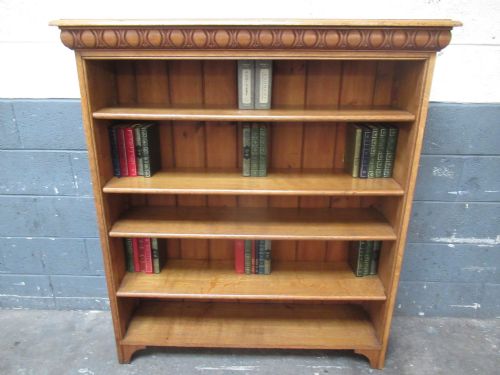
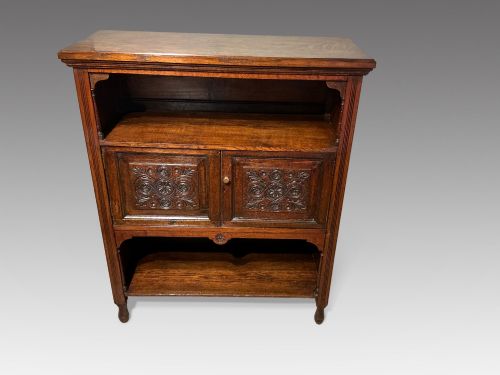
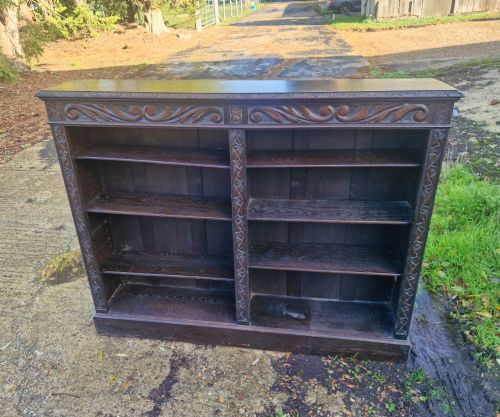
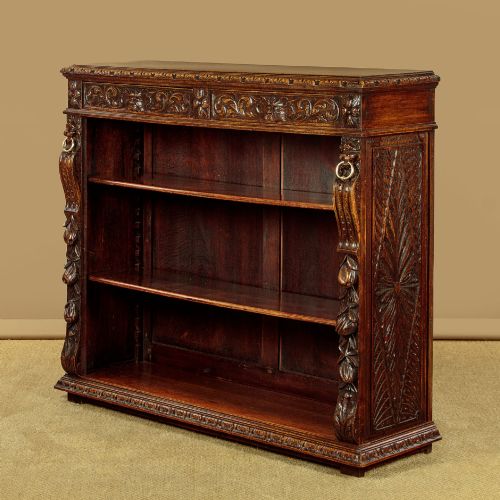
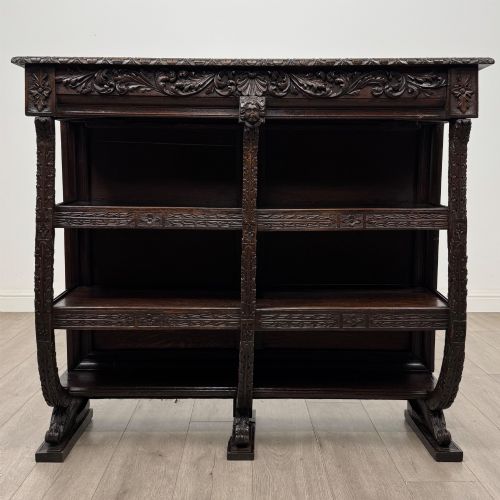
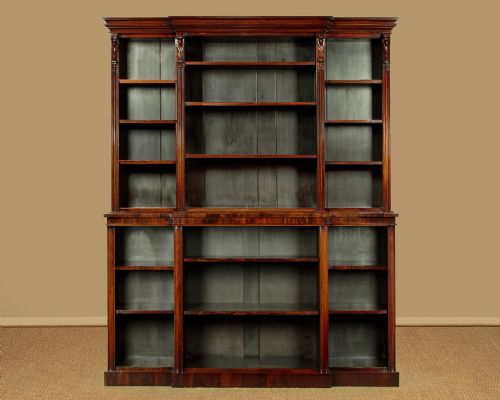
A victorian carved bookshelf brings substantial timber and architectural relief into a room, offering open storage for a working library.
Victorian Carved Bookshelf
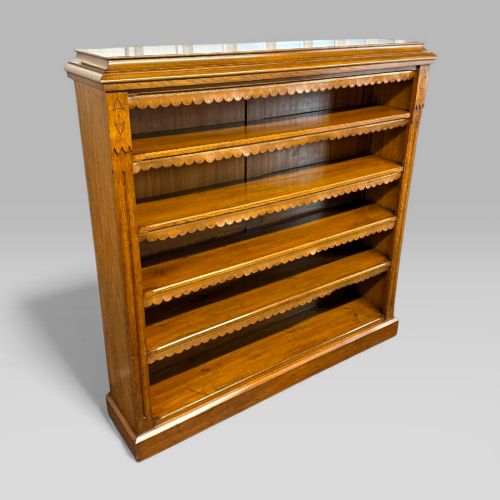
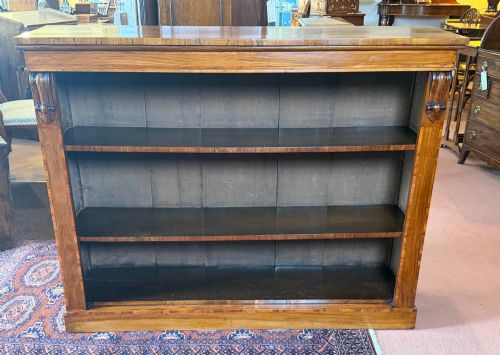
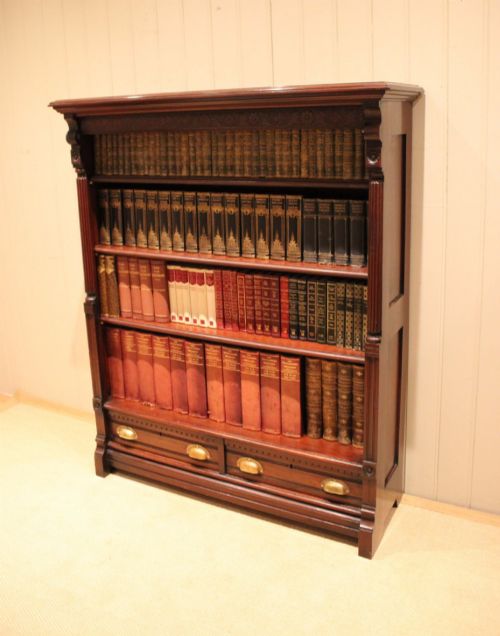
When you search for a victorian carved bookshelf, you encounter open front library cases, dwarf units, wall shelves, and whatnots spanning the nineteenth century. These pieces serve primarily to house books within domestic and institutional spaces, adopting proportions that range from low dwarf formats to large library editions.
The materials and styles reflect nineteenth-century preference for heavy hardwoods and decorative carving, often aligning with Gothic Revival, Aesthetic Movement, or Renaissance Revival tastes. Walnut, mahogany, and oak dominate the selection, frequently paired with adjustable shelving to accommodate varying book sizes.
Materials and construction
Joiners built these bookshelves using solid hardwoods such as oak, mahogany, and walnut, alongside decorative veneers like burr walnut and rosewood. Timber selection dictated the weight and colour profile of the finished piece, from dark golden oak to rich reddish mahogany.
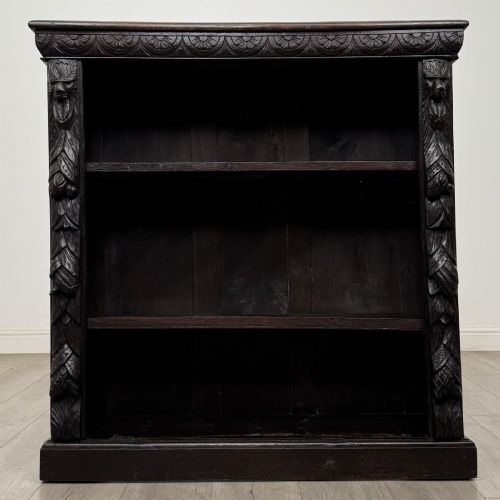
Carving was executed directly into the solid wood or onto applied mouldings, displaying motifs from Gothic tracery to leaf scrolls and green men. Brass mounts, ormolu details, and ebonised finishes occasionally augmented the timber framework.
Victorian Carved Bookshelf Retail Price Guide 2026
Typical asking prices for victorian carved bookshelf among the pieces listed under this phrase on Sellingantiques today, from the lower quarter to the upper quarter. They describe what is for sale here now, not the wider market.
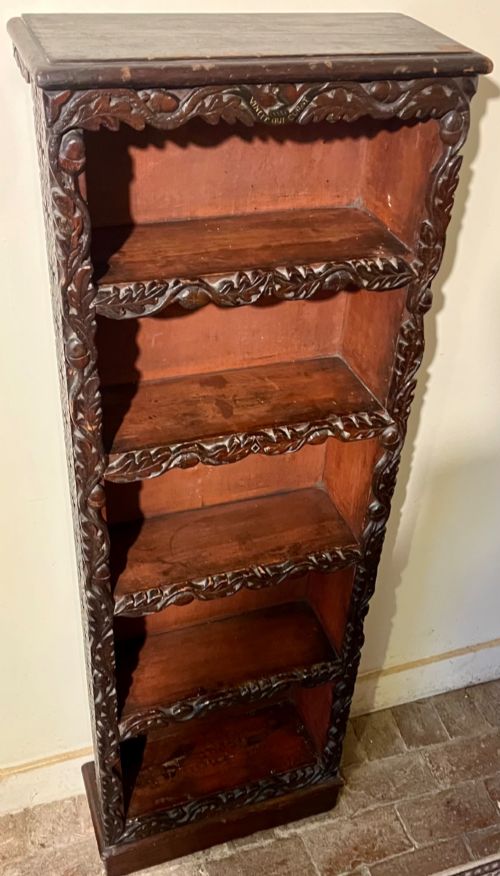
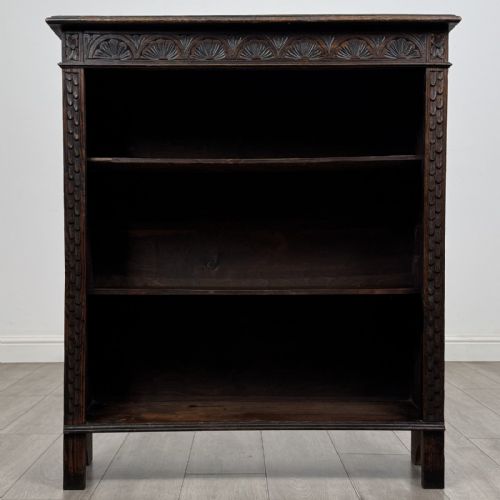
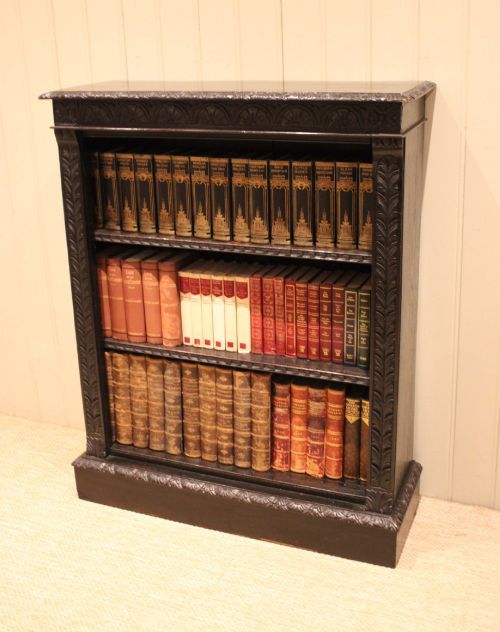
A grinning green man peers out from the carved ebonised woodwork of at least one nineteenth-century dwarf bookcase.
Judging quality in these bookcases
The distinction between standard utility furniture and superior pieces lies in the crispness of the timber carving and the selection of figured wood veneers. Dense grains in walnut and mahogany indicate better stock, while sharp, deep relief work on oak panels shows skilled hand carving rather than mechanical shaping.
Structural refinement also separates grades, visible in the integration of adjustable shelf mechanisms and the clean execution of architectural cornices or carved corbels. Superior examples maintain balanced proportions and unwarped backboards.
James Winter·John Moyr Smith
The Victorian Carved Bookshelf Glossary
- Dwarf bookcase
- A low open bookshelf designed to sit beneath window height, often featuring adjustable shelves.
- Breakfront
- A piece of furniture where the central section projects forward from the flanking sides.
- Green man
- A sculptural face carved from foliage or branches, frequently found on nineteenth-century carved woodwork.
- Ormolu
- Gilded bronze applied as decorative mounts to furniture frames during the nineteenth century.
- Waterfall bookcase
- A shelving unit with tiers that step back progressively from bottom to top.
Victorian Carved Bookshelf: Frequently Asked Questions
What is an open bookcase?
An open bookcase is a shelving unit without doors, designed for quick access to frequently used volumes.
These pieces typically feature fixed or adjustable horizontal boards supported by upright sides and a panelled back.
How do I adjust the shelves?
Many nineteenth-century library bookcases use wooden ratchets, brass studs, or vertical slots to hold shelves at different heights.
You simply lift the shelf and reposition the supports into the adjacent slots to fit taller books.
Where should I place a heavy wooden bookcase?
Position these heavy timber units against a sturdy interior wall away from direct sunlight and damp heat sources.
Keeping them out of intense thermal drafts prevents the solid mahogany or oak boards from warping over time.
How do I identify the wood type?
Examine the grain pattern, colour, and weight of the timber surfaces exposed on the sides and shelves.
Oak shows prominent silver flecks and open pores, while mahogany displays a reddish brown hue with fine interlocking grain.