
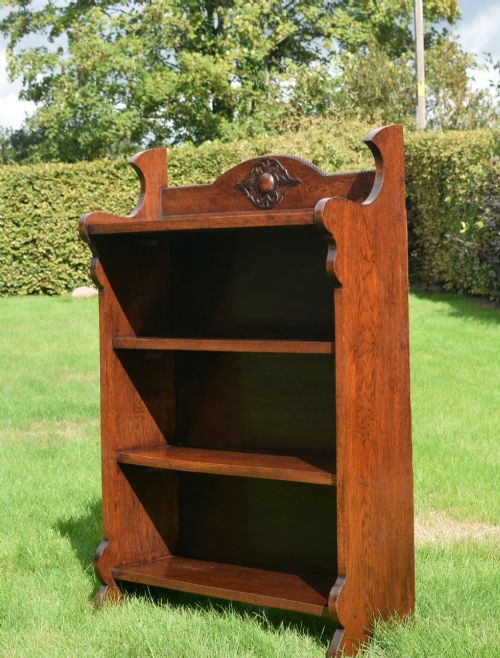
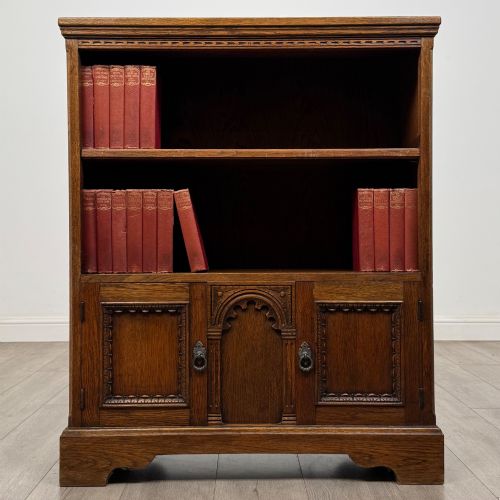
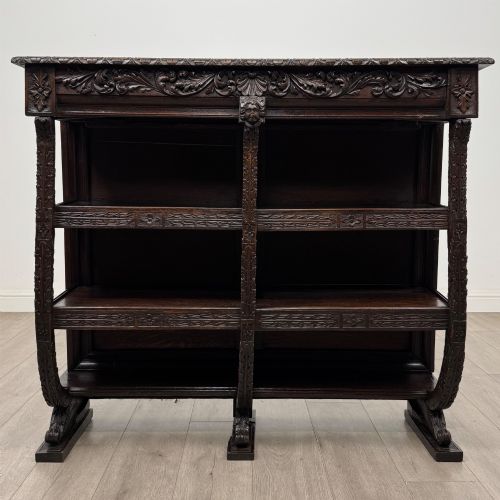
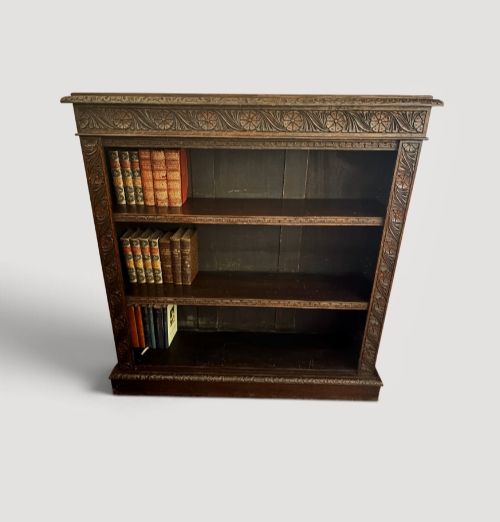
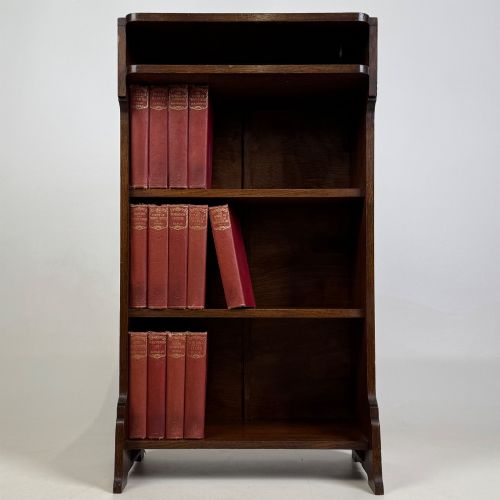
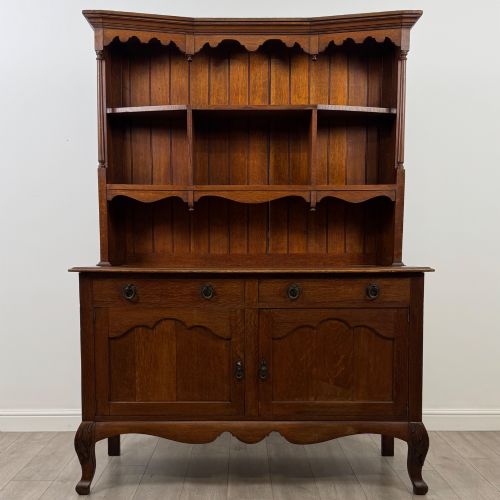
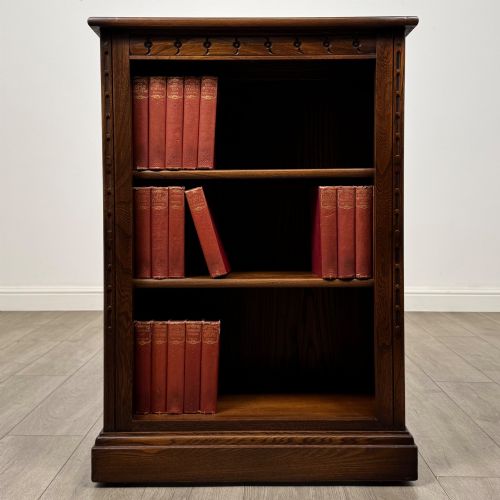
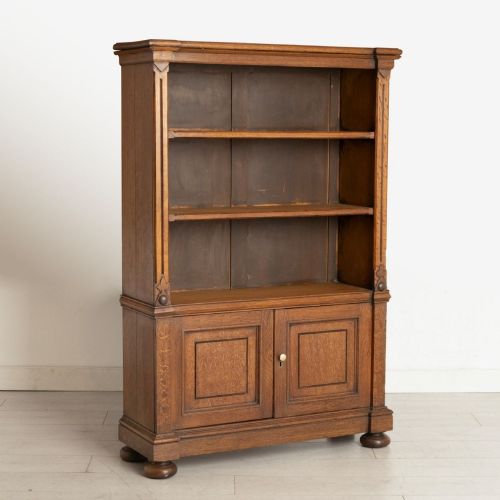
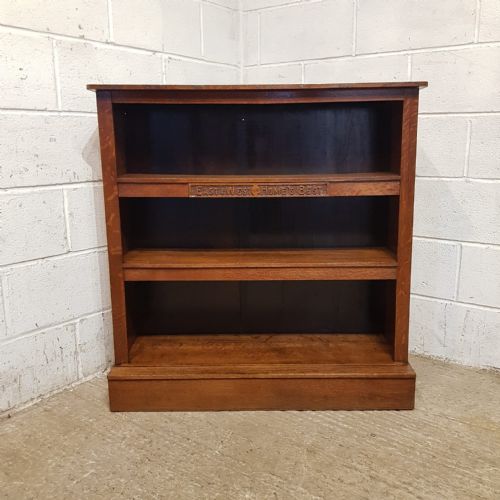
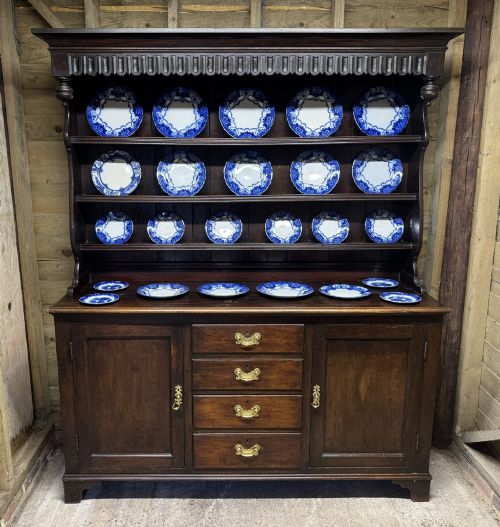
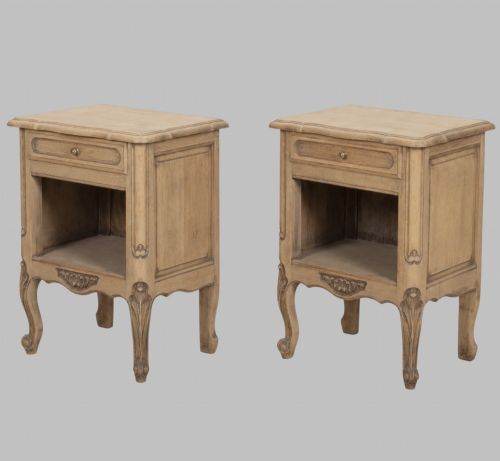
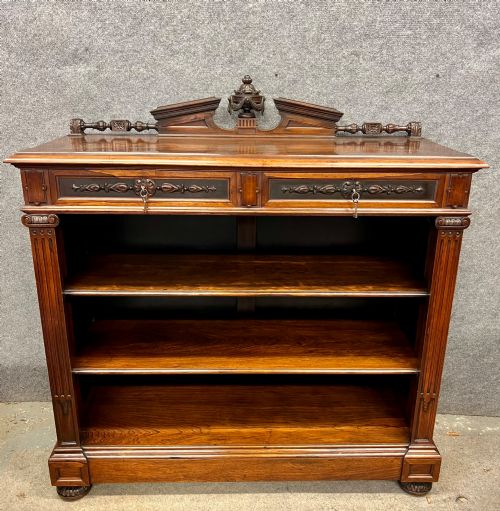
Carved Oak Open Shelves
Carved oak open shelves offer sturdy display space, bringing rich grain and deep relief carving into the home.
Carved Oak Open Shelves
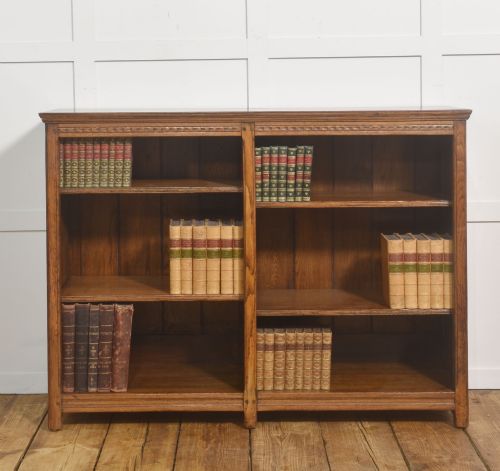
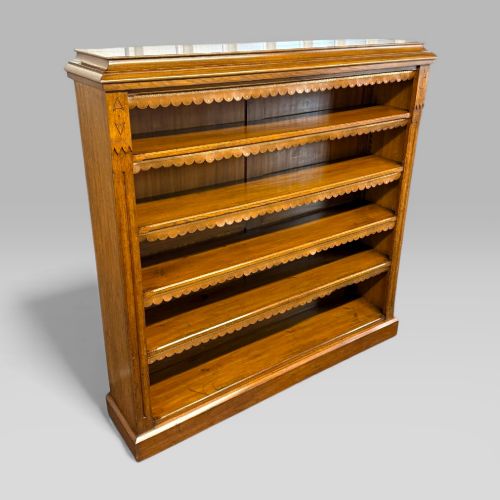
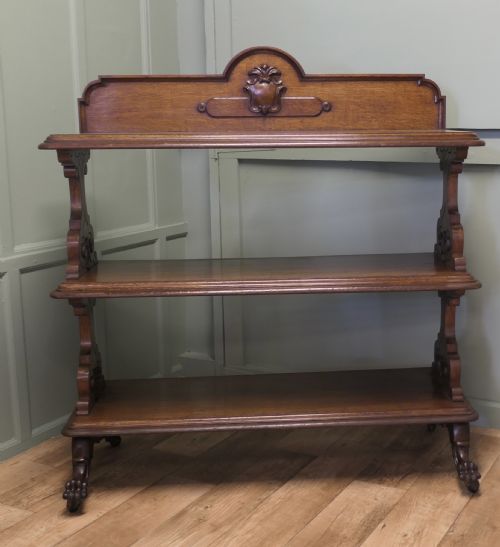
Carved oak open shelves comprise bookcases, wall shelves, and dresser bases designed to display books and objects without doors. Buyers seeking carved oak open shelves typically encounter Victorian and Edwardian examples alongside pieces from the early twentieth century.
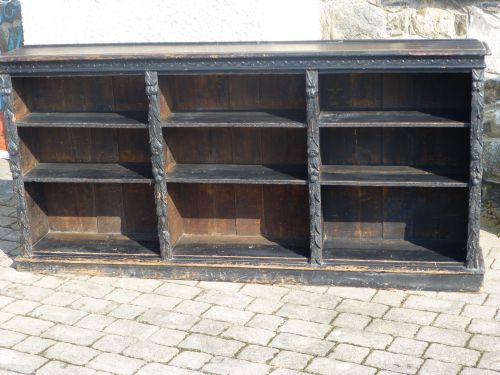
The form appears in varied proportions, from low dwarf bookcases to tall library units and hanging wall shelves. Solid oak and ebonised variants dominate, often fitted with adjustable shelves for practical use.
How they were made
Cabinet makers utilised solid oak, constructing frames and shelves to bear the weight of heavy volumes. Brass and metal fittings such as shelf brackets and screws appear alongside integrated wooden supports.
Carving was executed by hand, producing floral motifs, linenfold panels, and figural details like green man masks. Surfaces received wax or polish to highlight the natural grain of the timber.
Staring watchful green men peer from the woodwork of several bookcases, guarding your favourite novels with leafy resolve.
What varies in quality
The depth and crispness of the carving distinguish finer items from simpler production pieces. Elaborate relief work involving lion heads, Gothic tracery, or figural corbels indicates a higher grade of craftsmanship.
The choice of materials and construction methods also sets pieces apart, with solid golden or ebonised oak and adjustable shelving systems marking out superior workshops.
The Carved Oak Open Shelves Glossary
- Green man
- A sculptural motif of a human face emerging from or entwined with foliage. This symbol of rebirth appears frequently on Victorian carved furniture.
- Dwarf bookcase
- A low open bookcase standing roughly waist high. These pieces provide stable display surfaces while keeping sightlines clear across a room.
- Pot board
- A slatted or open lower shelf in a dresser or sideboard base. Historically utilised for storing pots and heavy kitchen utensils.
- Breakfront
- A piece of furniture where the central section projects forward from the flanking wings. This architectural arrangement adds visual depth to large bookcases.
- Fret-cut
- Woodwork pierced or cut through with a fretsaw to create decorative openwork patterns. This technique yields light, intricate geometric or floral designs.
Carved Oak Open Shelves: Frequently Asked Questions
What rooms suit carved oak open shelves?
These pieces fit naturally into studies, libraries, and living rooms where books and decorative objects require sturdy, accessible display. Their open format makes them practical for everyday use without closing off wall space.
Larger bookcases and dressers anchor spacious rooms, while smaller hanging shelves or dwarf variants suit more compact areas or hallways.
How do I adjust the shelves?
Many Victorian and Edwardian examples feature adjustable shelving supported by wooden ratchets, metal pins, or brass tracks. These systems allow you to alter shelf heights to accommodate books of varying sizes.
Care should be taken when sliding shelves along older wooden supports to avoid binding or damaging the interior panels.
Are these shelves suitable for heavy books?
Solid oak construction provides exceptional strength, making these shelves well suited for heavy volumes and large reference books. The density of the timber prevents significant sagging over time.
Checking the stability of the uprights and the condition of the shelf supports ensures safe loading for extensive libraries.
How do I date a carved oak bookcase?
Dating relies on stylistic clues, hardware, and construction methods spanning the nineteenth and early twentieth centuries. Gothic Revival and Aesthetic Movement pieces generally point to the Victorian era, while lighter frames often signal Edwardian production.
Details such as ebonised finishes, brass brackets, and specific carved motifs help narrow the period of manufacture.