

Victorian Carved Side Cabinet
These nineteenth-century pieces bring solidity and elaborate ornament to any room, offering practical enclosed storage alongside deeply carved wooden surfaces.
Victorian Carved Side Cabinet
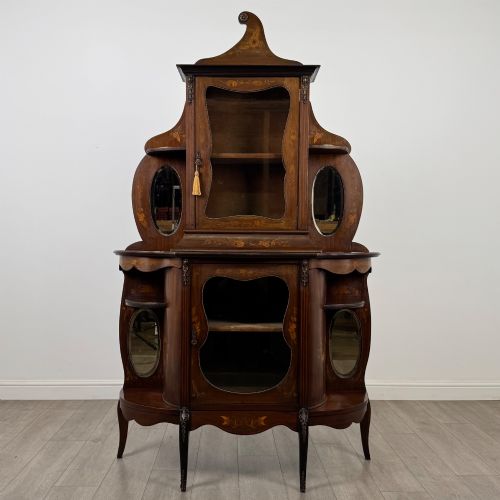
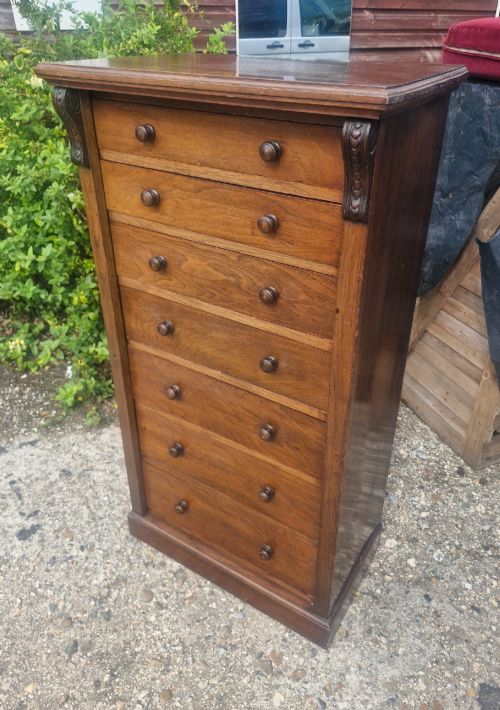
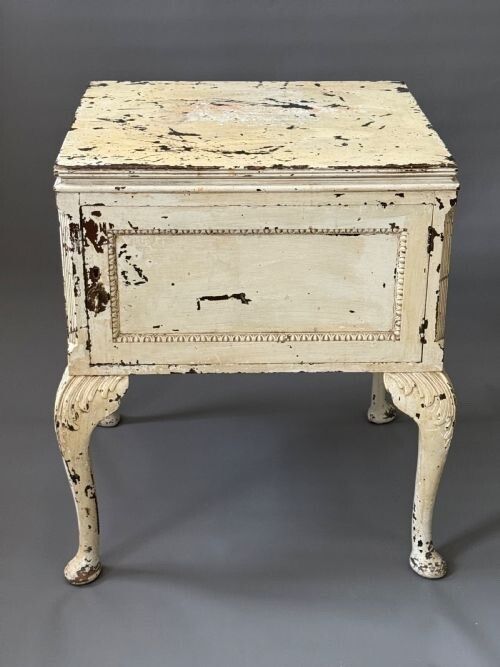
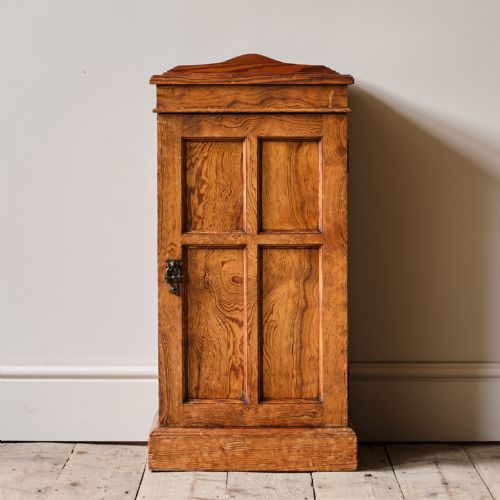
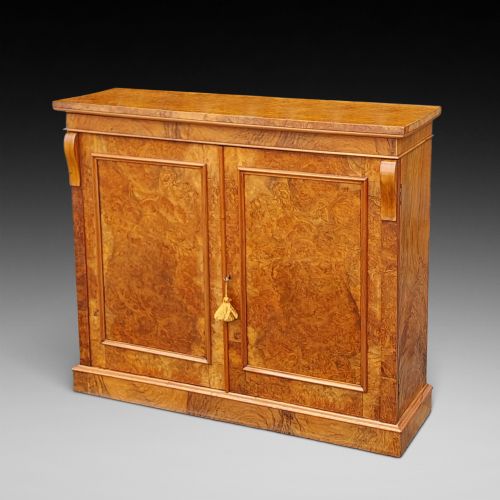
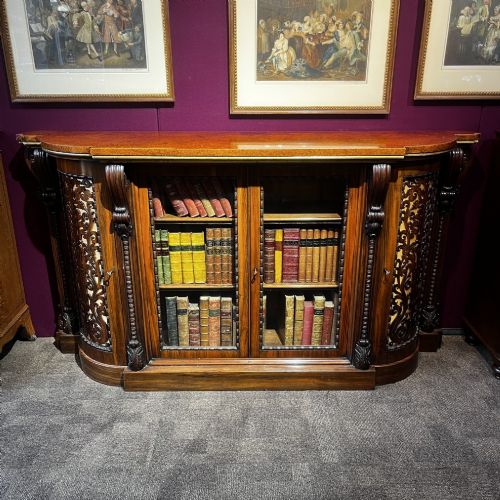
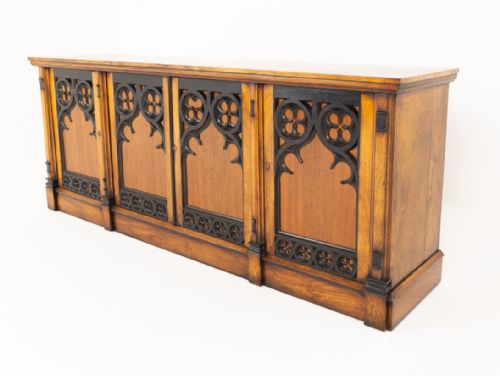
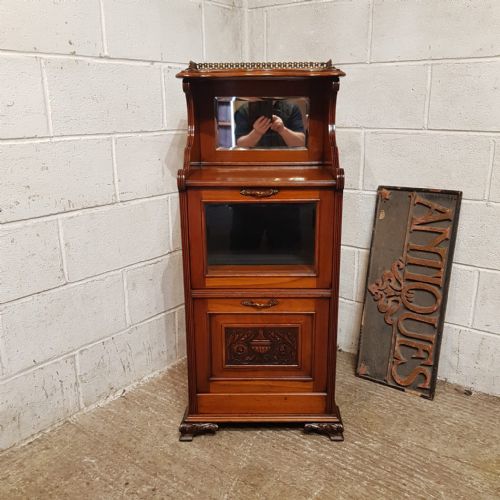
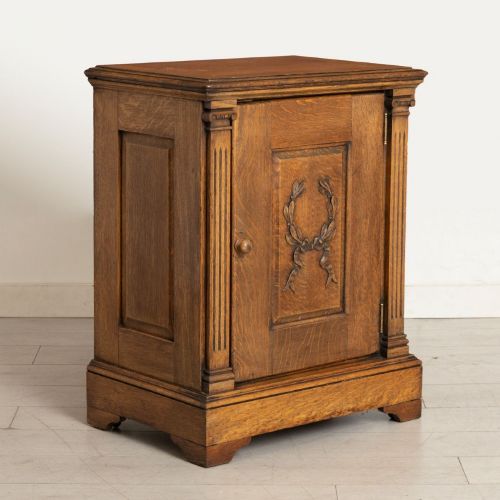
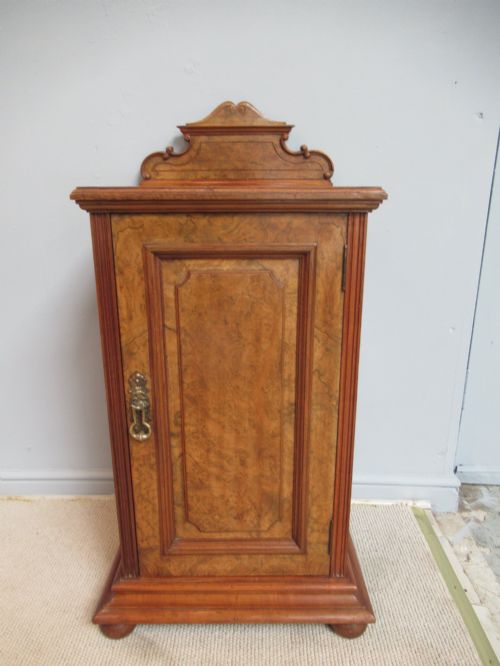
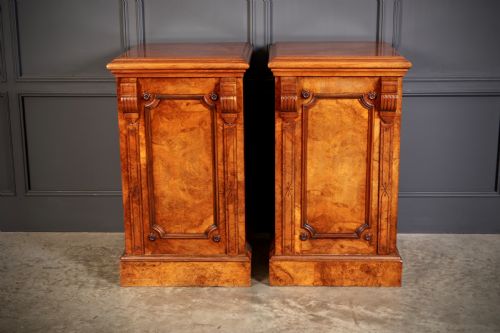
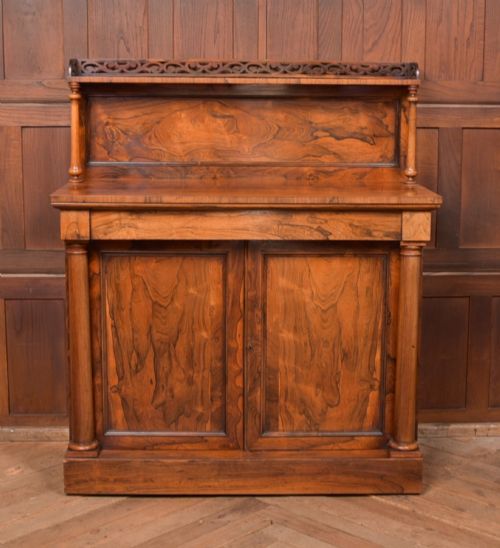
A victorian carved side cabinet functions as a substantial storage piece or display surface, originating primarily from the nineteenth century across decades such as eighteen eighty and eighteen ninety. The search brings up diverse forms including bedside cabinets, chiffoniers, hall cupboards, and mirrored display pieces.
Most examples meet on this page in dark timbers, notably oak and walnut, displaying the characteristic relief carving of the period. Buyers find both compact bedside variations and large mirrored units designed for principal reception rooms.
Materials and Construction
Cabinetmakers utilised dense native and imported timbers, frequently selecting figured mahogany, burr walnut, and solid oak as the structural base for heavy ornamentation. Carved motifs, panels, and applied mouldings were worked directly into the solid wood or applied to veneered carcases.
Secondary materials such as mirrored glass, brass hardware, and occasional ormolu mounts were integrated into the design to catch the light and accent the darker timber surfaces. Joinery relied on traditional techniques suited to heavy domestic furniture intended to last generations.
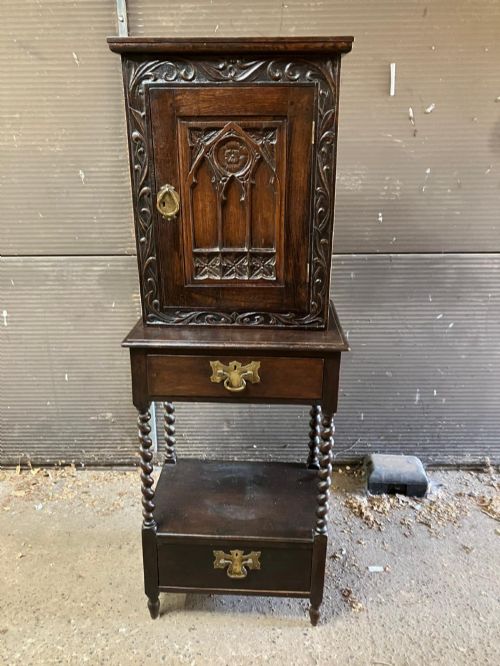
Several pieces feature the watchful face of the Greenman peering out from the carved oak foliage.
Judging the Workmanship
Quality rests in the depth and crispness of the carved details, where hand-chiseled foliage and figural work separate superior workshop output from mechanical production. The choice of timber grain, particularly matched burr veneers and substantial solid oak boards, dictates the status of the piece.
Internal construction, including drawer linings, backboards, and the original state of turnery or brass mounts, reveals the standard of the original maker. Cabinets retaining intact mirrors, original hardware, and structurally sound joints sit at the upper end of the scale.
Gabriel Viardot
The Victorian Carved Side Cabinet Glossary
- Chiffonier
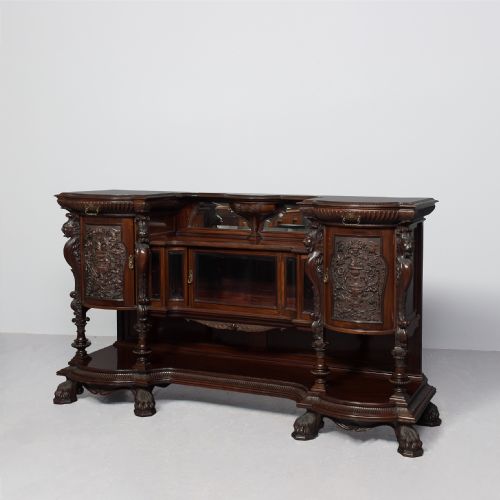
- A low sideboard or cabinet equipped with enclosed cupboards below and frequently a shelf or mirror structure above. It evolved during the nineteenth century as a popular dining room or parlour piece.
- Wellington chest
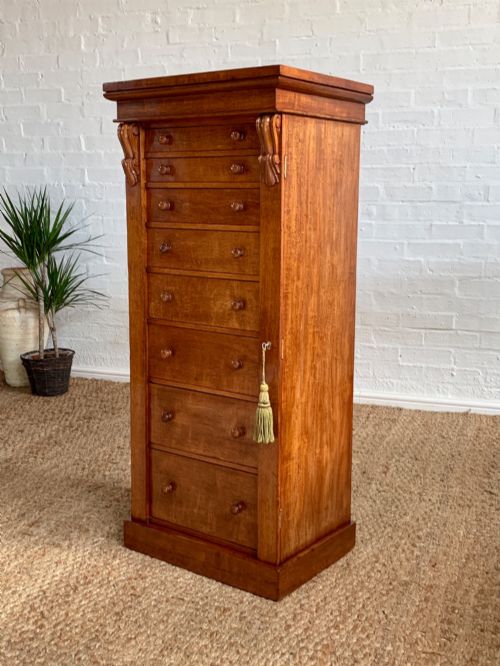
- A tall, narrow chest of drawers secured by a hinged locking stile on one side that fastens with a key. This form emerged during the nineteenth century for secure storage of papers or linen.
- Burr walnut
- A prized timber veneer taken from the knotted growths of the walnut tree, showing swirling, irregular grain patterns. Cabinetmakers utilised it on primary display surfaces for decorative impact.
- Pedestal cabinet
- A freestanding single-door cupboard designed to stand beside a bed or in the corner of a room. Pairs of these pieces frequently matched bedroom suites of the era.
- Greenman
- A sculptural architectural motif depicting a human face entwined with or sprouting from foliage. It appears frequently in nineteenth-century Gothic revival carved woodwork.
Victorian Carved Side Cabinet: Frequently Asked Questions
Where were these cabinets placed?
These pieces served multiple domestic roles, functioning as serving surfaces in dining rooms, display furniture in parlours, or bedside storage in larger chambers. Their enclosed cupboards kept household items concealed from dust and view.
Smaller variations adapted easily to narrow hallways or drawing rooms where floor space was at a premium, providing both a tabletop surface and internal shelving.
How do I distinguish oak from walnut?
Oak presents a pronounced, open grain with visible medullary rays, often carrying a medium to dark brown tone achieved through age or finishing. It was heavily favoured for Gothic revival and robust hall furniture.
Walnut offers a smoother, richer surface with darker figuring, especially when burr veneers are present. It tends to show a warmer, more polished lustre suited to formal reception rooms.
What is a chiffonier?
A chiffonier is a specific type of side cabinet featuring lower enclosed cupboards, often surmounted by a raised shelf or a mirrored back panel. They provided convenient surfaces for serving drinks or displaying decorative ceramics.
Victorian examples frequently combined rosewood or mahogany with elaborate carving, bridging the gap between a sideboard and a display cabinet.
How should I care for carved wood?
Maintenance requires keeping the timber away from direct heat sources and sudden temperature shifts that can dry out old wood and crack veneers. Regular dusting with a soft, dry cloth preserves the finish without chemical buildup.
Occasional applications of appropriate beeswax help nourish the grain and maintain the natural lustre of nineteenth-century polishes.