
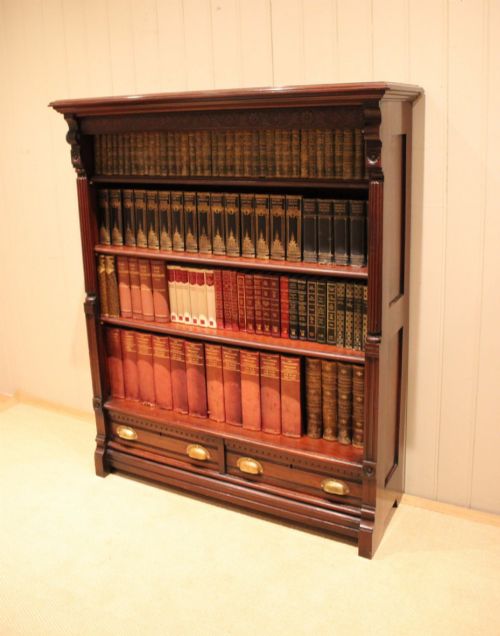
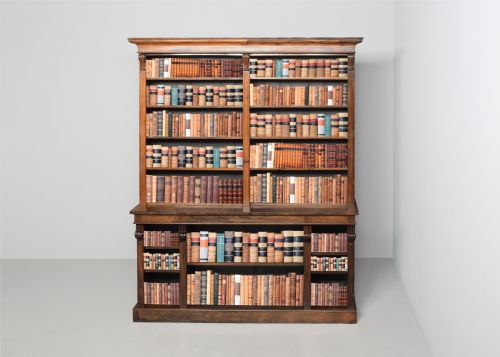
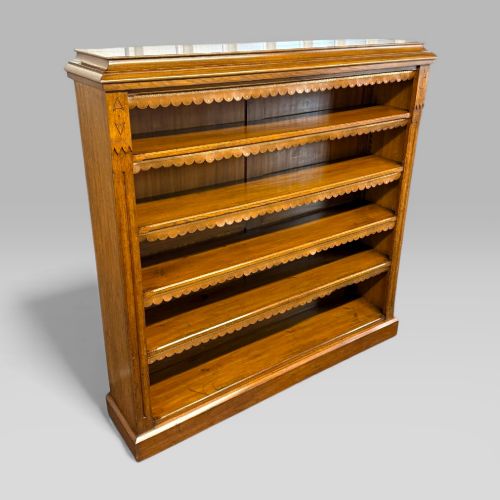
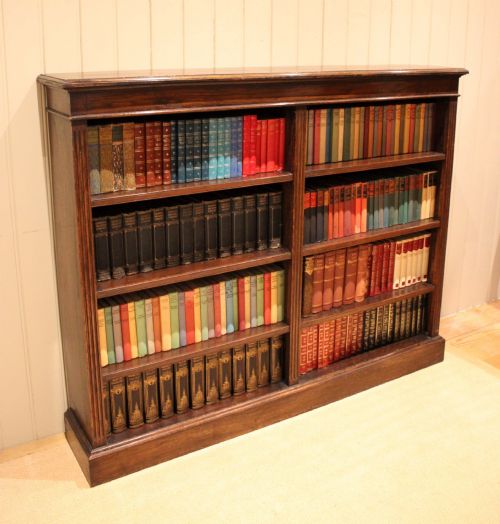
Large Open Library Shelving
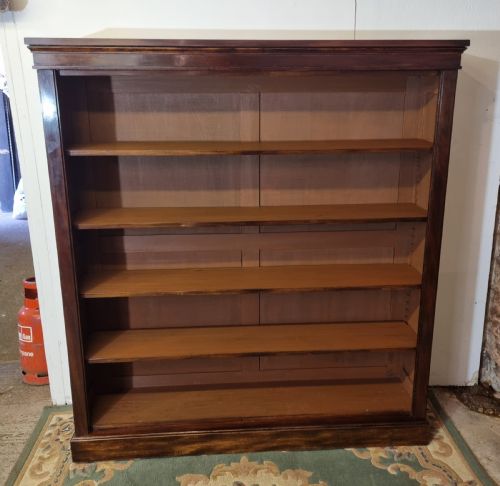
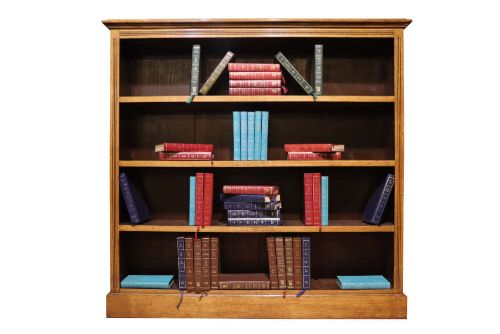
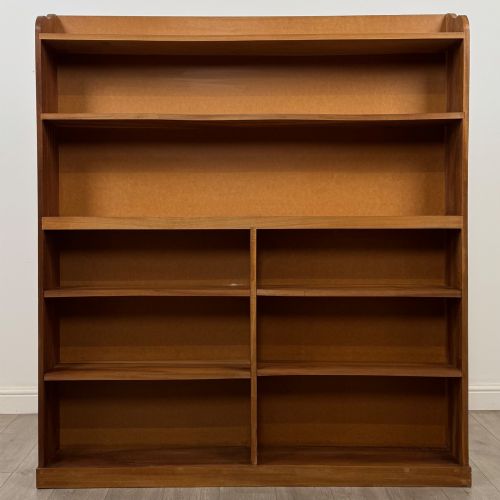
Large open library shelving delivers substantial storage and dignified presence, bringing order to extensive book collections through accessible architectural timber forms.
Large Open Library Shelving
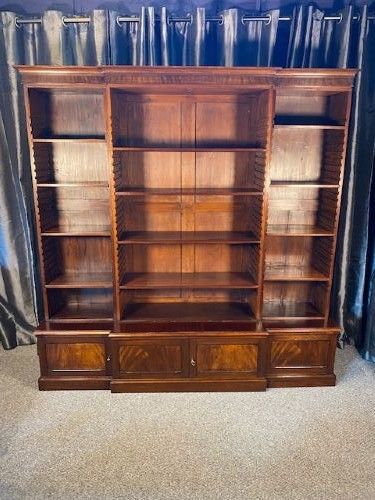
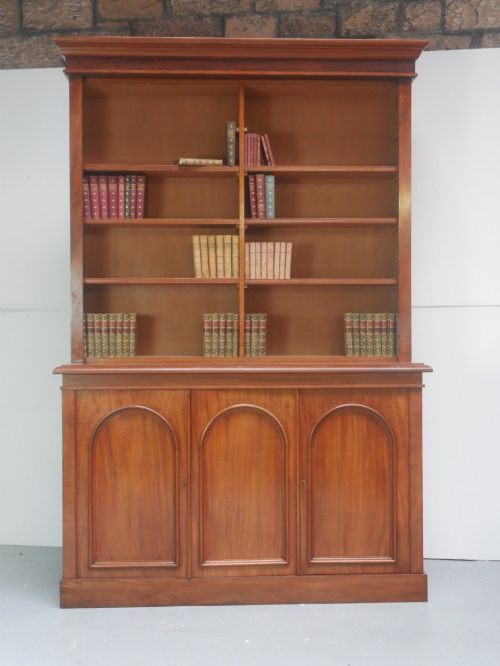
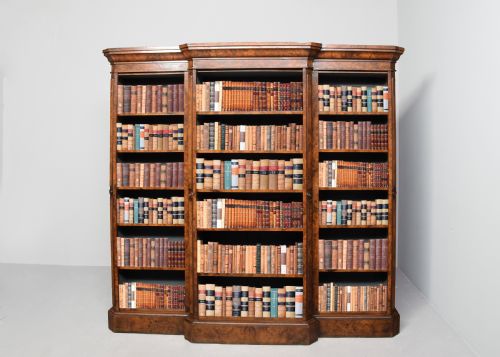
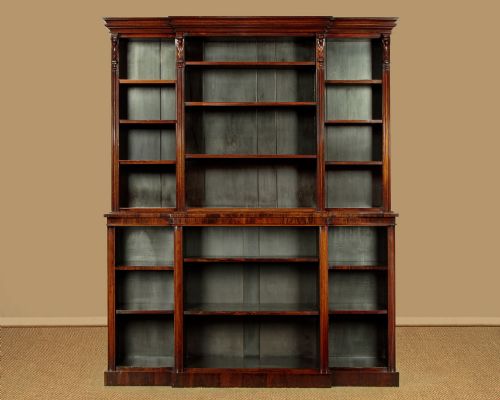
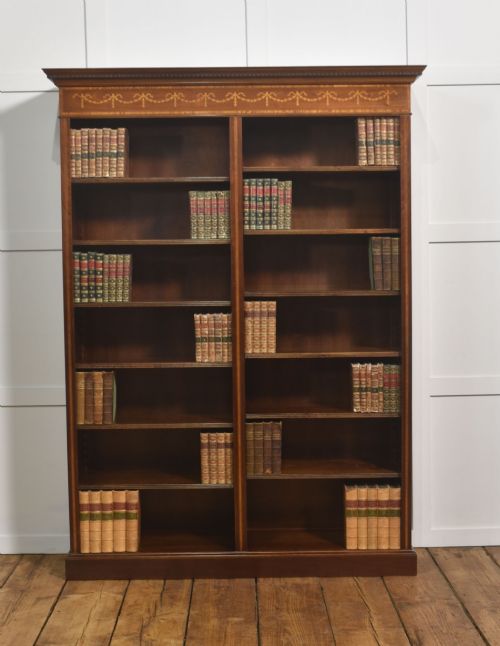
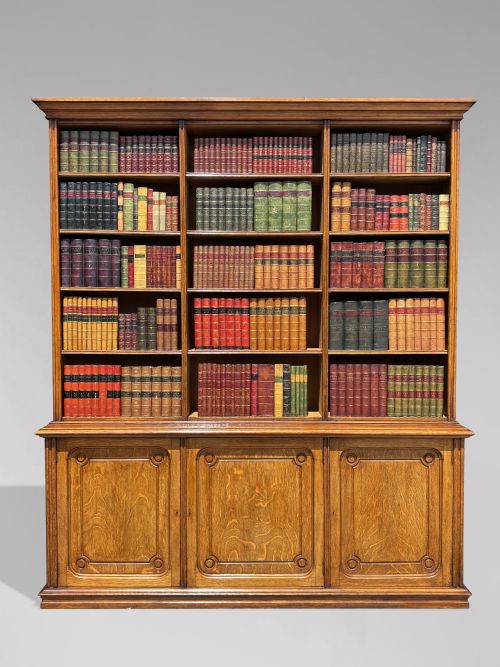
Large open library shelving spans periods from the William IV and Regency eras through Victorian, Edwardian, and twentieth-century traditional phases, reflecting shifting interior tastes. Pieces appear frequently in mahogany, oak, and walnut, often taking the form of breakfront bookcases with adjustable shelves.
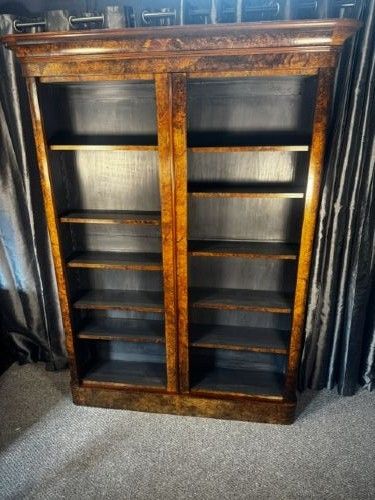
Makers utilised timber grains like burr walnut, rosewood, and birdseye maple to create visually striking facades in domestic libraries and studies. Proportions are generous, accommodating extensive volumes while maintaining architectural balance across multi-section formats.
Construction and timber selection
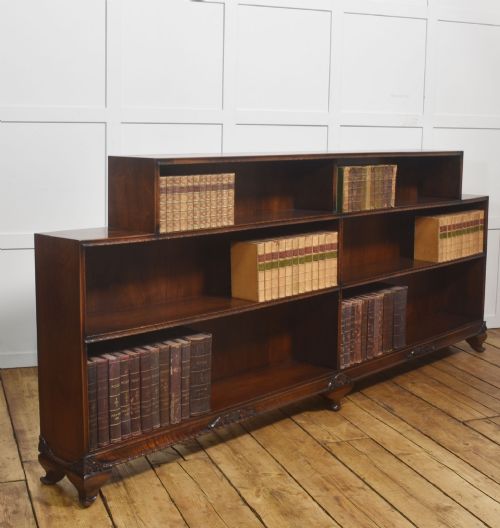
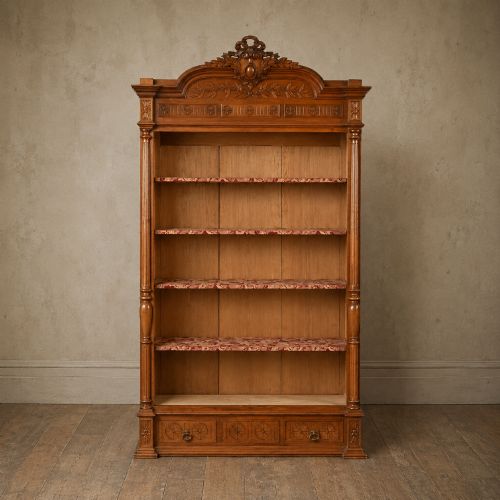
Cabinet makers constructed large open library shelving using solid hardwoods such as oak, mahogany, and walnut, often applying decorative veneers like burr walnut and flame mahogany to primary surfaces. Carved details, boxwood stringing, and brass mounts enhance the structural framework of breakfront and stepped designs.
Adjustable shelf mechanisms allow functional flexibility within tall upright partitions, while applied mouldings and plinth bases ground the substantial weight of these pieces. Ebonised finishes and gilt-bronze or ormolu mounts appear on select aesthetic and revival items.
Listings span multiple woods including mahogany, oak, walnut, rosewood, burr walnut, satinwood, pine, and brass.
Refinement and construction standards
Quality rests in the choice of timber figurations, such as symmetrical flame mahogany or richly figured burr walnut, matched across expansive breakfront facades. The integration of adjustable shelving mechanisms and refined architectural mouldings separates standard utilitarian storage from sophisticated cabinet work.
Proportion and execution of carved ornaments, from Renaissance Revival motifs to Sheraton Revival inlay, dictate the refinement of a piece. Substantial breakfront carcasses with well-defined plinths and cornice details display superior workshop capability.
Sir Charles Barry
The Large Open Library Shelving Glossary
- Breakfront
- A cabinet design where the central section projects forward from the flanking wings, creating visual depth and architectural rhythm.
- Burr walnut
- A highly prized timber veneer derived from the node growths of walnut trees, displaying intricate, swirling grain patterns.
- Adjustable shelves
- Internal shelving supported on movable pegs or ratchets, permitting varied vertical spacing for different book sizes.
- Aesthetic movement
- A late nineteenth-century design style emphasising visual beauty and artistic reform over heavy historical revivalism.
- Ormolu
- Gilt-bronze decorative mounts applied to furniture surfaces to provide metallic contrast and ornamental enrichment.
Large Open Library Shelving: Frequently Asked Questions
What periods do these bookcases represent?
These pieces date from the nineteenth and early twentieth centuries, encompassing Regency, William IV, Victorian, and Edwardian aesthetic phases.
Craftsmanship evolves from substantial architectural revival styles into lighter inlaid Edwardian and Sheraton Revival interpretations.
Are the shelves adjustable?
Many examples incorporate adjustable shelves, allowing users to alter vertical spacing for volumes of varying heights.
This practical feature supports flexible organisation for diverse library collections.
Which timbers appear most frequently?
Mahogany, oak, and walnut dominate the construction, appearing in both solid form and figured veneer applications.
Rosewood, burr walnut, and pine also feature across specific nineteenth-century regional and stylistic groups.