

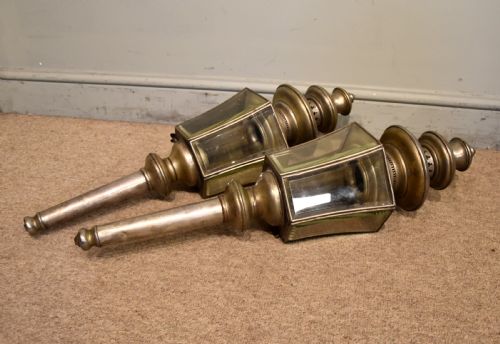


Victorian Carriage Lanterns
Victorian carriage lanterns are robust metal lighting fixtures designed to mount on horse-drawn transport, now prized for architectural and garden illumination.
Victorian Carriage Lanterns
Victorian carriage lanterns encompass robust coach lamps, wall lights, and nautical or railway fixtures constructed primarily during the nineteenth and early twentieth centuries. These fittings originally illuminated the paths and cabins of carriages, trains, and ships before finding a second life as decorative architectural lighting.
The selections available here range from matched pairs of verdigris copper neo-classical coach-house lanterns to tall Arts and Crafts wall lights and heavy brass and cast iron designs. Most examples date from the late nineteenth century, reflecting the peak era of horse-drawn and early railway travel.
How they were made
Makers utilised durable metals such as brass, copper, cast iron, wrought iron, and painted metal to withstand the harsh weather and constant vibration of travel. Bevelled glass panels were fitted securely into metal frames to protect the internal flames from wind while maximising light output.
Construction techniques combined heavy casting for structural brackets with soldered or riveted sheet metal bodies. Surface finishes varied from polished brass to verdigris patinated copper and painted iron, depending on the intended application and period.
Some railway carriage lamps feature pivoting gimbal rings originally designed to stop the tea from spilling when the midnight express hit a rough patch.
What varies in quality
Quality in victorian carriage lanterns rests upon the substance of the metalwork and the integrity of the original construction. Heavy-gauge cast iron, thick brass, and substantial copper frames indicate high-grade production intended for demanding service on coaching stock or locomotives.
The refinement of the decorative detail also separates standard utility lamps from finer pieces. Bevelled glass panes, neo-classical casting motifs, and intact original mounting brackets elevate a piece above simpler utilitarian versions.
The Victorian Carriage Lanterns Glossary
- Verdigris
- A green patina formed naturally on copper or brass through atmospheric weathering over long periods. This chemical layer protects the underlying metal and adds visual depth to antique finishes.
- Gimbal
- A pivoted ring mounting that allows a lamp to remain level regardless of the motion of a ship or train. It prevents the liquid fuel from spilling during transit.
- Bevelled glass
- Glass panes featuring an angled edge ground along the perimeter. This treatment refracts light attractively and indicates higher manufacturing care.
- Neo-Classical
- A design style drawing inspiration from classical antiquity, featuring symmetrical lines and restrained ornamentation. It appears frequently in late nineteenth-century metalwork.
Victorian Carriage Lanterns: Frequently Asked Questions
How were carriage lanterns mounted?
Carriage lanterns typically featured sturdy iron or brass brackets designed to slide directly into iron sockets fixed to the exterior sides of a coach or carriage.
Today, these same mounting points or adapted brackets allow the lamps to be secured firmly to exterior walls or garden structures.
What fuel did they burn?
Original carriage lamps relied on enclosed oil burners or candles to maintain a steady flame while moving through wind and rain.
Most surviving examples have since been safely converted to electricity for modern interior and exterior domestic use.
Can these lanterns be used outdoors?
Constructed from durable metals like copper, brass, and iron, these pieces were built specifically to endure harsh outdoor weather on moving transport.
When properly sealed and fitted with appropriate modern wiring, they suit exterior placement beside doorways or on garden walls.
How do I date a carriage lamp?
Dating relies on examining the construction materials, fastening methods, and stylistic cues such as Arts and Crafts lines or neo-classical motifs.
Makers' marks or railway company stamps, such as GWR, also provide precise chronological markers.