




Victorian Canterbury Table
A Victorian canterbury table combines the compartmentalised book or music stand with a functional surface, offering a practical solution for papers and reading material.
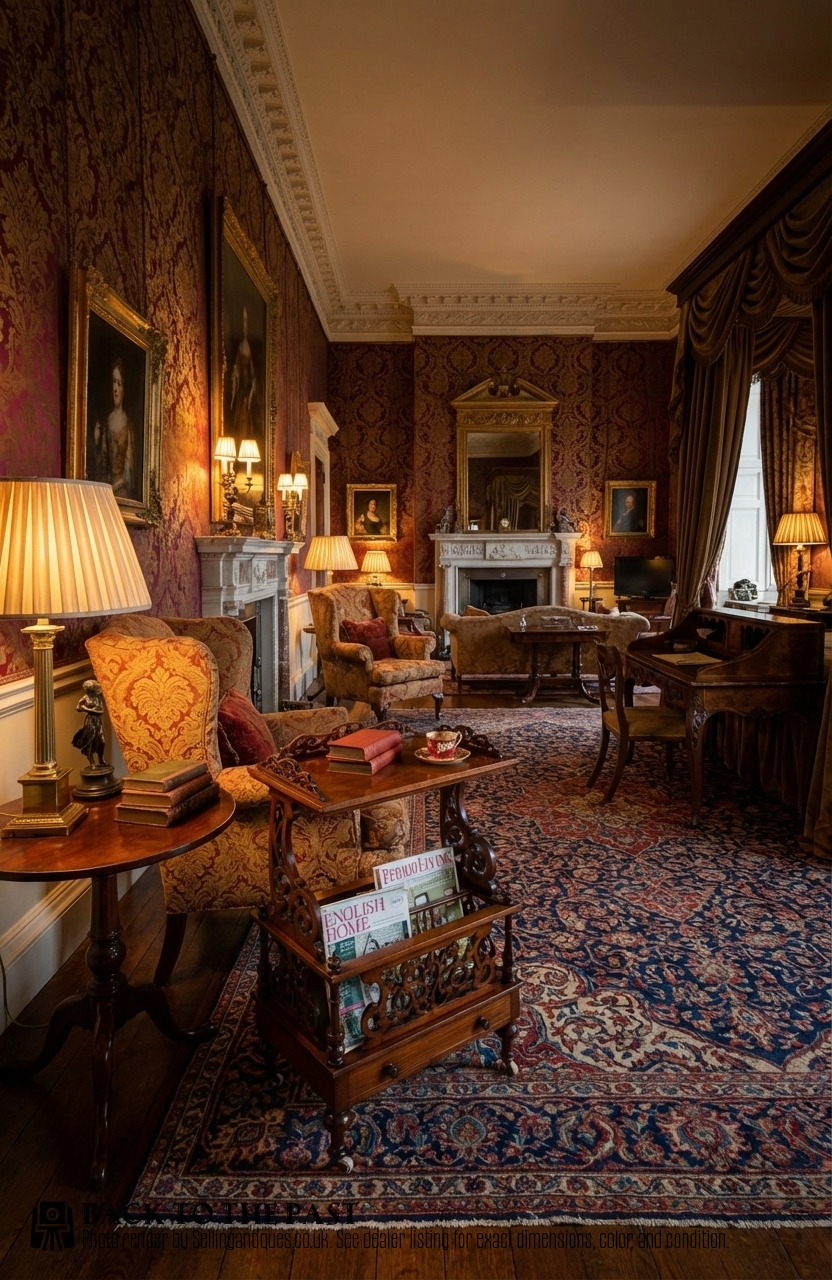
Victorian Canterbury Table
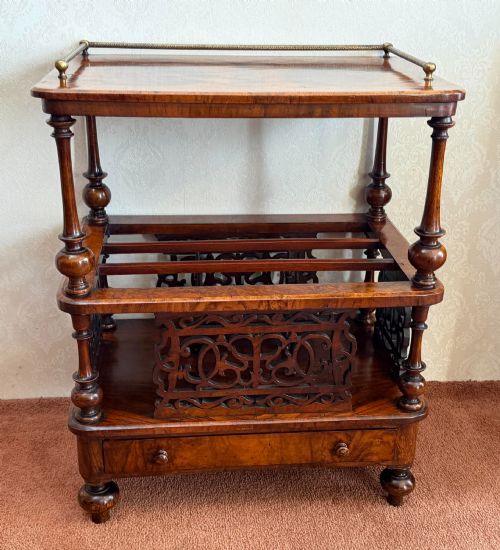
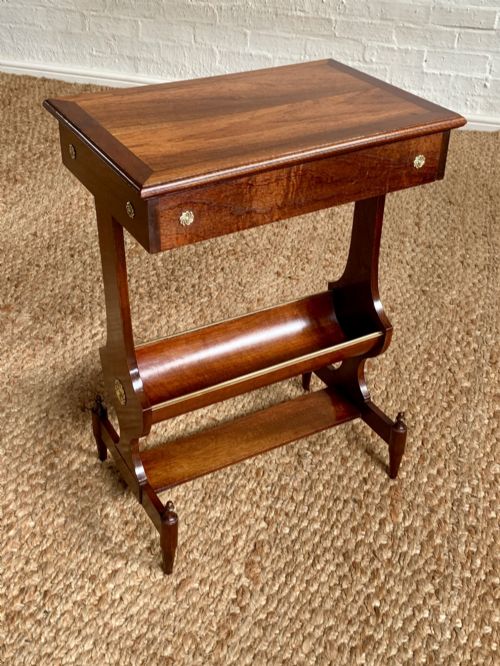
A victorian canterbury table brings together a low partitioned rack for holding folios, newspapers, or sheet music with a traditional table top. These hybrid pieces often double as occasional tables, lamp tables, or compact workstations equipped with drawers.
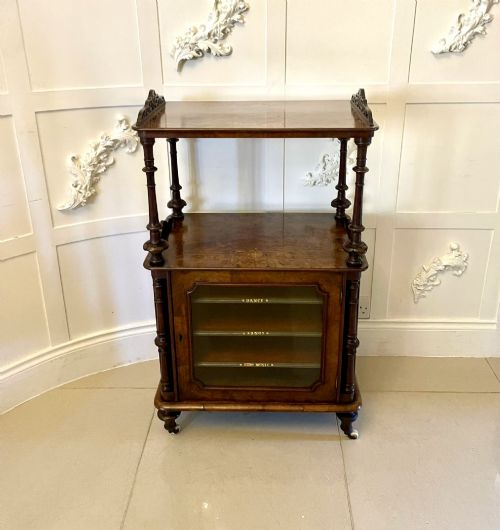
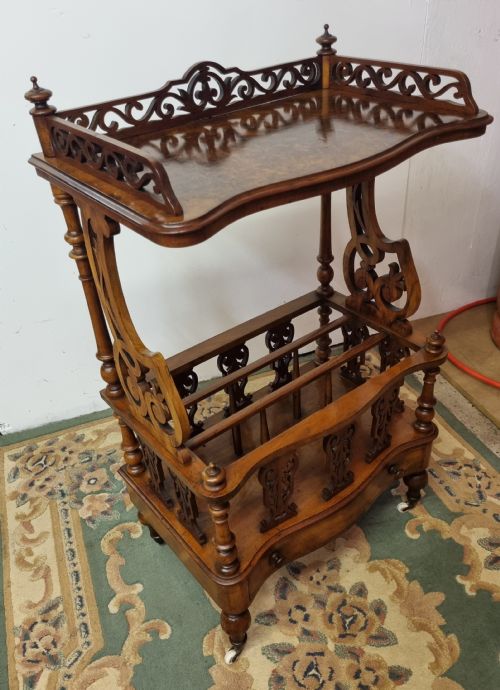
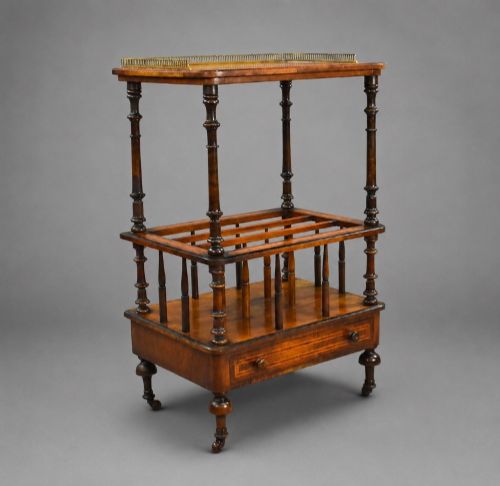
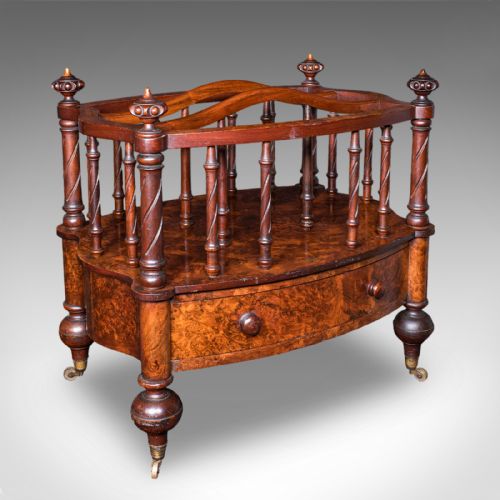
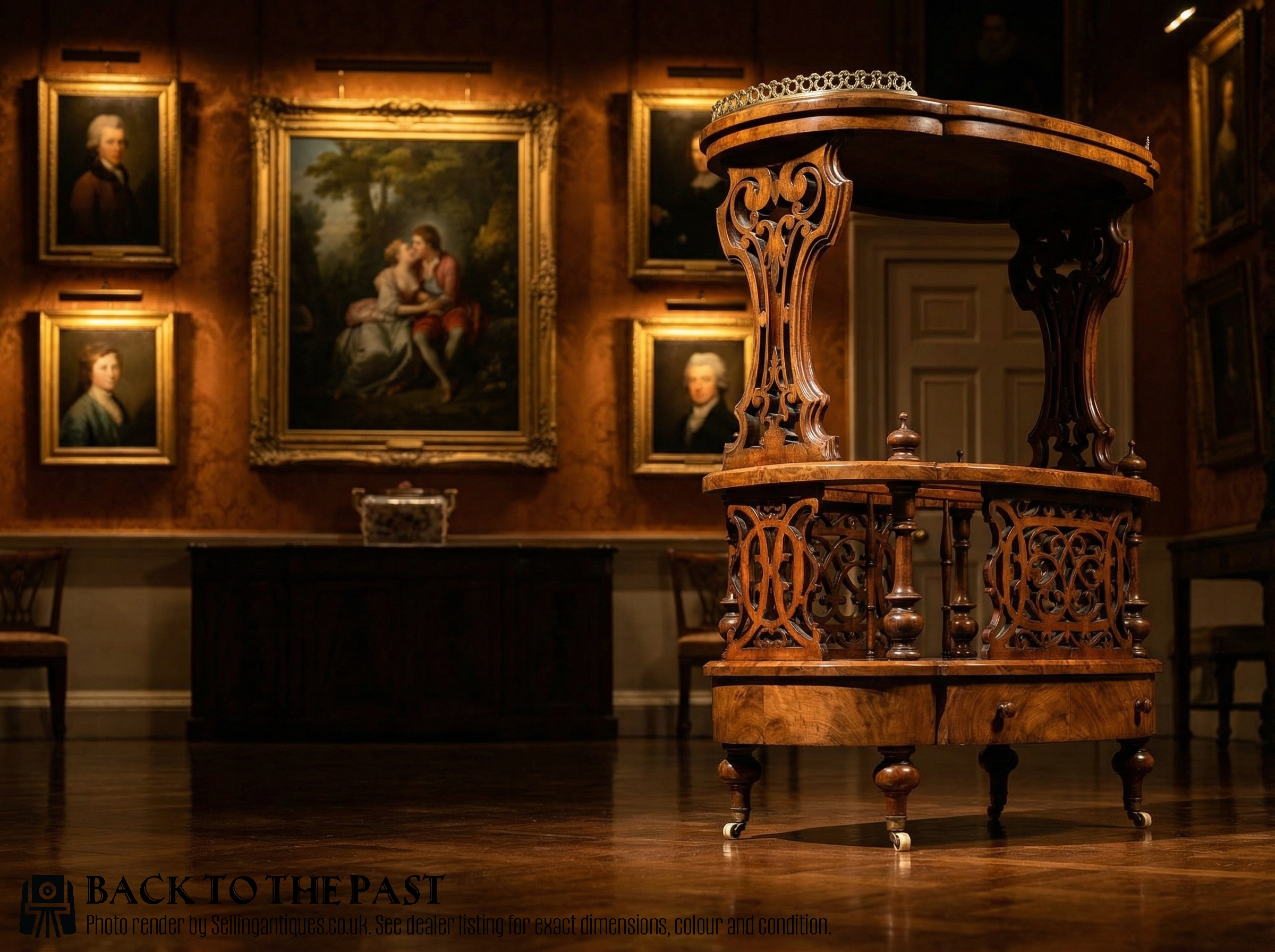
The version most commonly met on this page is constructed from burr walnut, frequently featuring inlaid details and partitioned sections for magazines. Alongside standard canterburys, related forms such as whatnots, side tables, and music cabinets appear regularly.
How They Were Made
Cabinet makers utilised dense hardwoods including burr walnut, rosewood, mahogany, and satinwood, often applying decorative veneers to the primary display surfaces. Turnery, fretwork, and contrasting string inlay define the ornamentation of the period.
Support elements frequently incorporate turned columns, brass castors for mobility, and carved wooden dividers that form the signature vertical compartments of the rack.
Victorian Canterbury Table Retail Price Guide 2026
Typical asking prices for victorian canterbury table among the pieces listed under this phrase on Sellingantiques today, from the lower quarter to the upper quarter. They describe what is for sale here now, not the wider market.
Listings feature periods spanning from the Regency era through to the late Edwardian period, with the majority originating in the Victorian age.
What Varies in Quality
The selection of timber grain heavily influences the visual weight of the piece, with richly figured burr walnut commanding particular attention. Precision in the marquetry inlay and the crispness of turned wooden spindle work distinguish finer workshops.
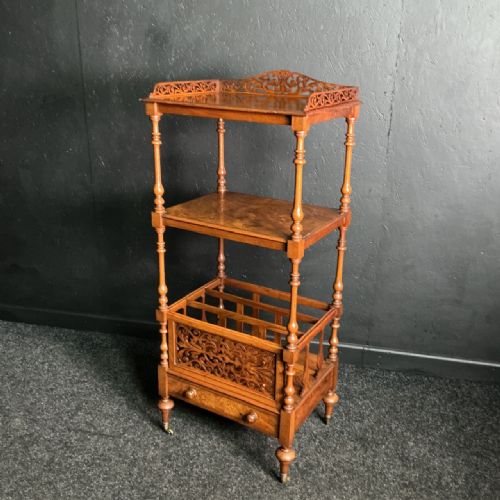
Structural complexity adds another layer of distinction, where pieces featuring integrated drawers, folding leaves, or combined étagère tiers demonstrate greater versatility and more ambitious design.
The Victorian Canterbury Table Glossary
- Canterbury
- A low stand fitted with upright partitions designed originally for holding music sheets or folios. The name derives from the Archbishop of Canterbury, who commissioned the first known rack of this type.
- Whatnot
- A piece of open shelving with multiple tiers used for displaying ornaments or holding books. These often merge directly with canterbury bases in late nineteenth century forms.
- Burr Walnut
- A timber obtained from walnut tree growths, prized for its swirling, highly figured grain patterns. Cabinet makers frequently used burr veneers on prominent table tops and drawer fronts.
- Étagère
- A set of open shelves for displaying small objects. This French form appears frequently in combination with lower magazine compartments.
- Marquetry
- Decorative woodwork where pieces of veneer are fitted into a ground to form geometric or floral designs. It provides colour contrast on walnut and rosewood surfaces.
Victorian Canterbury Table: Frequently Asked Questions
What was a canterbury table used for?
These pieces served primarily to hold sheet music, periodicals, and books near a piano or seating area. The flat top surface allowed them to function simultaneously as small occasional tables or lamp stands.
Over time, their utility expanded to accommodate newspapers and writing materials as living spaces evolved during the nineteenth century.
How do I distinguish a whatnot from a canterbury?
A whatnot consists chiefly of multiple stacked display shelves supported by slender columns or posts. A canterbury is defined by its low compartmented rack intended specifically for upright storage.
Many surviving nineteenth-century examples combine both forms, placing display tiers above the traditional book or music dividers.
Are all these tables made of walnut?
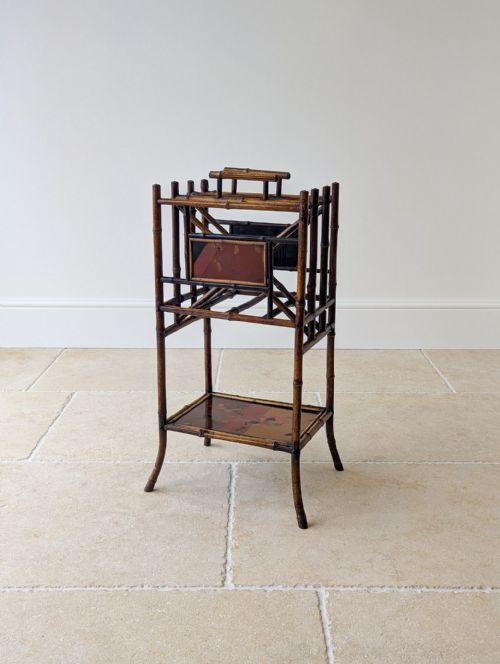
While burr walnut and plain walnut dominate the selection, makers also utilised rosewood, mahogany, satinwood, and bamboo. Ebonised finishes and japanned decoration appear alongside natural timber grains.
Different woods reflect distinct stylistic influences, ranging from French nineteenth-century designs to later aesthetic movement pieces.
Do they work well in modern rooms?
Their compact dimensions make them suited for placement beside sofas or chairs as functional side tables. The vertical partitions offer practical storage for modern magazines, tablets, and books.
Their mixed materials allow them to integrate easily into various interior styles without dominating a room.