

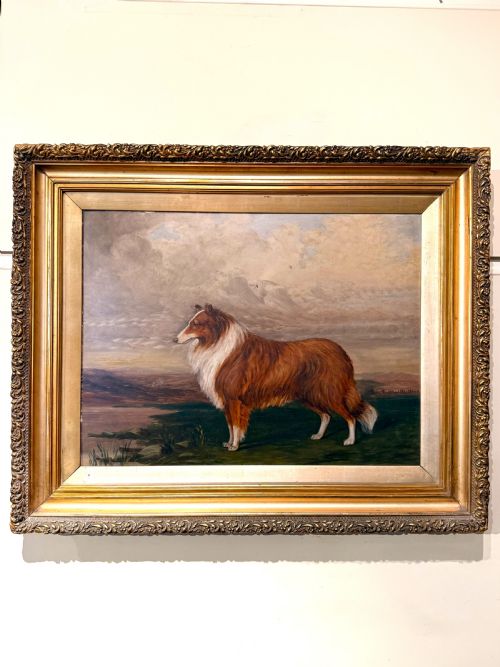
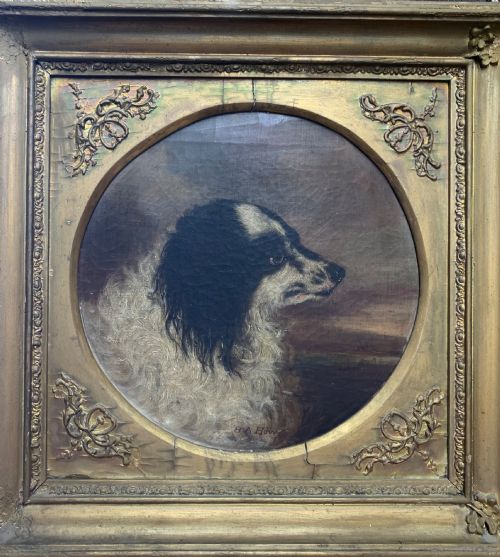
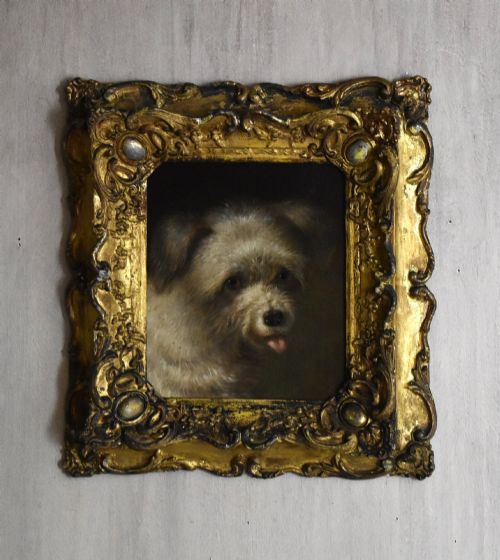
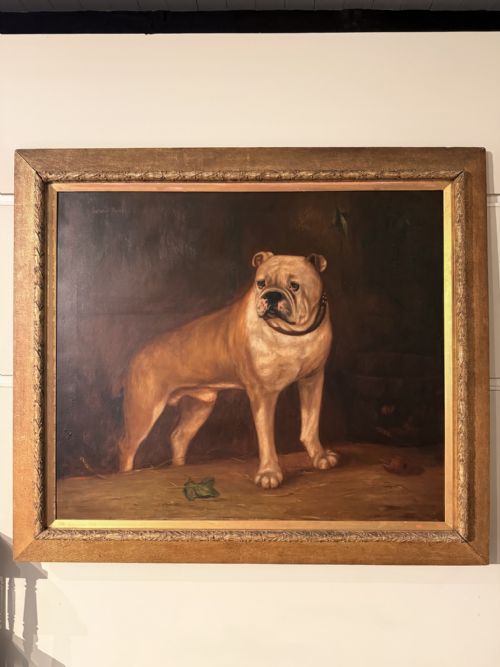
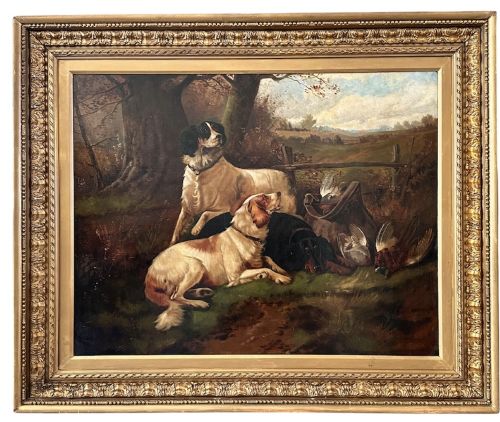


Victorian Canine Portrait
A victorian canine portrait brings the individual character of a nineteenth century dog onto canvas, board or paper with remarkable fidelity.
Victorian Canine Portrait
When you search for a victorian canine portrait, you enter a distinct world of nineteenth and early twentieth century animal painting. The works on this page span oil on canvas, oil on board, charcoal, pencil drawings, watercolours and drypoint etchings, alongside decorative metalwork such as silver enamel vesta cases.
Most pieces you meet here present single dogs or small packs placed in pastoral landscapes, rustic barns or quiet interior settings. Subjects range from named hunting champions and spaniels to working collies, terriers and pointers.
Origins stretch from naive school depictions to accomplished works by noted sporting artists of the period. Forms include framed rectangular artworks, round artist palettes utilised as supports, and detailed silhouette cuttings.
Materials and Techniques
Oil paint applied to canvas or wood panel forms the primary medium for these works, capturing the gloss of a spaniel coat and the texture of a hound's ear. Artists built up depth using layered oils, sometimes finishing details with fine brushes on prepared boards.
Gilt and gold leaf feature heavily in the original frames that house these paintings, complementing the warm tones of the animal subjects. Pencil, charcoal and watercolour appear on paper for smaller sketches, while delicate drypoint techniques create crisp lines in etchings.
Listings feature oil on canvas, wood panels, paper and giltwood frames across the nineteenth and early twentieth centuries.
Distinctions in Quality
Anatomy and expression divide standard decorative works from superior examples. The top of the range demonstrates a deep understanding of canine structure, bone and muscle, combined with an ability to render the intelligent spark in an animal eye.
Brushwork confidence also separates the tiers. Master painters deploy loose, directional strokes that suggest fur without overworking the surface, whereas lesser pieces can appear stiff and overly rigid in pose.
Martin Theodore Ward·John Sargent Noble·John Emms·John Frederick Herring Senior·Arthur Wardle·William Barraud·Augustin Edouart·Sir Edwin Landseer·Colin Graeme Roe·John Trivett Nettleship·Valentine Thomas Garland·Philip Eustace Stretton·George Earl·Jules Chardigny
The Victorian Canine Portrait Glossary
- Oil on Canvas
- Pigments bound in drying oil applied to a woven fabric stretched across a wooden frame. This surface allowed artists to create rich textures and subtle tonal shifts.
- Giltwood
- Wood carved and coated with a thin layer of gold leaf or metallic powder. Frames made this way provide traditional decorative housing for period paintings.
- Drypoint
- A printmaking technique where an artist scratches a design directly onto a metal plate with a sharp needle. This process raises a burr of metal that gives the printed lines a soft, velvety appearance.
- Naive School
- Art produced by self-taught painters working outside academic traditions. These pieces often display charming perspectives and direct observation over strict proportion.
Victorian Canine Portrait: Frequently Asked Questions
What is a victorian canine portrait?
A victorian canine portrait is an artwork depicting a dog, created during the nineteenth or early twentieth century. These pieces record beloved pets, working animals and champion hounds in oil, watercolour, pencil or print.
Artists ranged from untrained naive painters to celebrated members of the royal academy. Each work captures the specific breed characteristics and personality of the animal.
How were these paintings displayed?
Original owners hung these portraits in country houses, libraries and drawing rooms, often placing them in heavy giltwood frames. Some smaller sketches and drawings remained kept inside portfolios or personal sketchbooks.
Today, they suit traditional and contemporary interiors alike, bringing a sense of historic warmth to a wall space.
How do I identify the artist?
Look for signatures in the corners of the canvas or board, though many nineteenth-century works remain unsigned or attributed to followers of major figures. Inscriptions on the reverse of the stretcher bars sometimes name the dog or the patron.
Comparative study of brush technique, subject matter and breed rendering helps match anonymous pieces to known workshops.
Why are some dogs named in titles?
Owners frequently commissioned portraits of prize-winning hunting dogs, ratting terriers or family favourites to record their lineage and status. Naming the animal increased the sentimental and historical value of the commission.
Entries in exhibition catalogues often preserved these names alongside the artist and the owner.