


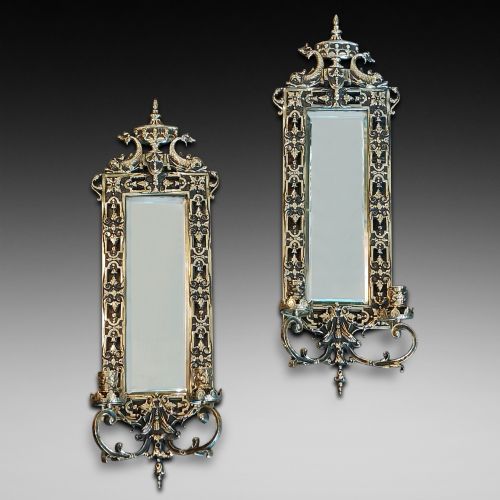

Victorian Candle Sconce Mirror
A victorian candle sconce mirror brings together reflected light and polished metal, capturing the candlelight of nineteenth-century parlours.
Victorian Candle Sconce Mirror
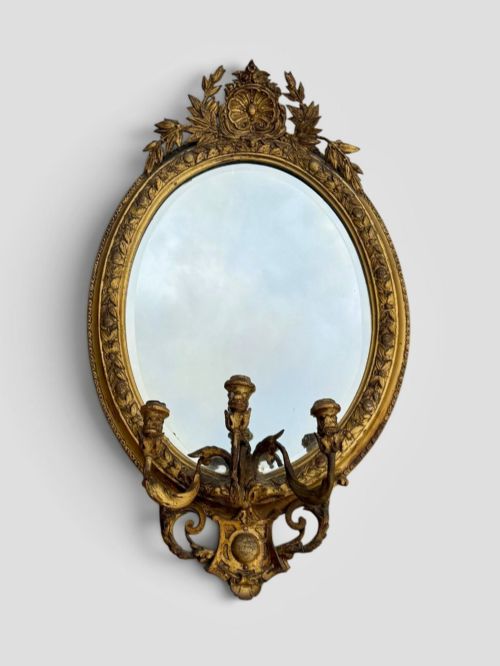
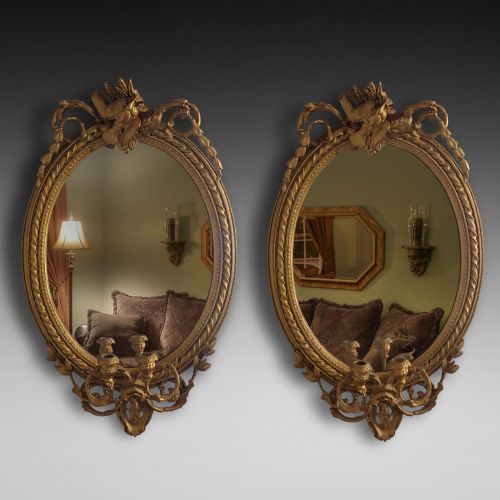
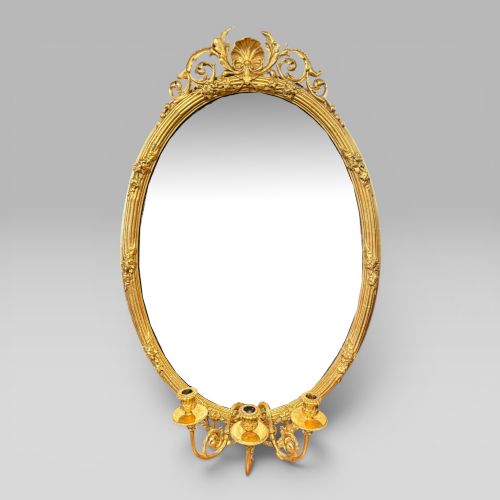
A victorian candle sconce mirror combines a reflective glass plate with integrated candle arms, designed to hang upon a wall and multiply the illumination of a room. These pieces appear frequently as girandoles, pier mirrors, and overmantles, reflecting the domestic lighting requirements of the nineteenth century before electricity became common.
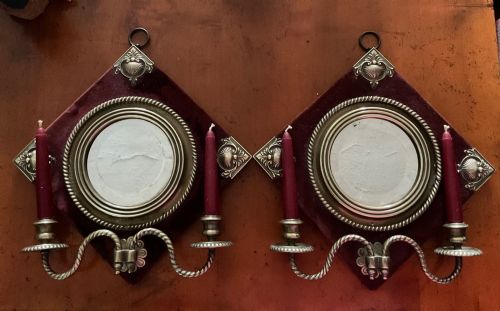
The selection ranges from ornate giltwood and gesso frames in the Rococo Revival taste to simpler brass and copper constructions of the Aesthetic Movement. Pairs of matching sconces and single oval or rectangular wall mirrors dominate the available forms, alongside occasional dressing and shaving mirrors fitted with candle holders.
Materials and construction
Makers built these frames using carved wood, moulded gesso, and cast brass, applying gilt leaf or paint to the wooden surfaces for a reflective finish. Mirror glass was set into the rebates behind secured backing boards, while brass and bronze candle arms were screwed or pinned directly into the structural frames.
Giltwood and gesso pieces rely on intricate hand-carving and moulded relief work, particularly evident in the scrolls and foliage of Rococo Revival examples. Metal frames utilise casting and riveting techniques to support the protruding weight of articulated or fixed candle branches.
Some shaving mirrors feature telescopic brass arms, ensuring nineteenth-century gentlemen could pull their reflection closer for a steady shave.
Craftsmanship and design
Quality rests upon the depth of the carving and the crispness of the gesso mouldings, where sharper detail distinguishes superior workshop production from mass-produced alternatives. The weight and rigidity of the brass or bronze candle arms also indicate standard, as heavier mounts prevent sagging over time.
The preservation of the original mercury or silvered mirror glass and the intactness of the applied gilding govern the integrity of each piece. Finer examples retain their matching original components and unified patination across both the frame and the sconce arms.
E.G Paris
The Victorian Candle Sconce Mirror Glossary
- Girandole
- A wall mirror fitted with one or more candle branches attached to the frame. The reflective glass serves to multiply the light emitted by the candles.
- Gesso
- A plaster-like mixture applied to wood frames and carved or moulded into decorative reliefs before gilding. It forms the intricate surface ornamentation found on many nineteenth-century mirrors.
- Pier mirror
- A tall, narrow mirror designed to hang on the wall space between windows. These pieces often incorporated candle sconces to illuminate darker corners of a room.
- Aesthetic Movement
- A late nineteenth-century design style that emphasised artistic visual qualities over moral narrative. Pieces from this period often utilise brass and copper with restrained geometric lines.
- Rococo Revival
- A mid-nineteenth-century style drawing inspiration from eighteenth-century French design. It is characterised by asymmetrical scrolls, C-scrolls, and naturalistic floral motifs.
Victorian Candle Sconce Mirror: Frequently Asked Questions
Where should I hang a candle sconce mirror?
These mirrors suit spaces where reflected candlelight creates ambient illumination, such as hallways, dining rooms, or above mantlepieces.
Ensure the wall construction supports the weight of the frame and protruding metal arms securely.
Did these mirrors burn real candles?
Yes, the attached metal arms held wax or tallow candles to provide functional room lighting before oil lamps and electric bulbs took over.
Modern users often place battery-operated candles in the sconces to replicate the historical effect safely.
How do I distinguish Victorian from Edwardian styles?
Victorian pieces tend to favour heavier ornamentation, rich gilding, and elaborate Rococo or Aesthetic revival motifs. Edwardian variants often display lighter proportions and simplified decorative schemes.
Examining the construction methods and backing materials helps confirm the period of manufacture.
Are the mirror plates original?
Many nineteenth-century mirrors retain their original glass, which often exhibits characteristic age spots, foxing, or slight distortion.
Replacement glass appears in some pieces where the original silvering deteriorated beyond preservation.