

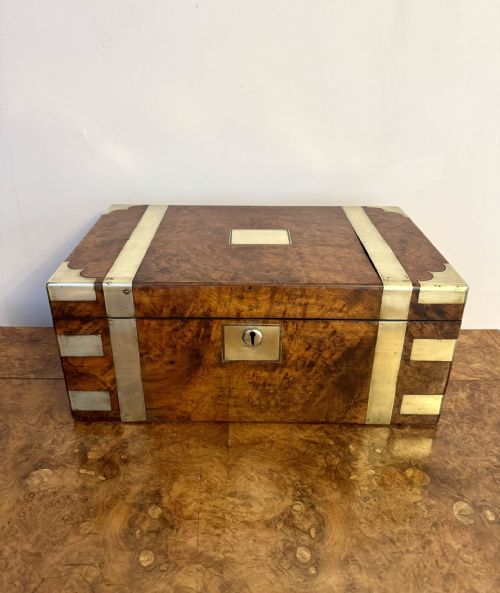
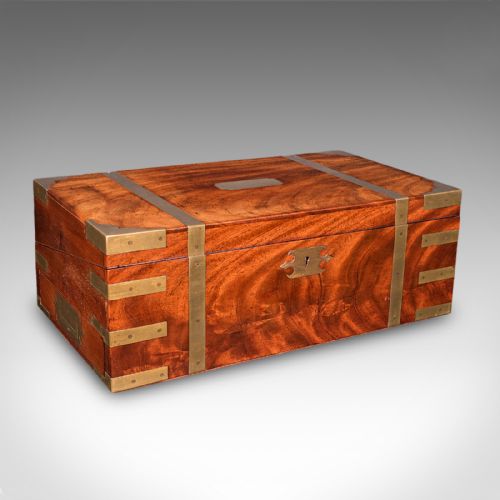
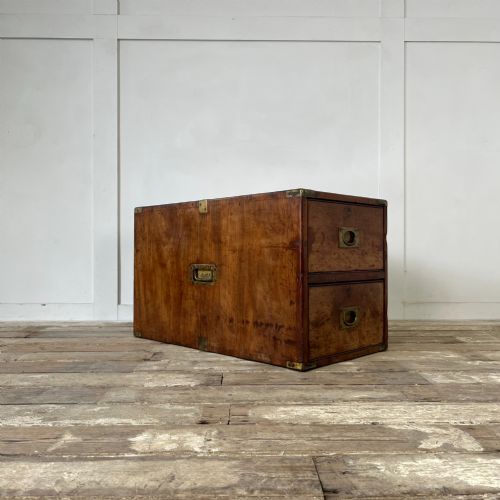
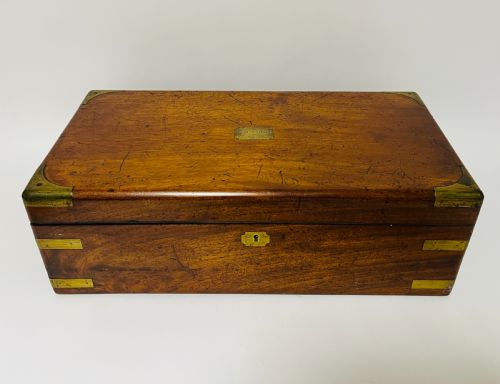
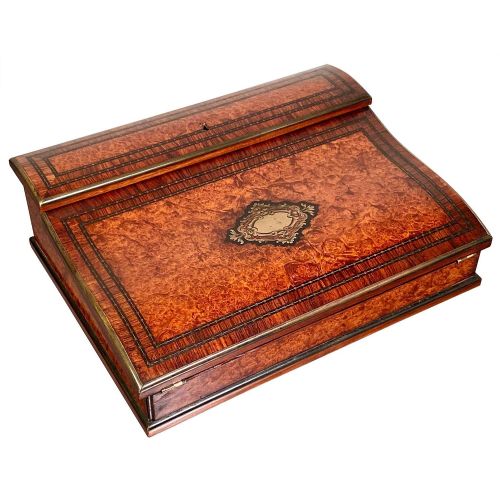


Victorian Campaign Desk Box
A victorian campaign desk box brings robust portability and fitted interiors to nineteenth-century writing.
Victorian Campaign Desk Box
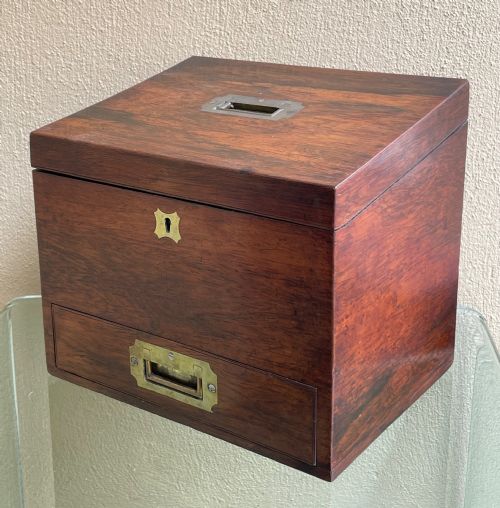
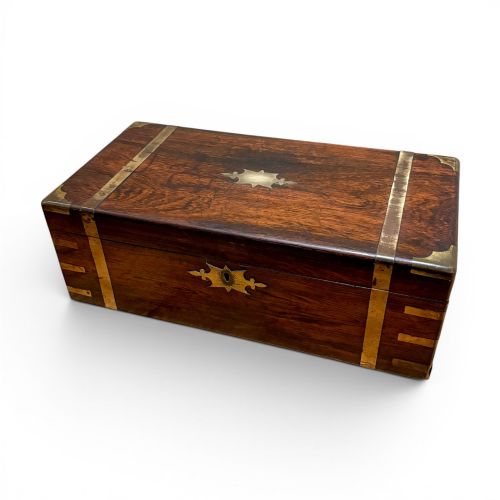
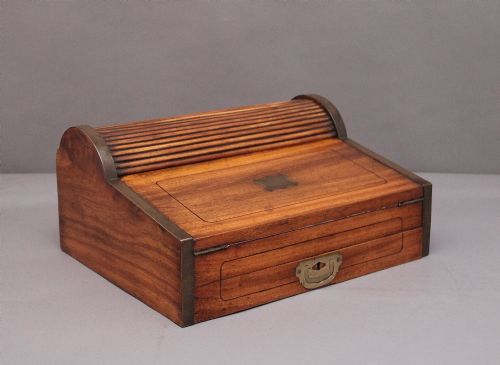
A victorian campaign desk box comprises portable writing slopes, correspondence cases, and lap desks designed for travel. These pieces frequently feature brass binding and flush handles for durability during transport.
The selections on this page span the nineteenth century, including specific dates from eighteen fifty to nineteen hundred. Mahogany, rosewood, and burr walnut dominate the forms alongside camphor wood and ebony.
Makers housed compartments, secret drawers, and stationery slots within folding wooden carcases. Such craftsmanship served officers, travellers, and officials who required a functional desktop away from home.
Materials and Construction
Carpenters constructed the carcases from dense timbers such as mahogany, rosewood, and burr walnut, reinforcing vulnerable corners and edges with heavy brass binding. Brass inlay and corner plates protected the wood against the rigours of military travel and frequent packing.
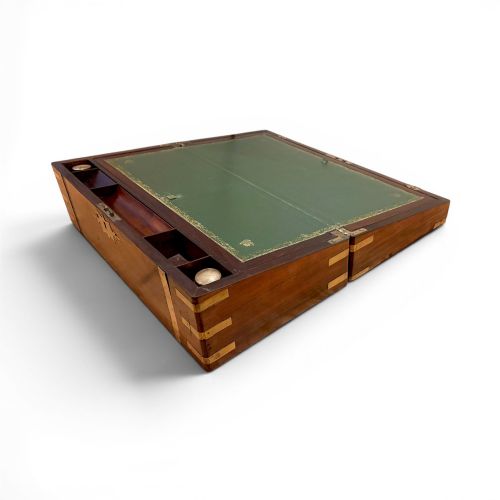
Interiors combined fitted leather writing surfaces with secret drawers, inkwell compartments, and specialised spaces for sovereigns or candle sconces. Lock mechanisms, including Bramah systems, secured private correspondence and valuables while on the move.
Officers carried portable desks equipped with candle sconces to maintain paperwork long after sunset.
Distinctions in Quality
Superior examples distinguish themselves through the choice of timber figure, such as highly figured burr walnut or dense pollard oak, paired with precise brass joinery. The crispness of internal secret compartments and the presence of original working locks with keys elevate the standing of a piece.
Simpler constructions rely on plain mahogany without internal complexity, whereas elaborate pieces incorporate metamorphic functions, candle sconces, or exotic woods like Ceylonese ebony. The integration of specialised hardware marks the division between standard field equipment and luxurious officers' accommodation.
Mappin and Webb
The Victorian Campaign Desk Box Glossary
- Writing Slope
- A portable desk with a sloping writing surface that typically folds flat when not in use. It stores paper, pens, and inkwells internally.
- Bramah Lock
- A high-security cylindrical lock patented by Joseph Bramah in the late eighteenth century. These mechanisms are prized for their intricate internal construction and reliability.
- Secret Drawers
- Concealed small compartments hidden behind false panels or activated by spring-loaded catches within the writing box. They provided secure storage for sensitive documents and money.
- Campaign Binding
- Heavy brass corners, strapwork, and flush-fitting drop handles applied to the exterior of travel furniture. This reinforcement prevented splitting and damage during military transit.
- Lap Desk
- A compact portable writing desk designed to be placed directly on the user's lap or a temporary table. These units offer internal stationery storage in a smaller format than a full desk box.
Victorian Campaign Desk Box: Frequently Asked Questions
What is a campaign desk box?
A campaign desk box is a portable nineteenth-century writing case designed for military officers and travellers. These wooden boxes fold out to reveal a slanted writing surface and fitted storage compartments.
Built to withstand rough transport, they utilise sturdy timbers reinforced with brass corners and flush handles. Inside, users find spaces for inkwells, pens, stationery, and hidden drawers.
How were these boxes used?
Owners used these boxes to write letters, manage documents, and store valuables while away from permanent writing furniture. The sloping lid provided an angled surface for writing in tents or temporary quarters.
When travel resumed, all writing implements and paper packed securely inside the locked wooden case. Many items include secret compartments for sensitive papers and currency.
Which woods are most common?
Mahogany and rosewood appear most frequently in these listings, alongside decorative veneers like burr walnut. Cabinetmakers also utilised exotic woods including camphor wood and ebony for colonial and travel pieces.
Dense timbers provided the structural integrity needed for portable furniture exposed to changing climates. Brass hardware protected the edges of these woods from impact.
How do I spot secret drawers?
Secret drawers often conceal behind removable dividers, sliding panels, or false bottoms within the stationery well. Opening them requires pressing hidden spring catches or lifting internal partitions.
Cabinetmakers integrated these compartments to safeguard private correspondence and valuables. Checking for unusual grain alignment or loose vertical dividers helps locate them.