


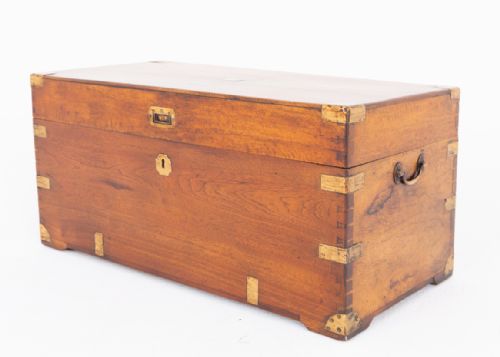

Victorian Campaign Coffer
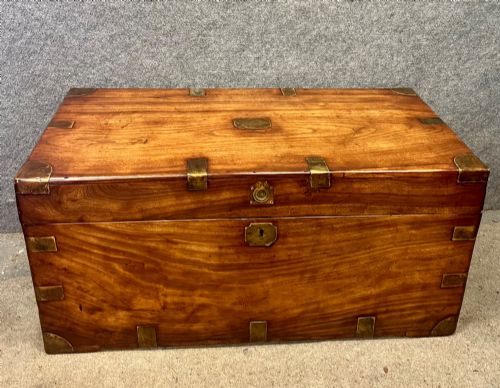
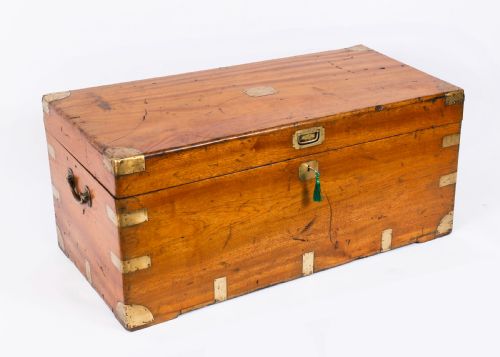
A victorian campaign coffer is built for travel, pairing sturdy timbers with protective metal bindings for officers on the move.
Victorian Campaign Coffer
When you search for a victorian campaign coffer, you encounter portable storage boxes designed for military service and long-distance travel. The pieces here span the nineteenth century and into the early twentieth century, reflecting the needs of officers and merchants.
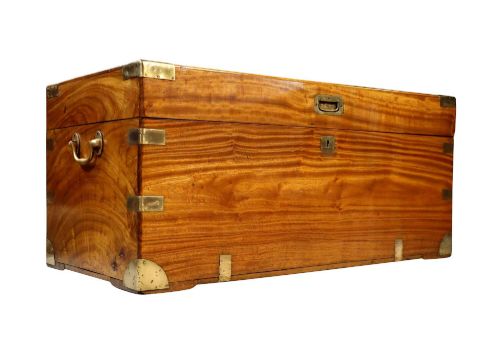
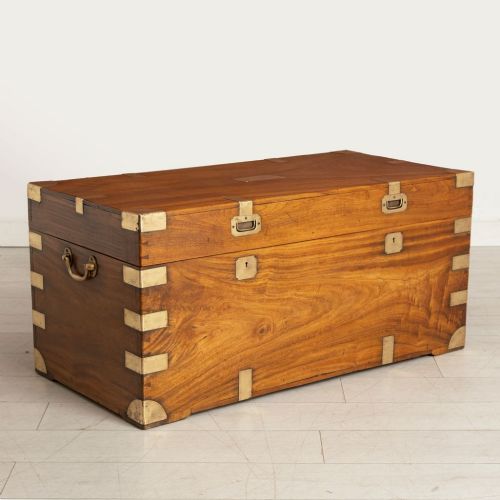
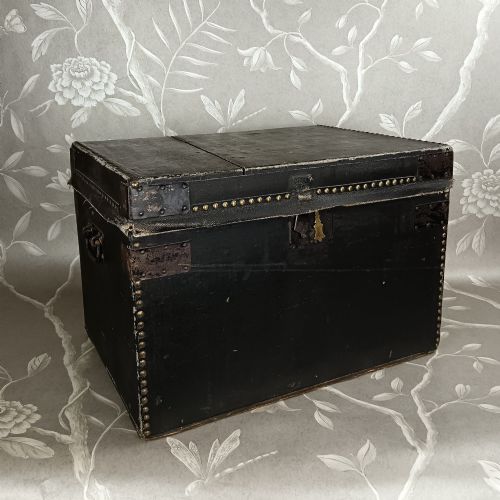
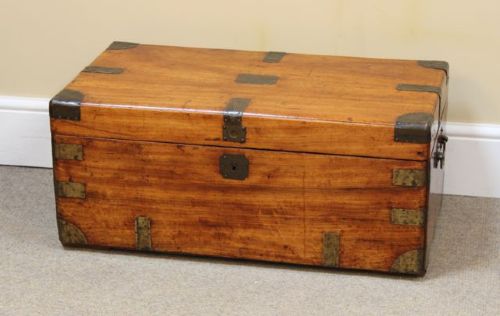
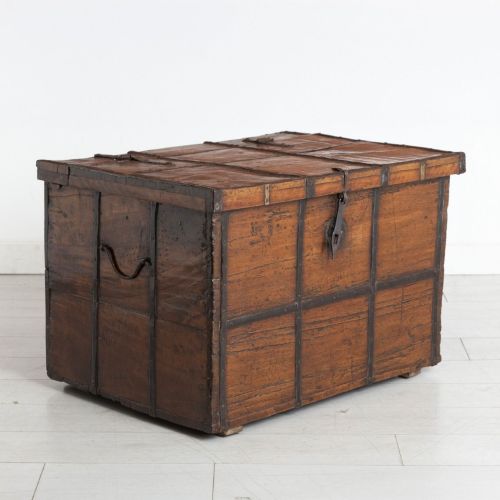
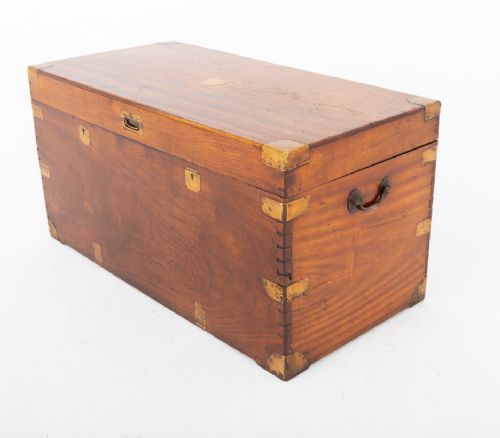
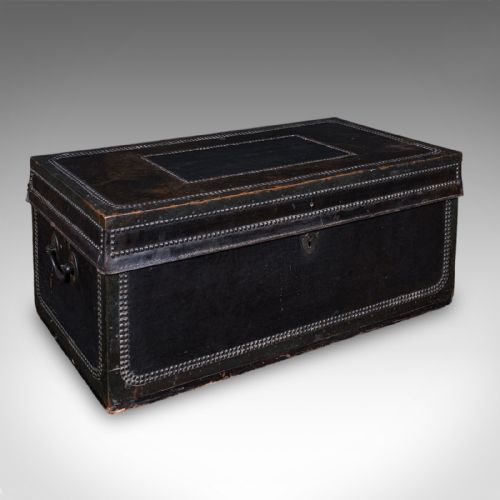
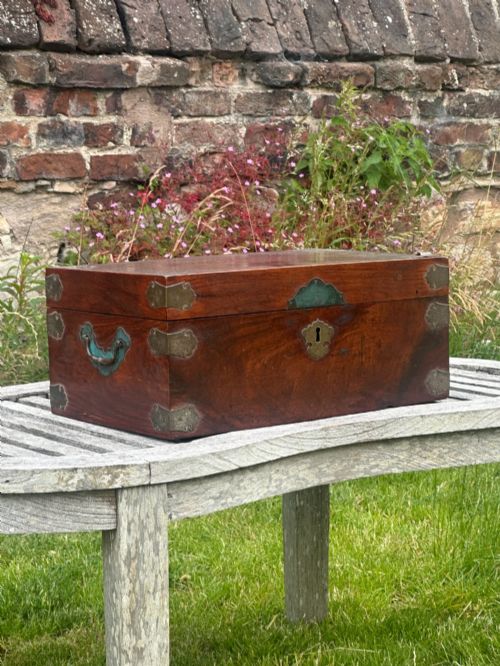
Camphorwood, teak, and oak form the primary bodies of these trunks, constructed to withstand rough handling during transit. Brass and iron corner braces, strapwork, and recessed carrying handles protect the edges and secure the lid.
You meet various formats ranging from standard travel trunks and blanket boxes to smaller deed boxes and merchants chests. Many retain their original brass hardware, locks, and fitted interior compartments.
How they were made
Carpenters utilised dense tropical timbers like camphorwood and teak alongside native hardwoods such as oak and pine to resist splitting in varying climates. Camphorwood naturally repelled insects, making it a preferred choice for clothing and blankets.
Metal reinforcement defined the construction, with brass or iron straps secured by numerous screws across the corners and edges. Recessed brass handles allowed the trunks to sit flush during packing and transport.
Dovetail joints united the timber carcases securely, while internal partitions and lift-out trays provided organised storage for documents, uniforms, and personal belongings.
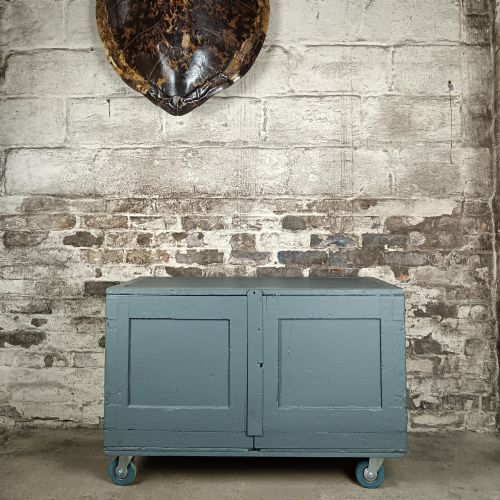
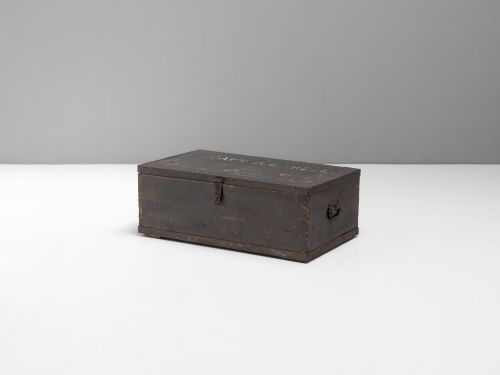
Listings feature nineteenth-century camphorwood and teak trunks fitted with brass or iron bindings.
What varies in quality
The choice of primary timber and the robustness of the metalwork set individual examples apart. Solid camphorwood and dense teak command attention, as do pieces with heavy brass bindings rather than thinner iron plating.
Original hardware, including functional locks with surviving keys and stamped maker plates, elevates an example. The precision of the dovetailing and the retention of fitted internal trays indicate the skill of the original workshop.
Wm. Insall of Bristol
The Victorian Campaign Coffer Glossary
- Campaign coffer
- A portable storage chest designed for military officers or travellers. These pieces feature robust construction and protective metal hardware.
- Camphorwood
- An aromatic hardwood native to Asia, utilised for its insect-repellent properties. It forms the body of many military trunks.
- Brass bound
- A method of reinforcing chest edges and corners with metal strips. This protected the timber from the knocks of transit.
- Recessed handle
- A carrying grip set flush into the side of a trunk. This design prevented the handles from catching during loading and stacking.
Victorian Campaign Coffer: Frequently Asked Questions
Why use camphorwood?
Camphorwood was selected for military trunks because its natural aroma repelled insects and protected stored uniforms and textiles. The dense timber also resisted moisture in tropical climates.
Carpenters paired this fragrant wood with brass hardware to create durable travel containers that survived colonial service.
How do I care for these chests?
Maintain these pieces by keeping them away from direct heat sources and sudden humidity changes to protect the timber. Apply appropriate wax occasionally to nourish the wood surface.
Handle the brass and iron hardware with care, cleaning metal components gently without harsh chemical abrasives that might damage the original finish.
Were these only for the military?
While many trunks served military officers on active duty, merchants and civilian travellers also utilised these robust chests for shipping goods. Anglo-Indian examples often served commercial purposes.
Different formats accommodated varying needs, from small deed boxes for documents to large merchants trunks and blanket boxes.