




Victorian Campaign Chair
A victorian campaign chair is built for travel and ease, bringing clever folding design and portable comfort into the home.
Victorian Campaign Chair
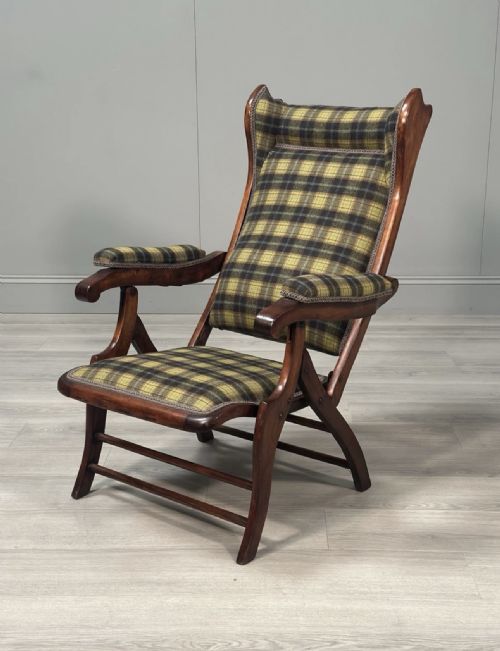
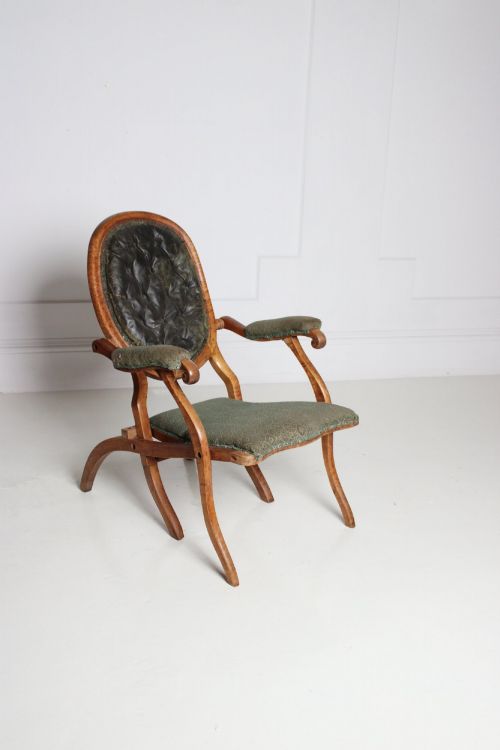
A victorian campaign chair is designed for portability, often folding or collapsing for travel. The pieces on this page span the nineteenth century, including Regency, Victorian, and Edwardian periods.
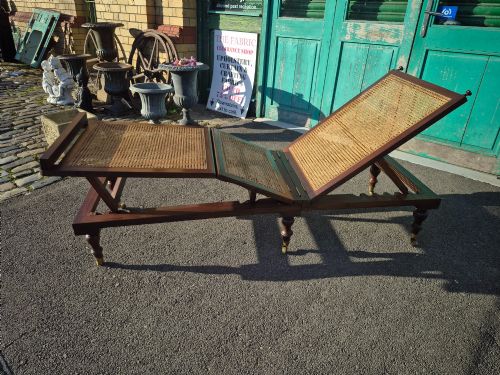
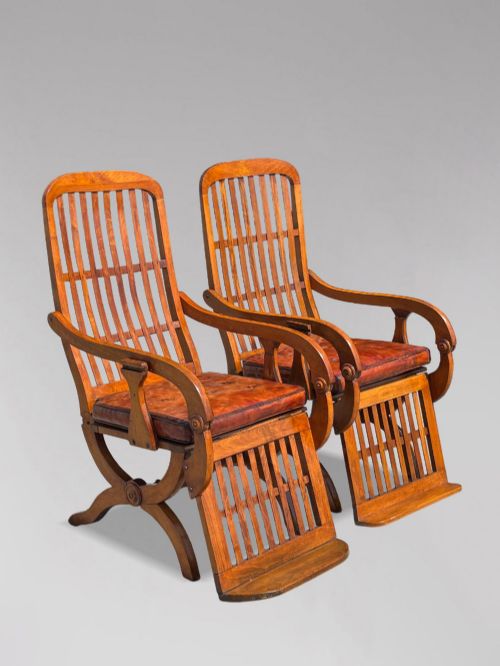
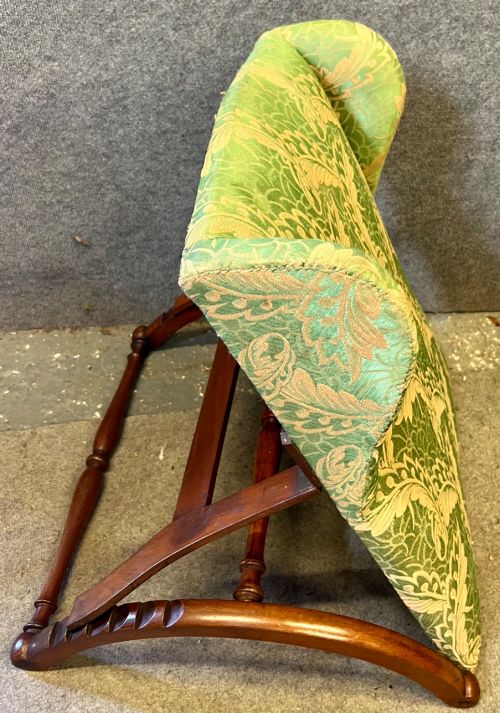
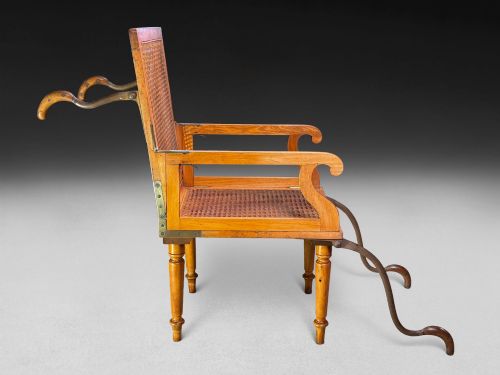
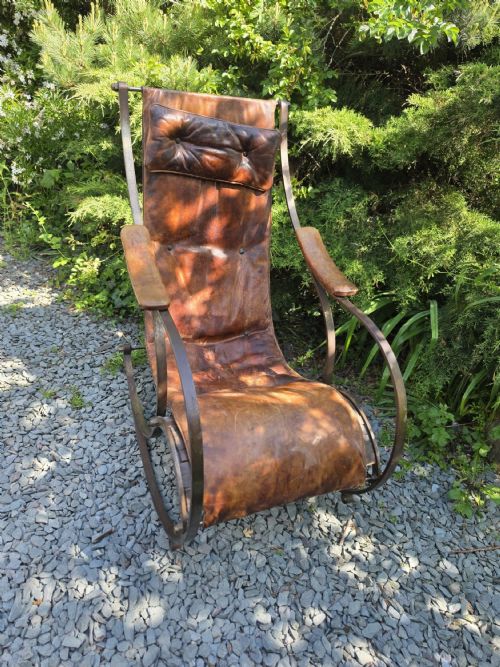
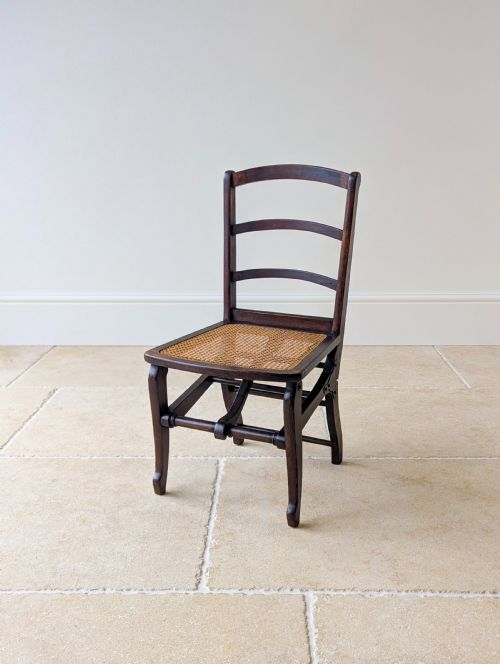
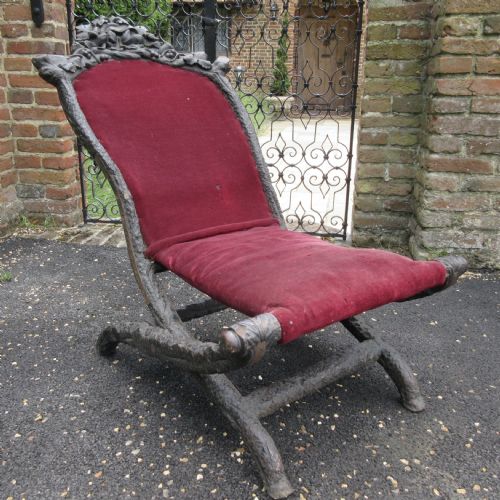
Forms include folding armchairs, reclining armchairs, daybeds, rocking chairs, and steamer deck chairs. Many examples feature adjustable backs and folding frames intended for officers on the move or travellers.
Origins stretch from English workshops to colonial contexts, with styles taking in Victorian campaign, colonial campaign, arts and crafts, and black forest carving.
How they were made
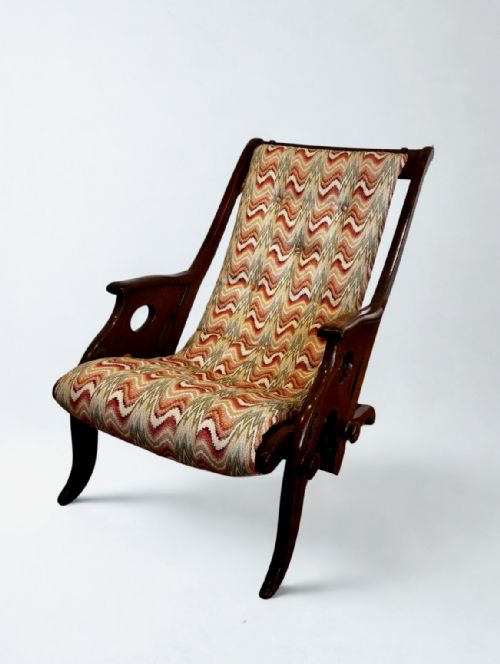
Timbers such as mahogany, walnut, rosewood, birds-eye maple, and oak form the structural frames of these folding seats. Carpenters utilised hinged joints and knock-down mechanisms to allow pieces to collapse without losing stability.
Metal components like brass and iron provide structural reinforcement, working alongside leather, cane, fabric, and bergère woven panels for seats and backrests. Bone button decorations and pierced carved crest rails appear on select walnut frames.
Periods represented span from the Regency era through Victorian and Edwardian times up to nineteen-ten.
What varies in quality
The sophistication of the folding mechanism marks out superior examples, where brass hinges and iron supports operate smoothly and lock securely into place. Finer pieces employ dense timbers like solid rosewood or figured mahogany rather than simpler secondary woods.
Carving and decorative detail distinguish the work, ranging from plain functional frames to pieces featuring pierced carved crest rails, fluting, and bone button decorations.
J Herbert McNair·R W Wingfield·Ross and Co Dublin
The Victorian Campaign Chair Glossary
- Campaign chair
- A portable seating form designed to fold or dismantle for transport by travellers or military officers.
- Bergère
- A type of rattan or cane woven work used for seat panels and backrests on wooden frames.
- Steamer chair
- An adjustable lounge seat with folding properties, often associated with deck travel in the nineteenth century.
- Adjustable backrest
- A mechanical device allowing the sitter to alter the angle of the chair back for reclining.
- Knock-down
- Construction methods that permit furniture to be taken apart into flat components for ease of movement.
Victorian Campaign Chair: Frequently Asked Questions
How do campaign chairs fold?
Many examples use hinged wooden X-frames or pivot points that allow the arms and legs to scissor together into a compact flat shape.
Other variants rely on removable pins and screws that let the backrest and seat detach entirely from the base frame for packing into a trunk.
Were these chairs actually used in the military?
The folding design originates from the practical need for officers and colonial administrators to transport their own furniture across rough terrain.
While many were built for military campaigns, a large proportion served as portable leisure seating for domestic travel, verandahs, and garden use.
How do I distinguish an Edwardian piece from a Victorian one?
Victorian pieces tend to use heavier timbers like solid mahogany or walnut with robust brass and iron hardware built for rigorous travel.
Edwardian examples often lean towards lighter occasional forms and steamer deck chairs reflecting domestic leisure rather than active military service.
What maintenance do folding chairs need?
Keep wooden frames conditioned with appropriate wax and check that metal hinges and brass pins remain clean and dry to prevent binding.
Avoid forcing stiff folding mechanisms; apply gentle pressure to the intended pivot points to allow the scissor action to move naturally.