

Victorian Cabriole Leg Armchairs
Victorian cabriole leg armchairs combine curved, graceful supports with the rich timbers of the nineteenth century.
Victorian Cabriole Leg Armchairs
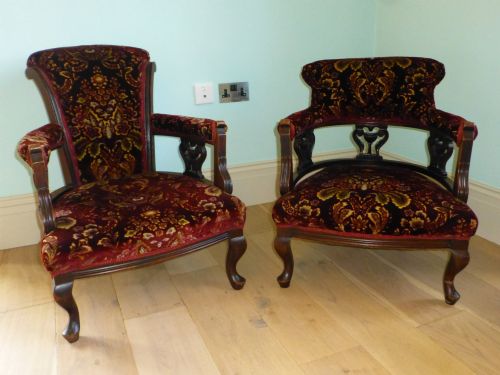
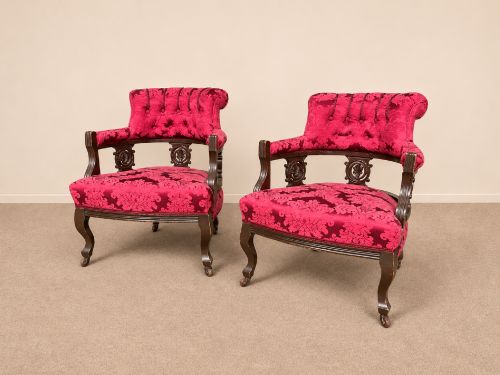
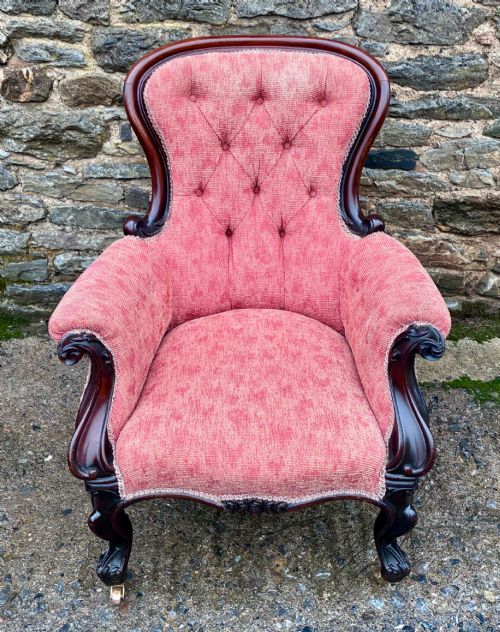
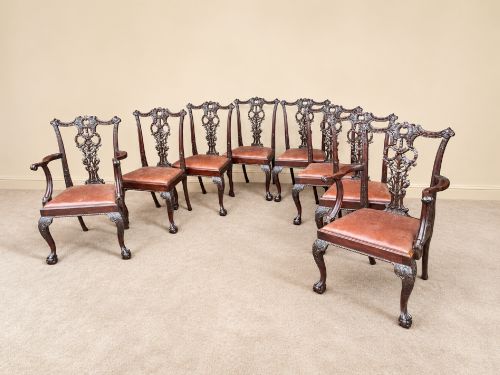
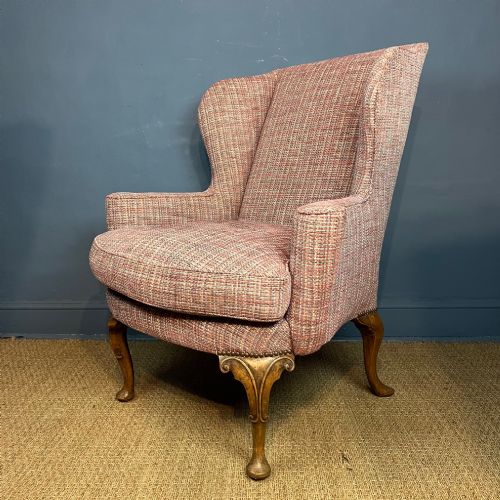
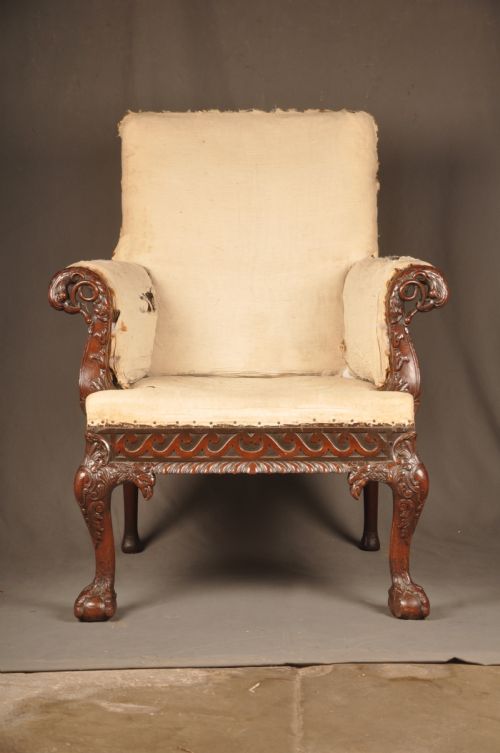
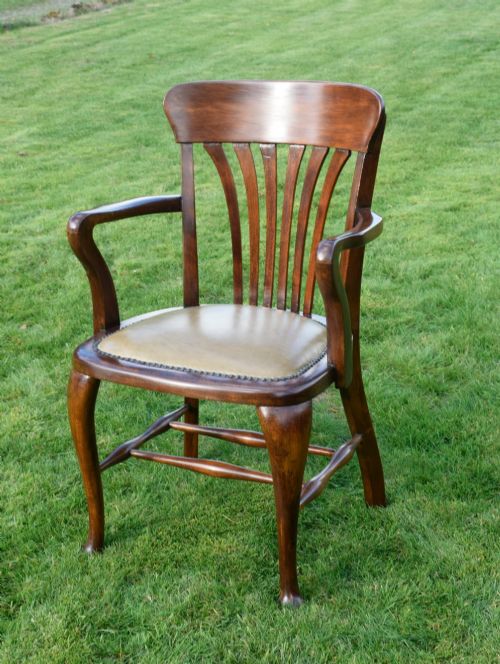
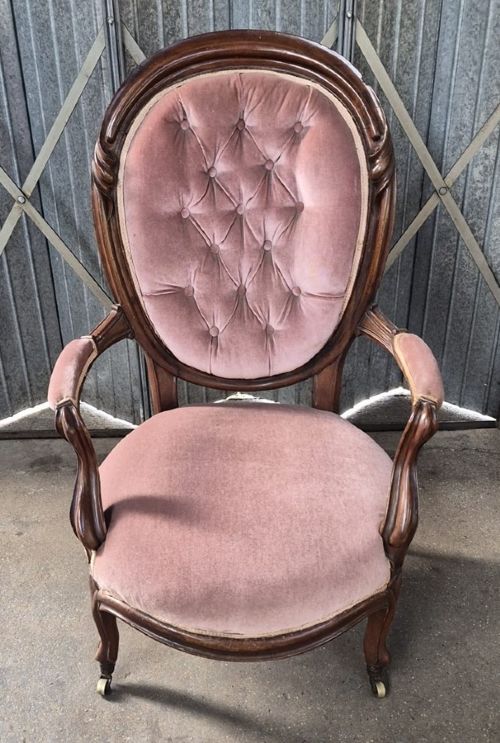
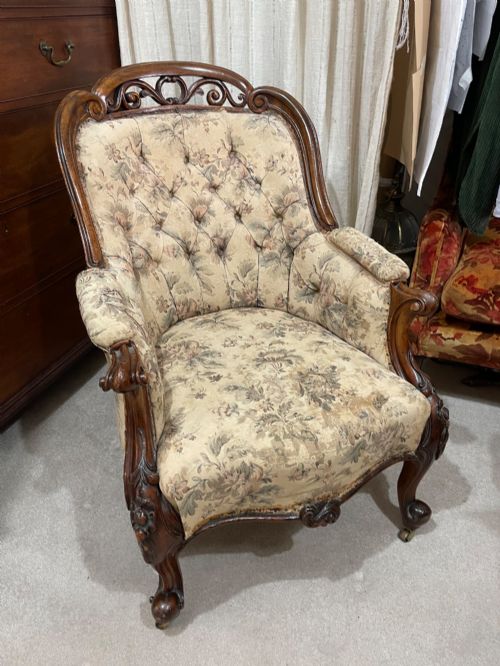
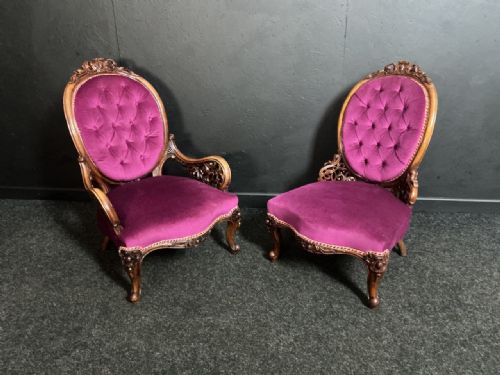
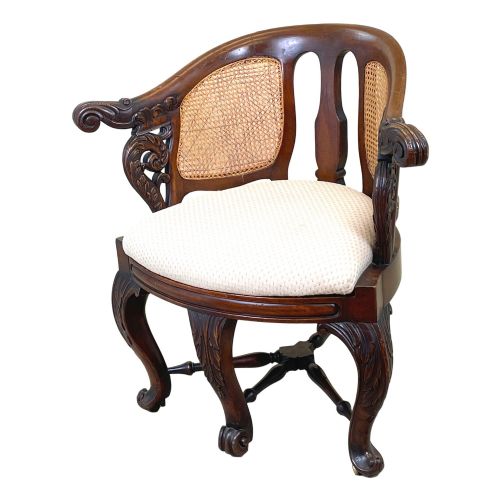
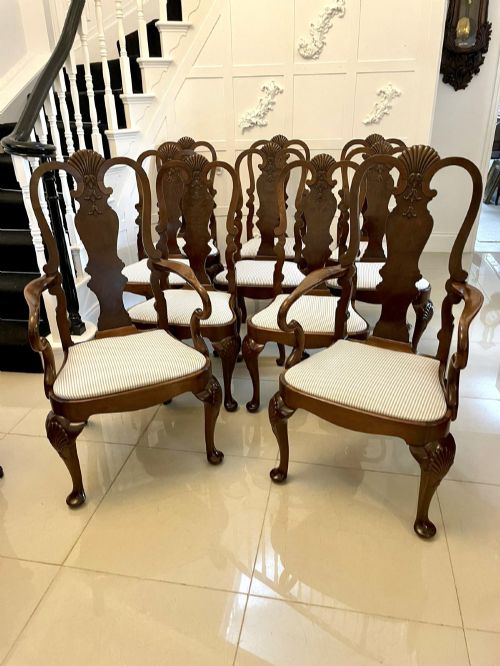
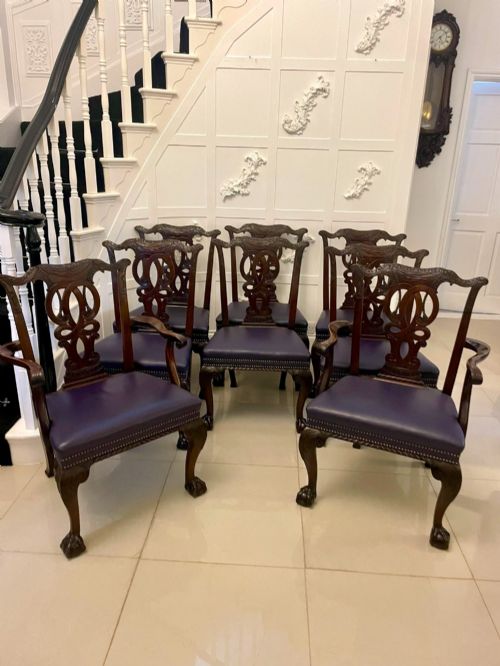
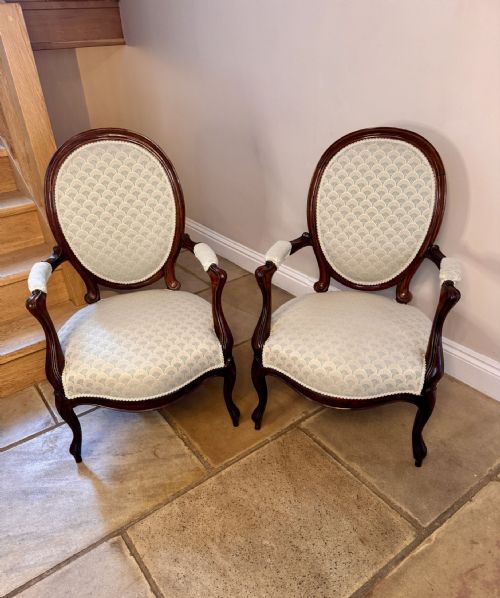
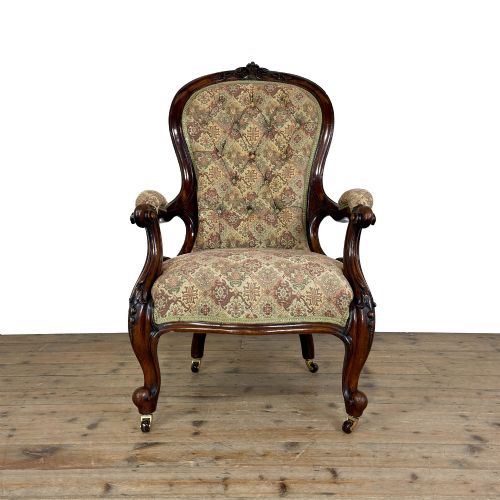
Victorian cabriole leg armchairs encompass a wide variety of seating from the nineteenth century, including library chairs, nursing chairs, and open armchairs. When exploring Victorian cabriole leg armchairs on this page, buyers frequently encounter walnut and mahogany frames featuring curvilinear forms.
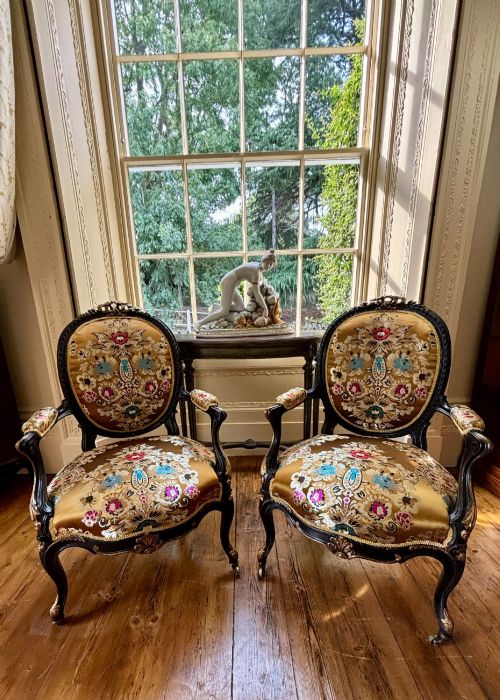
The styles range from straightforward nineteenth-century models to revival pieces influenced by earlier centuries, such as Queen Anne Revival and Rococo Revival designs. These seating options often appear as pairs or individual salon pieces suited to period interiors.
Materials and construction methods
Cabinet makers utilised dense hardwoods like walnut, mahogany, and rosewood, carving the signature double-curved legs directly from the timber. Frames frequently incorporated structural brass components alongside traditional joinery techniques.
Upholstery methods relied on heavy textiles, including velvet, leather, and fabric, often finished with button-backed detailing or simple calico undercovers depending on the specific armchair type.
Victorian Cabriole Leg Armchairs Retail Price Guide 2026
Typical asking prices for victorian cabriole leg armchairs among the pieces listed under this phrase on Sellingantiques today, from the lower quarter to the upper quarter. They describe what is for sale here now, not the wider market.
Some nineteenth-century library chairs spent their youth hidden behind heavy velvet drapes, silently enduring decades of dense cigar smoke and whispered gossip.
Distinguishing quality in nineteenth-century seating
The standard of carving on the cabriole legs and frame shoulders separates standard production seating from exceptional examples. Crisp, deeply hand-carved floral or scroll motifs indicate a higher level of craftsmanship.
Timber selection and grain figure dictate the overall presence of the piece, with richly figured walnut and rosewood elevating the visual weight of the armchair.
The Victorian Cabriole Leg Armchairs Glossary
- Cabriole leg
- A furniture leg that bends outward in a convex curve and tapers inward in a concave curve, ending in a pad or scroll foot. This form originates from ancient animal legs and gained popularity during revival periods.
- Spoon back
- An upholstered chair back shaped in a concave oval resembling the bowl of a spoon. This specific contour supports the spine comfortably.
- Rococo Revival
- A nineteenth-century design movement mimicking the ornate, asymmetrical curves of the mid-eighteenth century. It heavily influences many Victorian open armchairs.
- Wing armchair
- A high-backed chair with side panels designed to shield the occupant from drafts. These versions often feature deep button-back upholstery and turned or curved supports.
Victorian Cabriole Leg Armchairs: Frequently Asked Questions
Where did people place these armchairs?
Victorian households positioned these comfortable seats in libraries, drawing rooms, and master bedrooms. They served as reading chairs or formal seating within matching salon suites.
Today, they function well as accent seating in modern living spaces, bringing period character to corners or firesides.
How do I identify a revival style?
Revival pieces borrow decorative motifs from earlier eras, such as the eighteenth-century cabriole leg or carved scrollwork. Makers combined these historical shapes with heavier Victorian proportions and darker timbers.
Examining the underlying construction timber helps distinguish these nineteenth-century interpretations from older originals.
What is a nursing chair?
Nursing chairs feature lower seats designed for comfort and ease of tending to infants in the Victorian home. They frequently omit armrests to accommodate bulky nineteenth-century garments and dresses.
These low-slung seats often display elaborate carved walnut frames and delicate cabriole supports.
Are these chairs suitable for daily use?
Sturdy nineteenth-century hardwood frames provide robust structural support for regular seating. Many examples retain solid joinery built to withstand everyday household activity.
Upholstery condition varies, but the underlying frames remain durable foundations for contemporary living.