

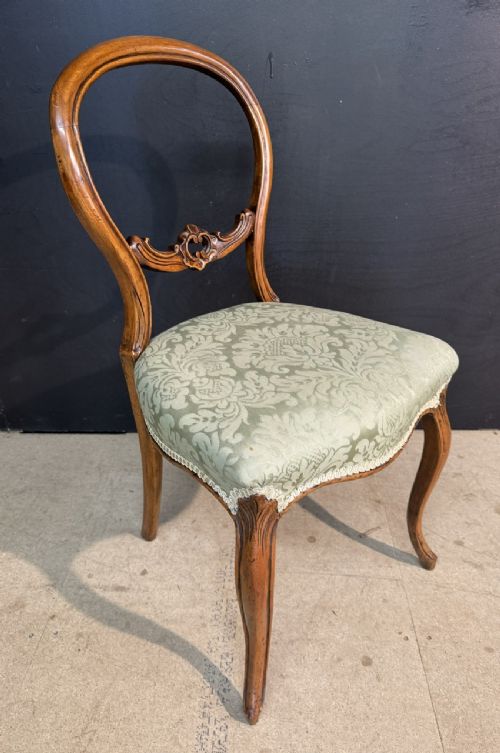


Victorian Cabriole Dressing Chair
These Victorian cabriole dressing chair pieces are low-slung seats designed for the vanity, bringing curved walnut or mahogany frames and upholstered pads to the bedroom.
Victorian Cabriole Dressing Chair
A victorian cabriole dressing chair is typically encountered here as a low stool, slipper chair or small side seat intended for use at a dressing table. The titles show forms such as rise and fall music stools, vanity chairs and bedroom single side chairs.
The material evidence points to walnut, rosewood and mahogany frames paired with upholstery fabrics, velvet and damask. These seating pieces span the nineteenth century, with specific dates including eighteen fifty, eighteen sixty, eighteen seventy and nineteen hundred.
Stylistic influences range across Victorian, Regency, French Rococo Revival and Queen Anne Revival. Buyers find that many examples incorporate the distinctive double-curved leg characteristic of the cabriole form.
How they were made
Cabinetmakers shaped dense hardwoods like walnut, mahogany and rosewood to form the characteristic cabriole legs and supportive frames. These timbers provided the structural strength required for chairs and stools subject to daily bedroom use.
Upholstery techniques involved securing fabrics such as velvet and damask over padded seat foundations. Metal components like brass occasionally appeared in mechanical elements, notably in rise and fall piano or dressing table stools.
Victorian Cabriole Dressing Chair Retail Price Guide 2026
Typical asking prices for victorian cabriole dressing chair among the pieces listed under this phrase on Sellingantiques today, from the lower quarter to the upper quarter. They describe what is for sale here now, not the wider market.
The listings on this page span the nineteenth century, recording walnut, mahogany and rosewood frames upholstered in velvet, damask and general fabric.
What varies in quality
The refinement of the carved cabriole leg distinguishes simpler production from finer cabinetwork, with crisp curves showing superior hand-tooling. Timber selection also plays a part, as richly figured walnut or rosewood elevates the visual presence of a dressing chair.
The integrity of the frame construction and the quality of the textile upholstery determine the overall standard of the piece. Surviving examples that retain harmonious proportions between the low seat and the curved supports represent the more successful designs of the period.
The Victorian Cabriole Dressing Chair Glossary
- Cabriole leg
- A furniture leg that curves outward and then tapers inward, mimicking an animal's limb. This form appears frequently on the walnut and mahogany frames found in these listings.
- Slipper chair
- A low-set upholstered bedroom chair designed originally for ladies to sit upon while putting on shoes or garments. These pieces often lack arms to allow full freedom of movement.
- Rise and fall stool
- A seat featuring a mechanical screw or ratchet mechanism that allows the height to be adjusted. Such items served dual purposes at the dressing table or the piano.
- Damask
- A reversible figured fabric woven on a jacquard loom, frequently utilised for historical upholstery. The pattern shows on both sides with contrasting warp and weft faces.
Victorian Cabriole Dressing Chair: Frequently Asked Questions
How were these chairs used?
They served primarily as seating at dressing tables for grooming and morning routines.
Some variants, such as the rise and fall stool, also doubled as piano or music seating in the Victorian home.
What woods are most common?
Walnut, mahogany and rosewood dominate the frames of these nineteenth-century pieces.
Cabinetmakers utilised these dense hardwoods to carve the slender, curved legs characteristic of the period.
How do revival styles differ?
Styles span Victorian Rococo, French Rococo and Queen Anne revivals alongside Regency designs.
These revivals reinterpreted earlier curving lines and decorative motifs within nineteenth-century manufacturing methods.