
Vanity Stool Cabriole Legs
A vanity stool cabriole legs brings graceful curves and period character to a dressing area or bedroom.
Vanity Stool Cabriole Legs
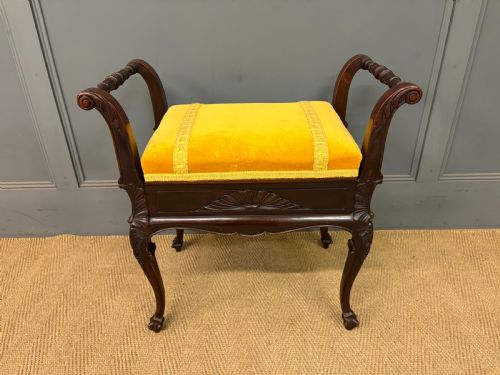
These low seats served practical purposes at the dressing table or piano before evolving into decorative footstools and benches. While many date from the nineteenth century, revivals of earlier seventeenth and eighteenth-century aesthetics dominate the selection.
How they were made
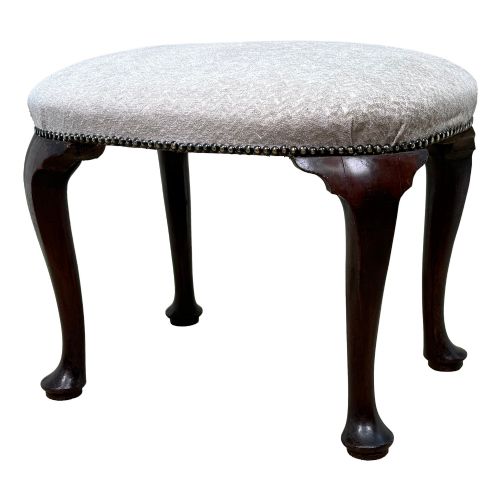
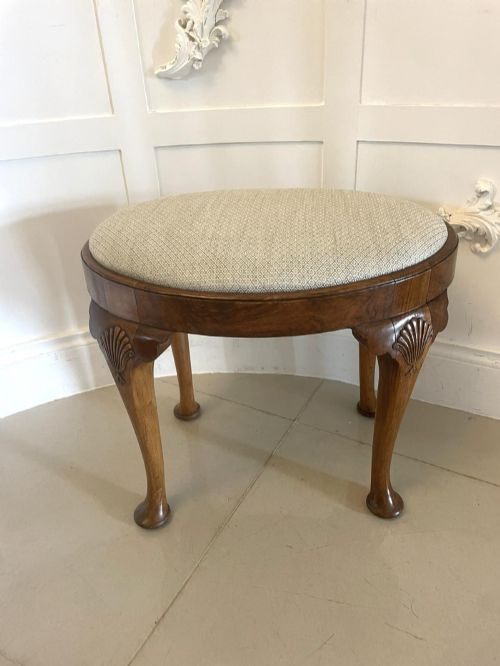
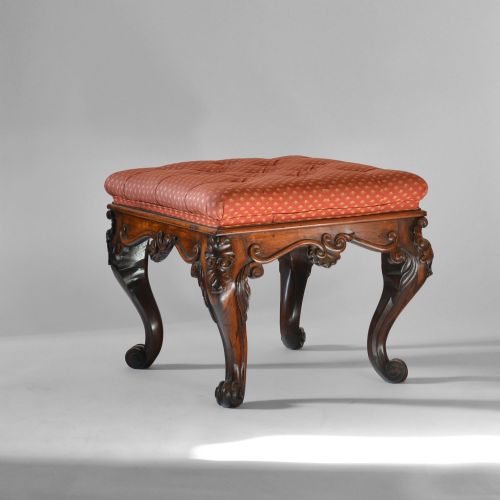
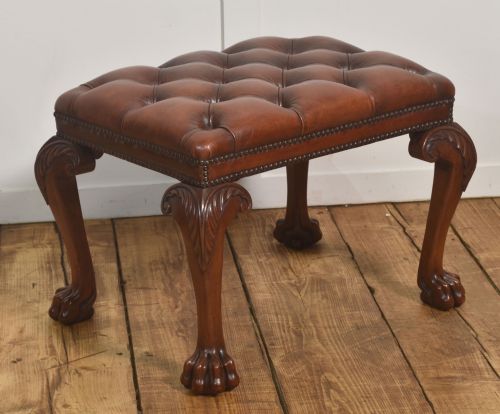
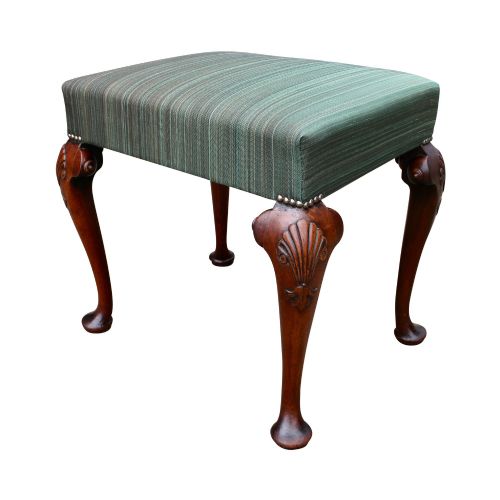
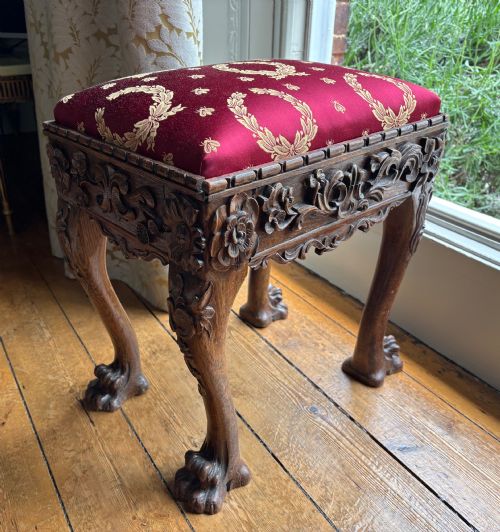
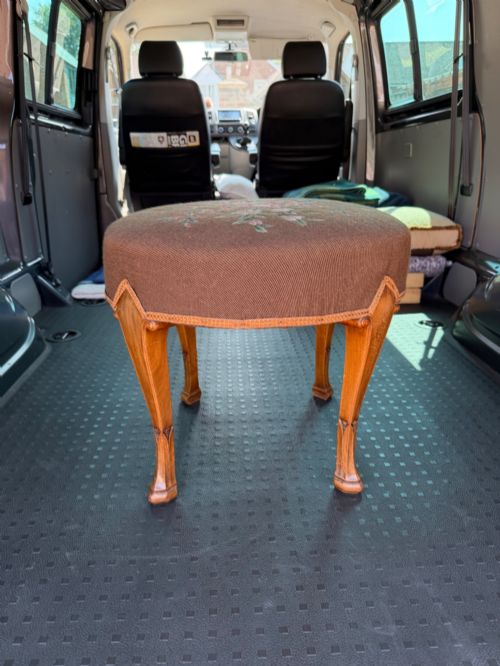
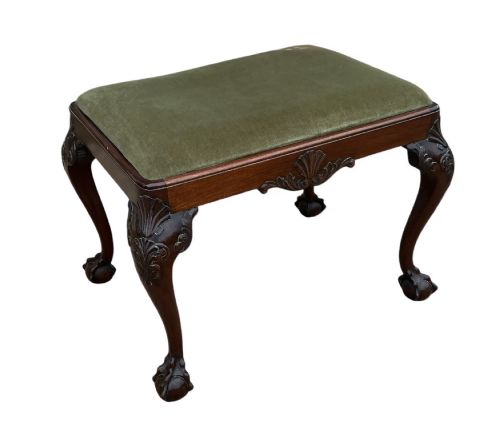
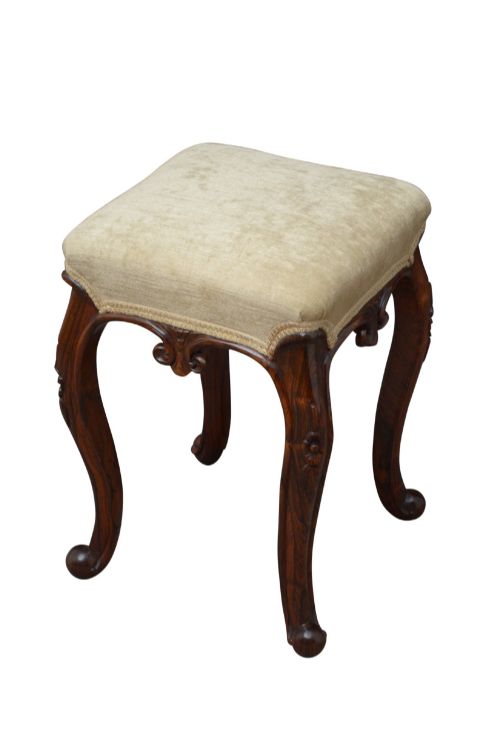
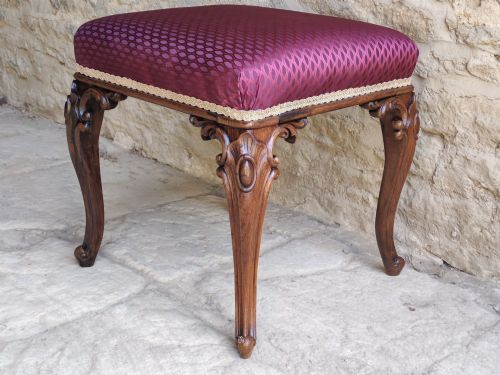
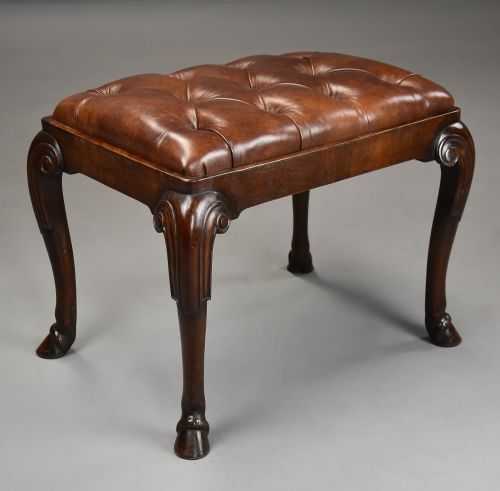
Timbers such as mahogany, walnut and rosewood form the sturdy frames of these stools, shaped with flowing curved legs that terminate in pad or claw and ball feet. Joinery relies on traditional mortise and tenon construction to support the weight placed upon the frame.
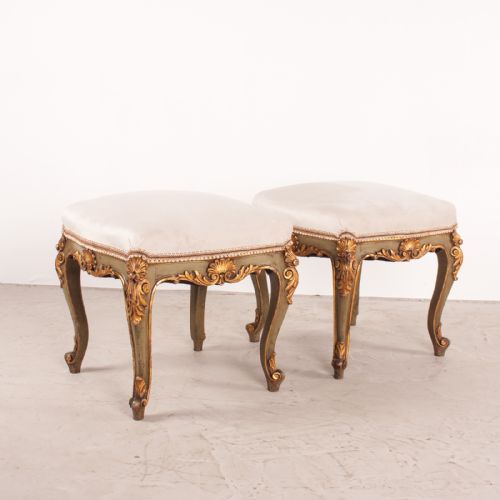
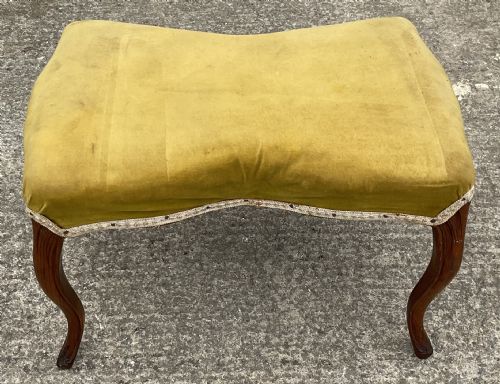
Seats are upholstered in a variety of textiles including velvet, tapestry, leather and traditional woven fabric, often padded over webbing or stuffing. Decorative touches range from carved cabriole legs to subtle gilding and painted Continental finishes.
Listings feature pieces spanning the Victorian period through the nineteen-thirties, constructed predominantly from walnut, mahogany and rosewood.
What varies in quality
The standard of carving on the cabriole legs sets finer examples apart from simpler production, with crisp relief work indicating skilled cabinet work. Timber selection also dictates grade, where rich grain patterns in solid walnut or mahogany elevate a piece.
Integrity of the frame and the quality of the upholstery materials determine durability and overall finish. Pieces retaining original textiles or showing meticulous restoration command greater appreciation among collectors.
Loidrault Freres Paris
The Vanity Stool Cabriole Legs Glossary
- Cabriole leg
- A furniture leg that bends outward in a convex curve at the top and inward in a concave curve at the bottom, mimicking an animal's leg. This form became popular during the eighteenth century and saw frequent revivals.
- Queen Anne style
- A design movement characterised by curved lines, cabriole legs and pad feet, originating in the early eighteenth century. Later revivals reproduce these graceful domestic proportions.
- Chippendale style
- A decorative aesthetic drawing from mid-eighteenth-century English cabinet maker Thomas Chippendale, featuring carved ornamentation and sturdy cabriole legs. It remains a staple of traditional seating design.
- Goncalo Alves
- A dense exotic hardwood with striking dark brown and pale yellow-brown markings, sometimes utilised for distinctive Victorian furniture. It provides a heavy, durable frame.
- Giltwood
- Wood that has been coated with a thin layer of gold leaf or powder for a decorative metallic finish. This technique appears on Continental and revival pieces.
Vanity Stool Cabriole Legs: Frequently Asked Questions
What is a cabriole leg?
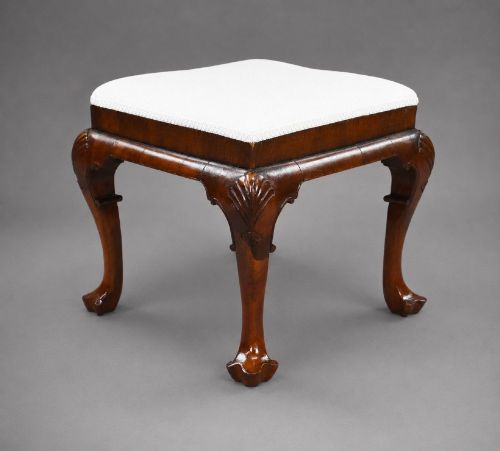
A cabriole leg is a stylistic furniture support featuring a double curve that swells outward near the top and tapers inward toward the foot. This shape derives from ancient furniture traditions and gained prominence in European design.
On these stools, the leg creates a sense of movement and elegance while providing robust support for the seat frame. Cabinet makers often embellished the knee of the leg with carved shell or floral motifs.
How do I date a wooden stool?
Dating relies on examining the timber species, construction methods, tool marks and underlying style characteristics. Nineteenth-century pieces often display machine-sawn components alongside traditional hand joinery.
Revival pieces adopt historical aesthetics from the Queen Anne or Chippendale eras but reveal nineteenth or twentieth-century manufacturing techniques upon closer inspection of the interior framework.
Where were vanity stools used?
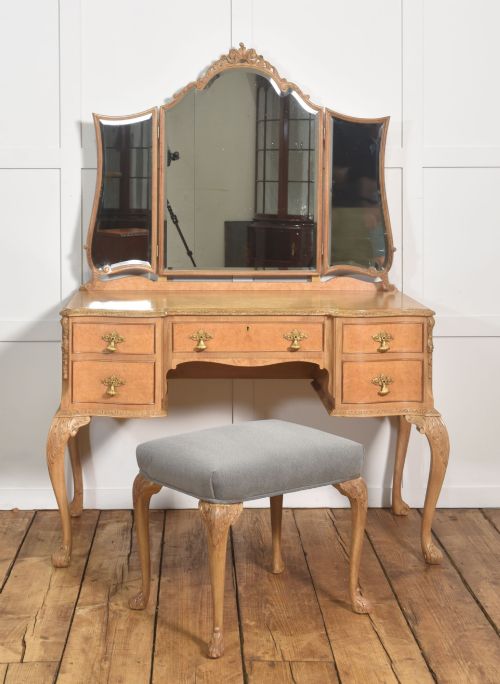
These stools typically sat in bedrooms and dressing rooms alongside matching dressing tables with mirrors. They provided comfortable, backless seating for grooming and personal care.
Some versatile variants also functioned as piano benches or small occasional footstools in formal reception rooms. Their compact proportions allowed them to tuck neatly beneath furniture surfaces when not in use.
Are these stools comfortable?
Upholstered seats with padded stuffing provide a supportive surface for sitting during daily routines. The inclusion of textile, velvet or leather top coverings adds a soft layer to the solid wood frame.
Original padding may feel firmer than modern cushioning due to historical stuffing materials like horsehair or wool. Many pieces retain functional comfort suitable for brief periods of use.