

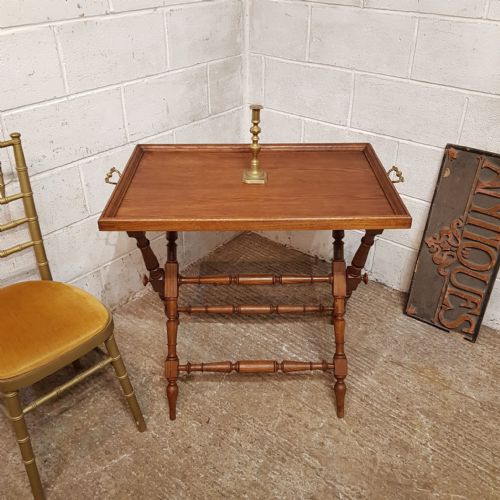


Victorian Butler Tray Table
A victorian butler tray table is a portable serving surface paired with a folding stand, valued for its dual utility and compact footprint.
Victorian Butler Tray Table
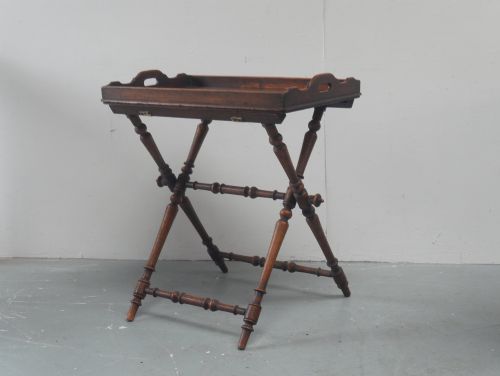
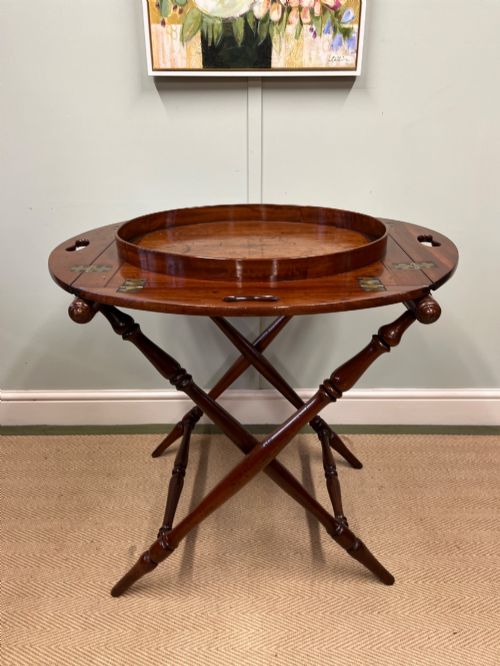
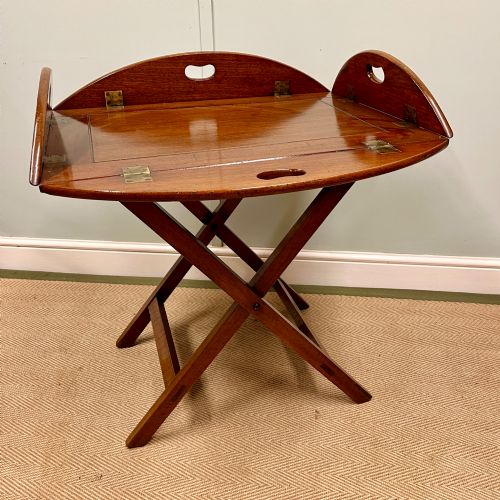
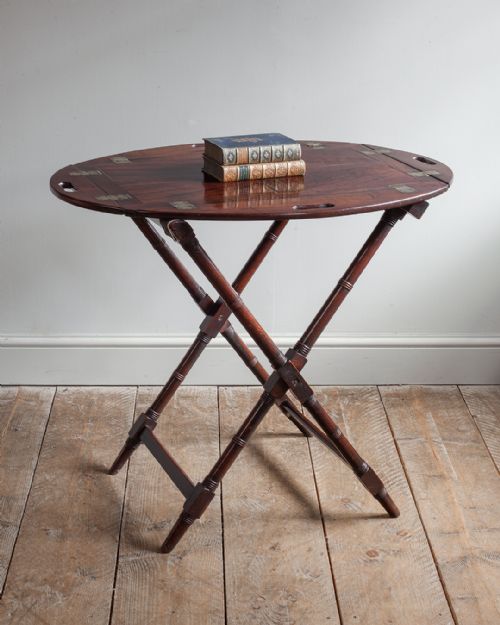
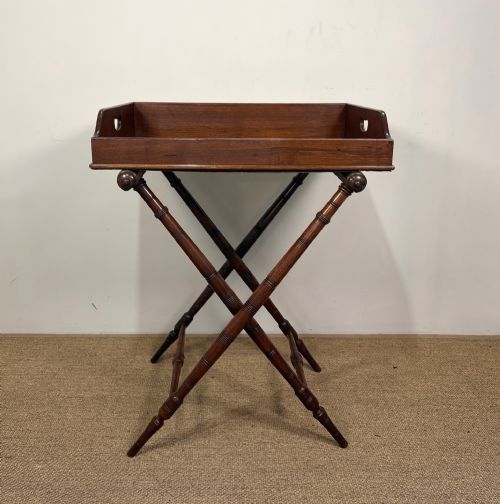
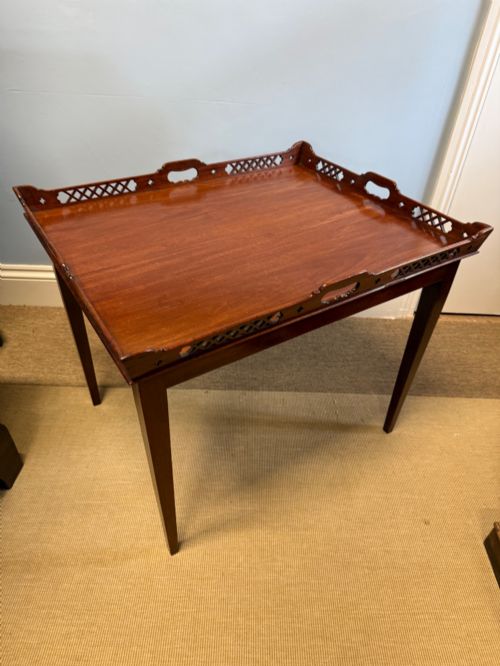
A victorian butler tray table comprises a detachable rectangular or oval tray resting upon a folding wooden frame. The form originates from practical domestic service, designed to carry food and drinks from kitchens to living quarters before doubling as a steady occasional table.
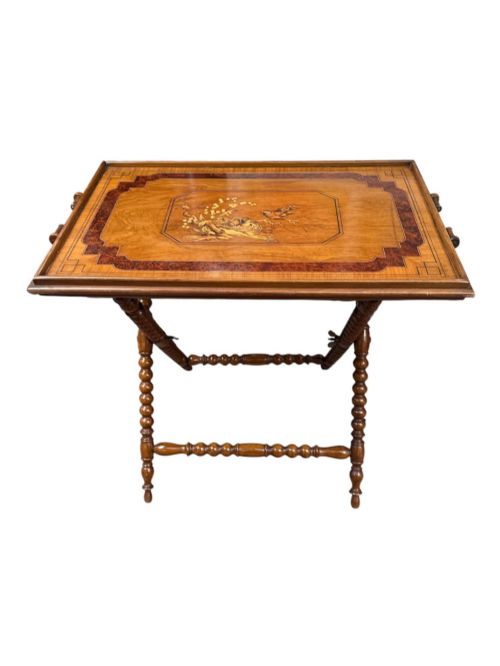
Most examples encountered here date from the nineteenth century, spanning mahogany, oak, and walnut timbers. These pieces range from plain utilitarian folding tables to decorative specimens featuring marquetry, brass handles, or elaborate gallery edges.
Variations include coaching tables and serving tables alongside standard tray tables on original or later stands. Certain iterations incorporate specialised details such as boat and oars motifs, floral papier-mâché, or Gothic Revival carving.
How They Were Made
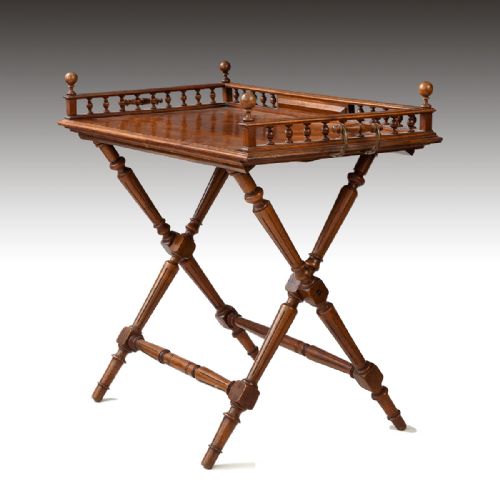
Cabinetmakers constructed the trays primarily in dense hardwoods like mahogany, oak, and walnut, frequently utilising figured grains for visual depth. Edges often feature raised galleries with hand-cut handgrips, or hinged sides that fold flat when released from their brass brackets.
Stands are engineered with hinged X-frame folding legs designed for rapid storage and transport. Joinery relies on traditional methods including mortise and tenon frames, while decorative models incorporate marquetry inlay, ebonising, or papier-mâché surfaces.
One exceptional tray commemorates maritime service with a carved boat and oars design.
What Varies in Quality
The distinction between ordinary and superior examples lies in the choice of timber and the crispness of the secondary enrichment. Finely figured mahogany or marquetry work indicates a higher grade of workshop production than plain utility pine or basic oak.
Originality of the matching stand heavily influences the standing of a piece, particularly where hinges, brass mounts, and folding mechanisms remain intact. Carved detailing, such as Gothic Revival motifs or serpentine galleries, demonstrates a higher tier of period craftsmanship.
The Victorian Butler Tray Table Glossary
- Butler tray
- A portable wooden tray with a raised rim, typically fitted with cut-out handles for lifting. It sits upon a separate folding support when in use.
- Coaching table
- A folding table design akin to a butler tray table, historically utilised for travel and temporary entertaining.
- Gallery
- A raised wooden or metal border encircling the edge of a tray to prevent items from sliding off during transport.
- Sorrento ware
- Woodwork decorated with micro-mosaic marquetry inlay, originating from the Italian town of Sorrento and popular during the nineteenth century.
- Papier-mâché
- A composite material made from paper pulp mixed with glue and resin, pressed into moulds and lacquered to create smooth, decorated serving surfaces.
Victorian Butler Tray Table: Frequently Asked Questions
What is a butler tray table?
A butler tray table is a piece of antique furniture consisting of a removable flat serving tray placed upon a collapsible wooden stand. This design allowed domestic staff to carry items easily and store the furniture away when not needed.
Today, these tables serve widely as versatile coffee tables or occasional surfaces in living rooms and studies. Their folding nature retains the practical flexibility intended by nineteenth-century makers.
How do I date a victorian butler tray table?
Dating relies upon examining the timber species, construction methods, and hardware style. Pieces from earlier decades often employ solid mahogany with hand-cut dovetails and heavy brass hinges, whilst later examples may feature machine-cut elements or alternative woods.
Matching stands bearing original patination provide the strongest indicator of period authenticity. Stylistic clues such as Gothic Revival carving or Sorrento marquetry further narrow the decade of manufacture.
Were these tables used outdoors?
Historical records indicate these pieces remained primarily within domestic interiors for serving afternoon tea or drinks in drawing rooms. Their portability suited movement between rooms rather than outdoor garden use.
While robustly constructed from hardwoods, their polished finishes and delicate inlays mean modern owners generally keep them inside as dry display surfaces.
What woods were used for these tables?
Mahogany remains the most common timber found in these listings, valued for its stability and rich reddish-brown tone. Oak and walnut appear frequently, providing alternative grains and heavier structural weight.
Scattered examples utilise exotic or decorative materials such as satinwood, olivewood, ebonised finishes, and papier-mâché. These rarer surfaces usually denote higher status pieces intended for formal reception rooms.