





Victorian Burr Walnut Armoire
A Victorian burr walnut armoire brings magnificent grain and scale to a bedroom, offering grand presence alongside practical hanging space.
Victorian Burr Walnut Armoire
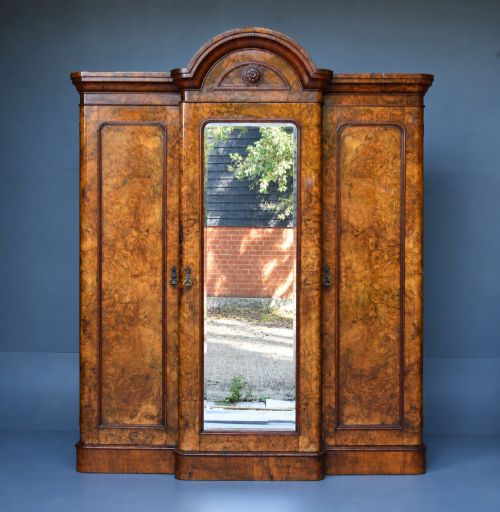
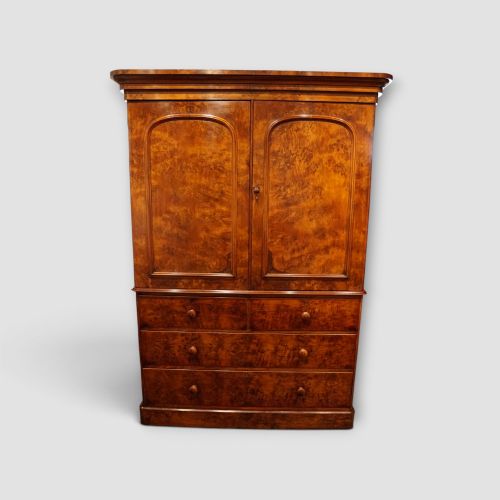
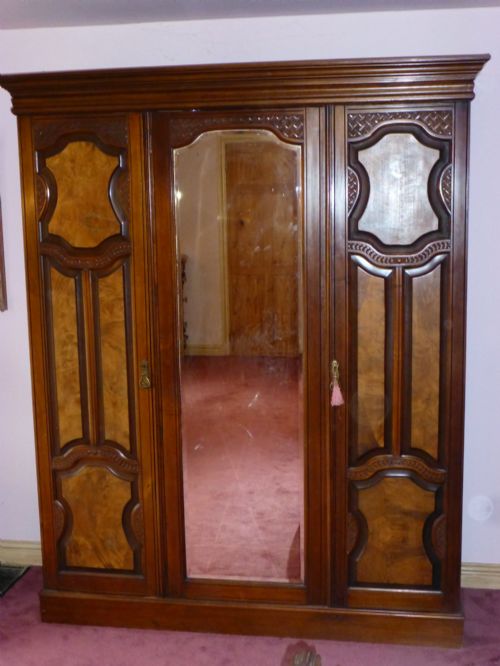
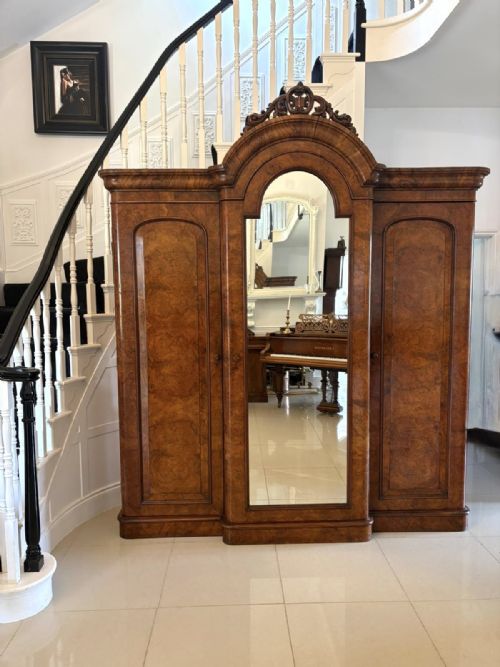
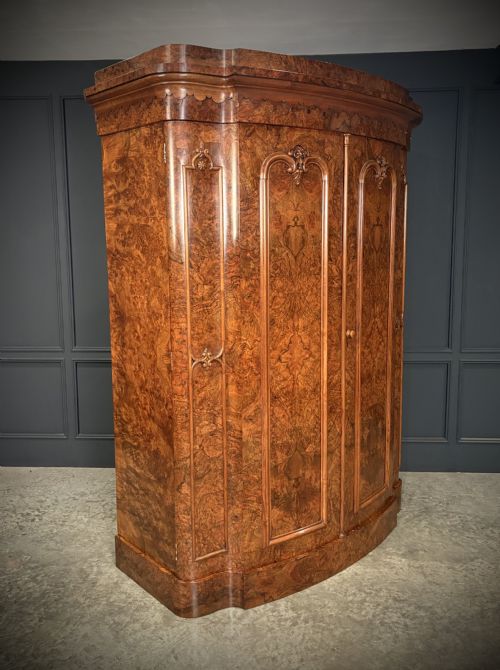
A Victorian burr walnut armoire is a substantial piece of bedroom furniture designed for clothing storage, spanning wardrobe, compactum, and linen press forms. These large items dominate a room with architectural presence, often featuring multiple doors and internal drawer configurations.
The pieces appearing on this page date predominantly from the nineteenth century, with specific examples recorded across the eighteen-fifties, sixties, seventies, eighties, and nineties. Buyers will encounter both grand triple wardrobes and more compact double versions, alongside related storage cabinets.
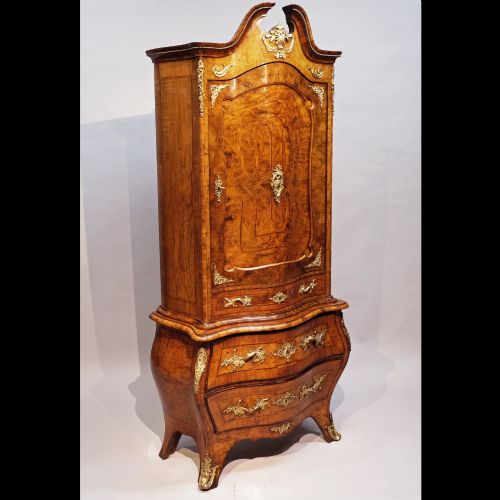
Makers and designers of the period utilised rich timber figure to create striking visual impact, rendering each wardrobe a distinctive focal point. While many pieces follow traditional Victorian taste, examples influenced by Rococo Revival styles and continental Grunderzeit aesthetics also emerge within the selection.
How they were made
Cabinet makers constructed these large wardrobes using solid timber carcases overlaid with decorative veneers, selecting burr walnut specifically for its swirling, highly figured grain patterns. Subsidiary timbers such as plain walnut and ash provided structural stability for the internal framing and drawer construction.
Metal components played a crucial functional and decorative role, with brass hinges, locks, and ormolu mounts securing the heavy doors and drawers. Large sheets of mirror glass were frequently integrated into the door panels, requiring precise rebate work and framing to support the heavy weight.
Several wardrobes hide internal sliding trays originally built to keep folded linen crisp before modern wardrobes took over.
What varies in quality
Quality in a Victorian burr walnut armoire rests upon the selection and bookmatching of the veneer, where symmetrical grain patterns across large door panels signal superior cabinet work. The depth and crispness of carved details, along with the integration of architectural mouldings, elevate the standing of a piece.
Internal configuration and secondary timber selection distinguish standard production from exceptional commissions. Multi-part compactums featuring fitted linen slides, interior drawers, and quality brass hardware represent higher tiers of craftsmanship than basic hanging cupboards.
Holland and Sons
The Victorian Burr Walnut Armoire Glossary
- Burr walnut
- A veneer sliced from the gnarled growths of a walnut tree. It produces highly prized, intricate circular grain patterns.
- Compactum
- A multi-functional wardrobe. It combines hanging space with fitted internal drawers, shelves, and sometimes sliding trays.
- Ormolu
- Gilded bronze or brass ornamentation applied to furniture. It provides decorative contrast against the dark timber surfaces.
- Linen press
- A traditional storage piece comprising upper shelving enclosed by doors, positioned above a chest of base drawers.
- Rococo Revival
- A nineteenth century decorative style. It draws inspiration from earlier French court art through asymmetrical, flowing scrollwork.
Victorian Burr Walnut Armoire: Frequently Asked Questions
How do I dismantle a large armoire?
These large wardrobes were typically built with modular carcases, cornices, and bases to allow movement through residential doorways. Professional dismantling requires careful cataloguing of wedges, screws, and numbered panels.
Reassembly demands precise levelling on site to ensure the heavy mirrored doors hang squarely within their frames without binding.
What is a compactum wardrobe?
A compactum is a specialised multi-compartment wardrobe designed to maximise storage efficiency within a single footprint. They frequently incorporate a central tower of drawers flanked by hanging spaces and linen slides.
These interior configurations make them particularly practical for modern bedroom organisation without requiring additional chest furniture.
How should I care for walnut veneer?
Burr walnut requires stable environmental conditions away from direct sunlight and strong heat sources to prevent the timber from drying out. Maintaining moderate room humidity protects the delicate veneer and underlying glue from shrinking.
Dusting with a dry microfibre cloth and occasional applications of appropriate beeswax maintain the natural lustre of the polished surface.
How do I date a Victorian wardrobe?
Dating relies upon stylistic cues, construction methods, and hardware types used during assembly. Mid century examples often display simpler architectural lines, while later nineteenth century pieces incorporate heavier carved details or continental influences.
Internal timber choices and screw types also offer reliable clues to the exact decade of manufacture.