

Burr Walnut Bedroom Storage
Burr walnut bedroom storage pieces bring striking, swirling timber grain to wardrobes, tallboys, and chests of drawers.
Burr Walnut Bedroom Storage
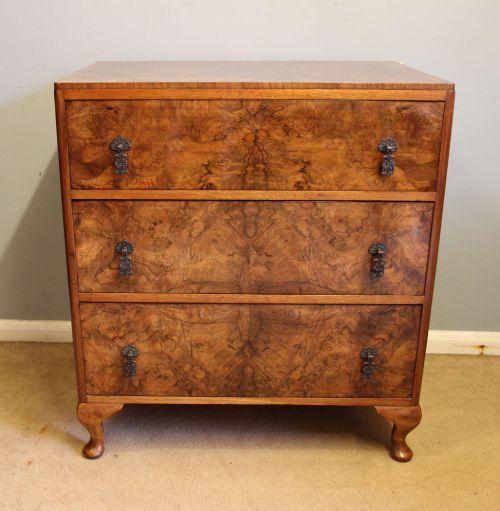
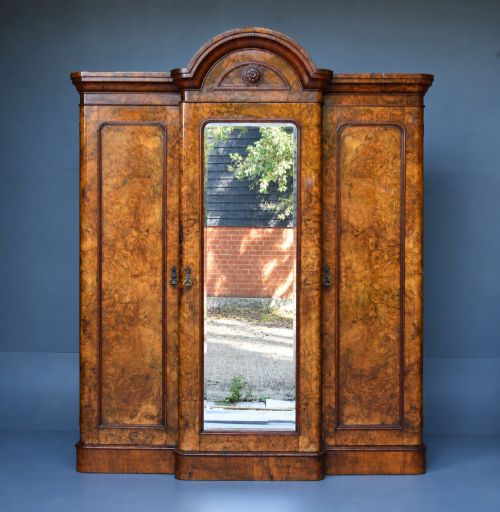
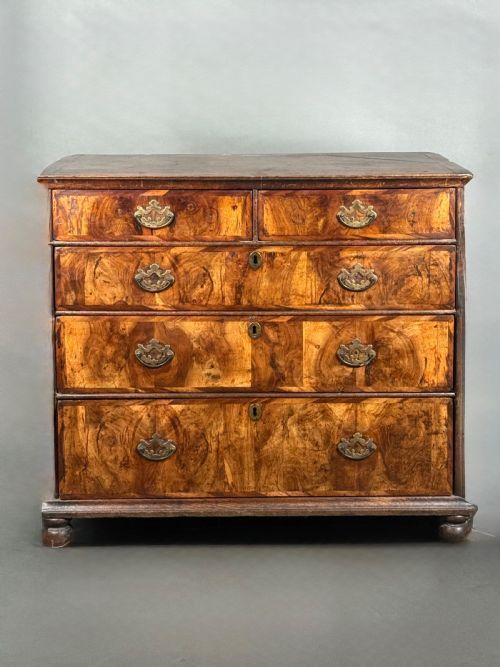
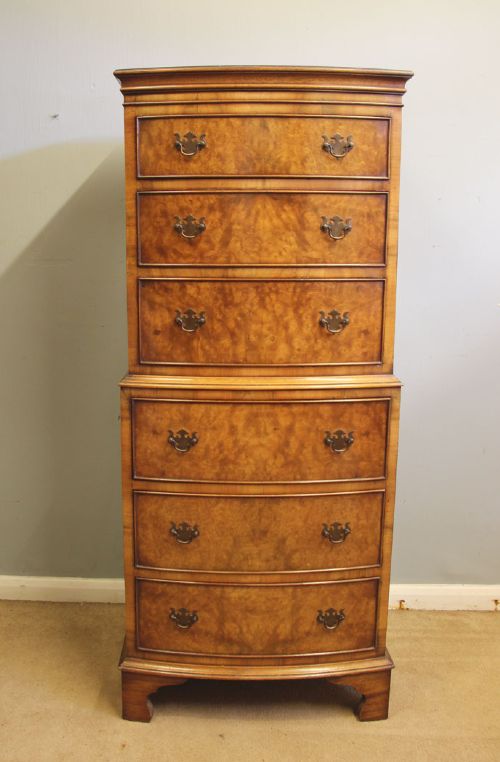
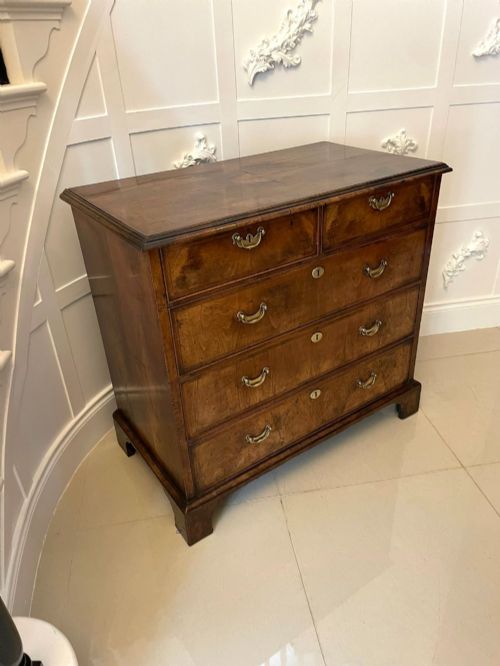
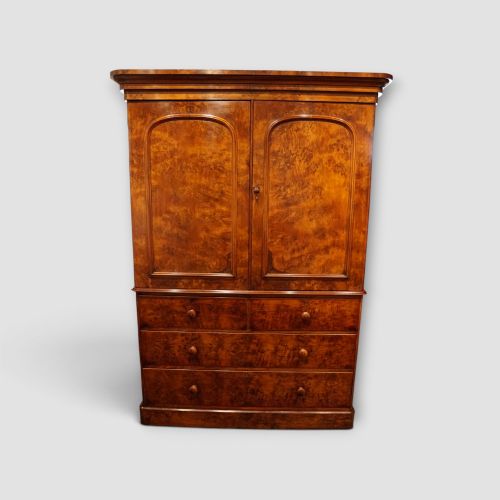
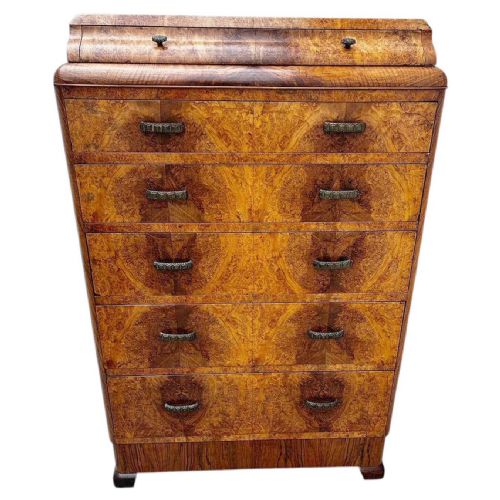
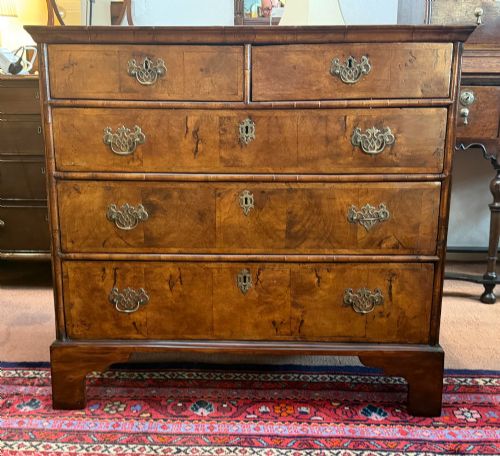
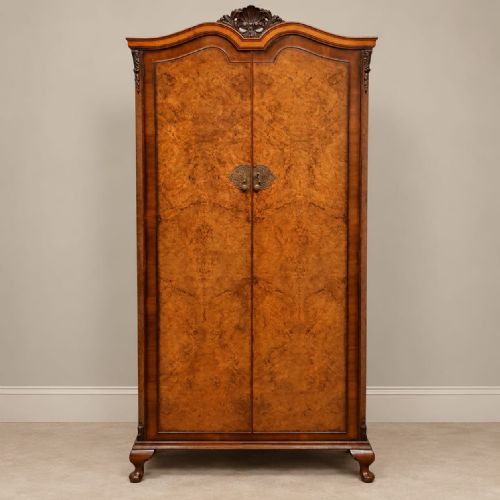
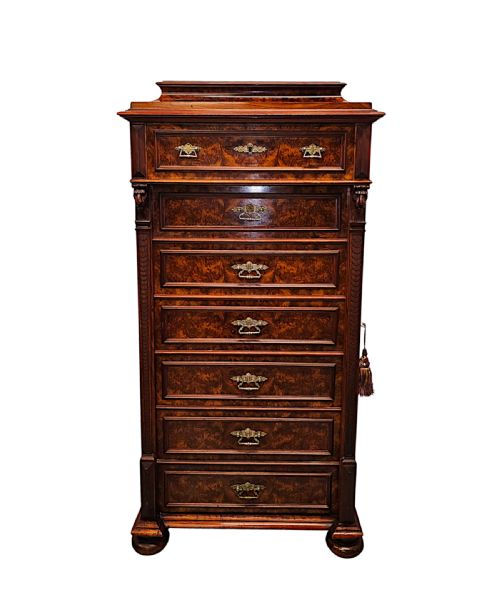
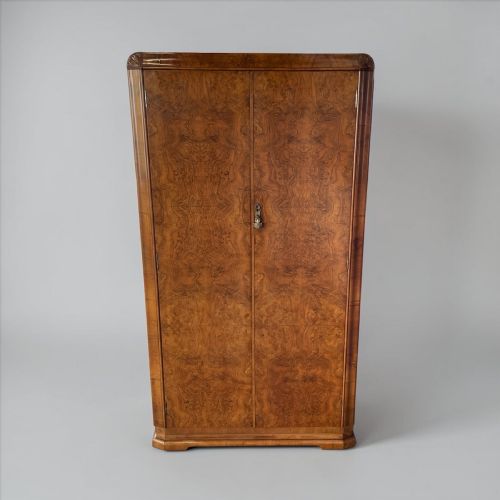
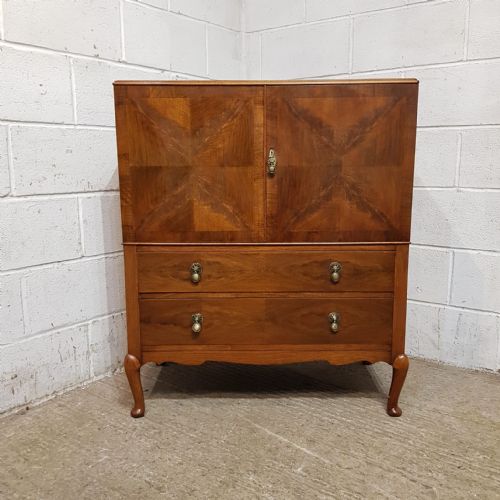
Burr walnut bedroom storage covers a range of large and small furniture designed to hold garments and belongings, appearing primarily as chests of drawers, wardrobes, tallboys, and bedside cabinets. When exploring this selection, buyers encounter pieces stretching from the early eighteenth century through the Victorian era into Art Deco and revival styles of the 1920s and 1930s.
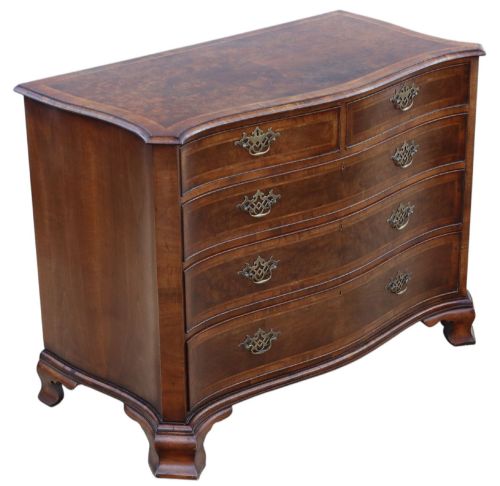
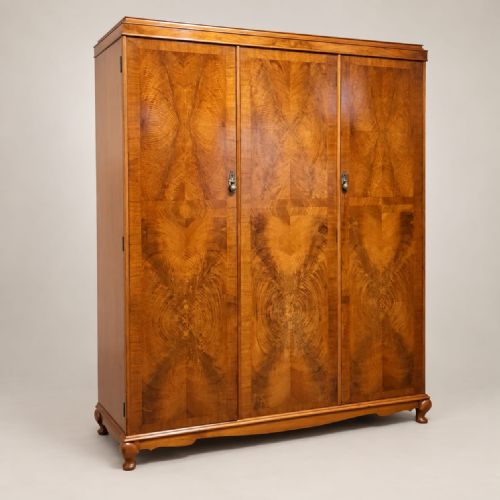
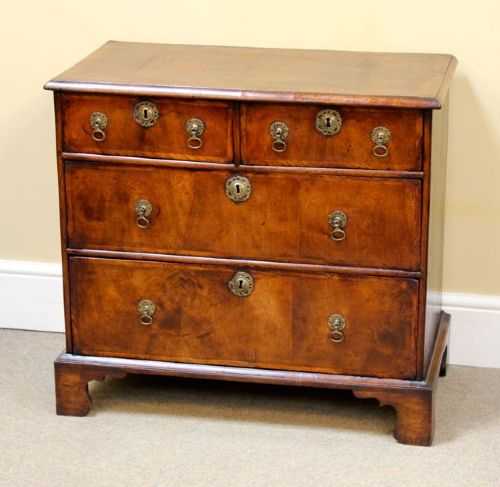
The chests of drawers take diverse forms, including serpentine fronts, bow fronts, and tall Wellington designs, alongside larger triple wardrobes and fitted armoires. Eighteenth-century examples sit alongside twentieth-century interpretations influenced by Georgian and Queen Anne aesthetics, offering distinct proportions for modern interiors.
Materials and Construction
Cabinet makers utilised walnut and burr walnut veneers applied over secondary timber carcases such as oak, pine, and solid walnut to achieve complex, figured grain patterns across large drawer fronts and wardrobe doors. Crossbanding and matched veneer panels define the surfaces, frequently complemented by brass handles, escutcheons, and occasional Bakelite details on later pieces.
Internal drawer construction relies on traditional dovetailed joints, while carcases incorporate solid timber framing to support heavy hanging spaces and multiple tiers of drawers. The application of veneer required precise hand-cutting from the burr growths of the tree, producing intricate swirling patterns that remain stable over centuries of use.
The selection ranges from 18th-century Georgian designs to 1930s Art Deco styles, using walnut veneer, oak, and brass.
Distinctions in Quality
The standard of a burr walnut piece rests upon the symmetry and richness of the veneer selection, where master cabinet makers matched the grain across multiple drawer fronts or wardrobe doors to create a continuous visual flow. Exceptional items display deep, unblemished figuring across every exposed surface, whereas simpler versions reserve the decorative timber solely for the primary facade.
Proportion and structural integrity separate standard utility pieces from high-end commissions, seen in the crispness of the mouldings, the weight of the brass hardware, and the smooth operation of deep drawers and fitted interior compartments. The survival of original polished surfaces without heavy restoration preserves the distinct character developed over generations.
The Burr Walnut Bedroom Storage Glossary
- Burr walnut
- A veneer sliced from the knotty growth of a walnut tree, prized for its swirling, highly figured grain patterns. It creates a decorative mottled effect across furniture facades.
- Wellington chest
- A tall, narrow chest of drawers secured by a hinged locking stile on one side that fastens all drawers simultaneously. Originating in the nineteenth century, it maximises vertical storage.
- Tallboy
- A tall chest of drawers, often constructed as one chest stacked upon another or built as a single tall unit. These pieces provide substantial capacity while occupying a compact floor footprint.
- Serpentine
- A front design characterised by a concave central section flanked by two convex curves. This undulating profile requires advanced woodworking skill to veneer accurately.
- Crossbanding
- A narrow strip of veneer laid around the border of a larger panel with the grain running at a right angle to the centre. It provides a neat contrasting frame to drawer fronts.
Burr Walnut Bedroom Storage: Frequently Asked Questions
How do I date a burr walnut wardrobe?
Dating relies on examining the construction methods of the interior carcase, the style of the cornice, and the presence of specific design markers like Art Deco curves or Victorian proportions. Earlier pieces often show hand-cut dovetails and solid timber secondary woods inside.
Hardware such as brass handles and locks also helps establish an era, though fittings are sometimes replaced during the lifespan of functional bedroom furniture.
What is the difference between a tallboy and a chest on chest?
A tallboy generally refers to a tall single-section chest of drawers or a wardrobe-style storage unit, whereas a chest on chest consists of two distinct cabinet sections stacked together. Both forms emerged to provide increased vertical capacity without expanding floor space.
In walnut furniture, both types showcase the decorative grain across multiple stacked drawer rows.
How should I care for walnut veneer?
Walnut veneer benefits from placement away from direct sunlight and heat sources to prevent the wood from drying out and the glue from failing. Maintaining stable room humidity protects the thin decorative surface from splitting or lifting.
Polishing should be done sparingly using traditional wax applied with a soft cloth to preserve the natural lustre of the timber.
Can I fit modern hangers inside antique wardrobes?
Many antique wardrobes from the early twentieth century feature adequate depth for standard clothes hangers, though older nineteenth-century cupboards can be shallower. Some fitted wardrobes include original hanging rails or pull-out hanging arms designed for period use.
Checking the internal depth dimensions before purchase ensures modern clothing fits comfortably inside the enclosed space.