

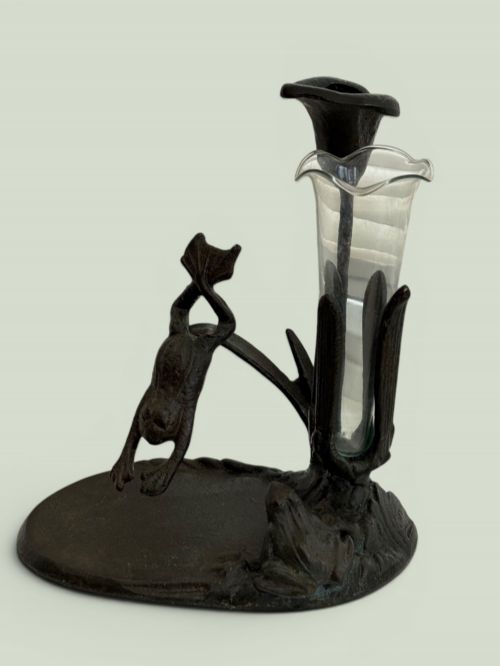


Victorian Bronze Vase
These heavy Victorian bronze vases bring classical antiquity and nineteenth-century craftsmanship into a room through patinated metal, porcelain mounts, and sculptural forms.
Victorian Bronze Vase
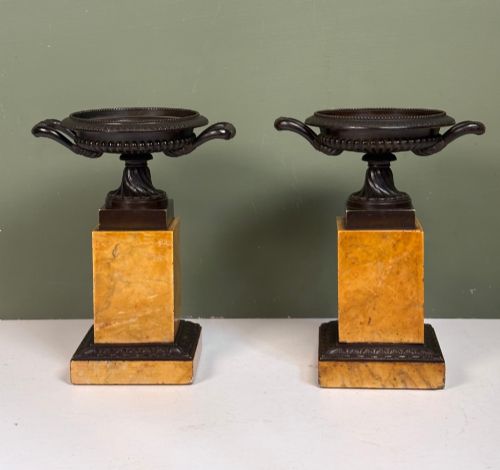
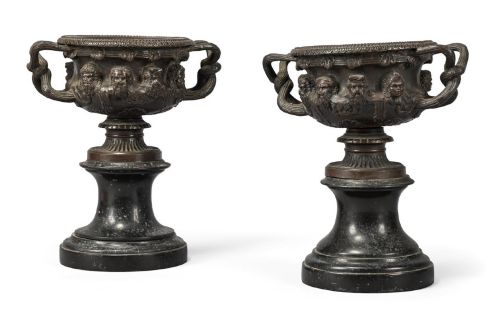
A victorian bronze vase can range from a classical Grand Tour reduction of a famous antiquity to an ornate French rococo revival ewer or an imported Japanese Meiji period bronze vessel. Buyers encounter everything from small posy vases and baluster urns to tall lidded vessels mounted on marble plinths or paired with gilt bronze trim.
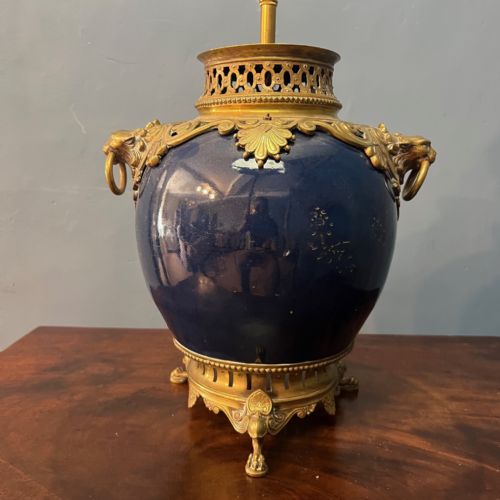
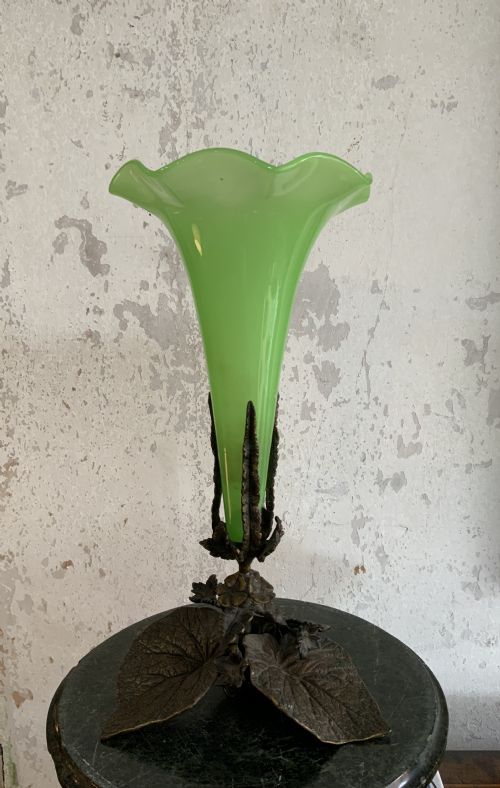
Many examples incorporate decorative handles featuring birds, cherubs, or bacchic masks, while others combine the metal body with contrasting materials such as uranium glass, crystal, porcelain, or marble bases.
Materials and construction methods
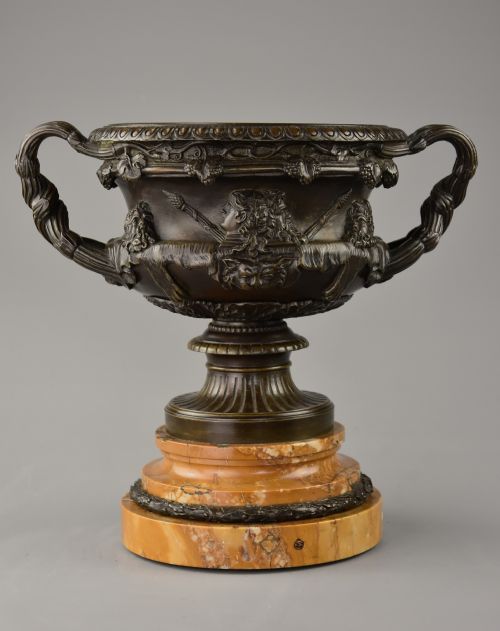
The construction relies on cast bronze, often enhanced through patination, gilding as ormolu, or chased surface decoration. Makers frequently combined the dark or patinated bronze with porcelain elements, marble plinths, and enamel detailing.
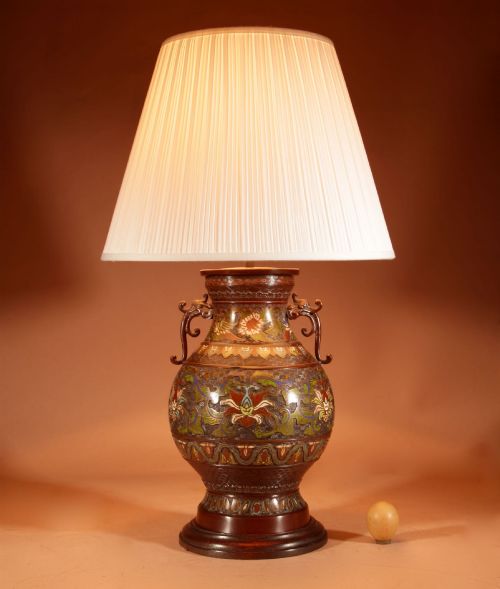
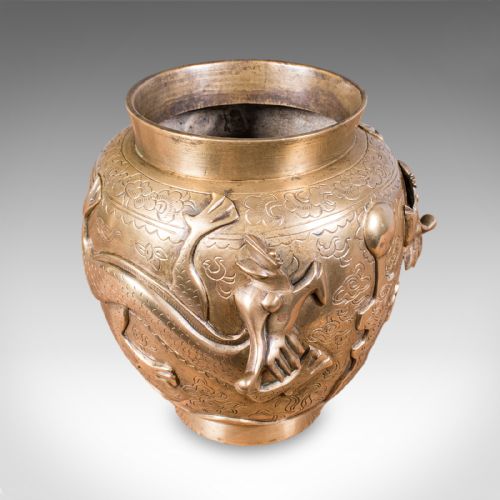
Techniques range from deeply hand-carved oriental chasing to European casting methods that produced crisp neoclassical details and sculptural mounts.
Victorian Bronze Vase Retail Price Guide 2026
Typical asking prices for victorian bronze vase among the pieces listed under this phrase on Sellingantiques today, from the lower quarter to the upper quarter. They describe what is for sale here now, not the wider market.
Object forms include baluster urns, posy vases, ewers, epergnes, and ritual vessels reflecting Neoclassical, Art Nouveau, and Meiji period aesthetics.
Assessing quality and execution
Quality reveals itself in the crispness of the casting and the depth of the chasing, particularly on sculptural elements like putti, masks, and floral handles. Superior pieces show careful attention to surface patination and secure joints where bronze meets marble, porcelain, or glass.
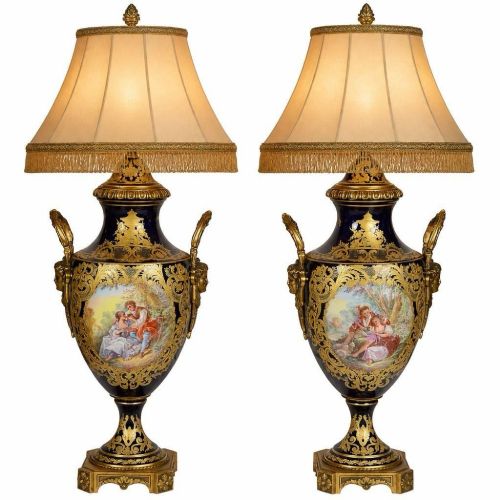
The integration of secondary materials, such as finely painted porcelain panels or heavy crystal bowls, distinguishes standard decorative production from exceptional workshop output.
The Victorian Bronze Vase Glossary
- Grand Tour
- A nineteenth-century souvenir tradition where travellers brought back miniature bronze reductions of classical antiquities such as the Warwick vase.
- Ormolu
- Gilt bronze mounts applied to furniture, porcelain, and vases, providing a bright golden contrast to patinated dark metal.
- Champlevé
- An enamelling technique where troughs are dug into the bronze surface and filled with vitreous enamel before firing.
- Ewers
- Pitcher-shaped vessels used for ornamental display, often featuring elaborate handles and spout details alongside matching vases.
- Tazza
- A shallow cup or vase set upon a stem and foot, frequently cast in bronze and mounted on marble plinths.
Victorian Bronze Vase: Frequently Asked Questions
What styles are common in these vases?
The listings show a strong presence of Neoclassical and Grand Tour aesthetics, alongside French Rococo Revival, Art Nouveau, and Japanese Meiji period influences.
These diverse styles reflect both European classical revival movements and the Victorian appetite for imported oriental metalwork.
Are these vases found as pairs?
Many examples appear as matched pairs, particularly decorative urns, ewers, and baluster vases designed for mantelpieces or side tables.
Single pieces also feature prominently, including large centrepieces, epergnes, and individual ritual vessels.
What other materials accompany the bronze?
Bronze bodies are frequently combined with porcelain, marble plinths, uranium glass, crystal, and enamel.
These mixed-media pieces highlight the Victorian preference for texture and contrasting colour in decorative display.
How do I date these pieces?
Dating relies on stylistic markers and manufacturing techniques associated with the nineteenth century, spanning from the eighteen-fifties through the early nineteen-hundreds.
Reference points include period exhibition pieces, Grand Tour reductions, and documented Meiji era imports.