



Victorian Bronze Dog Figure
A victorian bronze dog figure brings nineteenth-century animalier sculpture into the home, prized for its capture of canine character and musculature.
Victorian Bronze Dog Figure
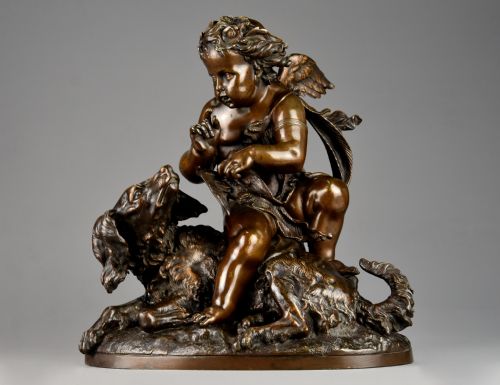
A victorian bronze dog figure captures breeds from spaniels and greyhounds to pugs and bulldogs, modelled as freestanding sculptures, desk accessories, and doorstops. These pieces emerge from the nineteenth century across English, French, and Austrian workshops, reflecting the era's fascination with domestic pets and sporting hounds.
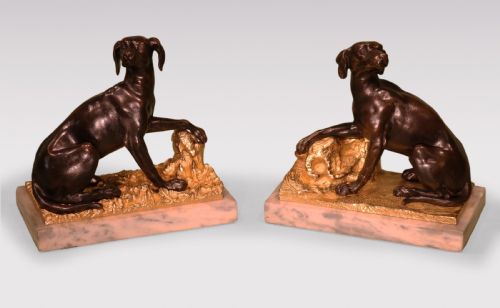
The most common examples on this page are French animalier bronzes and desk ornaments depicting hunting dogs, sighthounds, and terriers. Alongside solid bronze castings, buyers encounter hybrid forms like inkwells, paperweights, and mantel clock mounts incorporating cast iron, marble, and ormolu.
How they were made
Foundries utilised the lost-wax casting technique to reproduce fine anatomical details in bronze, capturing fur texture, folds of skin, and muscular tension. Surfaces received hand-finishing through chasing, chiselling, and the application of chemical patinas ranging from deep brown to gilt and cold-painted polychrome enamel.
Many sculptures incorporate complementary materials, mounting bronze figures onto marble bases or combining them with brass, ormolu, and glass components. Cast iron and bronzed plaster serve as alternative mediums for heavier utility pieces like doorstops and larger decorative statues.
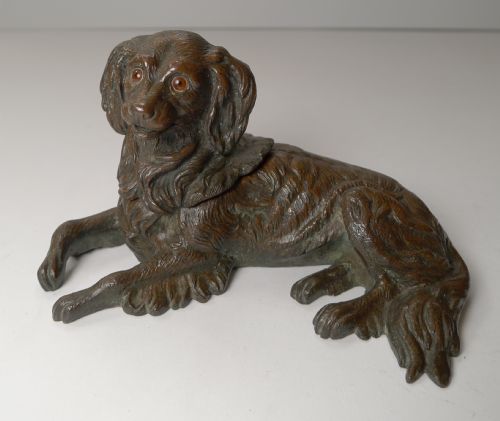
Several Victorian hounds double as ink-holders, gamely offering up their heads to open porcelain inkwells.
What varies in quality
Quality rests in the fidelity of the casting and the crispness of the hand-chased finish, where superior examples retain sharp muscular definition and delicate facial expressions. Lesser pieces suffer from softened details and blunt edges resulting from worn production moulds or secondary casting generations.
The sophistication of the patination and the integration of base materials distinguish standard decorative objects from masterworks. Finer sculptures display nuanced tonal variations in the bronze surface and secure, precise joins to marble or ormolu mounts.
Pierre Jules Mene·Prosper Lecourtier·Jules Moigniez·Arthur Waagen·Joseph Francois Victor Chemin·Franze Bergman·P.H. Mourey
The Victorian Bronze Dog Figure Glossary
- Animalier
- A nineteenth-century artistic movement focused on the realistic depiction of animals, particularly dogs, horses, and wild beasts. Sculptors in this tradition studied live subjects extensively to achieve anatomical precision.
- Cold painted bronze
- A technique where polychrome oil paint is applied to a cold metal surface rather than fired in a kiln. This method is particularly characteristic of Austrian foundry production.
- Lost-wax casting
- A historic metalworking process where a molten metal is poured into a mould that has been created by means of a wax model. The wax is melted and drained away to allow the bronze to take its place.
- Patina
- The surface coloration and sheen developed naturally through age or applied chemically by the foundry. It protects the metal and defines the visual depth of the sculpture.
- Ormolu
- Gilt bronze produced by applying a finely ground high-carat gold-mercury amalgam to a bronze object. The piece is then heated to drive off the mercury, leaving a rich golden coating.
Victorian Bronze Dog Figure: Frequently Asked Questions
How do I identify a cold painted bronze?
Cold painted bronzes display distinct enamel or oil paint surfaces applied directly to the metal rather than chemical patination. You will often notice subtle wear on high points where the underlying bronze shows through.
These pieces originate frequently from Austrian workshops around nineteen hundred. Handle them with dry cloths to preserve the fragile paint layers.
Were these figures meant as desk accessories?
Many nineteenth-century dog figures served practical functions beyond simple decoration. Workshops integrated bronze spaniels and hounds into inkwells, pen trays, and heavy paperweights for Victorian writing desks.
Desk items combine utilitarian brass or glass reservoirs with finely chased animal sculptures. They demonstrate how period craftsmen married domestic utility with high artistic standards.
How do I care for a bronze dog figure?
Bronze requires minimal maintenance beyond occasional dusting with a soft, dry brush. Avoid using commercial metal polishes or liquid cleaners, as these substances strip away the historic patina.
Keep pieces away from direct sunlight and damp environments to protect marble bases and cold-painted surfaces. A microcrystalline wax can be applied sparingly by experienced collectors to shield the metal.