

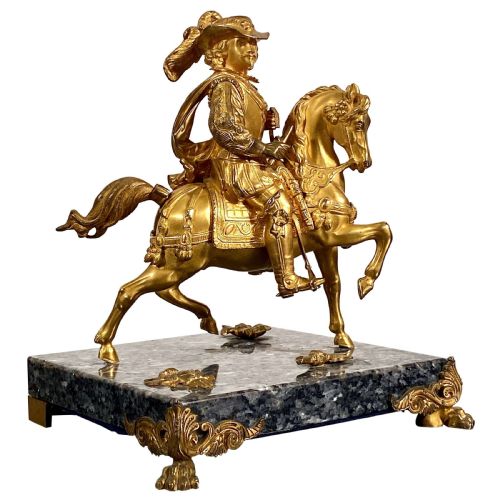
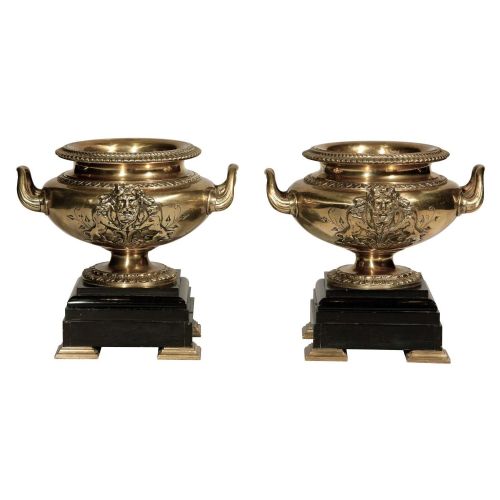

Ormolu and Marble Base
When you look for an ormolu and marble base, you are seeking decorative works that pair cast gilt bronze with polished stone.
Ormolu and Marble Base
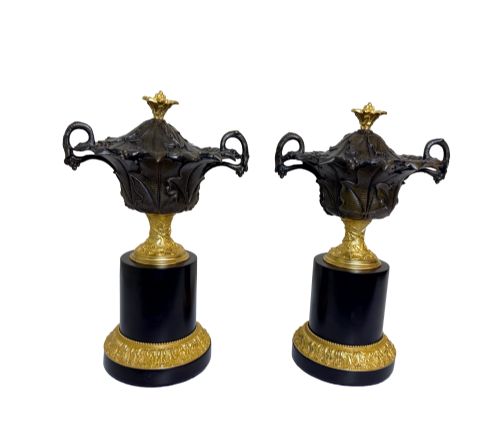
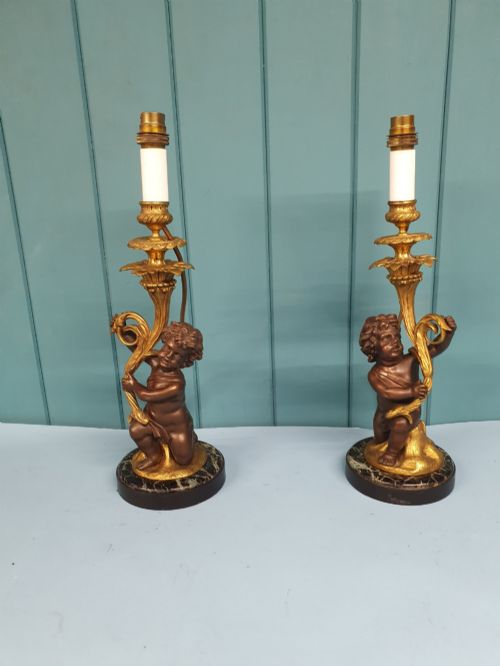
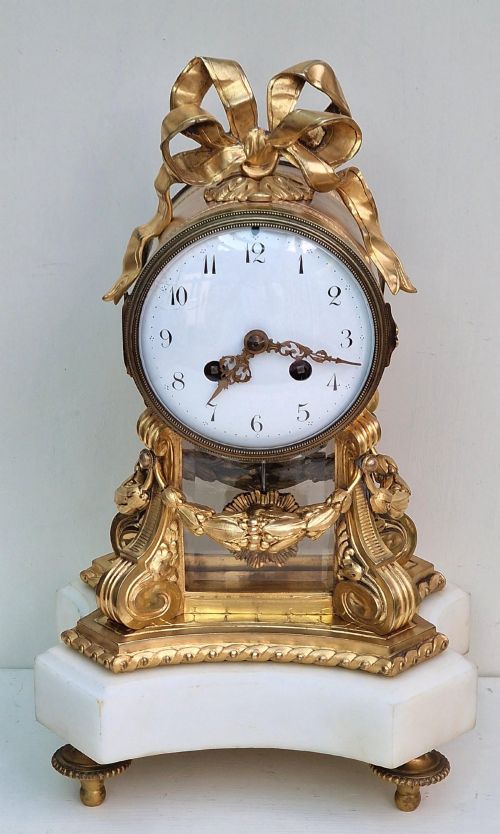
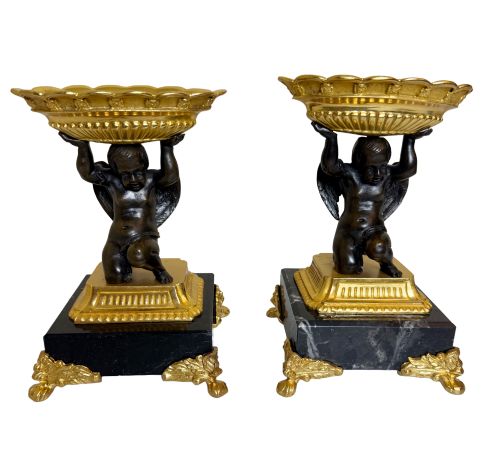
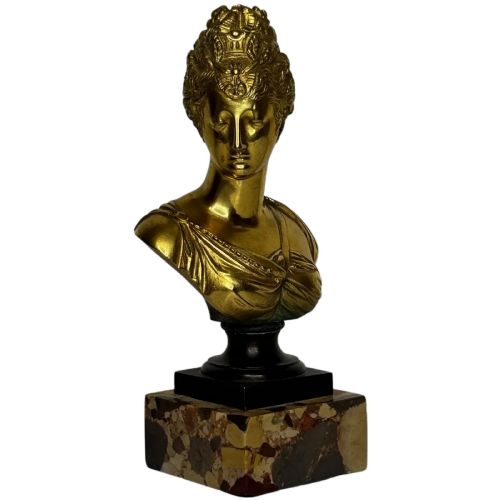
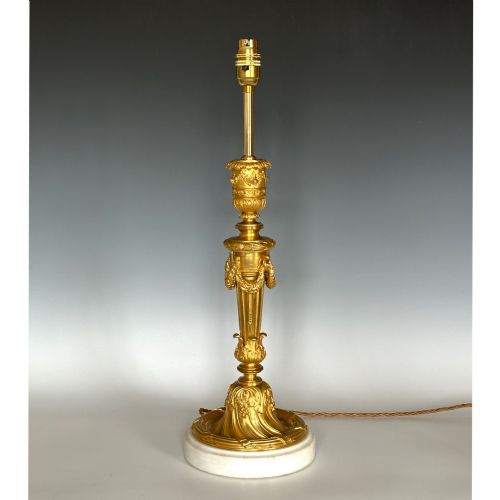
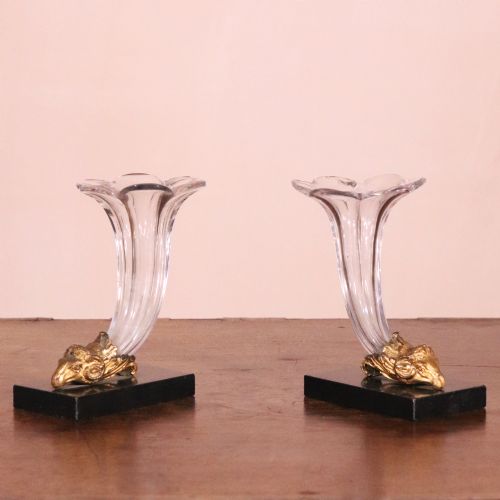
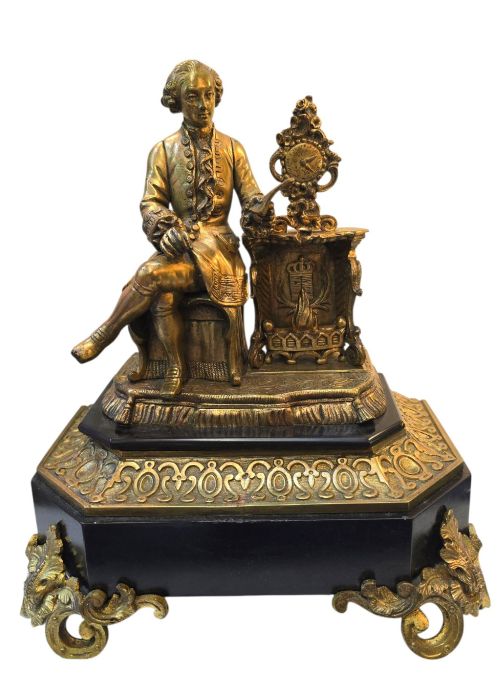
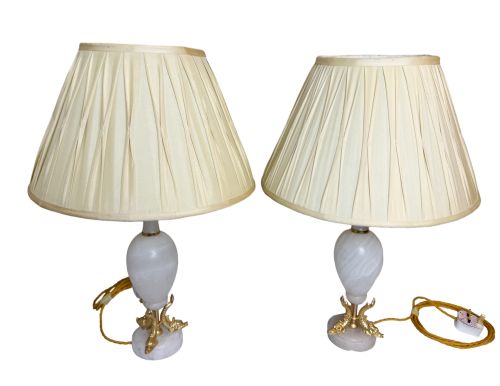
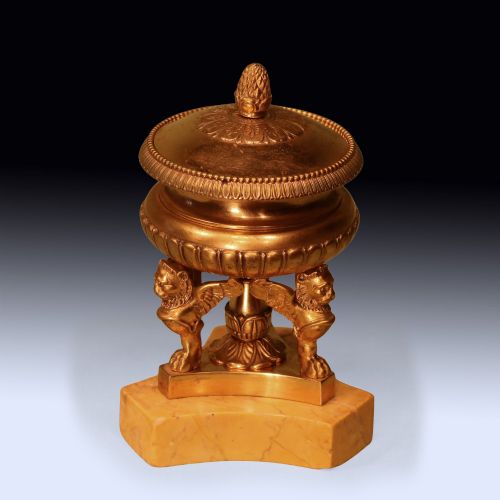
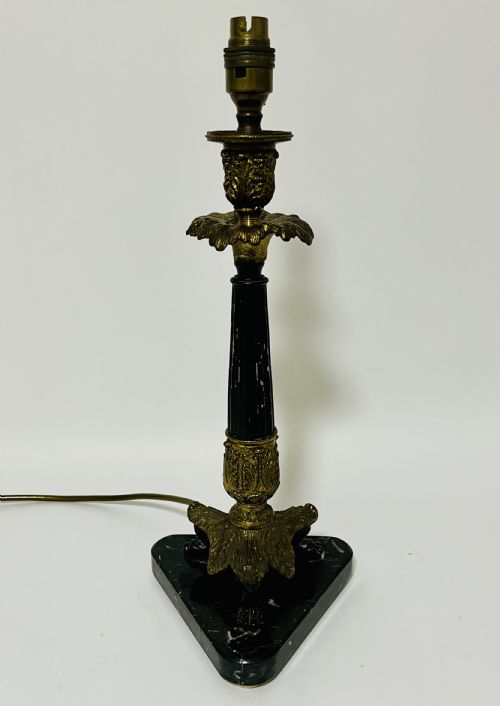
An ormolu and marble base combination forms the foundation for a variety of decorative objects originating largely from nineteenth-century France. Buyers encounter mantel clocks, candelabra, table lamps, and urns mounted upon stone plinths.
The objects span styles such as French Empire, Regency, Louis XVI, and Rococo Revival. Most examples rely on contrasting dark or white stone with the bright finish of mercury-gilt metal.
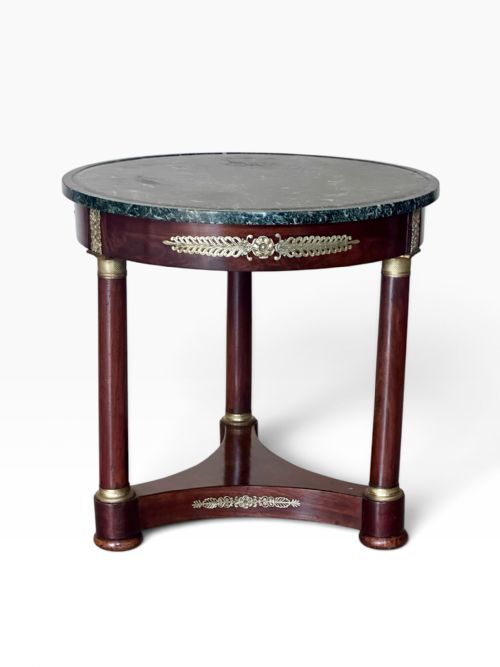
Functional pieces like inkwells, toilet mirrors, and centre tables also utilise this material pairing. The form functions primarily to elevate bronze figures, clocks, or lighting vessels.
The pieces on this page draw heavily from nineteenth-century production methods, with dates stretching from the early eighteen-hundreds into the early twentieth century.
How they were made
Maker's workshops cast bronze using the lost-wax method or sand casting, producing detailed figures of cherubs, animals, and classical subjects. Craftsmen then applied an amalgam of gold and mercury to the bronze surface, heating it to drive off the mercury and leave a durable gilt layer known as ormolu.
Stonemasons cut and polished the marble plinths, pedestals, and bases from varieties including white marble, Siena marble, and porphyry. Workshops fitted the metal mounts to the stone using pins, screws, or bronze bezels designed to secure the heavy components together.
Materials recorded across the inventory include patinated bronze, gilt bronze, ormolu, various types of marble, glass, and enamel.
What varies in quality
The selection and preparation of the stone plinth also dictate the grade of the piece. Uniform veining, absence of hairline fractures, and precise polishing of the marble edges indicate higher workshop standards.
Pierre-Augustin Caron de Beaumarchais·Claude Clodion·William Hardy London·Charlotte Monginot
The Ormolu and Marble Base Glossary
- Ormolu
- Gilt bronze produced by applying a gold and mercury mixture to a cast bronze object and firing it in a kiln. This historical technique yields a distinctive matte and bright golden finish that resists tarnish.
- Chasing
- The manual tool work applied to a bronze casting after it leaves the mould. Skilled artisans used small punches and hammers to sharpen details and remove casting flaws.
- Tazza
- A shallow saucer-like ornamental vessel elevated on a stem and a foot. In these listings, they appear mounted on marble bases.
- Porphyry
- An igneous rock with large crystals visible in a fine-grained groundmass. It provides a dense, purple-red or dark base for nineteenth-century bronzes.
- Gueridon
- A small circular table supported by one or more central columns. These tables frequently feature marble tops and gilt bronze mounts.
Ormolu and Marble Base: Frequently Asked Questions
What is ormolu?
Ormolu describes objects made from cast bronze that have been coated in a gold-mercury amalgam and fired. The process leaves a thin layer of gold adhered to the bronze surface.
This technique was widely used in France during the eighteenth and nineteenth centuries to give decorative items a rich golden appearance without solid gold construction.
How do I clean marble?
Marble requires gentle maintenance using a soft cloth slightly dampened with warm water. Avoid acidic cleaners, vinegar, or abrasive powders that etch the polished stone surface.
Dry the stone thoroughly after wiping to prevent water spots from forming on the polished finish.
Were these items electrified later?
Many table lamps and candelabra found today started as oil lamps or candle holders in the nineteenth century. Workshops or later owners adapted them for electricity during the twentieth century.
Wiring methods vary, with some conversions preserving the original structural components while others involve drilling through the bronze or stone.
How do I identify French Empire style?
French Empire pieces display strict symmetry, classical military motifs, and references to ancient Rome and Greece. Expect to see laurel wreaths, sphinxes, winged figures, and eagles.
The combination of dark patinated bronze, bright ormolu mounts, and contrasting marble bases defines the visual vocabulary of this period.