


Victorian Brass Weights
Victorian brass weights are functional items of domestic and commercial metrology, sought after for their solid metallurgy and honest design.
Victorian Brass Weights
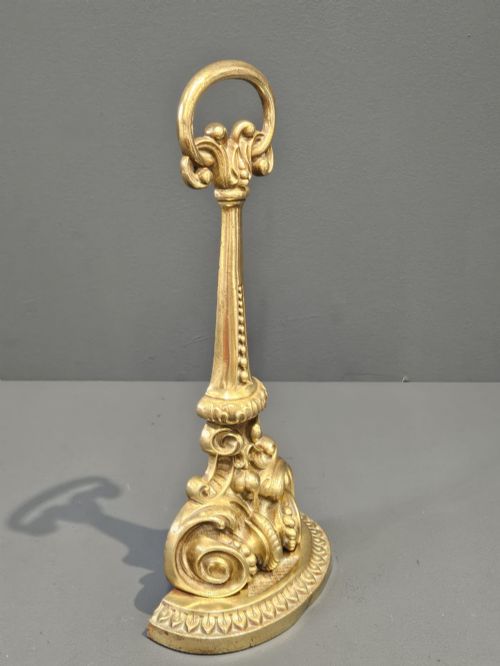
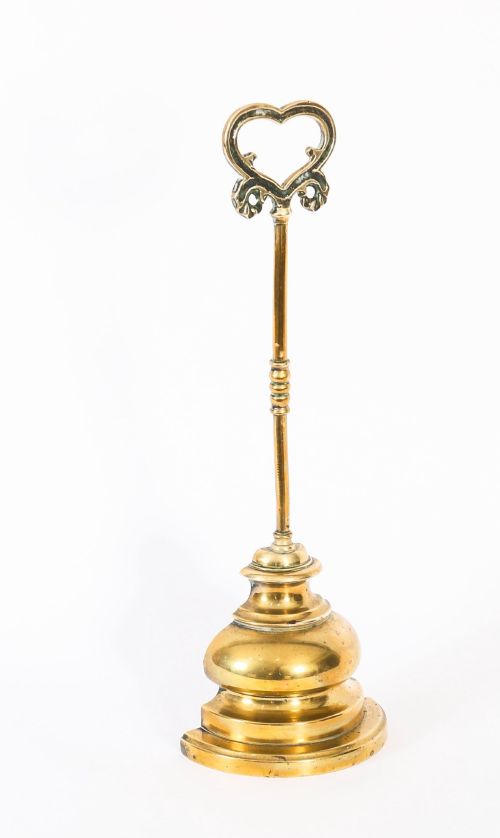
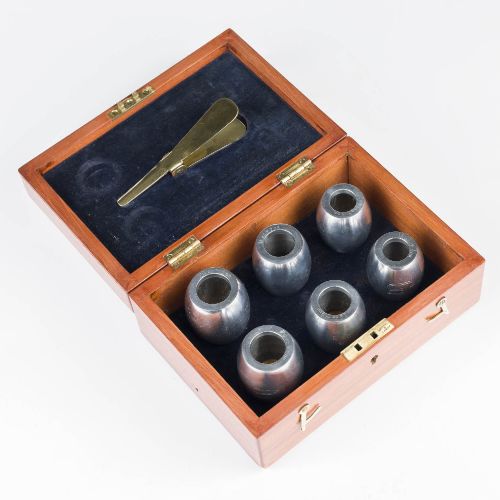
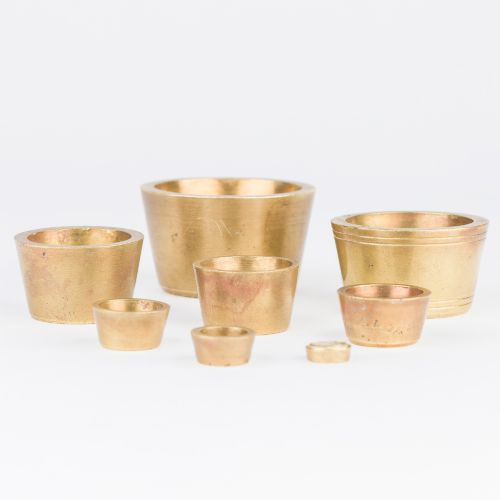
When searching for victorian brass weights, collectors encounter graduating sets designed for trade, kitchen, or postal use alongside individual cast examples. The pieces on this page appear primarily as complete sets of bell weights, flat square weights, or nested systems housed on mahogany and walnut bases.
Originating predominantly from the nineteenth century, these objects range from utilitarian shop equipment to precision apothecary balances. Many items retain official assay stamps or maker inscriptions, linking them directly to municipal and commercial measurement standards.
How they were made
The manufacture of these objects relied heavily on sand casting and gravity casting using copper-zinc alloys. Molten brass was poured into moulds, after which the cooled metal components underwent lathe turning to achieve precise mass.
Makers frequently paired the cast brass with dense secondary materials such as mahogany, walnut, and cast iron. Surfaces were polished to a bright finish or left to acquire a natural patina through handling.
Some nineteenth-century shop scales advertised sausages alongside hardware, proving that victorian trade was wonderfully diverse.
What varies in quality
Quality in these pieces is dictated by the crispness of the cast detailing and the legibility of the stamped markings. Superior examples retain their complete graduating sets rather than assembled collections of mismatched units.
The standard of construction is further elevated in items featuring original fitted wooden bases or maker signatures from prominent nineteenth-century scale and weight makers.
De Grave Short And Co·Day And Millward·S Mordan London·William Tonks·Hunt And Co·W And T Avery
The Victorian Brass Weights Glossary
- Bell weight
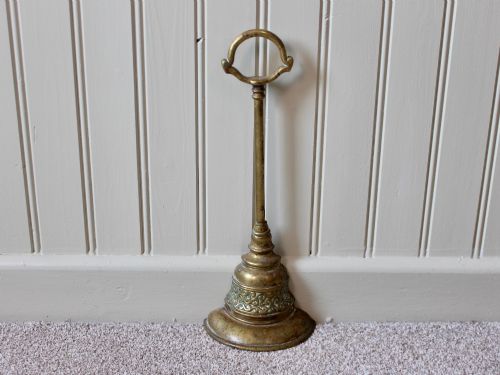
- A distinct shape of solid metal measure resembling a small handbell with a looped brass handle at the top. These were commonly utilised in British grocery and dairy trade.
- Troy ounce
- A system of units of mass traditionally used for precious metals. Sets of these weights appear alongside apothecary balances.
- Assay mark
- An official stamp applied to a weight to verify its accuracy and compliance with legal standards. These marks often include regional verification ciphers.
- Beam scale
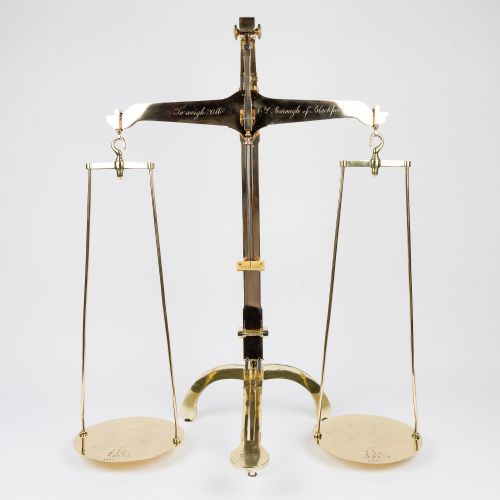
- A weighing apparatus consisting of a horizontal lever suspended from a central fulcrum. The objects utilise matching brass weights on opposing pans to determine mass.
Victorian Brass Weights: Frequently Asked Questions
What were bell weights used for?
Bell weights were standard units of measurement utilised in shops, dairies, and markets across Britain for everyday trade. Their distinctive shape allowed merchants to lift and stack them easily during busy transactions.
Over time, many of these utilitarian objects found their way into domestic kitchens and general stores before being preserved by collectors.
How do I know if a set is complete?
A complete set of graduating weights typically follows a mathematical progression where each piece is half the weight of the one above it or fits neatly into a nesting series. Checking the uniformity of the brass alloy and matching stamps helps determine if the group belongs together.
Original fitted wooden bases often feature dedicated recesses that reveal at a glance if any units are missing from the line-up.
Are these weights accurate today?
While many retain their original mass, oxidation, wear from use, and cleaning over the decades can alter the precise weight slightly. They are collected today as decorative and historical artefacts rather than for modern commercial calibration.
Collectors appreciate them for their metallurgical composition and connection to historical trade rather than their utility in a modern kitchen.
How should I clean brass weights?
Most collectors prefer to leave an aged patina on nineteenth-century brass, as excessive polishing removes microscopic amounts of metal and erodes stamped details. Gentle dusting with a soft cloth is usually sufficient for routine maintenance.
Harsh chemical abrasives should be avoided entirely to preserve the original surface texture and historical character of the pieces.