

Victorian Brass Umbrella Rack
A victorian brass umbrella rack is a functional hallway furnishing designed to hold walking canes and wet umbrellas.
Victorian Brass Umbrella Rack
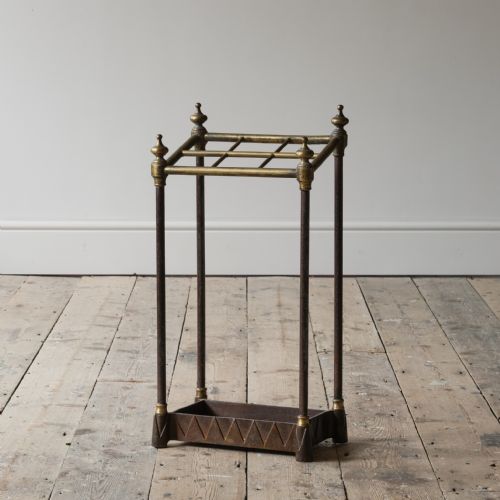
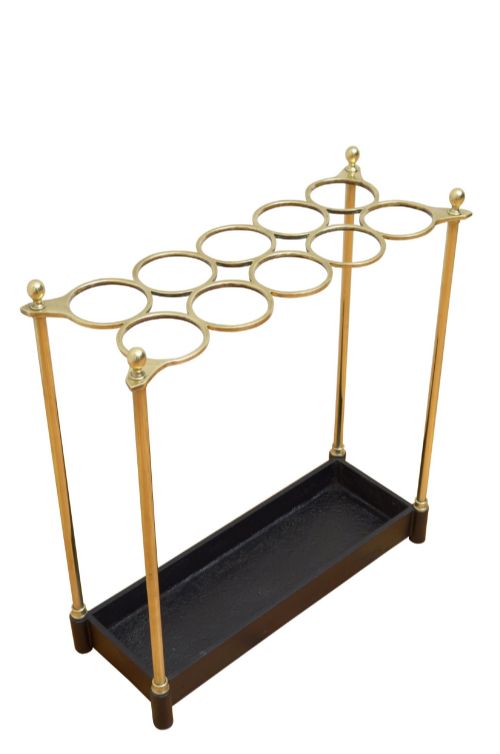
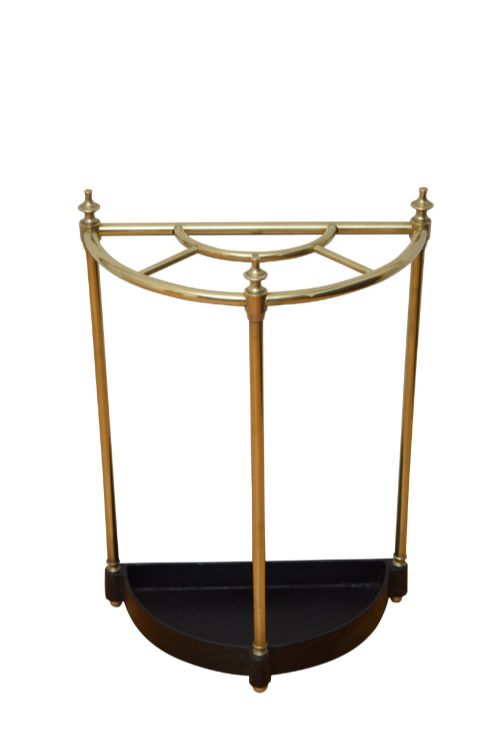
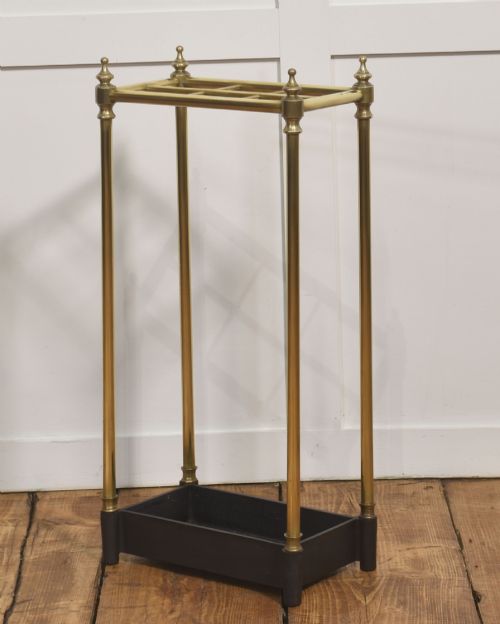
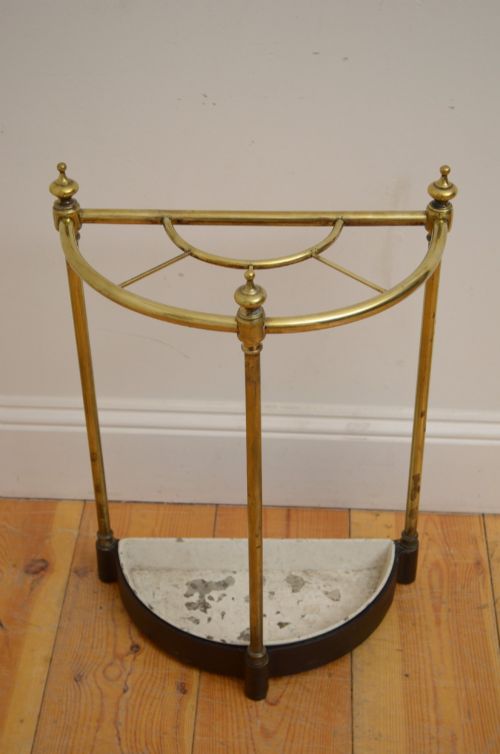
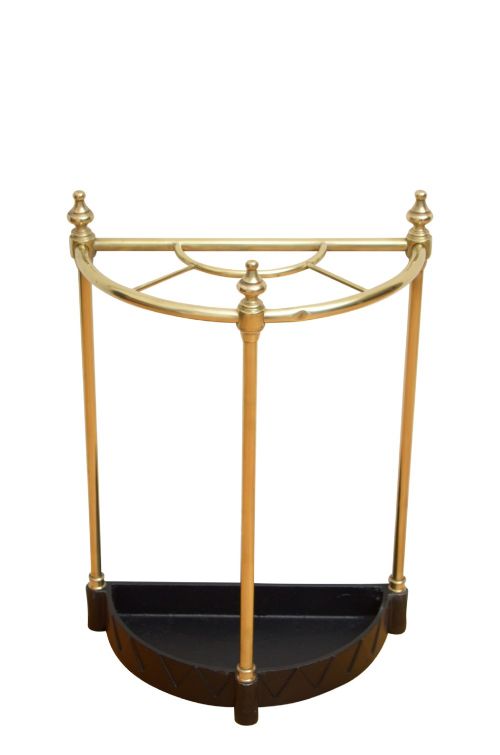
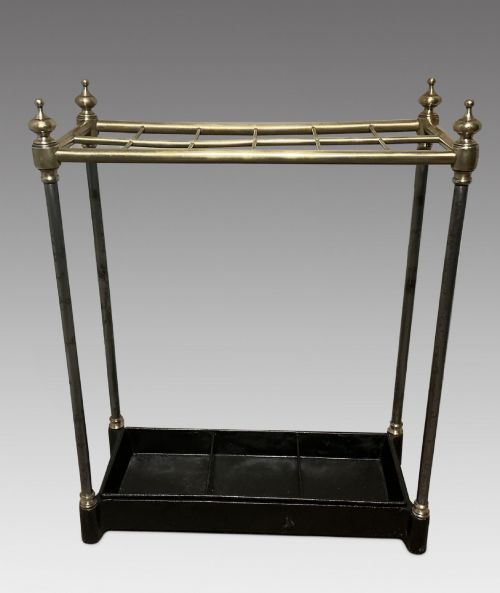
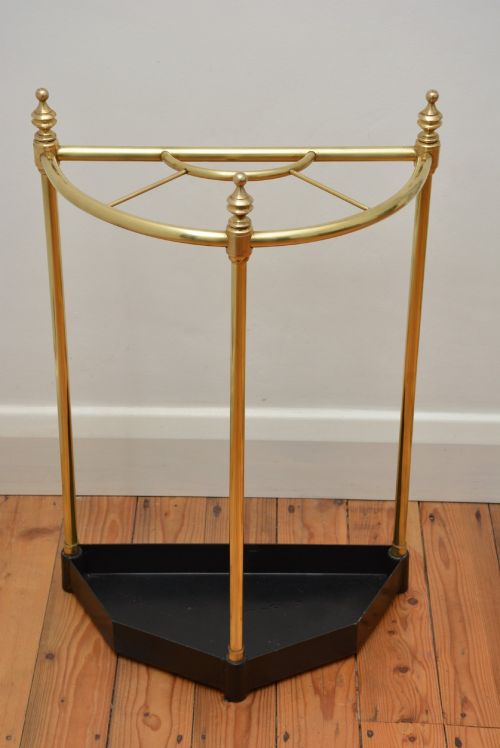
A victorian brass umbrella rack is designed to organise walking canes, sticks, and wet umbrellas within a hallway or entrance space. You will frequently encounter the demi-lune or half-moon shape, which sits flat against a wall to conserve space in narrow entryways.
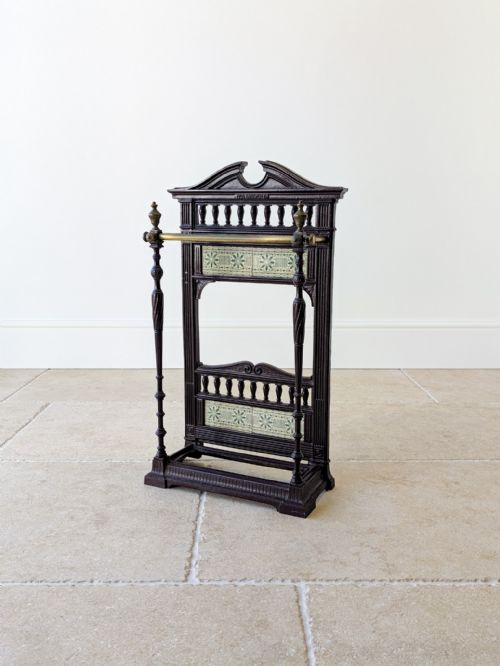
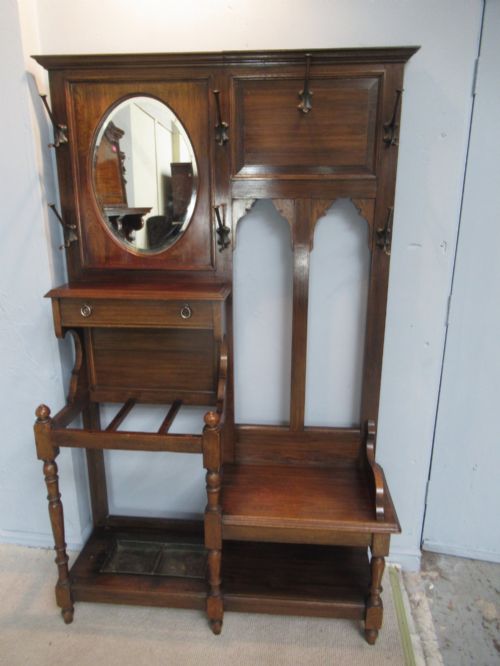
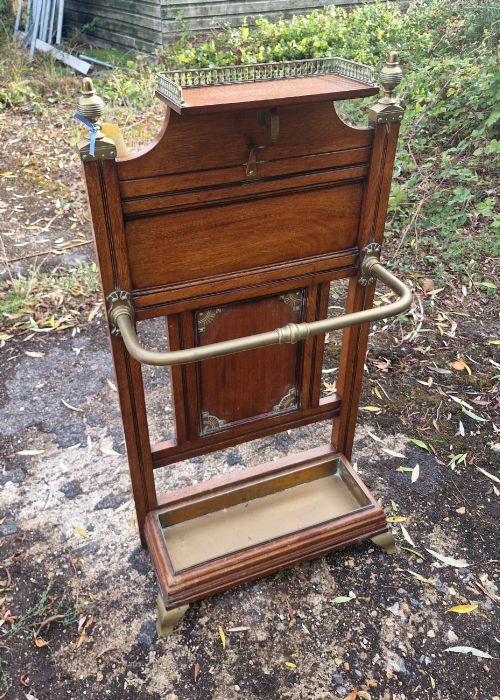
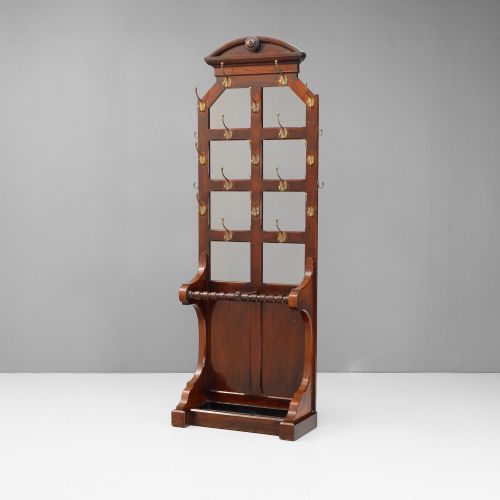
The materials span brass, cast iron, and occasional oak or mahogany frames mounted with brass loops and drip trays. These items appear in nineteenth-century, Victorian, and Edwardian periods, often taking the form of dedicated stick stands or combined hall stands.
How they were made
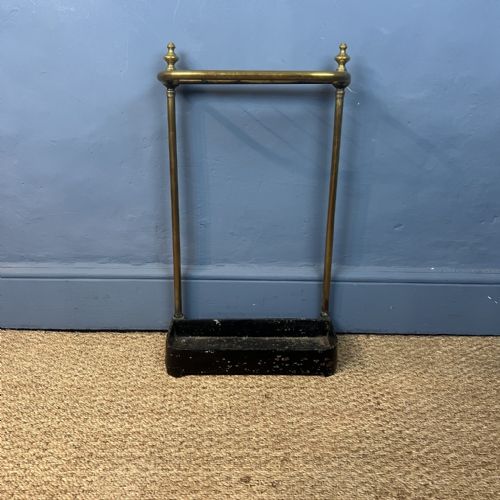
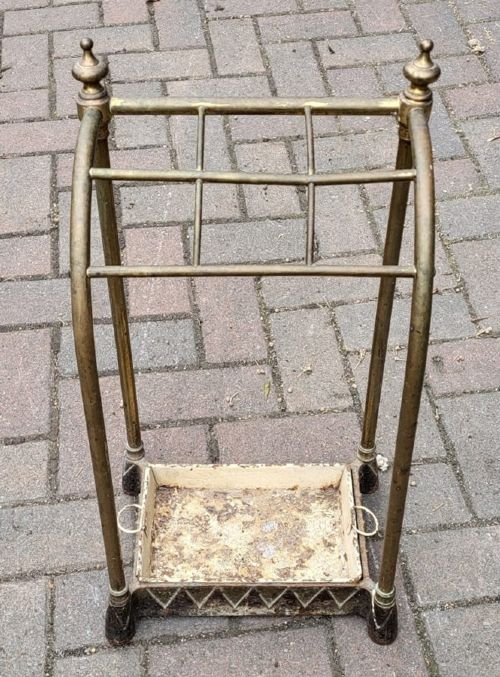
Makers combined cast iron for heavy base stability with brass for structural tubing, upright loops, and decorative finials. Removable metal drip trays were incorporated at the base to catch water from wet umbrellas.
Many examples utilise heavy brass frames secured to cast iron or ceramic bases, while wooden variations employ brass bands around coopered oak barrels or structural mounts.
Listings demonstrate that brass frequently pairs with cast iron, oak, or mahogany in nineteenth-century hall furniture.
What varies in quality
The weight and thickness of the brass and iron components dictate the solidity of the stand. Substantial cast bases and heavy gauge brass tubing indicate a sturdier construction built to support multiple heavy walking sticks.
Design complexity also separates standard utilitarian pieces from refined examples featuring decorative ball finials, dog tooth trays, or specific stylistic influences such as the Aesthetic Movement and Art Nouveau.
Coalbrookdale·James Shoolbred
The Victorian Brass Umbrella Rack Glossary
- Demi-lune
- A half-moon shape designed to stand flat against a hallway wall. This profile allows the piece to occupy minimal floor space.
- Drip tray
- A removable metal or ceramic tray placed at the base of the rack. It catches rainwater running off wet umbrellas.
- Stick loop
- A divided metal frame or ring at the top of the stand. This element keeps individual walking canes and umbrellas upright and separated.
- Finial
- A decorative terminal ornament placed on top of vertical posts. They frequently appear as polished brass balls on nineteenth-century stands.
- Hall stand
- A larger piece of entrance furniture combining coat hooks, a mirror, and an umbrella rack. These items integrate umbrella storage into a comprehensive hallway unit.
Victorian Brass Umbrella Rack: Frequently Asked Questions
Where should I place an umbrella rack?
These pieces belong in a hallway, entryway, or boot room where guests arrive and remove wet outerwear.
The flat-backed demi-lune designs fit neatly against narrow walls without obstructing passage through the corridor.
How do I clean brass frames?
Dust the metal regularly with a soft dry cloth to prevent the accumulation of grime on the decorative surfaces.
Avoid harsh chemical polishes that strip away the aged patina built up over decades of use.
What is the purpose of the tray?
The base tray catches water running off wet umbrellas and walking sticks after inclement weather.
Most trays lift out independently so accumulated moisture can be emptied without moving the entire heavy stand.
How do I identify a Victorian piece?
Examine the construction methods, materials, and overall aesthetic details characteristic of the nineteenth century.
Heavy cast iron bases combined with solid brass loop frames point directly to the Victorian and Edwardian manufacturing periods.