
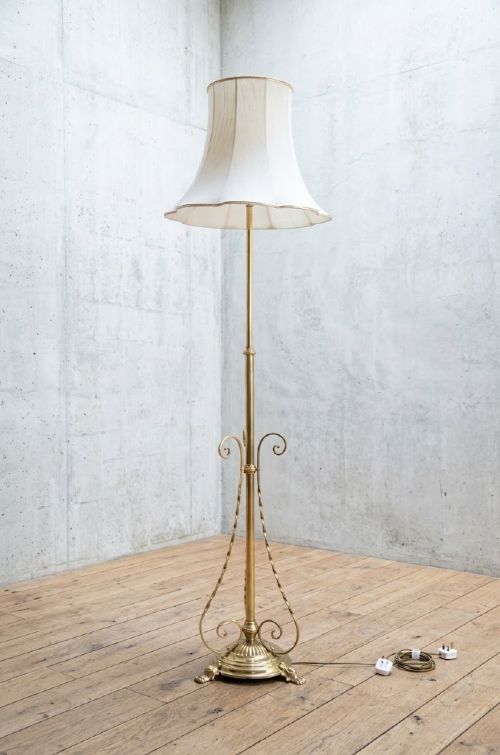

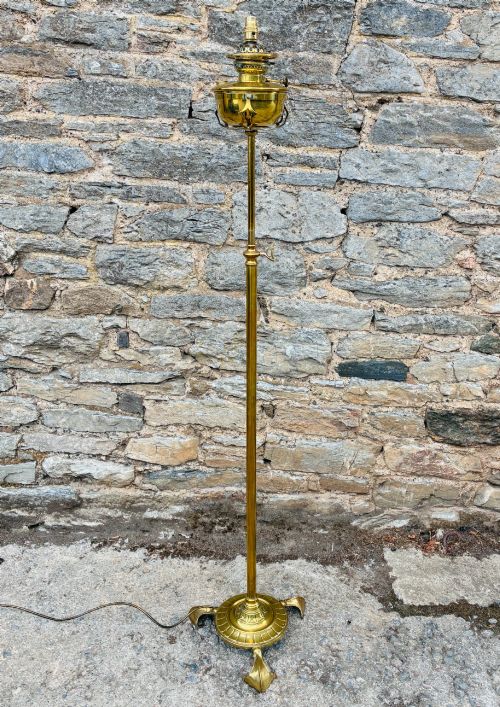
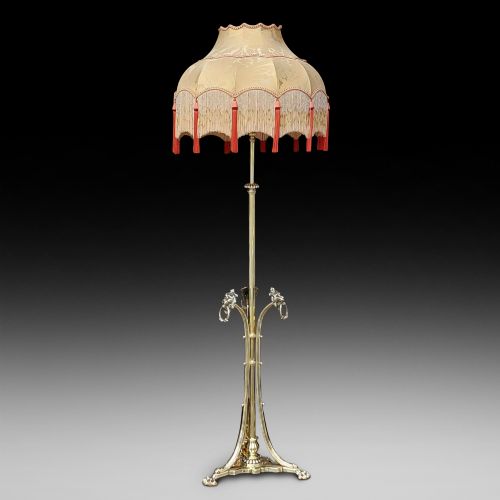
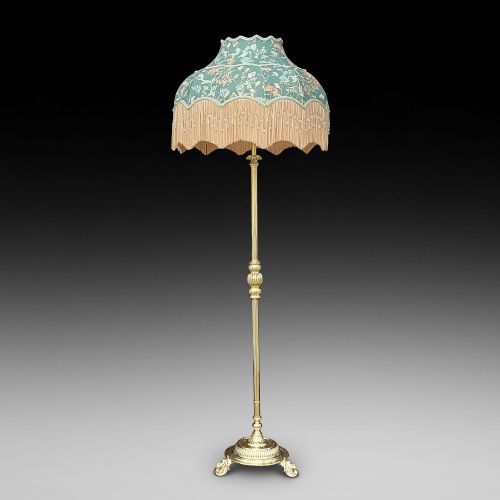


Victorian Brass Standard Lamp
A victorian brass standard lamp brings functional height and warm metallic lustre to a room, offering adjustable illumination rooted in nineteenth-century engineering.
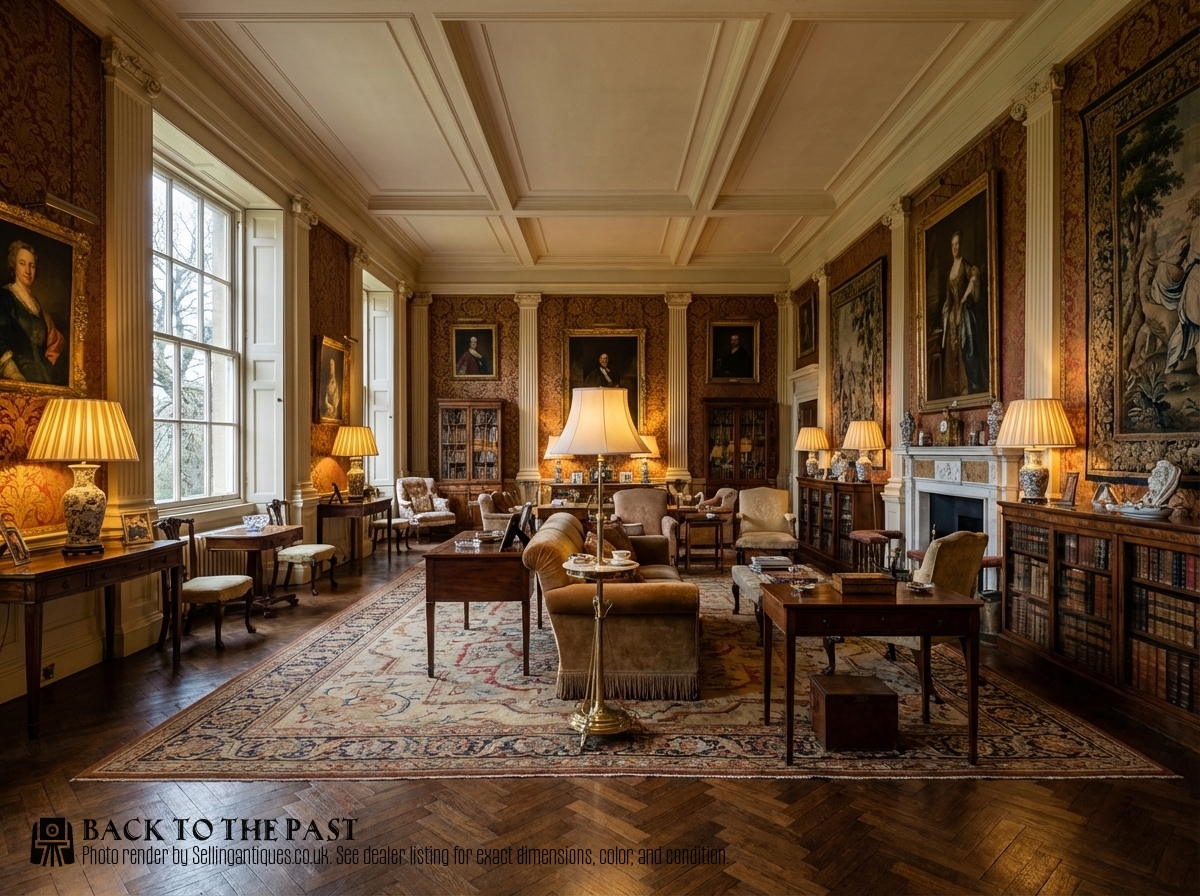
Victorian Brass Standard Lamp
When searching for a victorian brass standard lamp, collectors encounter tall floor-standing lighting fixtures that originally burned oil before conversion to electricity.
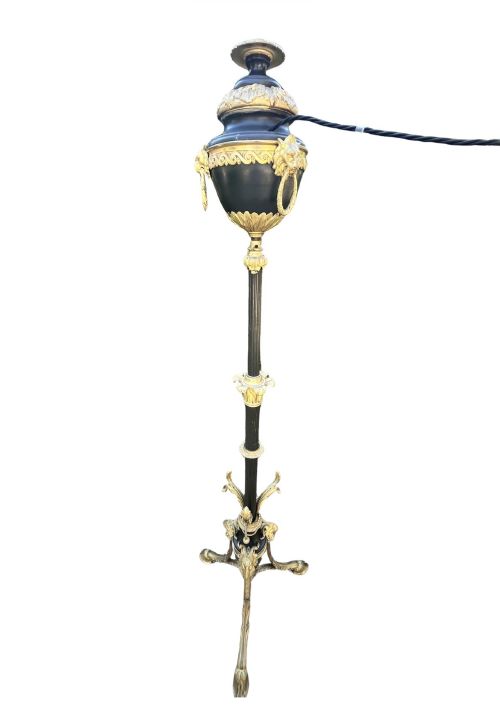
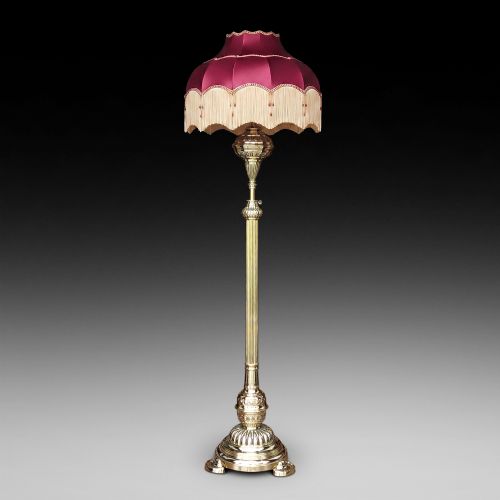
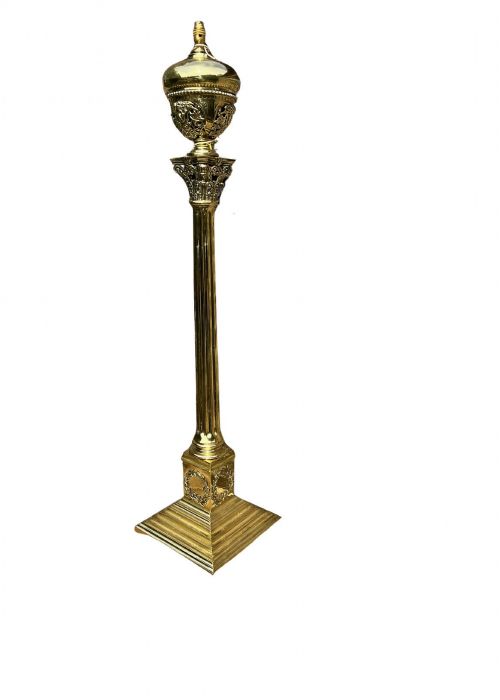
The pieces on this page span the Victorian and Edwardian periods into the early twentieth century, taking forms from simple telescopic columns to heavy Corinthian capitals.
Makers utilised various supporting bases including cast iron, marble, and onyx, paired with elaborate openwork or classical columns to anchor the height in a drawing room.
Assessing Quality and Design
Quality rests upon the weight of the casting and the crispness of detail in elements like Corinthian fluting or floral openwork on the base.
The sophistication of the extending mechanism dictates utility, with smooth telescopic action and robust collars separating superior workshop output from standard production.
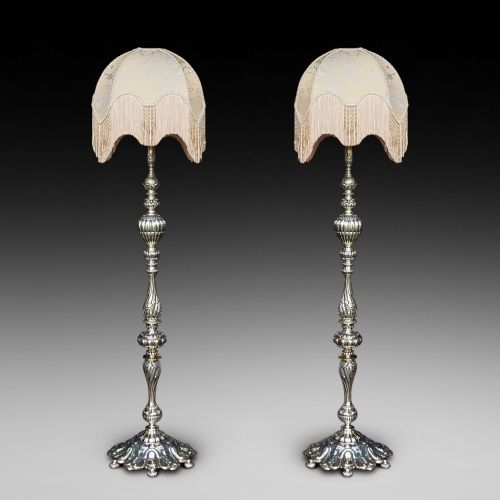
Attribution to documented makers such as Hinks or Elkington elevates a piece, as does the presence of matching pairs rather than single examples.
Victorian Brass Standard Lamp Retail Price Guide 2026
Typical asking prices for victorian brass standard lamp among the pieces listed under this phrase on Sellingantiques today, from the lower quarter to the upper quarter. They describe what is for sale here now, not the wider market.
Materials recorded across the archive include brass, copper, onyx, marble, gilt bronze, and decorative glass shades.
Hinks of B'ham·Elkington and Co·WAS Benson
The Victorian Brass Standard Lamp Glossary
- Telescopic
- An adjustable shaft design enabling the overall height of the lamp to extend or lower. This mechanism often uses a screw key to lock the inner tube in place.
- Corinthian Column
- A classical column style featuring ornate acanthus leaves decorating the capital beneath the oil pot or lamp fitting. It remains a popular Victorian revival motif.
- Steamer Lamp
- A sturdy floor lamp design produced for maritime use or stable placement on ships and large drawing rooms. These items often possess heavier weighted bases.
- Rise and Fall
- A counterweight system allowing the lamp height to adjust smoothly without manual locking screws. This mechanical arrangement appears on finer domestic examples.
- Ormolu
- Gilt bronze mounted onto furniture or metalwork to provide bright golden highlights. Pieces employing this finish often show French influence.
Victorian Brass Standard Lamp: Frequently Asked Questions
Were these lamps originally electric?
Most of these pieces started life as oil lamps fitted with burners and reservoirs before conversion to electricity during the twentieth century.
Wiring is updated to modern safety standards while retaining the original telescopic stems and heavy weighted bases.
How do I adjust the height?
Many examples feature a telescopic inner shaft secured by a side thumbscrew or collar that you loosen to raise and tighten to hold the position.
Rise and fall versions rely on interior weights or pulleys to maintain balance at different elevations without manual screws.
What shades belong on these lamps?
Original setups frequently included heavy glass reservoirs paired with cranberry glass, vaseline glass, or silk fringe shades that matched the drawing room decor of the period.
Modern buyers often select pleated silk or patterned fabric shades that complement the proportions of the brass column.
How do I distinguish Victorian from later pieces?
Victorian examples display heavy cast brass components, hand-cut threads on collars, and specific maker stamps such as Hinks on the burner mechanisms.
Later Edwardian and 1920s pieces often shift toward lighter gauge brass tubing and simplified stepped bases without classical detailing.