


Victorian Brass Letter Box
A victorian brass letter box is a sturdy desk accessory or door fixture for sorting post, prized for practical organisation.
Victorian Brass Letter Box
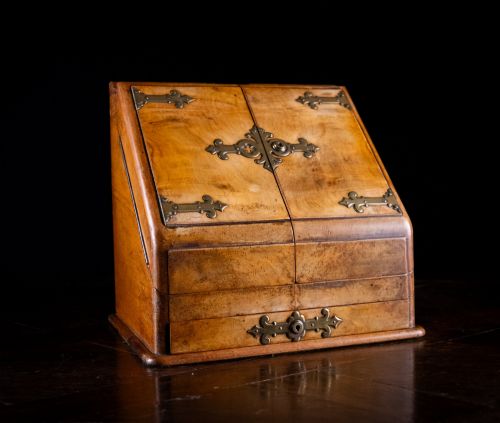
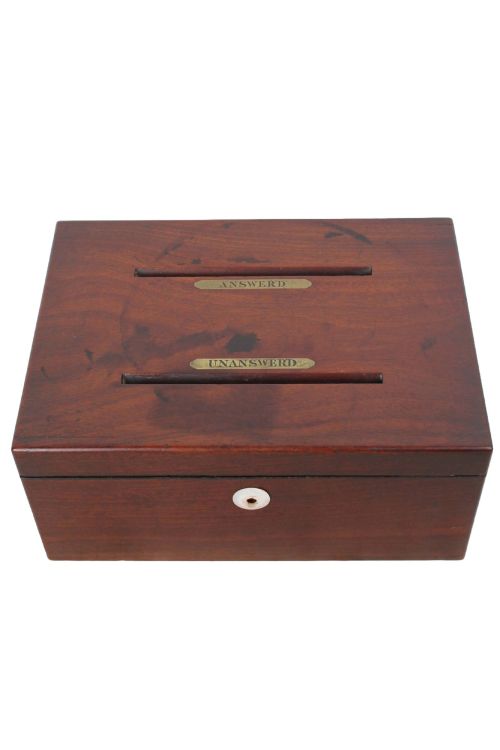
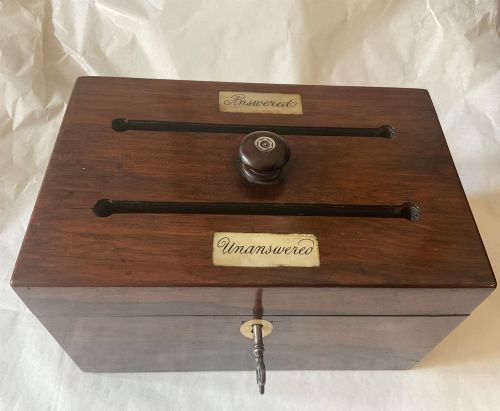
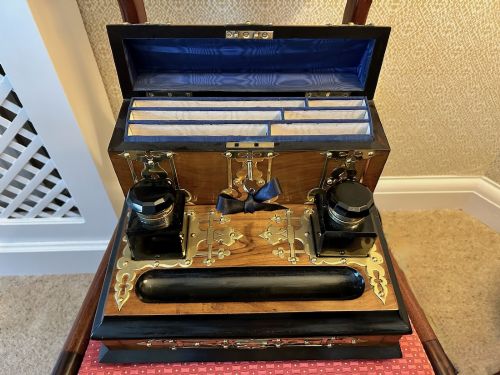
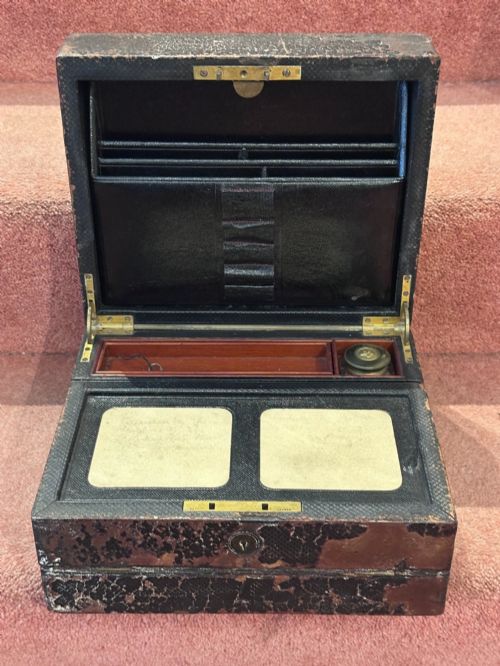
A victorian brass letter box encompasses domestic post receptacles, heavy brass document caddies, door hardware, and tabletop stationery cabinets designed for correspondence. These pieces serve as functional deskside containers for sorting letters, papers, and stamps in period interiors.
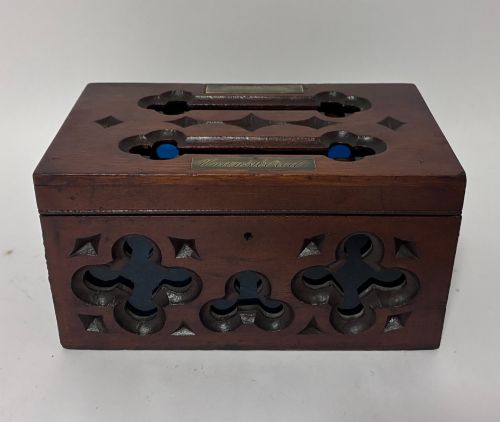
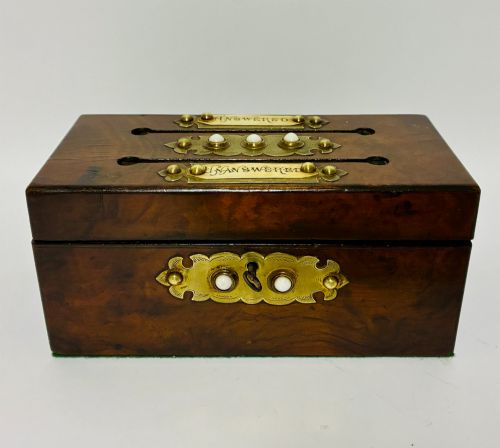
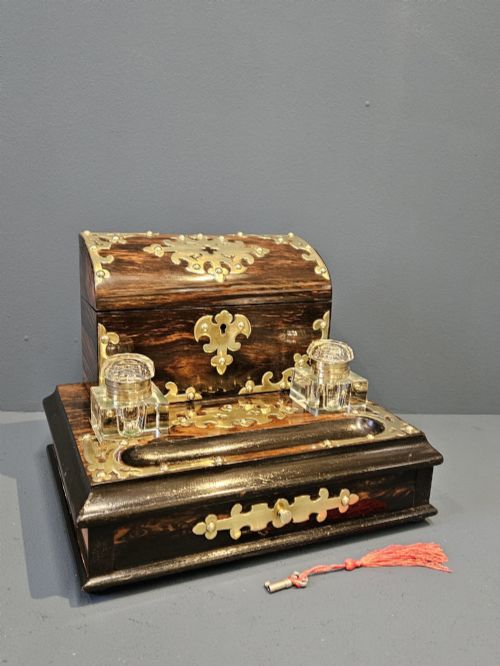
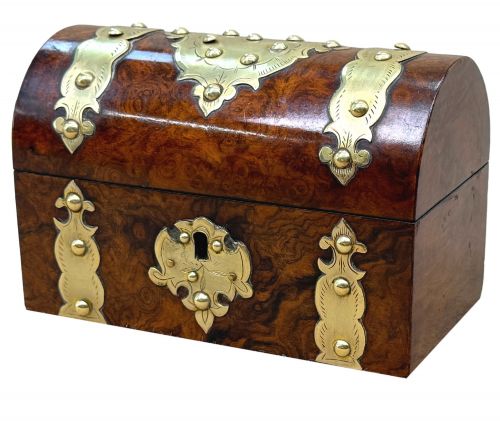
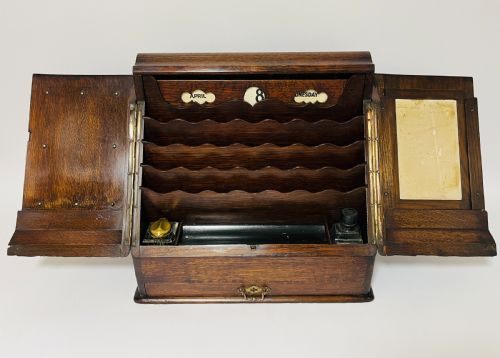
The versions most commonly met on this page are walnut, oak, mahogany, and coromandel wood correspondence boxes mounted with brass strapwork and hinges. Examples range from simple country house post boxes to elaborate dome-topped caskets and wall-mounted hotel letterboxes.
Makers utilised various regional timbers alongside durable brass mountings to create secure repositories for daily mail. Surviving specimens bridge the gap between utilitarian desk accessories and decorative cabinet work.
How They Were Made
Woodworkers constructed the carcasses using solid timbers and figured veneers such as burr walnut, pollard oak, and coromandel, housing them with dovetailed joints and fitted interiors. Metalworkers applied cast and sheet brass mounts, hinges, and locks to reinforce the corners and secure the lids.
Glazing, leather bindings, and ormolu mounts occasionally supplement the primary construction materials on more decorative examples. Makers integrated brass mesh, handles, and slots directly into the wooden or heavy metal bodies to facilitate daily postal sorting.
Listings feature materials spanning brass, glass, oak, coromandel, mahogany, burr walnut, and walnut across the nineteenth and early twentieth centuries.
What Varies In Quality
The refinement of the timber figure and the weight of the brass mountings dictate the standing of an individual piece. Dense burr walnut, pollard oak, and rich coromandel sit at the upper end of the scale, paired with thick gauge brass and precise mitring.
Design ambition separates standard desk furniture from exceptional items, seen in architectural dome tops, Gothic Revival strapwork, and makers' signatures. Original fitted interiors, secret drawers, and robust locking mechanisms elevate the execution.
Briggs 27 Piccadilly London·Houghton and Gunn·Mechi and Bazin
The Victorian Brass Letter Box Glossary
- Coromandel
- A dense, heavily figured exotic timber from Asia utilised for high-end Victorian stationery boxes and writing slopes. Its dark brown grain with contrasting pale streaks makes it visually distinct.
- Stationery Cabinet
- A tabletop cabinet fitted with vertical dividers, pigeonholes, and compartments for paper and envelopes. These pieces often feature sloping fronts or fall-front doors.
- Gothic Revival
- An architectural and decorative style popular during the nineteenth century, characterised by pointed arches, heavy strapwork, and medieval motifs. It appears frequently on brass-mounted boxes of this period.
- Writing Slope
- A portable desk with an angled writing surface that opens to reveal compartments for inkwells, pens, and paper. Many incorporate secret drawers beneath the stationary well.
- Ormolu
- Gilt bronze mounted onto furniture or decorative objects to provide bright metallic highlights. It adds decorative contrast against dark hardwoods like walnut and coromandel.
Victorian Brass Letter Box: Frequently Asked Questions
What is a victorian brass letter box used for?
These boxes provided a secure, orderly place to store incoming and outgoing correspondence on a desk or hall table. They helped households manage daily post before the era of modern envelope manufacturing.
Larger versions served country houses and hotels for collecting mail from multiple rooms or staff members.
How do I date a letter box?
Dating relies on stylistic clues such as Gothic Revival strapwork, Arts and Crafts simplicity, or Regency mountings, combined with timber choices like coromandel or pollard oak. Mid-nineteenth-century pieces often display heavy brass mounts and architectural forms.
Later examples from around nineteen hundred tend towards simpler oak construction or specific wall-mounted formats.
Where should I place my box?
Tabletop correspondence boxes and stationery cabinets sit naturally on a study desk, library table, or hallway console. Wall-mounted variants suit entrance areas where post is sorted upon arrival.
Keep wooden items away from direct heat sources to prevent the veneers from lifting or splitting.
Are these boxes secure?
Many period boxes feature integrated brass locks designed to keep private correspondence private. While some retain their original working keys, others function purely as decorative storage.
Heavier models marketed as strong boxes or ladies' safes offered genuine security for documents and valuables.