


Yellow Brass Hardware
Yellow brass hardware brings weight and character to doors and cabinetry through enduring metalwork from the Georgian, Regency and Victorian periods.
Yellow Brass Hardware
Yellow brass hardware encompasses fixtures designed for doors and cabinetry, spanning active functional pieces like handles and pulls to decorative knockers and letterboxes. Buyers search for these items to furnish period properties or to add authentic metal detail to modern interiors.
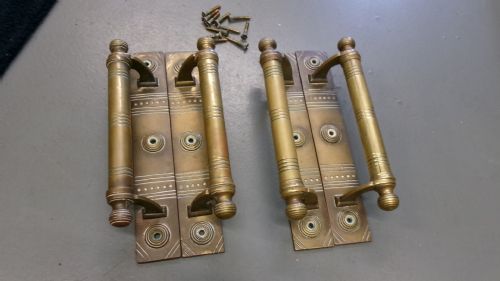
The pieces on this page are predominantly Victorian examples, alongside Georgian and Regency items, reflecting a range of historical domestic architecture. Common forms include door knobs, hinges, pull bells, centre door knobs and door knockers featuring classical or revival motifs.
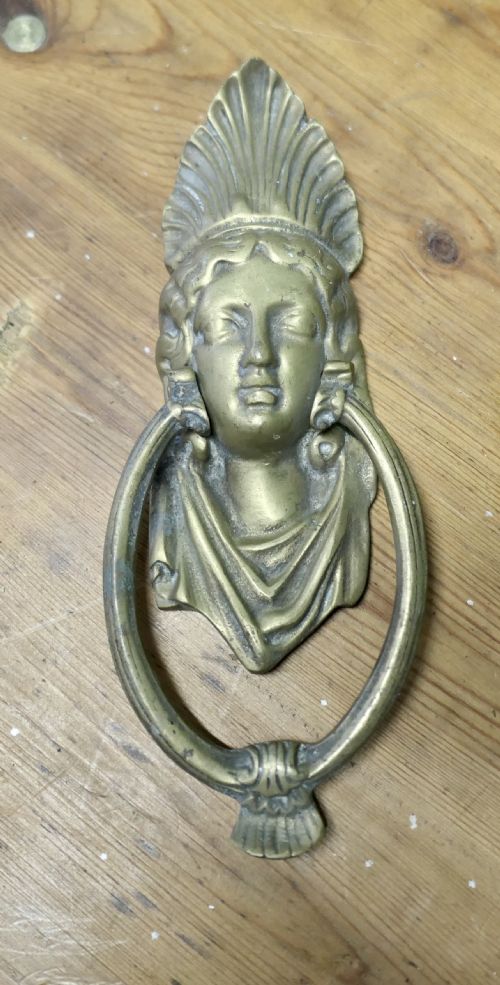
Makers and designers from the nineteenth century utilised cast brass and amber glass to produce durable architectural ironmongery and fittings. These items survive in various styles, from Gothic Revival hinges to Arts & Crafts handles and ornate caryatid knockers.
How yellow brass hardware was made
Makers produced these fixtures primarily through metal casting, pouring molten brass into moulds to achieve complex sculptural details such as Maltese dolphins and caryatids. This casting process allowed workshops to manufacture robust structural components alongside ornamental domestic hardware.
Manufacturers also combined brass with other materials, mounting amber glass elements into metal bases for specific centre door knobs and pairing brass assemblies with steel components for functional strength. Such mixed media construction ensured both visual appeal and mechanical durability on heavy doors.
Materials recorded across the inventory include cast brass, standard brass, steel, and amber glass.
What varies in quality
Quality in these pieces depends upon the crispness of the casting and the depth of detail in decorative motifs such as figures or geometric borders. Finer examples display sharp definition in relief work, whereas simpler items show softer edges from worn or basic moulds.
Substantial weight and material thickness distinguish superior hardware, ensuring the metal resists bending and maintains structural integrity during daily use. The original integration of components, such as secure mountings and balanced moving parts, also separates standard utility items from more refined architectural fittings.
The Yellow Brass Hardware Glossary
- Caryatid
- A carved or cast human figure acting as a supporting pillar, often seen on nineteenth century door knockers. This sculptural element adds classical architectural drama to an entrance.
- Centre door knob
- A large stationary handle placed in the middle of a front door rather than at the edge, used for pushing or pulling the door shut. These often incorporate decorative backplates.
- Pull bell
- A mechanical signaling device operated by pulling a handle or lever attached to a wire or crank. These were common in Georgian and Victorian hallway systems.
- Gothic Revival
- An architectural and decorative style drawing inspiration from medieval forms, characterised by pointed arches and robust metal hinges. Pieces in this style emphasise structural honesty.
- Maltese dolphin
- A traditional nautical or heraldic motif featuring stylized fish, frequently utilised in nineteenth century door knocker designs. This marine emblem was popular in coastal regions.
Yellow Brass Hardware: Frequently Asked Questions
How do I date yellow brass hardware?
Dating relies on stylistic clues, manufacturing techniques and the specific architectural context of the period. Georgian and Regency pieces tend to feature cleaner classical lines, whereas Victorian items often display heavier ornamentation and revival motifs.
Material composition also offers guidance, as nineteenth century casting methods left distinct surface textures on the reverse of plates and handles. Comparing a piece against documented examples from the same era helps confirm its age.
Can I use antique brass door knobs daily?
Most antique brass fixtures were built for heavy everyday use in period homes and remain entirely suitable for contemporary doors. Cast brass provides high durability, though internal mechanisms or spindles may need inspection or adjustment before installation.
Regular handling actually maintains the warm lustre of the metal through natural contact. Ensure that fixing screws match the original gauge to prevent damaging historical wood.
What is the difference between brass and cast brass?
Sheet or extruded brass is rolled or pressed into flat plates and simple profiles, offering a smooth and uniform surface. Cast brass is poured into a mould as liquid metal, allowing artisans to create three dimensional shapes, sculptural figures and deep relief patterns.
Cast items usually feel heavier and display the characteristic minor surface imperfections associated with traditional foundry work. This technique was essential for producing ornate door knockers and robust hinges.
How should I clean antique brass hardware?
Gentle washing with warm soapy water and a soft cloth removes accumulated dirt without stripping the historical patina. Avoid harsh chemical polishes that can permanently alter the surface colour and erase subtle details in the cast relief.
Allowing the metal to age naturally preserves its character and historical integrity. Light waxing can help protect exterior pieces from atmospheric moisture.