


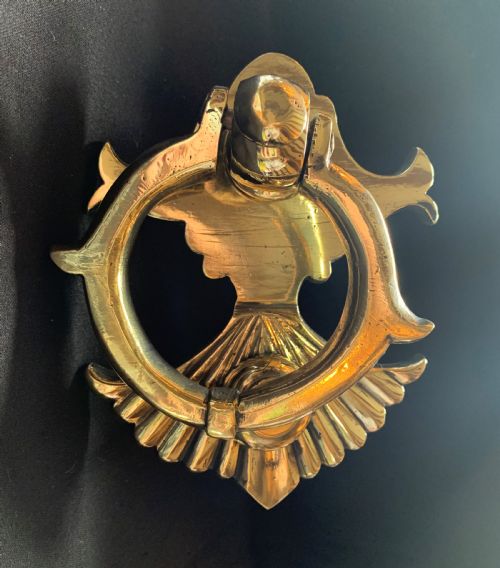

Architectural Door Knocker
These architectural door knocker examples bring weight and historical character to an entrance, forged in brass, bronze, and iron.
Architectural Door Knocker
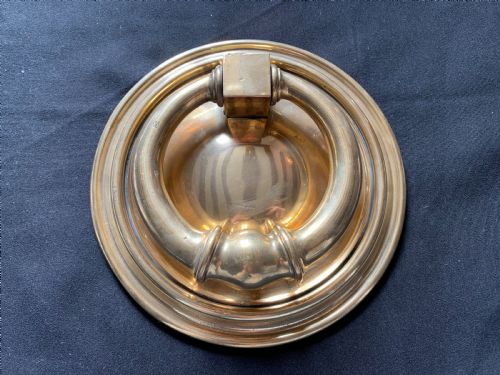
When you search for an architectural door knocker, you encounter heavy functional hardware designed to announce visitors to a house. These pieces span centuries of domestic design, featuring prominently on front entrances from the seventeenth century through to the twentieth century.
The versions you are most likely to meet on this page belong to the Victorian period, appearing in cast iron, brass, and solid brass forms. Alongside these, examples emerge from the Georgian era, the Regency period, and the seventeenth century, showing diverse stylistic influences.
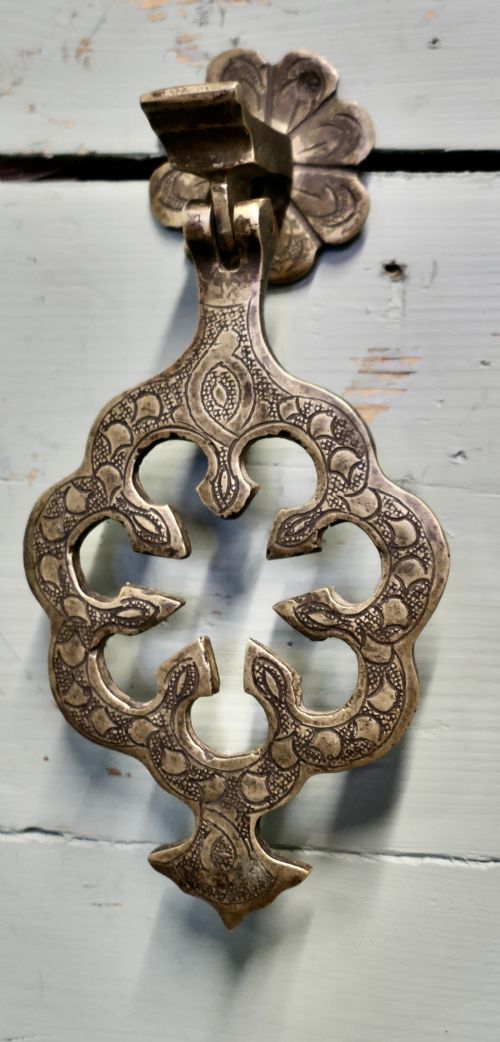
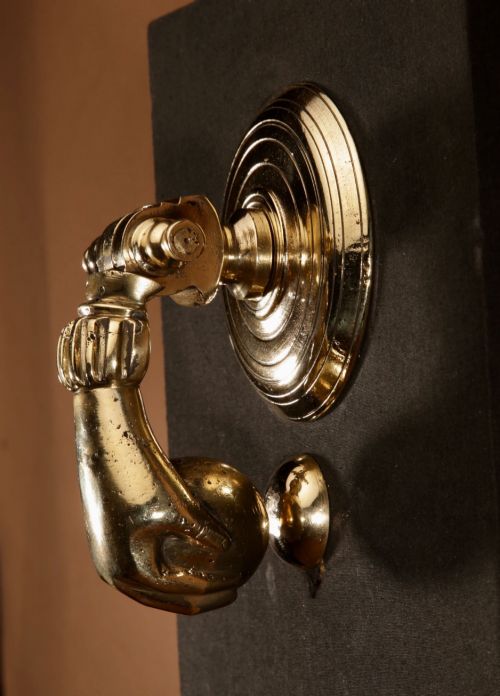
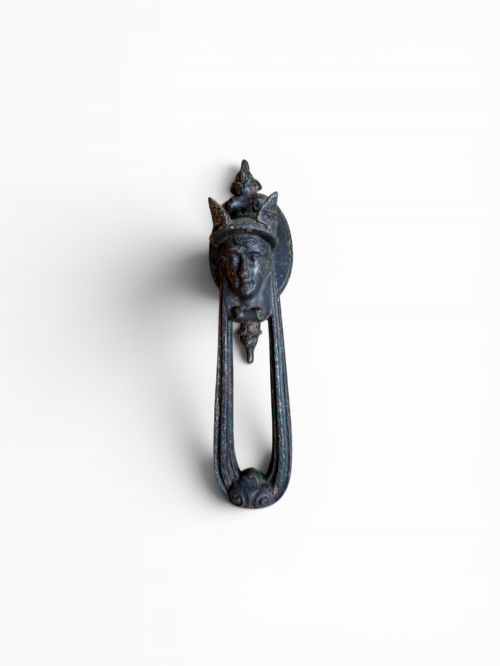
The selection includes distinct sculptural shapes such as human hands, Hermes heads, sea serpents, and Egyptian sphinxes, alongside large pierced brass designs and pieces combined with letterboxes. These objects function as architectural hardware, serving both practical entry duties and decorative roles.
Materials and construction
Makers utilised durable metals, predominantly brass, solid brass, bronze, cast iron, and wrought iron, to withstand daily use on exterior doors. Foundry techniques allowed workers to cast complex shapes like animal forms, mythological figures, and human hands with striking detail.
Finishing methods involved piercing sheet metal and casting solid components that could be mounted securely alongside matching backplates and letterbox assemblies. Lead also appears in the construction of certain hardware elements to provide necessary weight and stability.
Listings on this site feature brass, bronze, cast iron, and lead across pieces spanning the seventeenth, eighteenth, and nineteenth centuries.
Judging quality and execution
Material substance defines the better items, where substantial weight in solid brass or bronze indicates a higher grade of metalwork. The integration of functional elements, such as complete backplates or combined letterboxes, also distinguishes comprehensive hardware sets from simpler knockers.
Kenrick & Sons
The Architectural Door Knocker Glossary
- Architectural hardware
- Functional metal fixtures attached to buildings, including door knockers, handles, and letterboxes. These items combine utility with the decorative style of their period.
- Pierced brass
- Sheet brass cut through in decorative patterns to create openwork designs. This technique lightens the visual mass while allowing the underlying door colour to show through.
- Cast iron
- Iron poured into a mould to shape heavy components. It provides a robust, dark finish commonly seen on nineteenth-century hardware.
- Bronze
- An alloy of copper and tin prized for its durability and warm tone. It takes fine detail well in sculptural castings.
Architectural Door Knocker: Frequently Asked Questions
How do I fix a heavy door knocker to timber?
Heavy architectural door knockers require secure fixings that pass entirely through the door leaf to bear the weight of the striking mechanism.
Using traditional threaded bolts with matching interior nuts ensures the fixture remains stable during repeated daily use without loosening the surrounding wood.
Can I use an antique knocker outside?
Most of these metal pieces were cast precisely for exterior use and withstand weathering well when properly maintained.
Materials like brass, bronze, and iron develop a natural surface patina over time when exposed to the elements on an entrance door.
What period is a Hermes head knocker?
Figural knockers depicting mythological figures like Hermes typically date from the nineteenth century during periods of classical revival.
Victorian makers frequently drew on ancient Greek and Roman motifs to decorate domestic hardware with dramatic sculptural forms.
How do I clean solid brass hardware?
Gentle washing with warm soapy water removes accumulated surface grime without damaging the underlying metal or accelerated ageing.
Avoid harsh chemical abrasives that strip away the historical character and desirable surface tone built up over generations.