









Polished Brass Door Knocker
A polished brass door knocker brings immediate character to an entrance, offering heavy metalwork forged to last generations.
Polished Brass Door Knocker
When you search for a polished brass door knocker, you encounter heavy architectural hardware designed to mount directly onto exterior entrance timber. These pieces span periods from the Georgian and Victorian eras through to the early twentieth century, showing substantial weight and tactile form.
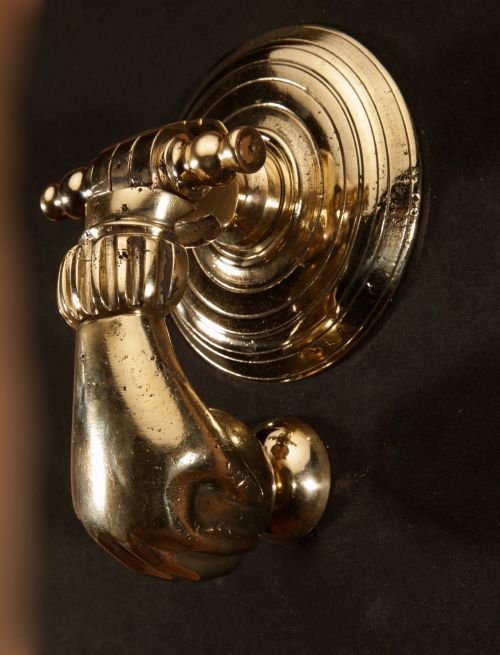
The versions you meet most frequently on this page are Victorian designs, often featuring regional motifs like the Maltese dolphin or classical doctor style plates. Alongside these traditional forms, continental styles and novelty shapes such as hands or imps appear among the selection.
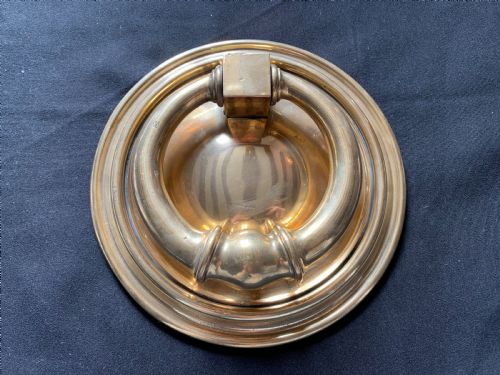
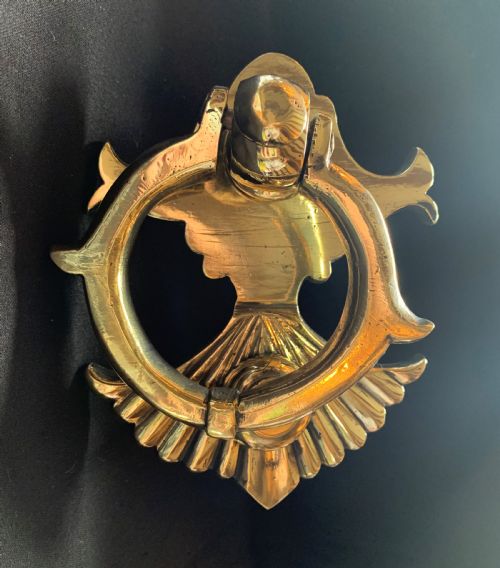
The construction typically combines the striking ring or hammer with a matching mounting plate, sometimes incorporating an integrated letterbox or pull handle. The materials range from solid brass to cast bronze, finished to a bright metallic shine.
Materials and construction methods
These items rely primarily on cast brass and bronze, poured into moulds to achieve intricate relief details such as scales on dolphins or the fingers of a hand. The resulting metal castings provide the necessary mass for a deep, resonant sound when dropped against the striking plate.
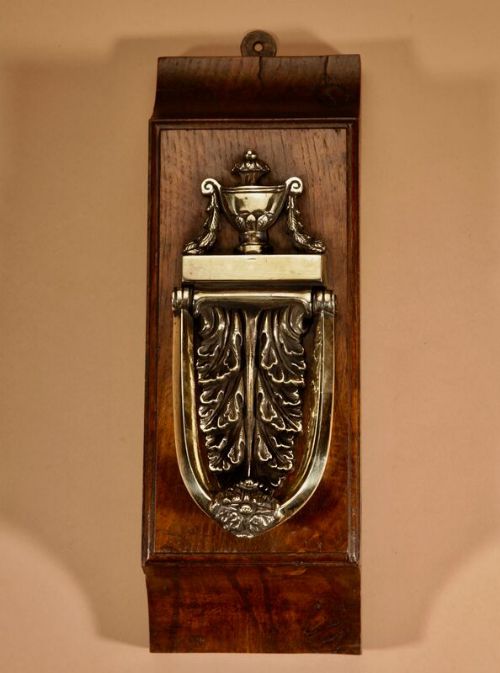
Surface finishing involves rigorous polishing to bring out the golden sheen of the brass or the warmer tones of the bronze. Iron fixings and oak backing boards occasionally support the primary metal components, securing the hardware to heavy doors.
An inquisitive bronze imp holding a tiny lantern peers out from one of the more unusual Victorian designs.
Assessing quality in antique hardware
The integrity of the original mechanical joints and mounting points dictates the structural standard of the hardware. Pieces retaining their matching backplates and original fixing screws demonstrate a higher level of completeness.
The Polished Brass Door Knocker Glossary
- Doctors Knocker
- A specific drop-handle door knocker style traditionally associated with medical practitioners, featuring a vertical bar and striking knob. These pieces became popular during the nineteenth century on urban townhouses.
- Maltese Dolphin
- A classic motif shaped like a stylized marine creature, frequently utilised in Victorian coastal ports and maritime properties. The curved tail forms the striking handle.
- Strike Plate
- The metal plate affixed to the door beneath the hammer or ring, protecting the wooden surface from impact damage. It absorbs the blow of the knocker during use.
- Gauge
- The thickness of the metal used in the construction of the hardware. Heavier gauges indicate a more substantial and durable casting.
Polished Brass Door Knocker: Frequently Asked Questions
How do I install an antique door knocker?
Installation requires aligning the mounting holes with the grain of your timber door and securing the piece with matching metal screws. Care must be taken not to over-tighten historical fixings into the brass.
Ensure the striking point aligns properly with the backplate or strike plate so the hammer lands squarely without damaging the door surface.
What periods do these knockers come from?
The pieces span several historical periods, running from Georgian and Victorian eras through to the early twentieth century. Victorian examples make up a significant portion of the available hardware.
Stylistic cues, such as Louis Seize influences or distinct Victorian motifs, help identify the manufacturing era alongside the casting methods used.
Are these knockers made of solid brass?
The selection includes items fashioned from solid brass, cast bronze, and heavy gauge brass alloys. These materials were chosen for their durability against weather and frequent handling.
Solid metal construction ensures the pieces maintain their weight and structural integrity over centuries of outdoor exposure.
How should I clean polished brass?
Maintenance involves gentle wiping with a soft cloth to remove dust and environmental grime that accumulates outdoors. A mild brass cleaner can be applied sparingly if you wish to maintain the bright polished finish.
Avoiding harsh abras<bos>2 scrubs preserves the original surface texture and prevents damage to the fine details of the casting.
What styles are most common?
Victorian designs dominate the selection, ranging from standard architectural plates to novelty shapes like hands, imps, and marine creatures. Georgian and continental revival styles also appear frequently.
Each style reflects the architectural tastes of its period, from classical symmetry to imaginative Victorian figural work.