


Victorian Brass Inlay Box
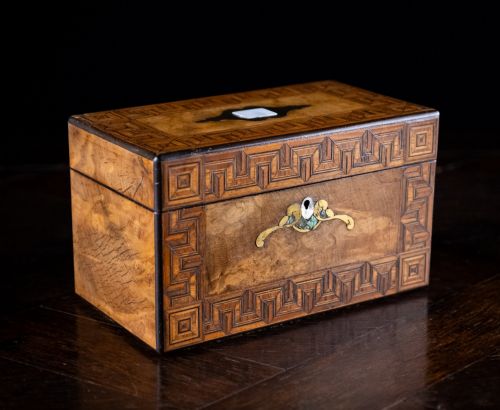
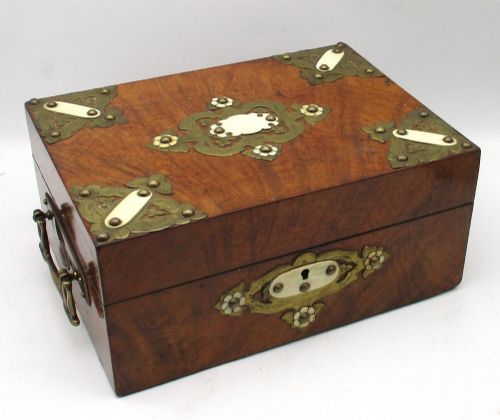
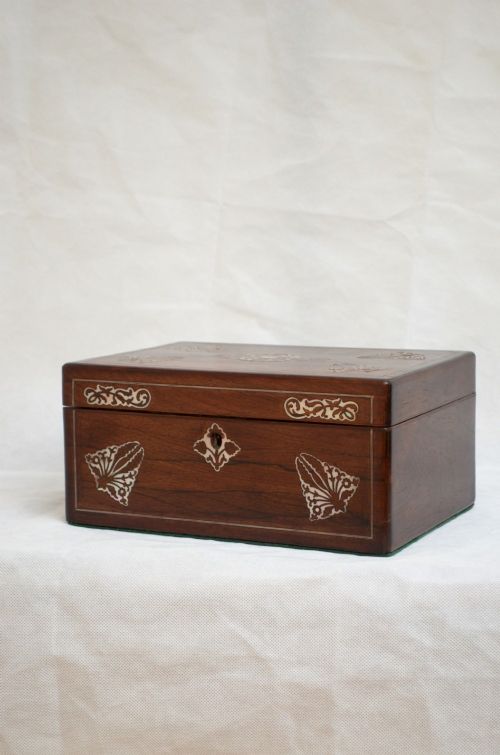
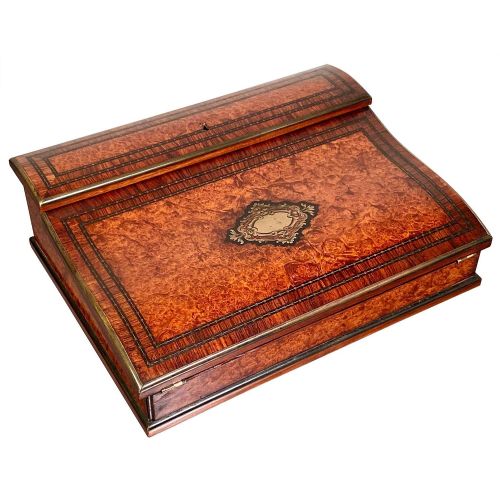
A victorian brass inlay box brings tactile weight and rich timber grain to a desk, holding letters or trinkets with period craftsmanship.
Victorian Brass Inlay Box
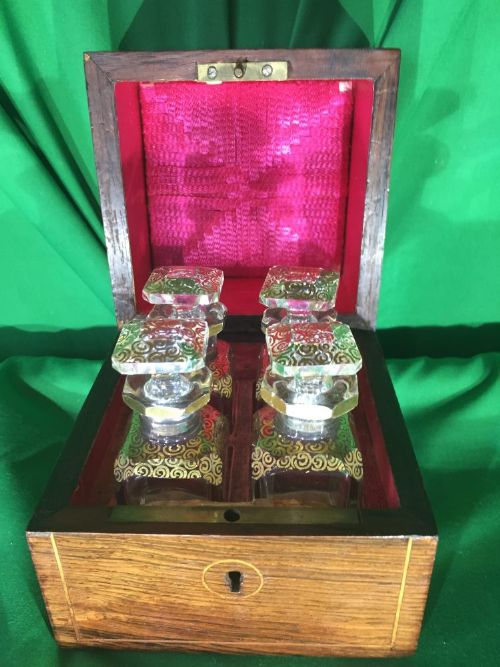
A victorian brass inlay box comprises practical containers constructed for writing, storing jewellery, or housing tea, originating predominantly from the nineteenth century. Buyers seek these pieces for their dense hardwood bodies and precise metal decoration that catches the light. The form spans slope desks, tea caddies, and vanity cases, reflecting the varied domestic needs of the period.
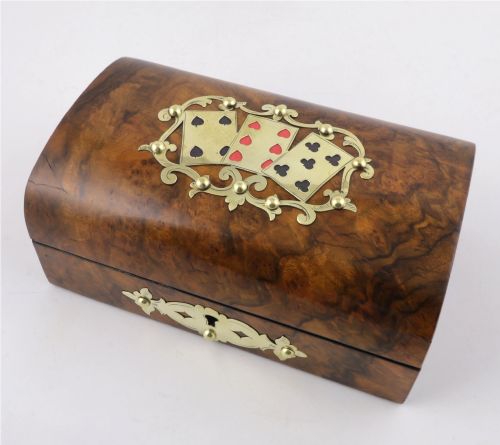
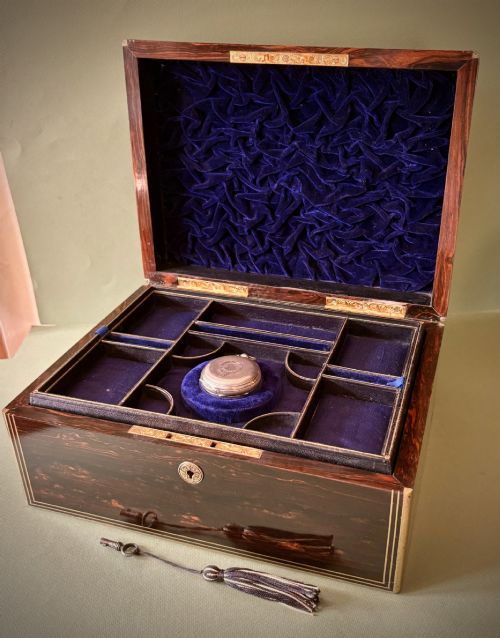
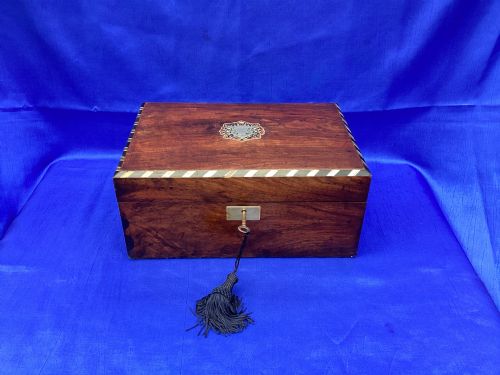
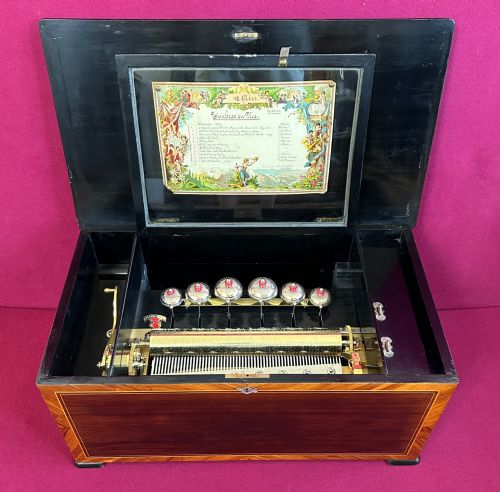
Rosewood, walnut, and burr walnut dominate the pieces available on this page, often paired with bright brass stringing or escutcheons. Writing slopes and jewellery caskets appear with frequency, alongside occasional music boxes and desk accessories. These containers range from compact trinket boxes to substantial bound writing slopes fitted with secret drawers.
How they were made
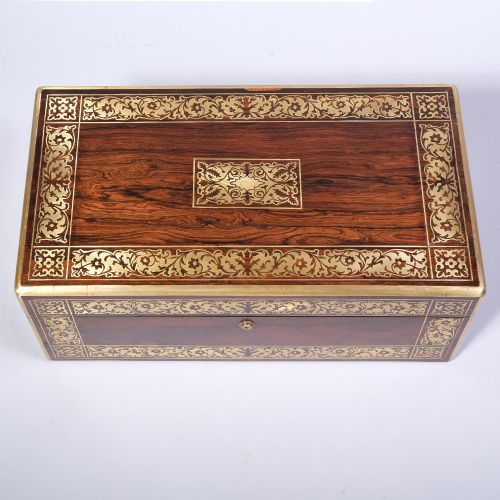
Cabinet makers constructed these vessels from dense hardwoods like rosewood, mahogany, and walnut, frequently applying burr walnut veneers for rich surface figuring. Channels were hand-cut into the wood grain to receive shaped brass strips, escutcheons, and corner brackets, secured flush to the surface.
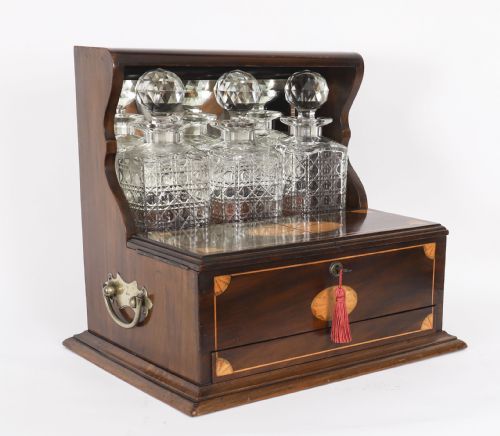
Interiors required intricate joinery to create removable trays, secret compartments, and partitioned spaces for stationery or bottles. Specialised locks, such as Bramah mechanisms, were integrated into the framework to secure private correspondence and valuables.
Secret drawers lurk behind false partitions in writing slopes, built to outsmart prying eyes.
What varies in quality
The standard of timber selection and the precision of the metalwork set individual pieces apart. Finely executed brass inlay sits perfectly level with the surrounding wood grain, showing minimal gaps along intricate curves and corners.
Internal complexity dictates the calibre of a box, distinguishing plain storage containers from fully fitted writing slopes with secret drawers, working locks, and original velvet or silk linings.
Edwards and Roberts·H Mitchell
The Victorian Brass Inlay Box Glossary
- Writing slope
- A portable slant-front desk hinged to fold flat, fitted with compartments for pens, inkwells, and paper. These items formed an essential part of nineteenth-century correspondence equipment.
- Bramah lock
- A high-security cylindrical lock patented in the late eighteenth century, commonly found on better-quality boxes of this era. It required a specially notched tubular key to operate.
- Escutcheon
- A decorative brass plate surrounding a keyhole, designed to protect the surrounding wood from wear. They are often engraved or shaped to match the box's brass inlay.
- Stringing
- Thin lines of inlay made from contrasting wood or metal, embedded into the surface of a box. This technique creates geometric borders and outlines panels on the lid and sides.
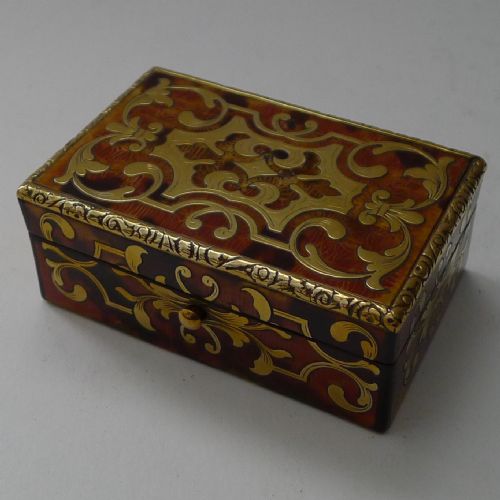
- Boulle
- An intricate marquetry technique combining tortoiseshell and brass, named after a French royal cabinet maker. Pieces in this style feature elaborate metallic scrolling against a dark background.
Victorian Brass Inlay Box: Frequently Asked Questions
What went inside a writing slope?
Writing slopes held folded stationery, folded letters, sealing wax, and small pens within dedicated internal compartments. Many included removable trays and glass inkwells.
Secret drawers were concealed behind false partitions to safeguard private documents and currency.
What timbers were commonly used?
Cabinet makers relied on dense tropical hardwoods like rosewood, coromandel, and mahogany for durability and rich colour. Burr walnut was also favoured for its striking natural grain patterns.
These woods provided a stable dark background that made bright brass inlay stand out.
How do I care for brass inlay?
Keep wooden boxes away from direct sunlight and steady heat sources to prevent timber shrinkage and subsequent lifting of the metal inlay. Feed the polished wood surface with appropriate wax periodically.
Avoid using harsh metal polishes on the brass stringing to prevent staining the surrounding grain.