


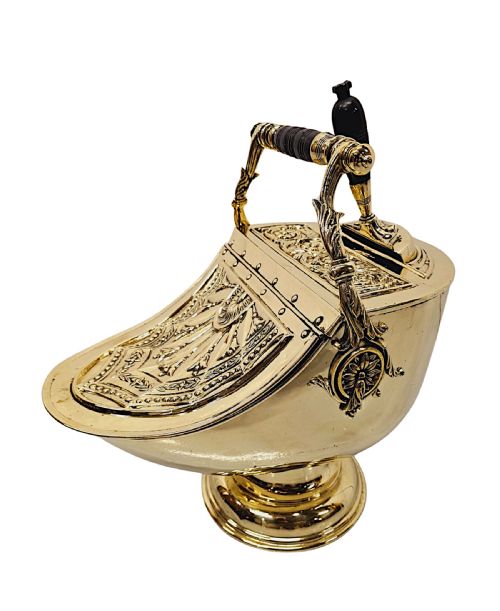


Victorian Brass Hearthware
Victorian brass hearthware brings functional warmth to a room through coal scuttles, fire irons, and warming pans forged to last.
Victorian Brass Hearthware
Victorian brass hearthware encompasses functional fireplace accessories shaped during the nineteenth century, including coal scuttles, fire irons, and trivets. Buyers searching for victorian brass hearthware encounter solid brass and copper vessels alongside iron and steel companion sets.
The objects most frequently met on this page are helmet-shaped coal scuttles and chestnut roasters from the nineteenth century. These pieces combine brass construction with iron handles and wood components, reflecting period domestic routines around the hearth.
What varies in quality
Quality in victorian brass hearthware rests on the thickness of the metal sheet and the robustness of joints and handles. Heavy-gauge brass and well-secured iron fittings distinguish superior items from lighter, purely decorative productions.
Detailing also marks the difference between standard and finer pieces, seen in crisp casting on fire dogs and careful hand-finishing on coal buckets. Surviving original parts, such as wooden grips and matching companion sets, elevate the integrity of an object.
Listings feature items spanning the nineteenth and early twentieth centuries, incorporating materials like wrought iron, copper, and solid brass.
The Victorian Brass Hearthware Glossary
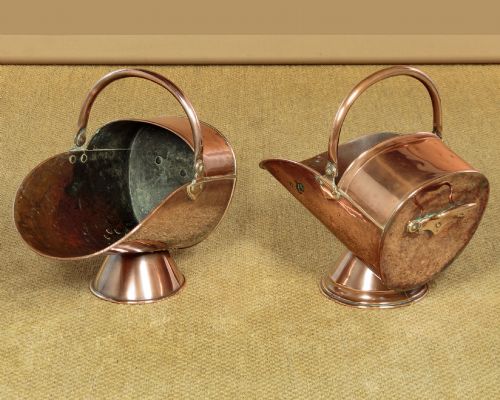
- Coal scuttle
- A container designed to hold fuel for a domestic fire, commonly helmet-shaped in this period. These vessels often feature a swing handle and a flat base for stability beside the grate.
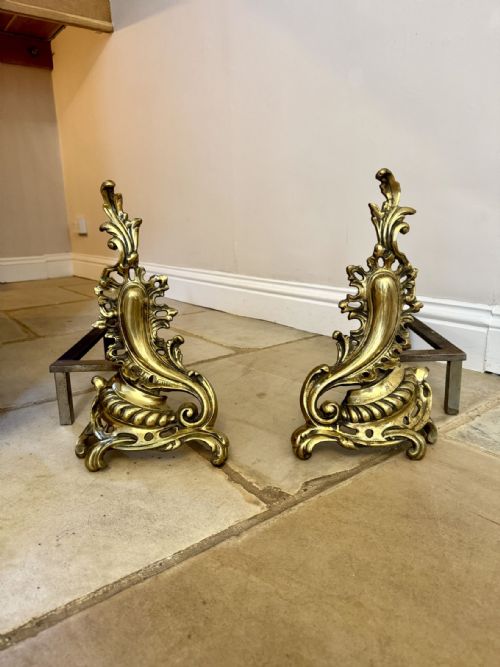
- Andirons
- Also known as fire dogs, these horizontal iron or brass supports hold logs within an open fireplace. They typically display decorative cast fronts facing into the room.
- Fire irons
- A matched set of poker, tongs, and shovel used to manage a coal or wood fire. They frequently hang from a companion stand or rest across a fender.
- Footman
- A low metal table placed in front of the hearth to keep food warm. These brass or iron stands often include side handles for lifting.
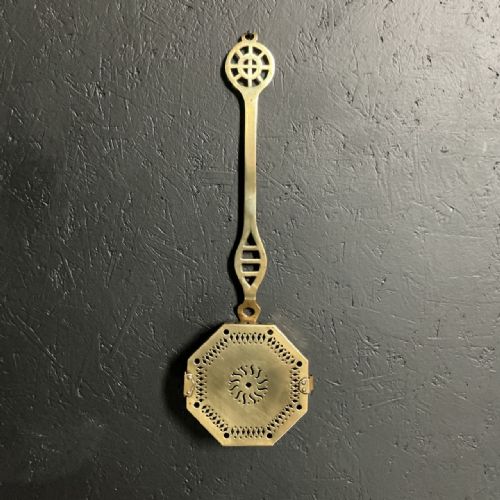
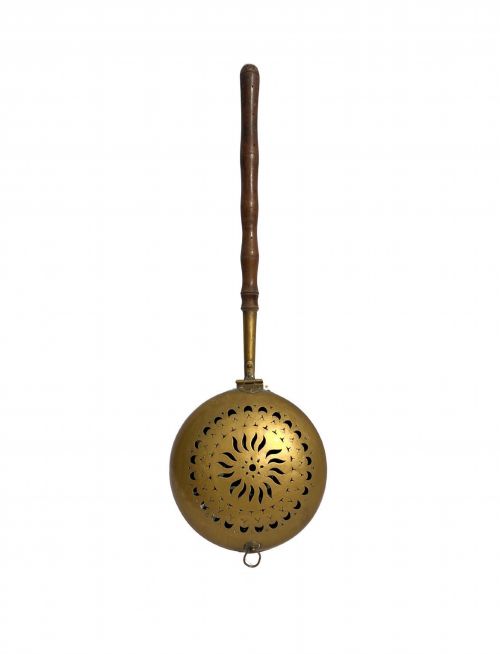
- Warming pan
- A long-handled metal pan filled with hot embers to warm bed linens. The hinged lid is often punched with decorative patterns to release heat gradually.
Victorian Brass Hearthware: Frequently Asked Questions
How do I clean brass hearthware?
Clean brass with a mild, non-abrasive metal polish and a soft cloth to remove soot and tarnish without stripping the underlying surface. Avoid harsh chemical dips that destroy the natural ageing of nineteenth-century metal.
Preserve the character of older pieces by leaving subtle patination in recessed areas while keeping handling surfaces clean. Regular dusting prevents soot accumulation from bonding to the metal.
Can I use these fire irons?
Many nineteenth-century fire irons and companion sets remain structurally robust enough for regular fireside use. Solid iron and steel shafts handle daily stoking effectively.
Inspect the joints and handles before use to ensure pins and welds are secure. Lighter decorative sets are better reserved for display beside an unused hearth.
How do I date a piece?
Dating relies on manufacturing marks, construction methods such as hand-cut rivets, and stylistic markers like French rococo curves or Arts and Crafts simplicity. Nineteenth-century items often show hammer marks and heavier metal gauges than later reproductions.
Compare the wear patterns on handles and bases with standard domestic usage from the period. Reference materials and period details help confirm whether an object originates from the Victorian era.