


Victorian Brass Handle Scuttle
A victorian brass handle scuttle brings heavy metal warmth and everyday utility straight to the hearth.
Victorian Brass Handle Scuttle
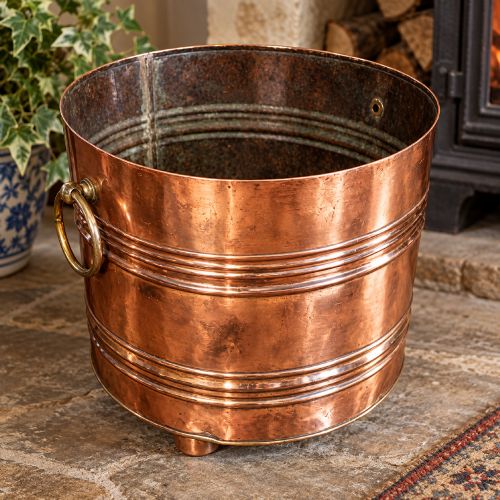
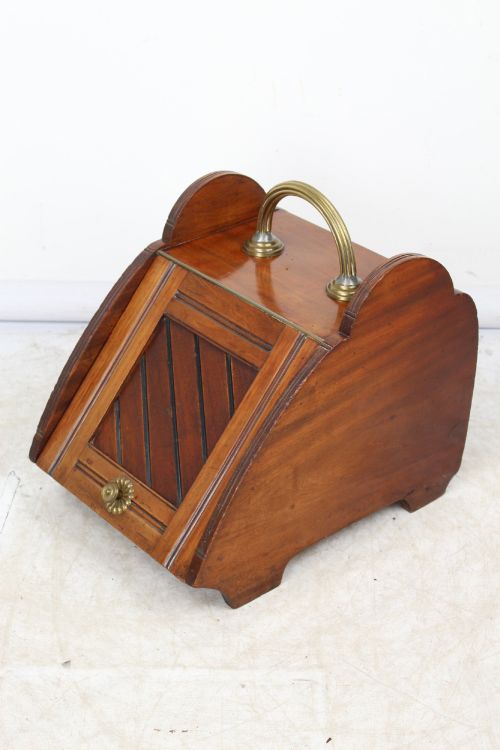
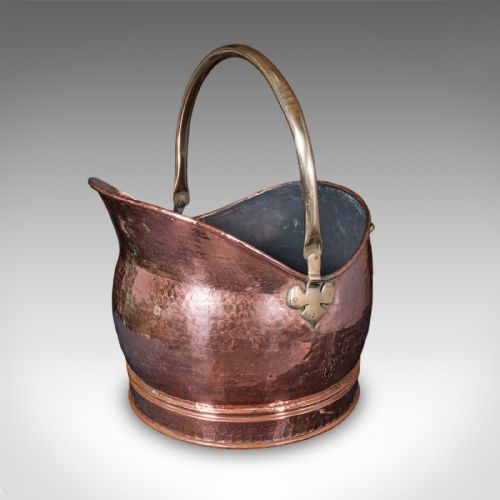
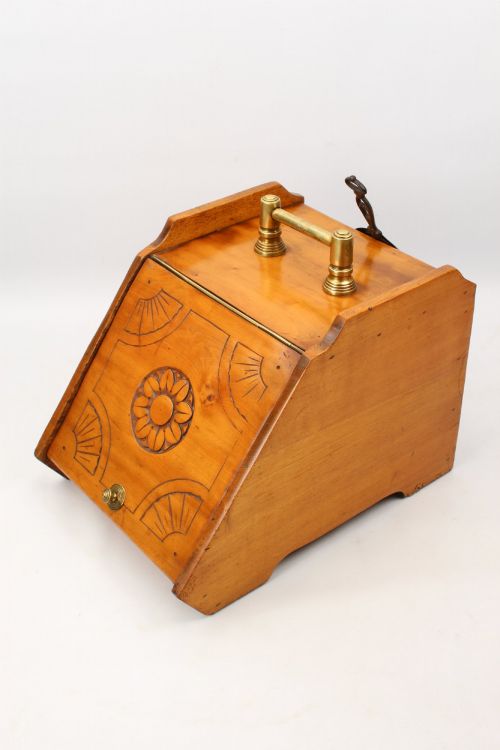
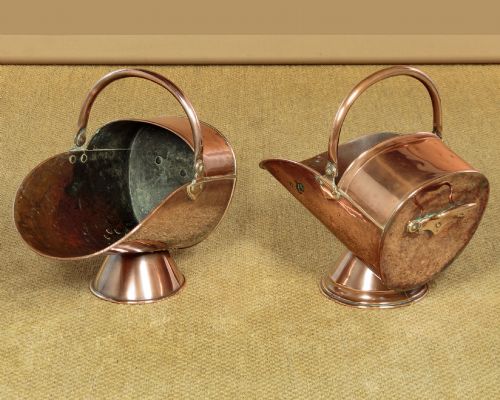
A victorian brass handle scuttle is a utilitarian vessel built to hold solid fuel beside a domestic fireplace, taking forms such as the traditional helmet shape, the cylindrical bucket, or the hinged wooden coal box known as a purdonium. These objects served a purely domestic purpose in nineteenth-century homes, carrying coal or logs from the cellar to the grate.
Materials and Construction
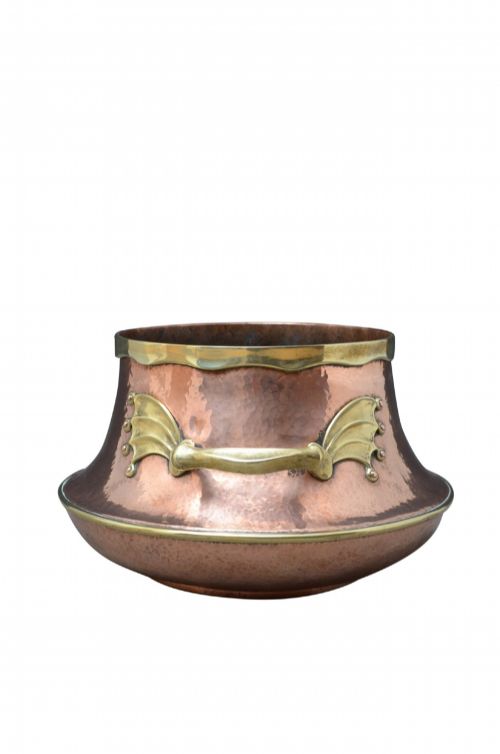
Metal vessels rely heavily on beaten or hammered copper bodies joined with riveted seams, complemented by cast brass handles, feet, and decorative mounts. Smiths shaped sheet metal over forms, employing hand-finishing techniques that left subtle hammer marks across the surface.
Wooden variations utilise mahogany, oak, walnut, and pine, frequently featuring carved panels, inlaid details, and drop swing handles. Inside these wooden cabinets sit removable metal liners designed to contain coal dust and simplify loading.
Listings feature items spanning the Victorian era, Arts and Crafts movement, and Edwardian period, constructed from copper, brass, oak, walnut, and mahogany.
Determining Quality
The distinction between ordinary utility items and finer pieces lies in the weight of the metal and the crispness of the secondary mounts. Substantial copper gauges and heavy cast brass handles indicate superior craftsmanship that endured daily household use without buckling.
On wooden examples, quality is read through the depth of the timber carving, the precision of any marquetry inlay, and the integrity of the internal metal liner. Maker attribution, such as stamped marks from established metalworkers, elevates certain pieces above anonymous workshop production.
William Soutter & Sons
The Victorian Brass Handle Scuttle Glossary
- Scuttle
- A metal or wooden container designed specifically for holding and transporting coal to a fireplace. These vessels typically feature a wide mouth and sturdy carrying handles.
- Purdonium
- A box-style coal container, usually made of wood with a sloping front flap and an internal metal scuttle. They often include a small compartment on top for a matching shovel.
- Helmet scuttle
- A coal bucket shaped with a flared, sloping rim resembling a classical helmet, designed to direct fuel cleanly into the grate. This profile is one of the most recognisable Victorian hearth accessories.
- Barge ware
- Brightly painted folk art decoration applied to tinware and iron objects, characterised by colourful floral motifs. This traditional style originated on English canal boats.
- Jardiniere
- An ornamental pot or vessel used to hold indoor plants or flowers. Many robust metal coal buckets found a second life repurposed in this manner.
Victorian Brass Handle Scuttle: Frequently Asked Questions
What is a victorian brass handle scuttle used for?
These pieces were originally manufactured to store and carry coal or logs to open fireplaces in nineteenth-century homes. Their robust construction handled the heavy weight of solid fuel daily.
Today, many buyers repurpose them beside modern hearths or utilise them as planters and log bins in living spaces.
What is the difference between a copper scuttle and a purdonium?
Copper scuttles are open metal vessels, often helmet-shaped or cylindrical, designed for direct carrying and dumping of fuel. Purdoniums are enclosed wooden boxes made of walnut or oak with a hinged front drop-down door.
Purdoniums conceal the coal entirely within an internal metal liner, presenting the appearance of fine cabinet furniture rather than utility hardware.
Are these pieces safe to use for real fires?
Most of these antique vessels retain their original structural integrity and metal liners, making them entirely suitable for holding logs or kindling beside a working fireplace. Wooden boxes should be checked to ensure their internal metal trays remain sound.
They function equally well as decorative interior storage pieces if kept dry and clean.