

Victorian Brass Fire Surround
A victorian brass fire surround frames the hearth with warmth and decorative metalwork, offering both safety and period character.
Victorian Brass Fire Surround
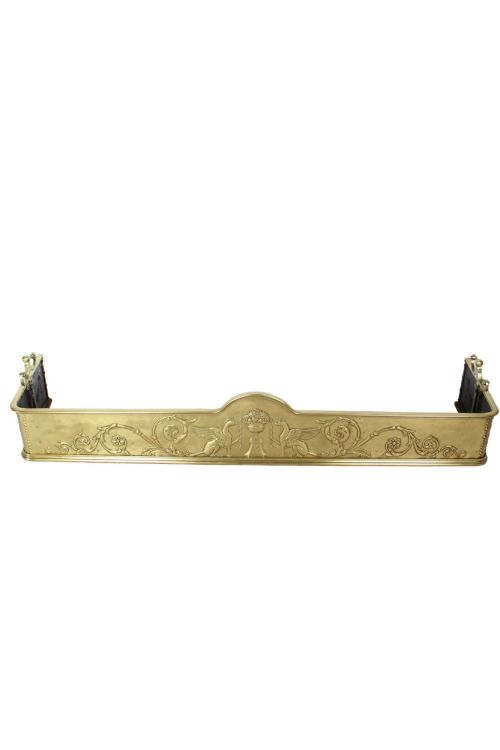
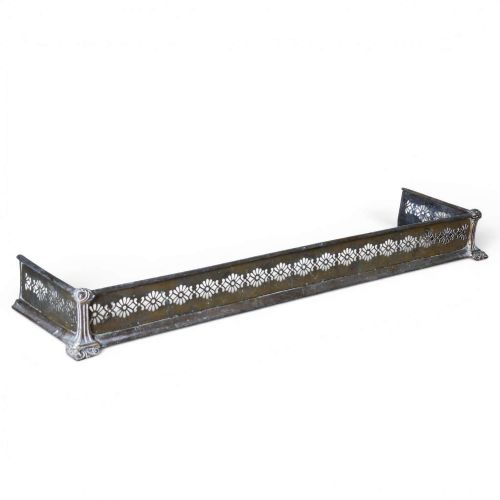
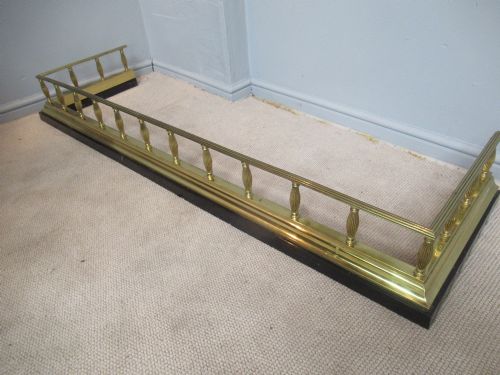
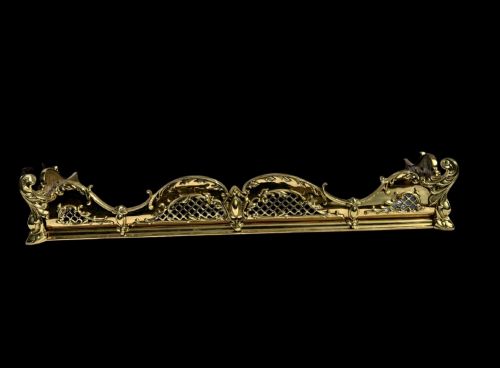
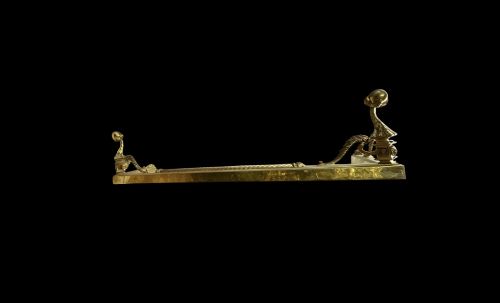
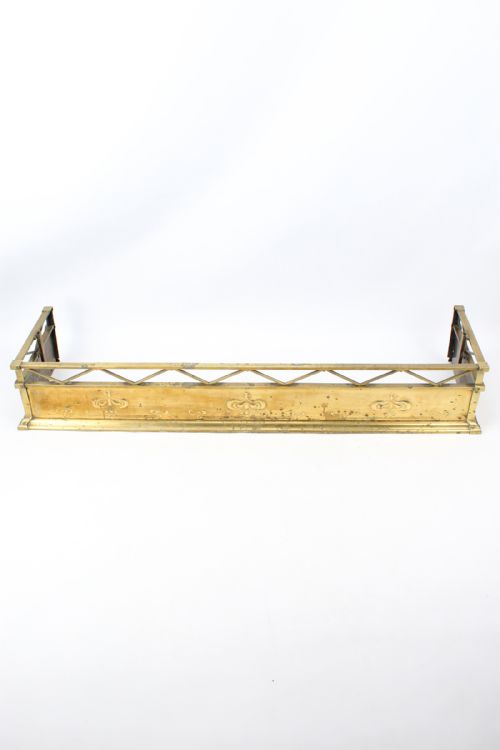
When searching for a victorian brass fire surround, buyers encounter various forms including fireplace fenders, club fenders, hearth fenders, and fire guards. The most common pieces on this page are fire fenders made during the nineteenth century, often measuring several feet to span domestic hearths.
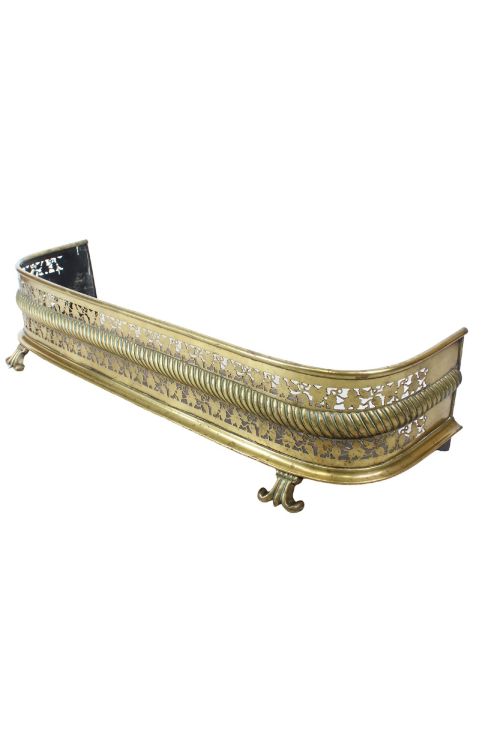
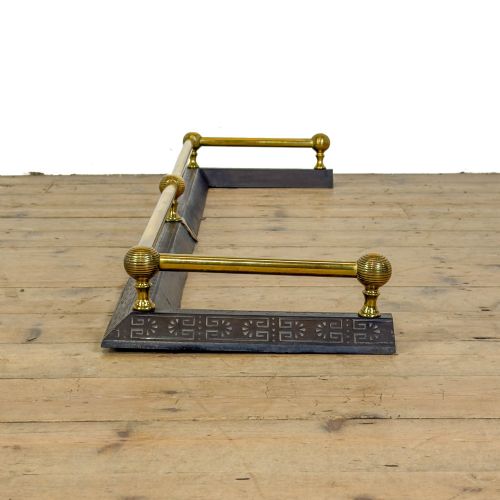
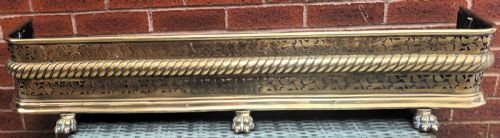
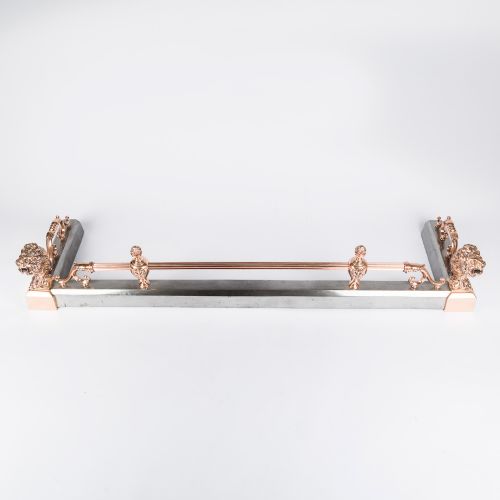
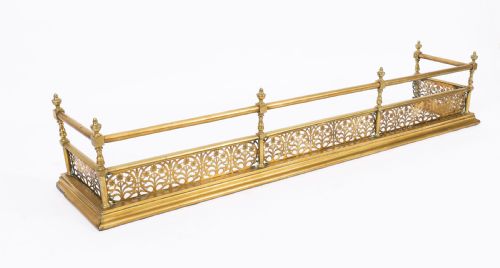
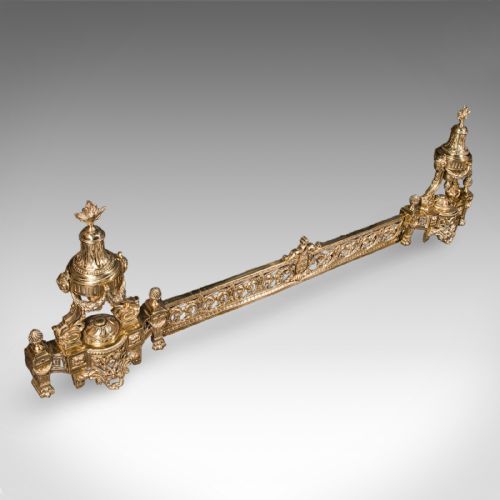
Many examples combine bright brass with iron or steel frames, while others incorporate adjustable mechanisms to fit different fireplace widths. Pierced sheet brass and heavy cast components define the dominant domestic styles seen across these listings.
Beyond standard hearth fenders, the selection includes related accessories such as miniatures and complete fire surround sets with integrated irons. These metal guards protect floor coverings from stray embers while anchoring the decorative scheme of the room.
Materials and Construction
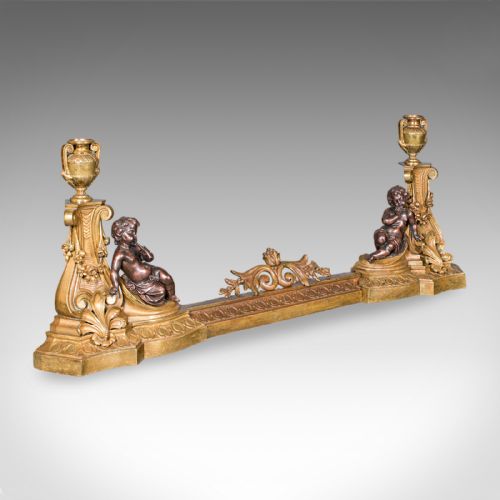
Maker workshops utilised sheet and cast brass, frequently mounting the metal components onto sturdy iron or steel bases for structural weight. Copper, bronze, and gilt bronze appear alongside brass, adding tonal variety to the finished hearth borders.
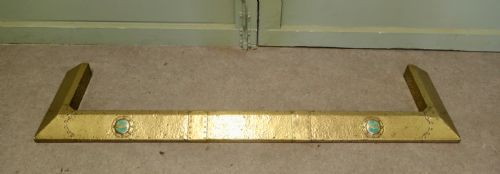
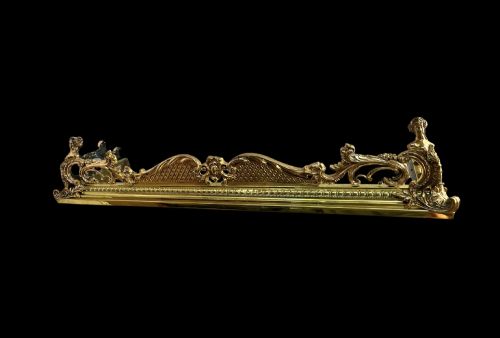
Decoration relied on piercing, stamping, and casting techniques to produce repeating neoclassical motifs, fluid art nouveau lines, or pierced scrollwork. Selected models integrate elements such as green enamel cabochons, lions, or padded leather seating on club fender variants.
Salesmen carried tiny miniature brass and iron fire places on their travels to show clients full-sized hearth designs without dragging heavy metal across the country.
Evaluating Quality
Quality rests in the substantial weight of the metal and the crispness of the pierced or cast ornamentation. Superior examples display clean joints, deep relief in decorative mouldings, and well-preserved surface patination rather than over-polished thin metal.
The sophistication of the stylistic execution distinguishes standard production items from finer studio pieces. Stronger designs show thoughtful integration of mixed metals like steel and brass, robust extending mechanisms, and balanced proportions across the hearth length.
The Victorian Brass Fire Surround Glossary
- Fender
- A low metal guard placed around the hearth to contain sparks and rolling embers. They sit directly on the floor in front of the fireplace opening.
- Club fender
- A low hearth fender featuring upholstered top rails designed for seating. These forms gained popularity in country houses and gentlemen's clubs.
- Pierced brass
- Sheet metal perforated with decorative patterns using saws or punches. This technique lightens the visual weight of the brass while displaying complex designs.
- Fire kerb
- An alternative term for a hearth fender, marking the boundary between the fire and the room. They appear in straight and curved formats.
- Ormolu
- Gilt bronze ornamentation applied to fireplace furnishings. The technique imparts a rich golden finish to cast metal details.
Victorian Brass Fire Surround: Frequently Asked Questions
What is a club fender?
A club fender is a hearth surround fitted with cushioned seats along the top rail. It provides a warm perch close to the fire.
Victorian and later examples often use leather upholstery supported by a robust brass and iron frame.
How do I measure for a fender?
Measure the width of your fireplace hearth opening and the surrounding floor space available. Allow clearance for the fender to sit comfortably without blocking hearth access.
Many nineteenth-century pieces feature adjustable frames to assist with precise fitting.
Are these pieces adjustable?
Certain nineteenth-century models incorporate sliding mechanisms allowing the width to expand or contract. These adjustable designs suit hearths that require specific dimensional adjustments.
Fixed-width fenders make up the majority of the available selection.
What metals are used?
Most items combine brass with iron or steel components for structural stability. Copper, bronze, and gilt bronze also appear across various styles.
Iron and steel typically form the inner chassis or base, while brass provides the visible decorative surface.
How do I clean brass fenders?
Gentle dusting and occasional wiping with a soft cloth help maintain the metal surface. Avoid harsh abrasive cleaners that strip historic patination.
Unlacquered nineteenth-century brass develops a natural darkening over time which many collectors prefer to preserve.