


Victorian Brass Fire Rail
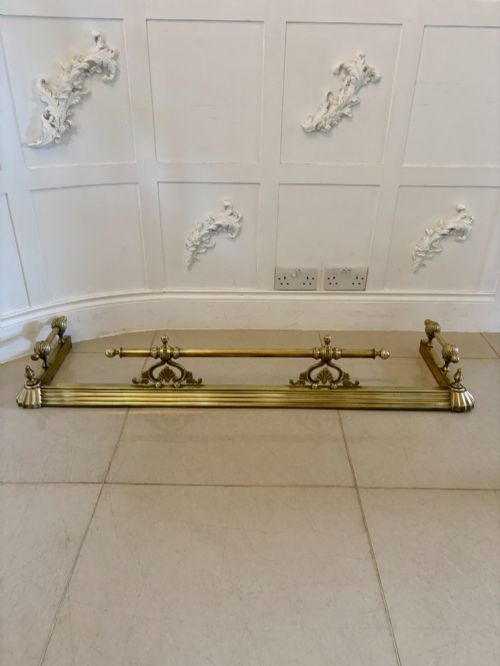
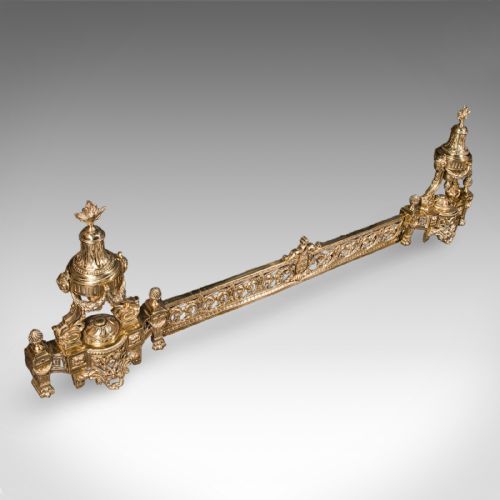
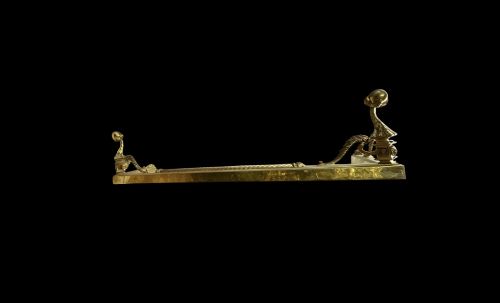
These Victorian brass fire rail pieces anchor a hearth with functional metalwork that protected interiors from stray embers.
Victorian Brass Fire Rail
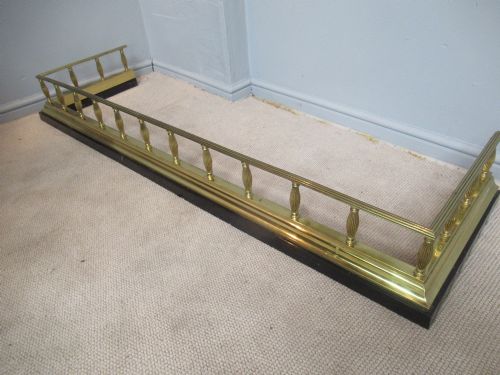
A victorian brass fire rail sits upon hearths as part of fireplace fenders, kerbs, and nursery fire guards. These pieces frame open fires while providing a sturdy barrier across the fireplace opening.
You will most commonly encounter domestic fenders and tall nursery fire guards featuring prominent brass top rails. Examples range from simple adjustable hearth curbs to large protective screens with integrated clothes rails.
The objects date predominantly from the nineteenth century, encompassing Victorian and Edwardian periods alongside earlier nineteenth-century forms. They function simultaneously as safety equipment and decorative hearth furniture.
How they were made
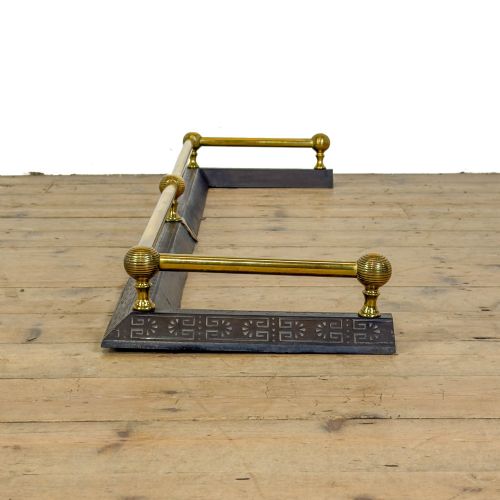
Makers constructed these hearth accessories using brass alongside structural iron, steel, and cast iron for enhanced weight and stability. Many items combine heavy brass framing with wire mesh panels or black finish steel components.
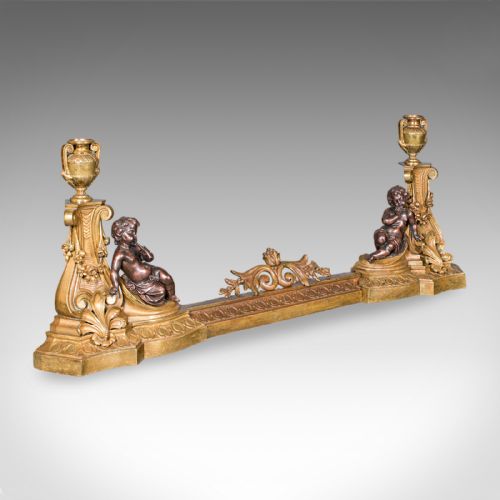
Decorative detailing incorporates bronze, ormolu, and gilt bronze elements attached to the primary brass and iron structure. Certain guards and fenders integrate copper accents alongside scrolled brass castings and pierced metalwork.
Several nursery guards arrive equipped with built-in clothes rails, proving that Victorian laundry drying happened dangerously close to the flames.
What varies in quality
The calibre of a piece depends heavily upon the gauge of the brass and the solidity of the underlying iron or steel frame. Heavy gauge construction and fully restored metalwork distinguish substantial items from lighter utilitarian examples.
Artistic execution sets apart standard hearth furniture from exceptional designs featuring lions, elaborate scrolls, or distinct Neoclassical and Art Nouveau stylistic influences. The presence of integrated components like matching fire irons or adjustable mechanisms also alters the character of the piece.
The Victorian Brass Fire Rail Glossary
- Fender
- A low metal guard placed around a hearth to contain coals and ash. Fenders also define the perimeter of the fireplace area.
- Fire guard
- A tall protective barrier placed before an open fire to prevent sparks from reaching the room. Nursery guards often incorporate a brass rail at the top.
- Kerb
- A stone or metal boundary enclosing the hearth space. Adjustable kerbs allow for precise fitting against varying fireplace dimensions.
- Ormolu
- Gilded bronze ornamentation applied to furniture and decorative metalwork. It provides a bright golden finish upon select Victorian pieces.
Victorian Brass Fire Rail: Frequently Asked Questions
What is a nursery fire guard?
A tall protective screen designed to keep children safely away from open flames. They typically feature a prominent brass top rail and substantial wire mesh.
Many historic examples also incorporate an integrated clothes rail for drying garments near the hearth.
How do adjustable fire fenders work?
These fenders feature sliding sections that expand or contract to fit different hearth widths. They offer a practical solution for matching specific fireplace dimensions.
Such pieces combine brass rails with iron or steel bases for secure placement.
Where were these pieces used?
They sat directly upon the floor surrounding domestic fireplaces in nineteenth-century homes. Their primary role was containing embers while protecting flooring and furnishings.
Drawing rooms and nurseries both utilised these metal accessories for safety and decoration.
How do I identify a Victorian piece?
Look for construction methods typical of the nineteenth century, including heavy gauge brass, cast iron components, and specific decorative styles. Neoclassical, Art Nouveau, and Regency influences often appear on these items.
Archival examples frequently date from the Victorian and Edwardian eras.