

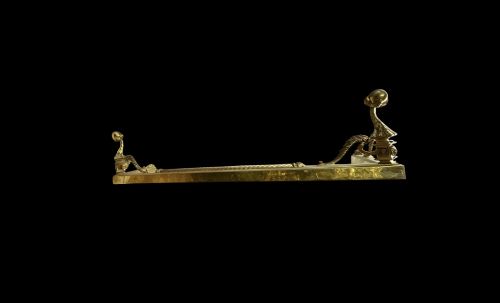


Traditional Fireplace Curb
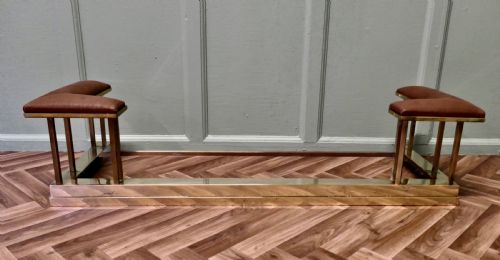
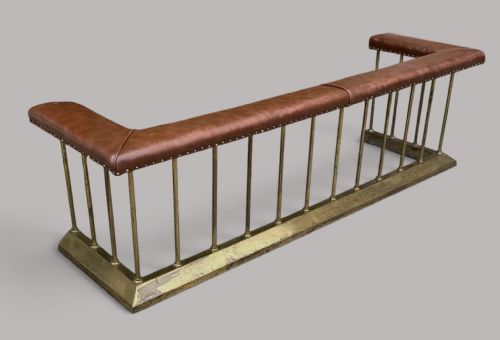
A traditional fireplace curb frames the hearth with metal and leather, keeping embers in place while offering a seat beside the fire.
Traditional Fireplace Curb
A traditional fireplace curb organises the hearth space, appearing primarily as fenders and club fenders across Victorian, Edwardian, and early twentieth-century examples. Buyers searching this phrase encounter low metal barriers designed to contain ash and wood.
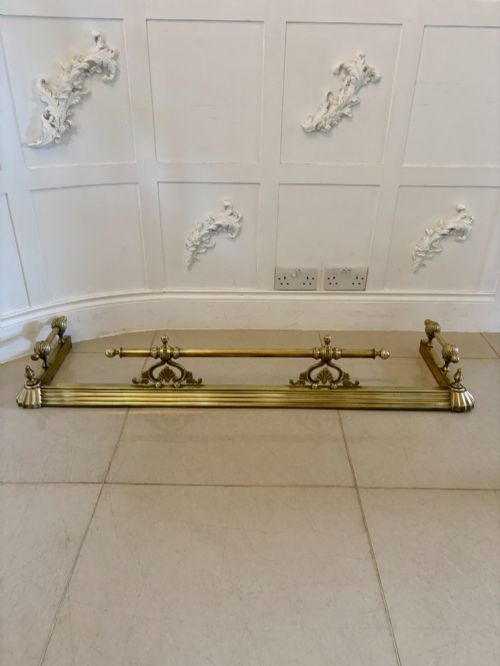
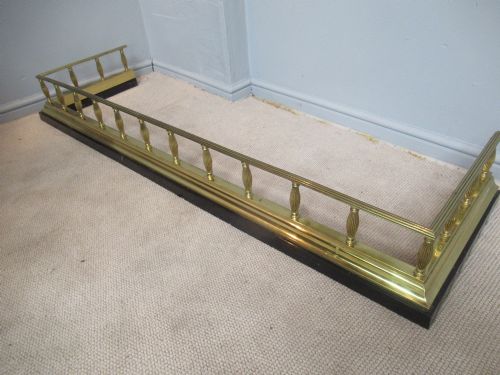
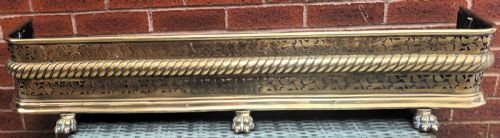
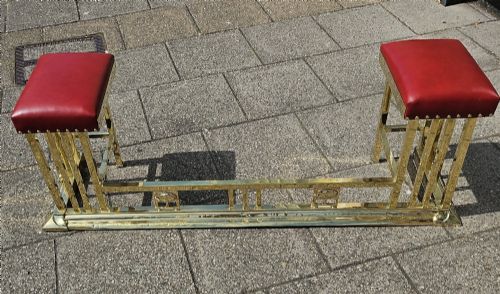
The material palette centres on brass, iron, and steel, occasionally combined with oak and leather to form low seats known as club fenders. These pieces span simple pierced sheet metal designs to heavy cast iron and polished brass assemblies.
Most items date from the nineteenth century through to the nineteen-twenties, reflecting the domestic heating habits of the Victorian and Edwardian eras. Form follows function, with extending models and corner arrangements adapting to varying hearth dimensions.
Distinctions in Quality
The weight of the metal gauge and the depth of casting set fine examples apart from standard utility items. Heavy gauge brass and substantial ironwork maintain structural integrity under daily foot pressure and hearth heat.
Detailing in the piercing and the quality of the leather upholstery distinguish the upper tier of production. Hand-tooled leather, robust spindle turnings, and crisp botanical or geometric piercings indicate careful workshop execution.
Current listings feature items from the Victorian, Edwardian, and Regency periods, constructed in brass, cast iron, steel, oak, and leather.
The Traditional Fireplace Curb Glossary
- Club fender
- A low fireside frame featuring upholstered corner seats, allowing occupants to sit close to the hearth. These combine metal floor rails with leather-topped cushion sections.
- Pierced brass
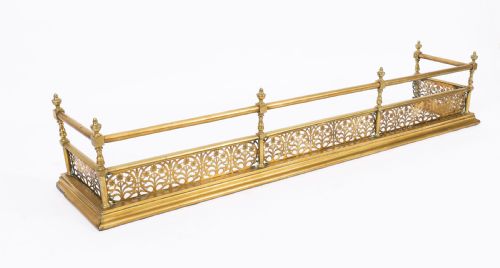
- Sheet metal perforated with decorative holes in geometric or floral patterns. This technique lightens the visual weight of the fender while allowing heat to circulate.
- Extending fender
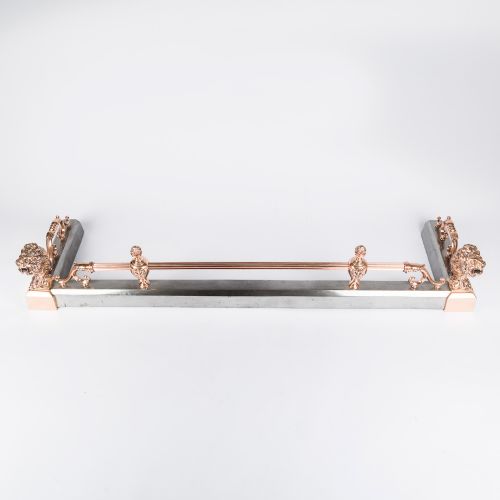
- A metal curb designed with telescopic sections to adjust in width. This mechanism allows the piece to fit varying fireplace openings.
- Spindle fender
- A hearth barrier constructed with vertical metal rods or balusters. These uprights link the top rail to the base plate.
Traditional Fireplace Curb: Frequently Asked Questions
How do I measure for a club fender?
Measure the width and depth of the hearth stone while allowing clearance for the fire surround legs. Ensure the interior dimensions leave sufficient space around the grate.
Check the height of the seat cushions relative to the hearth base to ensure comfortable seating.
Can these fenders be adjusted?
Extending models incorporate sliding channels that alter the overall width to suit different fireplace openings. Fixed-size pieces require exact matching to the hearth stone dimensions.
Alterations to fixed metalwork should be avoided to preserve the original construction.
How do I care for brass and leather?
Clean brass components using appropriate metal polish while protecting adjacent leather surfaces from chemical contact. Nourish older leather with suitable balms to maintain flexibility.
Avoid excessive moisture on both the metal frames and the upholstered seat pads.
What period do most curbs date from?
The majority of examples originate from the Victorian and Edwardian periods, spanning the nineteenth and early twentieth centuries. Styles range from plain iron guards to ornate neoclassical revival brass work.
Earlier Regency pieces display clean lines influenced by classical design traditions.